
VIVO × ZEISS Vivo V70 Series Flagship Camera Experience Lands in Indonesia
2 weeks ago · Updated 2 weeks ago
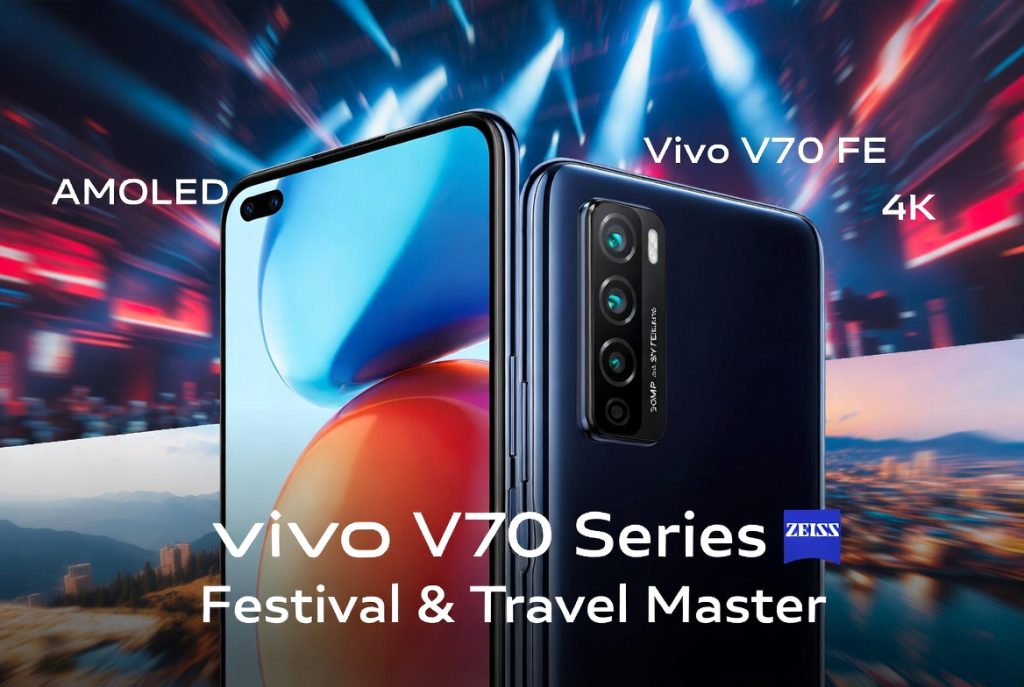
Vivo is a smartphone brand well known for its camera-focused innovation and deep commitment to the collaboration with optical giant ZEISS. In most markets, however, Vivo's top-tier 'Ultra' and 'Pro' camera flagships have remained largely inaccessible to consumers outside China — available in their home market, occasionally arriving in India, but rarely venturing further into Southeast Asia with full official support. That pattern is changing in 2026.
In March 2026, Vivo officially brought its V70 Series to Indonesia — a rare and significant expansion that demonstrates the company's growing confidence in the Southeast Asian premium smartphone market. The launch took place in Jakarta, where Vivo Indonesia's product and PR teams formally introduced both the Vivo V70 and its companion model, the Vivo V70 FE (Fashion Edition), to local media, retail partners, and consumers.
The Vivo V70 is positioned as a 'Festival Portrait Master' — a smartphone built specifically for the challenges of photography in concert halls, music festivals, crowded social events, and other environments where distance, dramatic lighting, and fast-moving subjects combine to defeat ordinary smartphone cameras. Its ZEISS-certified all-main-camera system, centered on a 50-megapixel telephoto lens with 10x zoom and Sony IMX882 sensor, represents a significant step forward in mid-range smartphone photography capability.
This comprehensive article examines the Vivo V70 in detail — its camera system and ZEISS partnership, its display and design, its performance hardware, battery life and charging, software features, and how it compares against competitors in Indonesia's increasingly competitive premium mid-range market. We also explore the V70 FE variant and what the arrival of the V70 Series means for the Indonesian smartphone market more broadly.
| 📍 Official Indonesia Launch
The Vivo V70 Series officially launched in Indonesia on March 9, 2026, at an event in Jakarta. General sale availability began March 13, 2026. The V70 is offered in a single 12GB/512GB configuration priced at Rp 8,999,000. |
The Vivo V Series: A Legacy of Portrait Photography
The Vivo V Series has, for several generations, staked its identity on portrait photography excellence. While the flagship X Series has served as Vivo's showcase for its most advanced imaging technology — including the dual-partnership with ZEISS on the X Series and collaborations with Sony sensor technology — the V Series has traditionally occupied the mid-range premium segment, bringing a taste of flagship-level camera capability to a broader audience at a more accessible price.
The V60 Series, which preceded the V70, received strongly positive reception in Indonesia and served as proof that local consumers were ready to invest in a premium mid-range camera phone. Alexa Tiara, PR Manager of Vivo Indonesia, acknowledged this explicitly at the V70 launch event: the V60 Series had generated 'positive responses and extraordinary enthusiasm,' and it was precisely this consumer trust that motivated Vivo to push the boundaries further with the V70 generation.
The V70 generation represents the most ambitious iteration of the V Series to date. For the first time, the V Series' flagship model — the standard V70 — deploys a fully ZEISS-certified All Main Camera system, bringing the optical precision and color science of Vivo's highest-end collaboration into the mid-premium tier. Meanwhile, the V70 FE introduces a 200-megapixel main camera — the highest resolution in V Series history — targeting the growing segment of users who demand pixel-level detail for landscape and travel photography.
Camera System: The Heart of the Vivo V70
The camera system is, without question, the defining characteristic of the Vivo V70 — and it is where the device makes its boldest statement. Vivo describes the V70's camera configuration as 'All ZEISS Main Camera,' meaning every lens in the system has been designed and certified in collaboration with ZEISS. This is a meaningful distinction: ZEISS certification involves calibration of the entire optical chain, from the lens design and coating to the image processing tuning applied by the software pipeline.
The 50MP ZEISS Super Telephoto: The Star Performer
The headline camera of the Vivo V70 is the 50-megapixel ZEISS Super Telephoto camera, built around Sony's IMX882 sensor. This camera supports 10x telephoto zoom — providing a long optical reach that allows users to photograph subjects from considerable distances without the image quality degradation that affects digital-only zoom systems.
The Sony IMX882 sensor measures 1/1.95 inches — a relatively large imaging area for a telephoto sensor — which contributes to improved light sensitivity and dynamic range at telephoto focal lengths. Combined with Optical Image Stabilization (OIS), this telephoto camera can produce sharp, detailed images even at maximum zoom, even in challenging conditions where camera shake would ordinarily blur telephoto shots.
The telephoto camera supports a zoom range from 3x optical to 10x (with 100x digital zoom available at the top end), giving users a highly flexible range of telephoto perspectives. At 3x, the perspective is equivalent to a short telephoto on a conventional camera — ideal for flattering portrait compositions, food photography, and close-up detail shots. At 10x, the camera can reach subjects that are comfortably beyond arm's reach, enabling concert photography from the stands, wildlife photography at modest distances, and candid street photography with a comfortable working distance.
AI Stage Mode: A Flagship Feature Comes to Mid-Range
One of the most significant additions to the V70's camera software is AI Stage Mode — a feature that had previously been exclusive to Vivo's flagship X Series devices. AI Stage Mode is specifically engineered for the challenges of photography at concerts, live performances, theater events, and other staged environments where photographers must contend with rapidly changing lighting conditions, dramatic color temperature shifts, fast-moving subjects, and significant distances between the camera and the subject.
In these environments, standard smartphone cameras typically produce images that suffer from motion blur, incorrect exposure, inconsistent white balance, and loss of fine detail. AI Stage Mode addresses each of these problems using a combination of multi-frame processing and scene-specific AI algorithms. The camera analyzes the content of each frame in real time, identifies the stage and subject, adapts its exposure, white balance, and noise reduction parameters for the specific conditions, and combines multiple frames to produce a sharper, more accurate result than any single-frame capture could achieve.
For Vivo V70 users who regularly attend concerts, sports events, theatrical performances, or other live events, AI Stage Mode is not merely a nice-to-have feature — it is the feature that justifies the camera system's positioning. It transforms the V70 from a general-purpose smartphone camera into a specialized tool optimized for exactly the use case its 'Festival Portrait Master' positioning describes.
The Main Camera: 50MP Sony LYT-700V
The primary wide-angle camera uses a 50-megapixel Sony LYT-700V sensor with a 1/1.56-inch imaging area — a sensor classification that places it in the upper tier of mid-range smartphone imaging hardware. The large sensor area, combined with Optical Image Stabilization, enables the main camera to perform strongly in low-light conditions and to capture images with natural, smooth background blur characteristic of a physically large sensor.
The LYT-700V sensor is part of Sony's LYTIA series, which represents the company's most advanced smartphone imaging technology. The sensor uses stacked architecture — placing the image processing circuitry on a separate layer beneath the light-sensitive pixel array — to reduce the distance that electrical signals must travel and thereby improve readout speed, reduce noise, and enable faster video frame rates.
The ZEISS certification applied to the main camera includes lens coating technology (T* coating) that reduces surface reflections and flare, improving contrast and color accuracy particularly in situations involving strong light sources within or near the frame — exactly the conditions encountered in stage photography. The collaboration also encompasses tuning of Vivo's image processing algorithms to align color rendering with ZEISS's established color science standards, producing images with the natural skin tones and accurate color reproduction that characterize ZEISS-tuned photography systems.
ZEISS Multifocal Portrait System
The Vivo V70's camera system supports ZEISS Multifocal Portrait, a system that uses the phone's multiple lenses to simulate the perspective compression and background rendering characteristics of specific focal lengths from the ZEISS portfolio. Users can select portrait modes corresponding to focal lengths of 35mm, 50mm, 85mm, and 100mm — each producing a distinctly different aesthetic result.
The 85mm and 100mm portrait modes are particularly valued by photography enthusiasts. At these longer equivalent focal lengths, the camera produces images with more pronounced background separation, more natural perspective with less facial feature distortion, and a rendering quality that closely resembles what a dedicated portrait photographer would achieve with a premium mirrorless camera and portrait lens. This capability positions the Vivo V70 as a genuinely useful tool for portrait photographers who want professional-quality results in a pocketable device.
Complete Camera System
| Main Camera | 50MP, Sony LYT-700V (1/1.56"), ZEISS OIS, f/1.88 |
| Telephoto Camera | 50MP, Sony IMX882 (1/1.95"), ZEISS OIS, 3x optical, up to 10x zoom, 100x digital |
| Ultra-Wide Camera | 8MP, ZEISS-certified |
| Front Camera | 50MP, ZEISS, 92° wide FOV, autofocus, 4K 60fps |
| Video (Rear) | 4K at 60fps |
| Portrait System | ZEISS Multifocal Portrait: 35mm / 50mm / 85mm / 100mm |
| AI Features | AI Stage Mode, AI Travel Portrait, AI Four-Seasons, AI Best Face |
| ZEISS Certification | All cameras ZEISS-certified (T* coating + color tuning) |
The ZEISS Partnership: What It Actually Means
The name ZEISS on a smartphone camera system has become a recognizable shorthand for photographic quality — but what does the collaboration actually entail in practice, and why does it matter for the Vivo V70?
Carl Zeiss AG, founded in Jena, Germany in 1846, is one of the oldest and most respected names in optics. The company's optical instruments have been used in groundbreaking scientific discoveries, professional filmmaking, medical imaging, and industrial manufacturing. The ZEISS T* (T-star) anti-reflection coating technology, developed in the 1930s, remains the gold standard for optical coatings in high-performance lenses — reducing surface reflections on glass elements to improve contrast, color fidelity, and resistance to flare.
Vivo's collaboration with ZEISS, formalized with the X60 Series in 2021, encompasses several distinct dimensions. ZEISS's optical engineers work with Vivo's hardware teams to design lens elements and coatings that meet ZEISS's standards for optical performance. The T* coating applied to the V70's camera lenses is the same technology used in ZEISS's professional photography lenses — not a marketing approximation, but the actual coating formulation.
At the software level, ZEISS's color scientists collaborate with Vivo's computational photography team to calibrate the image processing pipeline's color rendering. The result is images with color accuracy and tonal rendering that reflects ZEISS's decades of experience in professional optical color science — natural skin tones, accurate white balance across a wide range of light sources, and a rendering 'style' that prioritizes authenticity over the oversaturated, high-contrast processing that characterizes many competing smartphone camera systems.
For the V70 specifically, the 'All ZEISS Main Camera' designation signals that this collaboration extends across every camera module in the rear system — not just the primary sensor, but the telephoto and ultra-wide as well. This consistency ensures that images captured at different focal lengths maintain coherent color rendering and optical quality, important for users who routinely switch between lenses or composite images from multiple cameras.
Display: Slim Bezels and Flagship Brightness
The display of the Vivo V70 is crafted to complement its camera system — providing a viewing surface that does justice to the images captured and a visual experience that reflects the device's premium positioning. The phone uses a 6.59-inch AMOLED panel with 1.5K resolution (2800 × 1260 pixels) and a 120Hz refresh rate, delivering a combination of pixel density, color accuracy, and smoothness appropriate for its market tier.
5,000 Nits Peak Brightness
The most striking specification of the V70's display is its peak brightness: 5,000 nits in high-brightness mode. This is an exceptional figure that places the V70 alongside devices far above its price tier in outdoor visibility. For a phone positioned for use at outdoor concerts, festivals, and other events where sunlight may be a factor, a display that remains clearly legible even in direct sun is not merely a performance specification — it is a practical requirement for the use case the V70 is designed to serve.
For context, most mid-range smartphone displays peak at 800–1,200 nits; most flagship displays peak at 1,500–3,000 nits. At 5,000 nits, the V70's display approaches the peak brightness of the highest-end flagships currently available, delivering a viewing experience that punches significantly above the device's price class.
Ultra-Thin Bezels and NanoCrystal Glass
The V70 features bezel widths of approximately 1.25mm — among the thinnest available in its category — creating a display that appears to extend almost to the edges of the device front. This design choice enhances the immersiveness of the viewing experience for media playback, and gives the phone a modern, premium aesthetic that distinguishes it from competitors with thicker bezel frames.
Display protection uses Vivo's proprietary NanoCrystal Glass, which offers improved scratch and drop resistance compared to conventional tempered glass. For a device that will be used frequently at public events — where it may be jostled, dropped, or exposed to various environmental hazards — enhanced display protection is a meaningful practical benefit.
| Size | 6.59 inches |
| Panel Type | AMOLED |
| Resolution | 1.5K (2800 × 1260 pixels) |
| Refresh Rate | 120Hz |
| Peak Brightness | 5,000 nits |
| Bezel Width | ~1.25 mm (ultra-thin) |
| Cover Glass | NanoCrystal Glass |
| HDR Support | HDR10+ |
Performance: Snapdragon 7 Gen 4 and UFS 4.1
The Vivo V70 is powered by Qualcomm's Snapdragon 7 Gen 4 processor — a well-regarded mid-tier chipset built on a 4nm process node that delivers a balanced combination of processing power, energy efficiency, and AI performance appropriate for a premium mid-range device.
The Snapdragon 7 Gen 4 in Context
The Snapdragon 7 Gen 4 occupies an interesting position in the current chipset landscape. While it is not the flagship Snapdragon 8 Elite Gen 5 that powers devices like the OPPO Find X9 Ultra and Samsung Galaxy S26 Ultra, it offers performance meaningfully above entry-level and mainstream mid-range processors. Its AI Engine is optimized for computational photography tasks — scene detection, real-time processing, noise reduction, and the complex multi-frame operations that underpin features like AI Stage Mode.
For the V70's positioning as a photography-focused device rather than a gaming or high-performance computing platform, the Snapdragon 7 Gen 4 is an appropriate choice. Camera processing, video recording at 4K 60fps, and everyday productivity and social media use are all well within the chipset's capable performance envelope. Users who demand the absolute highest benchmarks for demanding 3D games may find themselves limited compared to flagship alternatives, but for the camera-centric use case the V70 targets, the performance is more than adequate.
UFS 4.1 Storage: A Genuine Upgrade
While the processor choice is contextually appropriate, one specification where the Vivo V70 genuinely impresses is its storage subsystem. The device uses UFS 4.1 storage technology — a standard that represents the current cutting edge of smartphone storage performance, typically found in flagship devices rather than mid-range models.
UFS 4.1 delivers read speeds of up to 4,200 MB/s and write speeds of up to 2,800 MB/s, compared to the UFS 3.1 standard's 2,100 MB/s read and 1,200 MB/s write figures. For a camera-focused device that generates large file sizes — 50-megapixel JPEGs can reach 15–25 MB; RAW files from a 50MP sensor may exceed 80 MB — fast storage is a practical benefit. The V70's UFS 4.1 storage ensures that shooting bursts, saving video files, and transferring large media collections happen quickly without creating noticeable delays in the camera workflow.
Memory and Fingerprint Technology
The Indonesian version of the Vivo V70 launches in a single configuration of 12GB RAM and 512GB internal storage — a generous allocation that aligns with Vivo Indonesia Product Manager Fendy Tanjaya's specific emphasis on providing consumers with sufficient storage to capture and retain large volumes of photo and video content without relying on cloud services.
The fingerprint sensor uses second-generation 3D Ultrasonic Fingerprint Scanning technology with a wider scanning area than previous implementations. This technology, which reads the three-dimensional structure of a fingerprint using ultrasonic waves rather than optical imaging, is more reliable in wet conditions and at non-perpendicular contact angles — practically useful for a device likely to be used during outdoor events where hands may be sweaty or wet.
| Chipset | Snapdragon 7 Gen 4 (4nm) |
| RAM | 12GB LPDDR5X |
| Storage | 512GB UFS 4.1 |
| OS | OriginOS 6 (based on Android 16) |
| Fingerprint | 3D Ultrasonic (2nd gen, wide-area) |
| GPU | Adreno 720 |
| AI Engine | Hexagon AI for computational photography |
Battery and Charging: Built for Long Events
A smartphone designed for concerts, festivals, and extended social events must be able to sustain heavy camera usage throughout a full day without requiring a mid-event recharge. The Vivo V70 addresses this requirement with a 6,500 mAh BlueVolt battery — one of the larger battery capacities available in its market segment — and 90W FlashCharge wired fast charging.
The 90W charging capability is particularly notable for its practical implications in the context of the device's use case. Before leaving for an event, a user who realizes their V70 is low on charge can connect it for 30 minutes and recover the majority of the battery capacity. Vivo claims the V70 can reach 50% charge in approximately 18 minutes and full charge in under 45 minutes from empty — figures that make a partial top-up entirely practical even within a short preparation window.
The 6,500 mAh capacity, combined with the Snapdragon 7 Gen 4's 4nm process efficiency and the AMOLED display's adaptive brightness capabilities, is expected to deliver over 24 hours of mixed-use battery life under typical conditions — and potentially a full event day of moderate-to-heavy camera usage before requiring a recharge. For users who have previously relied on external battery packs at concerts or festivals, the V70 may render such accessories unnecessary.
| Battery Capacity | 6,500 mAh (BlueVolt technology) |
| Wired Charging | 90W FlashCharge |
| 0-50% Charge Time | ~18 minutes |
| 0-100% Charge Time | ~45 minutes |
| Wireless Charging | Not supported on standard V70 |
| Battery Technology | BlueVolt (Vivo's enhanced cell chemistry for longevity) |
Design and Build Quality: Slim, Premium, and Durable
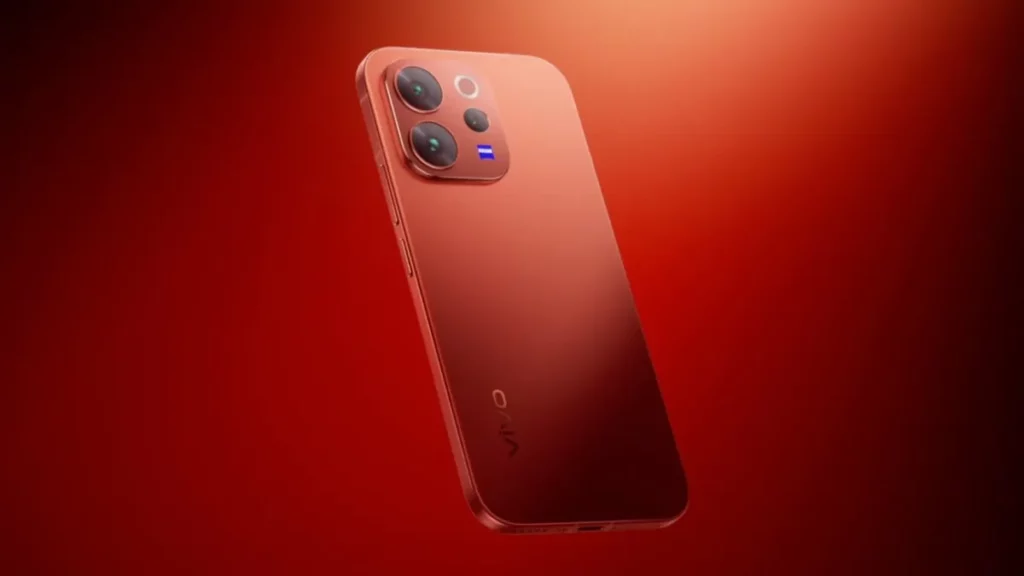
The Vivo V70 occupies a design aesthetic that balances slim dimensions with a premium material composition. The device measures just 7.59mm in thickness — making it one of the slimmer camera phones available in its category, particularly impressive given the large battery and three-camera system it accommodates. Weight is approximately 187–194 grams depending on color variant, placing it in a comfortable range for extended one-handed use.
Aerospace-Grade Aluminum Frame
The frame of the Vivo V70 is constructed from aerospace-grade aluminum alloy — a material choice that provides a significant strength-to-weight advantage over standard aluminum. Aerospace-grade aluminum alloys (typically 6061 or 7000-series) are lighter than stainless steel while offering comparable or superior rigidity and resistance to bending under load. The practical result is a device that feels substantial and well-built in the hand without contributing unnecessary weight.
The frame combines flat edges with softly rounded corners, a design language that has become associated with premium smartphone build quality and that also contributes to comfortable grip ergonomics. The camera module protrudes slightly from the rear panel but is integrated cleanly into the device's overall aesthetic rather than appearing as an afterthought.
IP68 and IP69 Certification
The Vivo V70 carries both IP68 and IP69 water and dust resistance certifications — providing a level of environmental protection that goes beyond the single IP68 rating common to many competing devices. IP68 certifies the device against water immersion at up to 1.5 meters depth for 30 minutes. IP69 adds protection against high-pressure, high-temperature water jets — useful in scenarios involving heavy rain or splash incidents at outdoor events.
For a device positioned for use at outdoor music festivals, sporting events, and other environments where rain exposure is a realistic possibility, dual IP certification is a meaningful practical assurance rather than merely a marketing specification. Users can deploy the V70 confidently in wet conditions without concern about water damage.
Color Options
The Vivo V70 is available in three color options in Indonesia: Sandalwood Brown, Alpine Gray, and Golden Hour. Each colorway uses a soft-finish rear panel that provides fingerprint resistance and a pleasant tactile character. The color names reflect the device's photography heritage — colors associated with the natural light conditions that define landscape, portrait, and event photography — and give the phone a distinctive visual identity compared to the more utilitarian colorways typical of the category.
The V70 FE: The Travel Photography Companion
Alongside the standard V70, Vivo Indonesia launched the V70 FE (Fashion Edition) — a companion model that shares the V70's premium positioning but offers a different photographic philosophy. Where the V70 is the Festival Portrait Master, optimized for telephoto performance and stage photography, the V70 FE is positioned as the Travel Portrait Master, designed for users who explore new places and need a versatile camera system that excels at landscape, travel, and wide-angle photography.
200MP Main Camera: Unprecedented Resolution in V Series
The V70 FE's headline specification is its 200-megapixel main camera — the highest resolution ever offered in a V Series device and one of the highest in the entire mid-range smartphone category. The sensor used is Samsung's HP5, a 200MP sensor measuring 1/1.56 inches that uses pixel-binning to produce optimally-sized output files under standard shooting conditions while preserving the option to capture full 200MP resolution for detailed landscapes, architectural subjects, or any scene where maximum detail is desired.
At full 200MP resolution, each image captured contains enough detail to enable aggressive cropping while retaining print-quality resolution. A single 200MP photograph of a landscape or cityscape effectively functions as a panoramic image capable of producing very large prints or being divided into multiple detailed crops. For travel photographers who want the flexibility to capture wide scenes and then extract details in post-processing, 200MP resolution provides an unprecedented level of creative freedom.
V70 FE Key Specifications
| Main Camera | 200MP OIS, Samsung HP5 (1/1.56") |
| Ultra-Wide | 8MP |
| Front Camera | 32MP |
| Chipset | MediaTek Dimensity 7360-Turbo (4nm) |
| Display | 6.83" AMOLED, 1.5K, 120Hz |
| Battery | 7,000 mAh (largest in V Series history) |
| Charging | 90W FlashCharge |
| Durability | IP68 / IP69, SGS 5-Star drop resistance |
| Colors | Muse Purple, Ocean Blue, Titanium Silver |
| Price in Indonesia | Rp 7,199,000 |
Software: OriginOS 6 and the Photography Ecosystem
Both the Vivo V70 and V70 FE run OriginOS 6, Vivo's proprietary Android overlay that forms the software ecosystem within which the devices' photographic capabilities are realized. OriginOS 6 has received consistent praise for its polish, customization depth, and the quality of its native applications — particularly the camera app and gallery.
The camera app on the V70 is designed around the device's photography use case. The UI organizes modes intuitively, with AI Stage Mode, Portrait, Video, and Photo accessible from the main shooting interface. The ZEISS Multifocal Portrait system is directly integrated into the Portrait mode, allowing users to switch between focal length simulations by selecting the desired millimeter value from a row of options at the bottom of the viewfinder.
OriginOS 6 also includes One Tap Transfer, a feature that enables fast wireless file transfer between devices running different operating systems — including iOS and Windows. For users who work across multiple platforms, the ability to move large photo and video files quickly between a Vivo phone and a Windows PC or MacBook without cables or cloud services is a genuinely useful convenience.
AI-assisted photography features are woven throughout the system rather than relegated to a separate app. AI Travel Portrait uses scene detection to identify travel contexts and apply optimized processing for architectural, landscape, and people-in-environment shots. AI Four-Seasons automatically detects seasonal environmental characteristics — spring blossoms, autumn foliage, winter snow, summer greens — and applies processing tuned to bring out the defining qualities of each season's visual character. AI Best Face captures multiple frames during group photography and composites the version where all subjects have their best expression.
Price, Availability, and Launch Promotions in Indonesia
The Vivo V70 is priced at Rp 8,999,000 in Indonesia for the single available configuration of 12GB RAM and 512GB storage. This price point positions it in the upper mid-range tier of the Indonesian smartphone market — above mainstream mid-range devices like the Redmi Note 14 Pro and Samsung Galaxy A56, but below the flagship price tier occupied by devices like the Samsung Galaxy S26 and OPPO Find X9 Ultra.
The V70 FE is priced more accessibly at Rp 7,199,000, offering the 200MP main camera and larger 7,000 mAh battery at a price point that represents strong value for its camera specification.
| 🛒 Indonesia Pricing & Availability
Vivo V70: Rp 8,999,000 (12GB/512GB) — Available online and offline from March 13, 2026. Vivo V70 FE: Rp 7,199,000 (12GB/256GB) — Available simultaneously. Promos: Bonus TWS, extended warranty, 0% installment financing through official partners. |
For the launch period, Vivo offered a range of promotional incentives through multiple retail channels: bonus TWS wireless earbuds with qualifying purchases, extended warranty programs, cashback offers through specific payment partners, and interest-free installment plans through affiliated financing providers. These promotions were available through Vivo's official stores, major e-commerce platforms, and offline retail partners across Indonesia.
How the Vivo V70 Compares: Competitive Landscape
The Indonesian premium mid-range smartphone market is intensely competitive, with Samsung, OPPO, Xiaomi, realme, and Honor all fielding capable devices in the Rp 7–10 million price range. How does the Vivo V70 stack up?
| Specification | Vivo V70 | OPPO Reno 13 Pro | Samsung Galaxy A56 | Xiaomi 14T |
| Price (IDR) | 8,999,000 | ~9,000,000 | ~7,999,000 | ~8,999,000 |
| Main Camera | 50MP Sony LYT-700V | 50MP | 50MP | 50MP |
| Telephoto | 50MP Sony IMX882 10x | 50MP 3x | 10MP 3x | 50MP 2.6x |
| Camera Partner | ZEISS | Hasselblad | — | Leica |
| Chipset | Snapdragon 7 Gen 4 | Dimensity 9300+ | Exynos 1580 | Dimensity 9300+ |
| Battery | 6,500 mAh | 5,800 mAh | 5,000 mAh | 5,000 mAh |
| Fast Charging | 90W | 80W | 45W | 67W |
| Display Peak Brightness | 5,000 nits | 3,000 nits | 1,900 nits | 4,000 nits |
| IP Rating | IP68 / IP69 | IP66 / IP69 | IP67 | IP68 |
| Storage Type | UFS 4.1 | UFS 3.1 | UFS 2.2 | UFS 3.1 |
The comparison reveals the Vivo V70's most significant competitive advantages in its market tier: the 10x ZEISS telephoto camera with Sony IMX882 sensor provides telephoto reach and quality that genuinely sets it apart from most competitors; the 5,000 nits peak display brightness is exceptional for the price range; the UFS 4.1 storage is a premium specification normally found only in flagships; and the dual IP68/IP69 certification provides superior water resistance versus most rivals. The 90W charging combined with 6,500 mAh battery is also class-leading in this tier.
Who Should Buy the Vivo V70?
The Vivo V70 makes a compelling case for a specific type of smartphone buyer — and understanding that profile helps determine whether it is the right device for a given individual's needs.
The V70 is ideal for:
- Concert-goers, festival enthusiasts, and event photographers who need a telephoto camera that performs in challenging stage lighting
- Users who frequently photograph subjects at a distance — whether at events, in nature, or in urban environments — and want genuine 10x zoom quality
- Portrait photography enthusiasts who value ZEISS color science and the multi-focal portrait system's professional-quality background rendering
- Power users who prioritize battery longevity and charging speed and need their phone to survive a full day of intensive camera use
- Buyers who want a premium build and design at an upper mid-range price, without paying full flagship premiums
- Users switching from flagship devices who want comparable camera quality at a lower investment
Consider alternatives if:
- Maximum raw processing power for gaming is your priority — the Snapdragon 7 Gen 4 is capable but not in the same tier as flagship chipsets
- You want the absolute best low-light performance regardless of price — the flagship X series or OPPO Find X9 Ultra offer superior low-light capability
- You prefer the wider camera ecosystem of Samsung's Galaxy lineup, including Samsung's extensive accessory ecosystem
- Wireless charging is a requirement — the standard V70 does not support wireless charging; the V70 FE may vary by market
Conclusion: A New Standard for Mid-Range Camera Phones in Indonesia
The arrival of the Vivo V70 Series in Indonesia marks a significant moment for the local smartphone market. Vivo has brought not merely a competitive mid-range device, but a camera system that introduces flagship-tier optical technology — ZEISS certification, Sony's best mid-range sensors, 10x optical-quality zoom, AI Stage Mode — to a price point accessible to a much broader consumer base than typically associated with these features.
The 'Festival Portrait Master' positioning is more than a marketing label. It describes a genuine and carefully considered design philosophy: every specification, from the telephoto camera's Sony IMX882 sensor and 10x zoom range, to the 5,000-nit display, the 6,500 mAh battery, and the dual IP68/IP69 waterproofing, has been selected or optimized for a user who is out in the world, capturing live experiences rather than studio setups or static landscapes.
At Rp 8,999,000, the Vivo V70 offers a combination of camera technology, build quality, and battery performance that is difficult to match at the same price point in the Indonesian market. Its companion model, the V70 FE, extends the value proposition further by providing 200MP resolution and the largest battery in V Series history at a lower price point, giving Indonesian consumers a genuinely differentiated choice depending on their specific photographic priorities.
Vivo's expansion into Indonesia with the V70 Series signals the company's intention to compete meaningfully in Southeast Asia's premium mid-range tier — and based on the specifications and features on offer, the V70 is well positioned to earn a significant share of the market from both camera-conscious consumers upgrading from previous mid-range devices and experienced photographers looking for a versatile, portable, and capable system that doesn't demand flagship expenditure.
Vivo V70 — Full Specifications (Indonesia Version)
| Display | 6.59" AMOLED, 1.5K (2800×1260), 120Hz, 5,000 nits, NanoCrystal Glass |
| Chipset | Snapdragon 7 Gen 4 (4nm) |
| RAM / Storage | 12GB / 512GB UFS 4.1 |
| Main Camera | 50MP Sony LYT-700V (1/1.56"), ZEISS OIS |
| Telephoto Camera | 50MP Sony IMX882 (1/1.95"), ZEISS OIS, 3x–10x zoom |
| Ultra-Wide | 8MP ZEISS |
| Front Camera | 50MP ZEISS, 92° FOV, AF, 4K 60fps |
| Battery | 6,500 mAh BlueVolt |
| Charging | 90W FlashCharge (~45 min 0–100%) |
| OS | OriginOS 6 (Android 16) |
| Dimensions | Approx. 161 × 75 × 7.59 mm |
| Weight | ~187–194g |
| Water Resistance | IP68 + IP69 |
| Fingerprint | 3D Ultrasonic (2nd gen, wide-area, in-display) |
| Colors | Sandalwood Brown, Alpine Gray, Golden Hour |
| Indonesia Price | Rp 8,999,000 (12GB/512GB — single configuration) |
| On Sale | March 13, 2026 |
Vivo V70 Series FAQ (Indonesia Launch)
1. When did the Vivo V70 and V70 FE officially go on sale in Indonesia?
- Official launch: March 9, 2026 (Jakarta).
- Sale availability: March 13, 2026, both online and offline via official Vivo channels.
2. What are the prices in Indonesia?
- Vivo V70: IDR 8,999,000 (12GB/512GB)
- Vivo V70 FE: IDR 7,199,000 (12GB/256GB)
3. What’s the difference between V70 and V70 FE?
| Feature | Vivo V70 | Vivo V70 FE |
|---|---|---|
| Main Camera | 50MP Sony LYT-700V + ZEISS OIS | 200MP Samsung HP5 + OIS |
| Telephoto | 50MP Sony IMX882, 10x zoom | No dedicated telephoto |
| Battery | 6,500 mAh | 7,000 mAh |
| Chipset | Snapdragon 7 Gen 4 | MediaTek Dimensity 7360-Turbo |
| Positioning | Festival Portrait Master | Travel Portrait Master |
| Price | IDR 8,999,000 | IDR 7,199,000 |
4. What is AI Stage Mode in the V70?
- A feature designed for concerts, live shows, and stage photography.
- Automatically adjusts exposure, white balance, and noise reduction to deliver sharper, more natural photos in challenging lighting.
5. Does Vivo V70 support wireless charging?
- Vivo V70: No
- V70 FE: Usually only supports wired 90W FlashCharge, wireless support may vary by market.
6. How long does the battery last?
- V70: 6,500 mAh, can last over 24 hours under mixed usage, including heavy camera use.
- Charging 90W FlashCharge: 0–50% in ~18 minutes, 0–100% in ~45 minutes.
7. Is the Vivo V70 water and dust resistant?
- Yes: IP68 + IP69 certified
- IP68: Water immersion up to 1.5m for 30 minutes
- IP69: Protection against high-pressure, high-temperature water jets
8. What makes the Vivo V70 camera better than competitors in the IDR 7–10M range?
- 10x ZEISS telephoto camera (farther and sharper than OPPO, Samsung, Xiaomi).
- All ZEISS Main Camera: All rear cameras calibrated for color accuracy and optics.
- AI Stage Mode: Exclusive for live events.
- ZEISS Multifocal Portrait: 35mm, 50mm, 85mm, 100mm for professional portrait effects.
9. What are the display highlights?
- 6.59” AMOLED, 1.5K (2800×1260), 120Hz refresh rate
- Peak brightness 5,000 nits – highly visible outdoors
- NanoCrystal Glass + ultra-thin 1.25mm bezels
10. Is the Vivo V70 good for gaming?
- Snapdragon 7 Gen 4 handles casual to mid-range gaming well.
- Not designed for top-tier AAA games like Snapdragon 8 Elite Gen 5 devices.
- Primary focus: photography and event photography performance.
11. Are there launch promotions in Indonesia?
- Bonus TWS earbuds with qualifying purchases
- Extended warranty programs
- 0% installment plans via official partners
- Available through Vivo Store, official e-commerce platforms, and retail partners
Leave a Reply