The Architectural, Physiological, and Genetic Blueprint of the Donskoy Cat
2 weeks ago
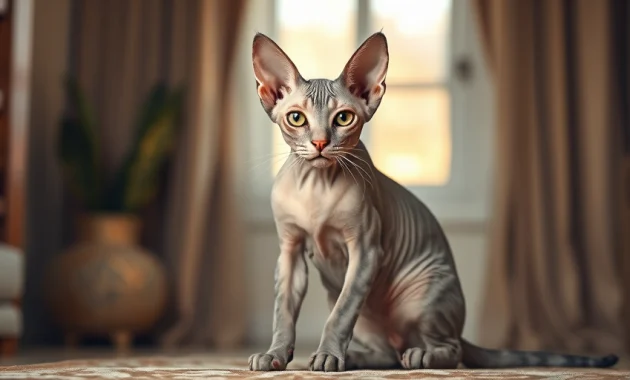
The Donskoy cat—variably designated as the Don Hairless, Russian Hairless, or Don Sphynx—represents a profound divergence in feline genetic evolution. While casually conflated with the Canadian Sphynx due to superficial phenotypic commonalities, the Donskoy is a completely distinct breed defined by a unique genetic blueprint, strict morphological standards, and specific metabolic dynamics.
This architectural guide provides an exhaustive analysis of the Donskoy breed, exploring its historical discovery, unique genetic profile, structural standards, physiological needs, and long-term care management.
Chronological Origin and Genetic Architecture
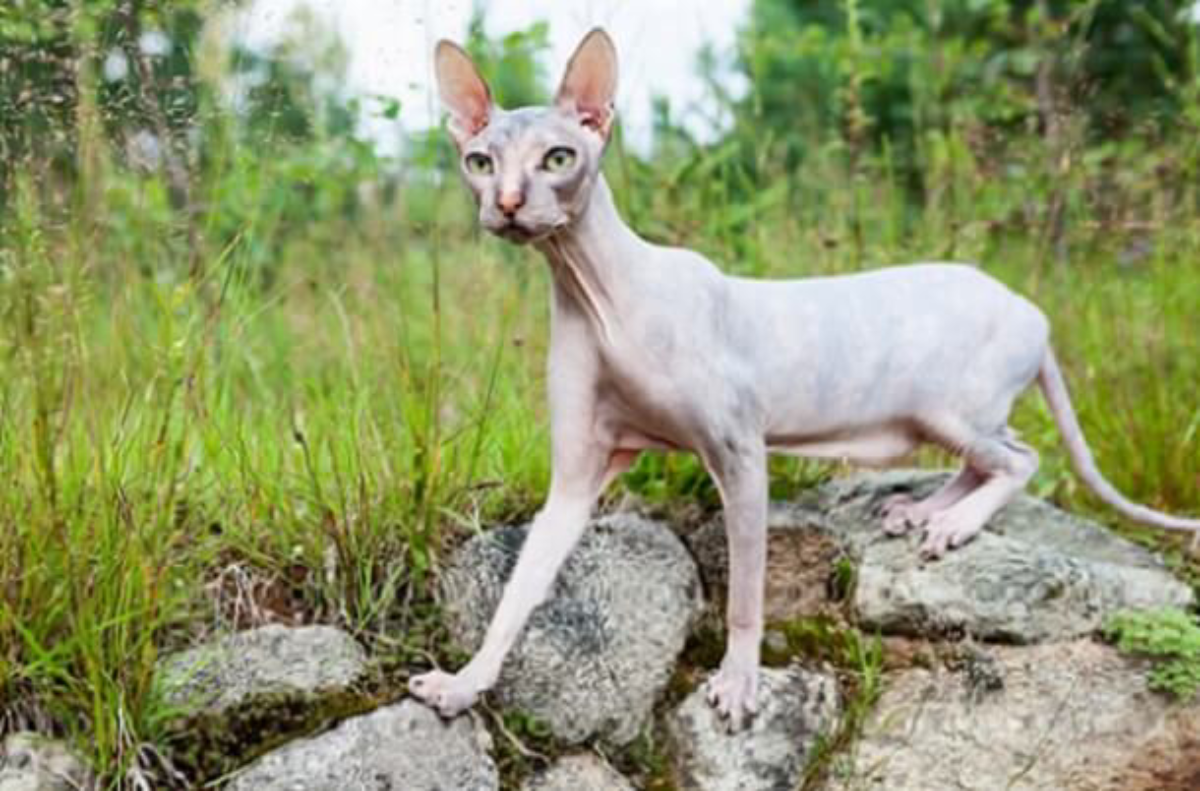
The genesis of the Donskoy breed began in 1987 within Rostov-on-Don, Russia. Elena Kovaleva, a professor of linguistics, rescued a young, mistreated kitten named Varvara. As Varvara matured, she exhibited progressive alopecia (hair loss) along her dorsal region and torso, which resisted all veterinary dermatological interventions.
The true nature of this condition was revealed when Varvara produced a litter: a portion of the kittens were born partially or entirely hairless, while those born with coats shed them during early development. This proved that the hairlessness was not a disease, but rather the manifestation of a spontaneous genetic mutation.
Canadian Sphynx Architecture:
[Recessive hr Mutation] ──► Requires Homozygosity (hr/hr) ──► Alters Hair Shaft Structure

Donskoy (Don Sphynx) Architecture:
[Dominant Hbl Mutation] ──► Expressed in Heterozygosity (Hbl/+) ──► Controls Follicular Ectodermal Dysplasia
The Dominant Hairless Allele ($Hbl$)
The critical differentiator between the Donskoy and the Canadian Sphynx lies in the mode of inheritance governing their coat phenotypes:
The Canadian Sphynx ($hr$): Governed by a recessive mutation of the KRT71 (keratin 71) gene. To express hairlessness, a kitten must inherit two copies of the mutated gene ($hr/hr$). If outcrossed to a normal domestic shorthair, the entire $F_1$ generation will revert to a standard haired phenotype.
The Donskoy ($Hbl$): Governed by a dominant or semi-dominant trait designated as the $Hbl$ allele. Because this trait is dominant, a single copy of the gene ($Hbl/+$) is sufficient to cause hairlessness. Outcrossing a heterozygous Donskoy to a standard domestic shorthair yields a predictable $50\%$ hairless or altered-coat distribution in the immediate $F_1$ generation.
- 1) What is a Donskoy cat?
- 2) Is the Donskoy cat the same as a Sphynx cat?
- 3) Where did the Donskoy breed come from?
- 4) Why are Donskoy cats hairless?
- 5) Are all Donskoy cats completely bald?
- 6) What are the four coat types of the Donskoy cat?
- 7) Do Donskoy kittens stay the same coat type for life?
- 8) What does a Donskoy cat look like?
- 9) Are Donskoy cats wrinkly like other hairless breeds?
- 10) How big do Donskoy cats get?
- 11) What is the temperament of a Donskoy cat?
- 12) Are Donskoy cats good family pets?
- 13) Are Donskoy cats hypoallergenic?
- 14) Why do Donskoy cats feel warm to the touch?
- 15) Do Donskoy cats need more food than other cats?
- 16) What should a Donskoy cat eat?
- 17) Do Donskoy cats need baths?
- 18) How do you bathe a Donskoy cat safely?
- 19) Do Donskoy cats need daily skin cleaning?
- 20) Are Donskoy cats prone to acne or skin problems?
- 21) Do Donskoy cats need ear cleaning?
- 22) Do Donskoy cats need special nail care?
- 23) Can a Donskoy cat live in a cold climate?
- 24) Can Donskoy cats go outside?
- 25) Can Donskoy cats get sunburned?
- 26) Are Donskoy cats high-maintenance?
- 27) Are Donskoy cats healthy?
- 28) What is the difference between a Donskoy and a Peterbald?
- 29) Why are Brush Donskoy cats important if they are not ideal for shows?
- 30) Are Donskoy cats rare?
- 31) What should I ask a Donskoy breeder before buying a kitten?
- 32) Is a Donskoy cat a good choice for first-time cat owners?
- 33) What is the biggest challenge of owning a Donskoy cat?
The Four Distinct Coat Classifications
Due to the semi-dominant nature and variable expressivity of the $Hbl$ gene, Donskoy cats exhibit a spectrum of four distinct coat classifications. This varies significantly from other hairless breeds.
                     [Donskoy Coat Spectrum]
                                │
       ┌────────────────────────┼────────────────────────┐
       ▼                        ▼                        ▼
 [Rubber Bald]              [Flocked]                [Velour]
 完全無毛                 Chamois texture          Woolly birth coat
 (Pref. for Show)         (Sheds over time)        (Loss within 2 yrs)
                                │
                                ▼
                             [Brush]
                         Wiry, broken hair
                         (Breeding only)
Rubber Bald: Kittens are born completely hairless (allocutious). Their skin possesses a highly elastic, rubbery texture. This phenotype carries the highest value for show ring compliance and specialized breeding programs.
Flocked: The cat appears hairless at a distance but is covered in an ultra-short, fine down resembling the texture of a chamois cloth or a peach. This micro-fur often thins out completely as the cat reaches social and physical maturity.
Velour: Kittens are born with a soft, woolly coat and a distinct bald patch on the cranium (calvaria). Over the course of the first 12 to 24 months, the hair undergoes progressive shedding, leaving residual hair only on the distal extremities (paws, tail, muzzle).
Brush: Characterized by wiry, bristly, and broken hair across the entire body, often accompanied by bald patches on the neck and torso. While Brush-coated Donskoys are disqualified from championship show structures, they remain highly valuable assets in breeding programs to preserve genetic diversity.
Structural Morphology and Breed Standards
The World Cat Federation (WCF) and the International Cat Association (TICA) maintain explicit structural baselines for the Donskoy, ensuring they retain a robust, athletic anatomy distinct from oriental or foreign body types.
        [Large Ears: High Set, Forward Tilt]
                   │
                   ▼
       [Modified Wedge Cranium] ──► [Pronounced Vertical Wrinkles]
                   │
                   ▼
   [Muscular Torso / Narrower Shoulders than Rump]
                   │
                   ▼
  [Elongated, Webbed Toes with Prehensile Capacity]
Cranial Architecture
The head is a well-defined, modified wedge shape featuring high, prominent cheekbones and prominent supraorbital ridges. The forehead is flat, exhibiting deep, permanent vertical wrinkles that branch out above the eyes.
The muzzle is moderately short, rounded, and finished with a firm chin. Whiskers are highly desirable, though they may be curly, brittle, or broken short at the base.
Ocular and Auricular Standards
Eyes: Medium-sized, almond-shaped, and set at a distinct, slight slant toward the outer base of the ears. There is no pigmentation restriction; eye color ranges across amber, green, aqua, and deep blue, independent of coat color.
Ears: Unusually large, set high on the skull, and tilted slightly forward. The outer margins of the pinnae should perfectly continue the vertical wedge lines of the jaw. The inter-ear distance should not exceed the width of a single ear base.
Somatic and Appendicular Structure
The torso is solid, muscular, and medium-long, featuring a straight dorsal line and a barrel-shaped rib cage. A key trait of this breed is that the shoulders are visibly narrower than the broad, muscular rump.
The legs are medium-long, heavy-boned, and end in oval paws with long, distinct toes. These digits feature fine webbing, which gives the paws a highly tactile, almost prehensile gripping capability.
Physiological Dynamics and Advanced Care Protocols
Lacking a protective layer of fur fundamentally alters the Donskoy's internal homeostatic mechanisms, requiring specialized care from handlers.
Absence of Fur ──► Accelerated Radiative Heat Loss ──► Elevated Basal Metabolic Rate ──► High Caloric Intake Requirement
Thermoregulation and Nutrition
Because they lack insulating fur, Donskoys lose body heat quickly. To keep their internal temperature steady ($100.5^\circ\text{F}\text{–}102.5^\circ\text{F}$), they have an elevated basal metabolic rate (BMR).
Caloric Intake: They need more food per pound of body weight than haired cats of similar size. Their diet should be rich in highly bioavailable proteins and fats.
Dermatological Nutrition: Incorporating targeted Omega-3 and Omega-6 fatty acids (such as EPA and DHA from marine oils) is essential to reinforce the skin's moisture barrier and manage oil production.
Dermatological Maintenance
While they do not shed, Donskoys are not zero-maintenance pets. Their skin continuously produces sebum, which would normally be absorbed by fur. Without fur, this oil builds up directly on the skin.
Accumulated Sebum + Environmental Debris ──► Pore Blockage ──► Comedones / Malassezia Dermatitis
To prevent skin issues like comedones (blackheads) and yeast overgrowth (Malassezia), you must wipe down their skin folds daily with soft, damp cloths. They also need a full bath every 7 to 14 days using a pH-balanced, surfactant-free shampoo.
Special care must be taken with the nail beds and the tail's dorsal surface, where sebaceous glands are highly concentrated.
Genetic Conservation and Approved Outcrossing
Because the global population of authentic Donskoys is small, maintaining genetic health while avoiding inbreeding depression requires strict outcrossing guidelines.
[Donskoy Line] ✕ [Non-Pedigreed Domestic Shorthair (DOM SH)] ──► F1 Generation (Preserves Hbl Gene and Broadens Gene Pool)
Major international registries currently permit outcrossing only with non-pedigreed Domestic Shorthairs ($DOM\text{ }SH$).
Historical outcrosses to the Oriental Shorthair or Siamese—which initially produced the Peterbald breed—are now strictly prohibited within purebred Donskoy lines. This rule preserves the breed's distinct robust body shape and keeps it separate from more delicate, foreign-type cats.
Comparative Structural Summary
| Anatomical Marker | Donskoy Standard | Canadian Sphynx Comparison |
| Genetic Driver | Dominant $Hbl$ Mutation | Recessive $hr$ Mutation |
| Cranial Geometry | Modified Wedge, Flat Forehead | Modified Wedge, Rounded Skull |
| Somatic Silhouette | Medium, Muscular; Broad Rump | Medium, Semi-Cobby; Round Belly |
| Digital Structure | Long, Webbed, Prehensile | Round, Padded, Standard Length |
| Wrinkle Distribution | Concentrated on Head, Neck, Legs | Distributed Uniformly Over Body |
FAQ
1) What is a Donskoy cat?
The Donskoy cat, also known as the Don Hairless, Russian Hairless, or Don Sphynx, is a rare hairless cat breed that originated in Rostov-on-Don, Russia in 1987. Although it is often confused with the Canadian Sphynx because both breeds can appear hairless, the Donskoy is genetically and structurally different. Its hairlessness is caused by a dominant mutation rather than the recessive mutation found in the Sphynx, and the breed has its own distinct body type, skin texture, coat categories, and care requirements.
2) Is the Donskoy cat the same as a Sphynx cat?
No. The Donskoy and the Canadian Sphynx are completely separate breeds. The Canadian Sphynx carries a recessive mutation linked to the KRT71 gene, which means a kitten must inherit two copies of the mutation to be hairless. The Donskoy carries a dominant or semi-dominant hairless trait often referred to as the Hbl allele, so only one copy is needed for the trait to appear. Beyond genetics, the breeds also differ in body structure, wrinkle distribution, head shape, and coat behavior over time.
3) Where did the Donskoy breed come from?
The breed began in 1987 in Rostov-on-Don, Russia, after a rescued cat named Varvara developed progressive hair loss that was not caused by illness. When Varvara later produced kittens, some were born partially or completely hairless, while others lost their coats as they matured. This proved the condition was inherited rather than pathological, and breeders began developing what became the Donskoy breed.
4) Why are Donskoy cats hairless?
Donskoy cats are hairless because of a spontaneous genetic mutation that affects hair follicle development. Unlike some hairless breeds that simply have fragile or sparse hair shafts, the Donskoy’s mutation influences follicular ectodermal development and can create a range of coat outcomes from fully bald to partially coated. The trait is dominant, so it can pass to offspring even if only one parent carries it.
5) Are all Donskoy cats completely bald?
No. Donskoys can appear in four recognized coat categories, and not all are completely bald throughout life. Some are born hairless, some have a soft peach-like covering, some are born with a woolly coat that later sheds, and some retain wiry hair. The coat can also change as the cat matures.
6) What are the four coat types of the Donskoy cat?
The Donskoy breed typically falls into four coat categories:
- Rubber Bald: Born completely hairless with soft, elastic skin. This is the most iconic and show-preferred appearance.
- Flocked: Covered in a very fine, suede-like down that can feel like peach fuzz or chamois. This may thin further with age.
- Velour: Born with a soft coat that gradually sheds over time, often leaving only patches of hair on the face, paws, or tail.
- Brush: Has broken, wiry, sparse, or patchy hair. Brush cats may not qualify for certain show standards, but they are valuable in breeding programs.
7) Do Donskoy kittens stay the same coat type for life?
Not always. Donskoy coat development can change significantly with age, especially in Flocked and Velour cats. A kitten born with visible hair may gradually lose most of it over the first one to two years of life, while a lightly coated cat may become nearly bald. This variable coat expression is one of the breed’s defining traits.
8) What does a Donskoy cat look like?
A Donskoy has a muscular, medium-length body with a strong frame and a broad, powerful rump. The head is a modified wedge with prominent cheekbones, a flat forehead, and visible wrinkles, especially on the head and neck. The ears are large and high-set, the eyes are almond-shaped, and the toes are long and sometimes slightly webbed, giving the paws a very dexterous appearance.
9) Are Donskoy cats wrinkly like other hairless breeds?
Yes, but the wrinkle pattern is one of the breed’s distinctive features. Donskoys usually show pronounced wrinkles on the forehead, around the eyes, on the neck, and sometimes on the legs and body. These wrinkles are part of the breed standard and contribute to the cat’s unique expression.
10) How big do Donskoy cats get?
Donskoy cats are generally medium-sized but feel heavier than they look because they are muscular and solidly built. Adults commonly weigh between 6 and 12 pounds, though exact size varies by sex, genetics, diet, and activity level.
11) What is the temperament of a Donskoy cat?
Donskoys are often described as affectionate, people-oriented, intelligent, and social. They tend to seek out human contact, enjoy warmth, and often bond strongly with their family. Many are playful, curious, and interactive well into adulthood. Because they crave companionship, they may not do well if left alone for long periods without stimulation.
12) Are Donskoy cats good family pets?
Yes, in the right home. They can do well with families, singles, couples, and seniors as long as their special care needs are understood. They often enjoy attention and interaction, and many get along with respectful children and other pets. However, because they are sensitive to temperature and skin irritation, they need a home environment that can support regular skin care and indoor living.
13) Are Donskoy cats hypoallergenic?
No cat is truly hypoallergenic, and Donskoys are no exception. Even though they have little or no fur, they still produce skin oils, dander, and saliva proteins such as Fel d 1, which are common triggers for cat allergies. Some allergy sufferers may tolerate a Donskoy better than a heavily shedding cat, but there is no guarantee.
14) Why do Donskoy cats feel warm to the touch?
Hairless cats often feel warmer because there is no insulating coat between your hand and their skin. Their body temperature is not necessarily higher than other cats, but the direct contact with skin makes them seem hot. They also lose heat more quickly and often seek warm blankets, sunny spots, and human laps to stay comfortable.
15) Do Donskoy cats need more food than other cats?
They often need careful nutritional management and may require more calories than a similarly sized coated cat, especially in cooler environments. Because they lack a full fur coat, they can lose body heat faster and may use more energy to maintain body temperature. A balanced, high-quality diet rich in animal protein and appropriate fats is important, but feeding should always be tailored to the individual cat’s body condition, age, and activity level.
16) What should a Donskoy cat eat?
A Donskoy should eat a complete, nutritionally balanced cat food appropriate for its life stage. High-quality animal protein is essential, and some owners choose diets with beneficial fatty acids like omega-3 and omega-6 to support skin health. Because the breed’s skin can become oily, overall diet quality matters. Any special feeding plan should be discussed with a veterinarian, especially if the cat has skin issues, digestive sensitivity, or weight changes.
17) Do Donskoy cats need baths?
Yes, most Donskoy cats need regular bathing. Since they do not have fur to absorb skin oils, sebum accumulates directly on the skin and can mix with dust and debris. Without routine cleaning, this can lead to greasy skin, clogged pores, blackheads, odor, and secondary infections. Many Donskoys benefit from a gentle bath every 1 to 2 weeks, though frequency depends on the individual cat’s skin type and oil production.
18) How do you bathe a Donskoy cat safely?
Use lukewarm water and a mild cat-safe shampoo formulated for sensitive skin. Avoid harsh detergents, heavily fragranced products, or human shampoos. Gently clean the skin folds, neck, belly, underarms, tail base, and feet, then rinse thoroughly and dry the cat completely with a soft towel. Because hairless cats chill easily, keep the room warm and do not leave the cat damp after bathing.
19) Do Donskoy cats need daily skin cleaning?
Many do. In addition to routine baths, daily or near-daily wiping with a soft damp cloth can help remove excess oil from skin folds, the face, under the neck, and around the tail base. This is especially helpful for cats prone to clogged pores or yeast buildup.
20) Are Donskoy cats prone to acne or skin problems?
They can be. Excess sebum, debris, and poor skin hygiene may contribute to blackheads, acne-like lesions, clogged pores, irritation, or yeast overgrowth. Areas that commonly need attention include the chin, nail beds, and the tail’s upper surface. If the skin becomes red, inflamed, smelly, crusty, or itchy, the cat should be evaluated by a veterinarian.
21) Do Donskoy cats need ear cleaning?
Usually yes. Hairless breeds often accumulate ear wax more quickly because there is less hair in and around the ear to trap oils and debris. Routine ear checks and periodic cleaning with a vet-approved ear cleaner can help prevent buildup and irritation. Never insert cotton swabs deep into the ear canal.
22) Do Donskoy cats need special nail care?
Yes. Oil and grime can collect around the nail beds, so regular nail trims and gentle cleaning around the claws are important. Neglecting this area can lead to buildup, odor, and irritation.
23) Can a Donskoy cat live in a cold climate?
Yes, but only with proper indoor protection. Donskoys are not well suited to cold outdoor environments because they lack insulating fur. They should live indoors in a temperature-controlled home with access to warm bedding, blankets, heated pet beds if used safely, and draft-free resting areas.
24) Can Donskoy cats go outside?
It is safest to keep them indoors or allow only highly supervised outdoor time in appropriate weather. Their exposed skin makes them vulnerable to cold, sunburn, scratches, insect bites, and environmental contaminants. If they spend any time outside, it should be controlled, brief, and weather-appropriate.
25) Can Donskoy cats get sunburned?
Yes. Hairless cats can be more vulnerable to UV exposure because their skin is not protected by fur. Prolonged direct sunlight can cause irritation or sunburn, especially on lighter skin. It is best to limit intense sun exposure and provide shaded resting areas indoors and outdoors.
26) Are Donskoy cats high-maintenance?
They are not high-maintenance in the same way as a long-haired cat that needs extensive brushing, but they do require consistent skin, ear, nail, and temperature management. Prospective owners should expect regular bathing, skin checks, indoor climate control, and close attention to hygiene. In that sense, they are a specialty-care breed rather than a low-maintenance pet.
27) Are Donskoy cats healthy?
Like all purebred cats, Donskoys can be healthy when responsibly bred and well cared for, but they still require careful monitoring. Their main day-to-day concerns often involve skin care, temperature regulation, and maintaining overall condition. Because the breed is relatively uncommon, it is especially important to work with ethical breeders and veterinarians familiar with hairless cats.
28) What is the difference between a Donskoy and a Peterbald?
The Donskoy and Peterbald are related historically but are not the same breed. The Peterbald was developed using Donskoy ancestry and Oriental-type cats, which created a more elegant, foreign body style. The Donskoy remains a separate breed with a more muscular, robust body and its own breed standard. Modern purebred Donskoy breeding programs are designed to preserve that distinction.
29) Why are Brush Donskoy cats important if they are not ideal for shows?
Brush-coated Donskoys can be valuable in breeding because they help preserve genetic diversity in a breed with a relatively small population. Even if they do not match the ideal bald show appearance, they can contribute important structural and genetic traits to responsible breeding programs.
30) Are Donskoy cats rare?
Yes. The Donskoy is considered a rare breed outside parts of Europe and Russia. Availability varies widely by country, and finding a reputable breeder may take time. Because of their rarity, it is important to verify breeder ethics, health practices, and registration standards before acquiring one.
31) What should I ask a Donskoy breeder before buying a kitten?
Ask about the kitten’s lineage, health screening, coat type, vaccination schedule, socialization, diet, and any skin-care routine already established. You should also ask whether the breeder outcrosses responsibly, how they manage genetic diversity, whether they provide registration paperwork, and what support they offer after adoption. Ethical breeders should be transparent and knowledgeable about the breed’s special care needs.
32) Is a Donskoy cat a good choice for first-time cat owners?
It can be, but only if the owner is prepared for the breed’s unique maintenance needs. A first-time owner who is willing to learn about bathing, skin care, indoor temperature management, and routine health monitoring can do well with a Donskoy. Someone looking for a low-effort or independent cat may find the breed more demanding than expected.
33) What is the biggest challenge of owning a Donskoy cat?
The biggest challenge is usually maintaining healthy skin and a stable indoor environment. Owners must be consistent about bathing, wiping away oil buildup, checking ears and nail beds, and protecting the cat from cold and excessive sun. Because Donskoys are also highly social, meeting their emotional needs for companionship and engagement is just as important as meeting their physical care requirements.