The Colorpoint Shorthair: An Unabridged Guide to the Breed's Genetics, Architecture, and Behavior
1 week ago
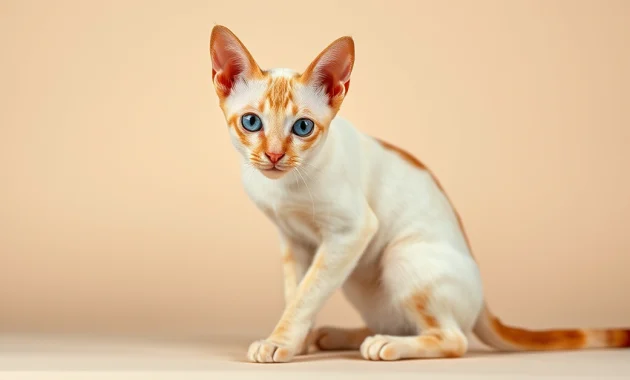
The Colorpoint Shorthair occupies a unique space in the feline world. Recognized by some registries as a distinct breed and by others as an offshoot of the Siamese, this cat combines an elegant, athletic build with an expanded palette of coat colors. For owners and breeders, understanding this cat requires looking closely at its history, physical standards, and highly social personality.
Historical Foundations and Genetic Evolution
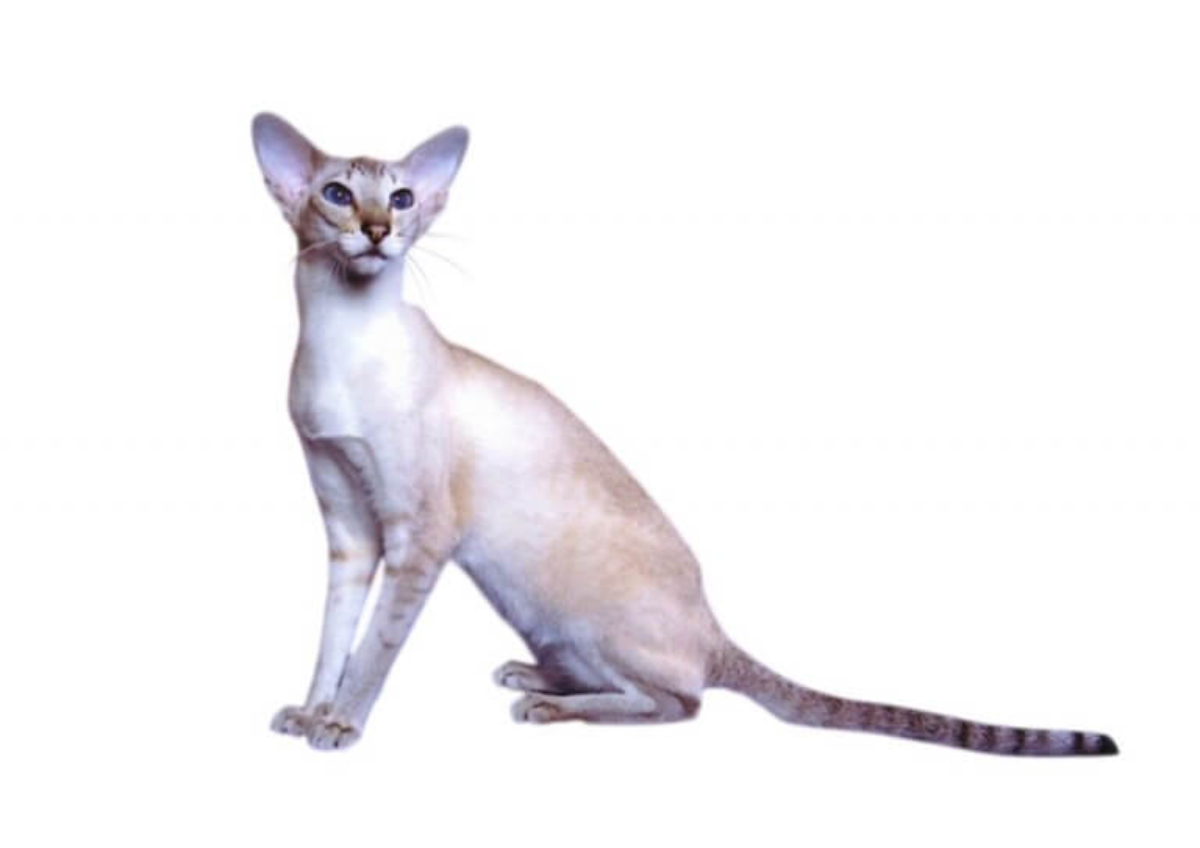
The story of the Colorpoint Shorthair began in the United States during the 1940s and 1950s. At the time, traditional Siamese cats were strictly restricted to four classic point colors: Seal, Chocolate, Blue, and Lilac. A group of progressive breeders sought to introduce new colors—specifically red and cream—into this sleek, pointed body type.
                  [Initial Genetic Introgression]
                                 │
       ┌─────────────────────────┴─────────────────────────┐
       ▼                                                   ▼
 [American Shorthair]                                [Purebred Siamese]
 (Carrying Dominant Red/Agouti)                       (Carrying Pointed Mutated Tyrosinase)
       │                                                   │
       └─────────────────────────┬─────────────────────────┘
                                 ▼
                    [F1 Hybrid Generation]
                     (Solid/Tabby Variants)
                                 │
                                 ▼
                     [Backcrossing to Siamese]
                                 │
                                 ▼
               [The Modern Colorpoint Shorthair]
                (16 Non-Traditional Point Hues)
To achieve this, breeders crossed a purebred Siamese with a red tabby American Shorthair. This initial cross introduced the dominant red gene ($O$ chromosome link) and the agouti patterning gene ($A$) into the Siamese gene pool.
Because the pointed pattern is controlled by a recessive mutated tyrosinase gene ($c^s$), the first generation ($F_1$) offspring did not show the pointed look. Breeders had to systematically cross these offspring back to purebred Siamese cats over generations to bring back the pointed pattern while keeping the new red and cream colors.
By 1964, the Cat Fanciers' Association (CFA) officially granted championship status to the Red Point and Cream Point variants. By 1969, the classification expanded to include Tortoiseshell and Lynx (tabby) points. Today, while the International Cat Association (TICA) considers them a color class of Siamese, the CFA and the Canadian Cat Association (CCA) preserve them as an independent breed to protect traditional Siamese bloodlines from outside genetic traits.
- Anatomical Precision and Breed Standards
- The Palette: The 16 Point Variants
- Behavioral Mechanics and Psychological Profiling
- Clinical Health and Preventative Maintenance
- FAQ
- 1. What is a Colorpoint Shorthair?
- 2. Is the Colorpoint Shorthair a separate breed or just a Siamese variation?
- 3. How is a Colorpoint Shorthair different from a Siamese?
- 4. Where did the Colorpoint Shorthair come from?
- 5. Why was the American Shorthair used in the breed’s development?
- 6. When did the Colorpoint Shorthair gain official recognition?
- 7. What does the Colorpoint Shorthair look like?
- 8. What is meant by the breed’s “wedge-shaped” head?
- 9. What eye color should a Colorpoint Shorthair have?
- 10. Why do Colorpoint Shorthairs have darker ears, face, tail, and legs?
- 11. How many official Colorpoint Shorthair point colors are there?
- 12. What are the solid point colors in Colorpoint Shorthairs?
- 13. What is a Lynx Point Colorpoint Shorthair?
- 14. What is a Tortie Point Colorpoint Shorthair?
- 15. Do Colorpoint Shorthairs stay pale-bodied forever?
- 16. Are Colorpoint Shorthairs rare?
- 17. What is the personality of a Colorpoint Shorthair like?
- 18. Are Colorpoint Shorthairs very vocal?
- 19. Are Colorpoint Shorthairs affectionate?
- 20. Do Colorpoint Shorthairs get separation anxiety?
- 21. Are Colorpoint Shorthairs good for first-time cat owners?
- 22. Are Colorpoint Shorthairs intelligent?
- 23. How do you keep a Colorpoint Shorthair mentally stimulated?
- 24. Do Colorpoint Shorthairs get along with children?
- 25. Are Colorpoint Shorthairs good with other cats?
- 26. Can Colorpoint Shorthairs live with dogs?
- 27. How big do Colorpoint Shorthairs get?
- 28. What kind of coat does a Colorpoint Shorthair have?
- 29. Do Colorpoint Shorthairs shed a lot?
- 30. How often should a Colorpoint Shorthair be groomed?
- 31. Do Colorpoint Shorthairs need baths?
- 32. What should a Colorpoint Shorthair eat?
- 33. Why is weight control so important for this breed?
- 34. Are Colorpoint Shorthairs prone to any inherited health issues?
- 35. What is hypertrophic cardiomyopathy (HCM) and why does it matter?
- 36. What is hepatic amyloidosis?
- 37. Are crossed eyes or strange eye movements common in pointed cats like Colorpoint Shorthairs?
- 38. Do Colorpoint Shorthairs need special veterinary monitoring?
- 39. How long do Colorpoint Shorthairs live?
- 40. Is a Colorpoint Shorthair the right cat for a quiet household?
Anatomical Precision and Breed Standards
The physical structure of the Colorpoint Shorthair is an exercise in extreme symmetry and fine lines. According to official show standards, the breed matches the modern Siamese body configuration exactly.
                      [Wedge Head Profile Alignment]

                        /\           /\
                       /  \         /  \
                      /    \_______/    \
                     /  E A R       E A R \
                    /                     \
                   /   _________________   \
                  /   /  \           /  \   \
                 /   / EYE\         / EYE\   \
                /    \____/         \____/    \
               /               ▲               \
              /             N O S E             \
             /_________________▼_________________\
The Wedge-Shaped Cranium
The head forms a straight, unbroken wedge. This wedge starts at the outer base of the ears and flares out in straight lines down to a fine muzzle. When viewing the profile, a straight line runs from the top of the flat skull down to the tip of the nose, completely free of dips at the eye line or bumps on the nose bridge. The neck is long and slender, acting as an elegant pedestal for the head.
Large, Flared Ears
The ears are remarkably large and wide at the base, tapering to sharp points. The angle of the ears must perfectly continue the straight lines of the wedge-shaped head, forming a neat triangle when viewed from the front.
Almond Eyes and Lean Limbs
The eyes are medium-sized, almond-shaped, and set at a clear slant slanting toward the nose. They must always be a deep, vivid blue.
The body is long, tubular, and finely muscled, balancing fine bones with athletic strength. The legs are long and thin, with the hind legs standing slightly higher than the front legs, ending in delicate, oval-shaped paws. The tail is long and thin, tapering down to a fine point.
The Palette: The 16 Point Variants
The primary distinction of the Colorpoint Shorthair lies within its coat. The body color should be a clear, uniform cream or pale white, though subtle shading is acceptable on older cats. There must be a sharp contrast between this pale body color and the deeply colored points on the mask, ears, legs, feet, and tail.
The 16 officially recognized point variations are divided into three main categories:
| Solid Points | Lynx (Tabby) Points | Tortie Points |
| Red Point | Seal Lynx Point | Seal-Tortie Point |
| Cream Point | Chocolate Lynx Point | Chocolate-Tortie Point |
| Blue Lynx Point | Blue-Cream Point | |
| Lilac Lynx Point | Lilac-Cream Point | |
| Red Lynx Point | Cinnamon-Tortie Point | |
| Cream Lynx Point | Fawn-Tortie Point | |
| Cinnamon Lynx Point | ||
| Fawn Lynx Point |
In all variations, the dark mask covers the entire face, including the whisker pads, and connects directly to the ears via clear tracings, though it should not extend over the top of the head.
Behavioral Mechanics and Psychological Profiling
The personality of the Colorpoint Shorthair is intense, demanding, and deeply social. They are vocal cats that do not fit well in a quiet, low-interaction home.
Vocal Communication: Like the Siamese, they possess a distinct, raspy, human-like voice. They routinely use different volumes and tones to voice their opinions, demand food, or protest being left behind closed doors.
Neophilia and Intelligence: These cats are highly intelligent and curious about their surroundings. They can easily learn to fetch toys, walk on a leash and harness, and open cabinet doors. Without regular mental stimulation—such as puzzle feeders or active play sessions—they can develop stress behaviors like over-grooming or destructive scratching.
Hyper-Attachment: They are true "Velcro cats." They form deep emotional bonds with their owners and prefer to sit directly on your lap, shoulders, or chest. Consequently, they are prone to severe separation anxiety and should not be left alone for long periods.
Clinical Health and Preventative Maintenance
The fine bone structure and genetic history of the Colorpoint Shorthair place them at risk for several specific health issues.
                     [Pathological Risk Matrix]
                                 │
       ┌─────────────────────────┼─────────────────────────┐
       ▼                         ▼                         ▼
[Hepatic Amyloidosis]     [Cardiovascular Issues]   [Strabismus / Nystagmus]
 Abnormal protein blocks   Hypertrophic             Visual wiring issues
 liver function.           Cardiomyopathy (HCM).    cause involuntary tracking.
Pathological Vulnerabilities
Hepatic Amyloidosis: A genetic condition where abnormal amyloid proteins build up inside the liver. This disrupts normal liver function and can lead to sudden liver failure. Early signs include yellowing of the skin and eyes (jaundice), excessive thirst, and frequent vomiting.
Hypertrophic Cardiomyopathy (HCM): This condition causes the muscle walls of the heart to thicken abnormally, reducing its pumping efficiency over time. Regular echocardiograms are highly recommended for breeding lines to catch this early.
Ocular Defects: Due to the genetics behind the pointed coat pattern, some cats experience issues with how their visual nerves are wired to the brain. This can cause crossed eyes (strabismus) or involuntary twitching of the eyes (nystagmus). While these look unusual, they rarely impact the cat's daily quality of life indoors.
Dietary and Grooming Care
Because of their fine bones, keeping these cats at a healthy weight is vital. Carrying extra body fat places heavy stress on their delicate joints and increases the risk of feline diabetes. They should be fed a high-protein, low-carbohydrate diet with carefully managed portions rather than being left to free-feed.
Their short, single-layer coat lacks a dense undercoat, meaning they shed very little. A weekly brushing session with a soft bristle brush or rubber curry comb is plenty to remove loose hairs and keep their coat sleek and shiny.
FAQ
1. What is a Colorpoint Shorthair?
The Colorpoint Shorthair is a sleek, short-haired pointed cat closely related to the Siamese. In body type, head shape, eye color, and temperament, it is essentially a Siamese with an expanded range of point colors beyond the four traditional Siamese shades. Depending on the registry, it may be recognized as a separate breed or treated as a color division of the Siamese.
2. Is the Colorpoint Shorthair a separate breed or just a Siamese variation?
That depends on the cat registry. The Cat Fanciers’ Association (CFA) and some other registries recognize the Colorpoint Shorthair as a distinct breed because of its separate breeding history and expanded point colors. The International Cat Association (TICA), however, generally treats these cats as a color class of Siamese rather than a separate breed. So technically, the answer changes based on which registry standard you follow.
3. How is a Colorpoint Shorthair different from a Siamese?
The main difference is color range. Traditional Siamese are limited to four classic point colors: Seal, Chocolate, Blue, and Lilac. Colorpoint Shorthairs were developed to include additional point colors such as Red, Cream, Lynx points, and Tortie points while keeping the same elegant Siamese-style body, blue eyes, wedge-shaped head, and highly vocal personality.
4. Where did the Colorpoint Shorthair come from?
The breed was developed in the United States in the 1940s and 1950s by breeders who wanted to introduce new point colors into Siamese-type cats. To do that, they crossed Siamese with red tabby American Shorthairs, then backcrossed the offspring to Siamese over multiple generations until the pointed coat pattern and Siamese body style were restored while preserving the new color genes.
5. Why was the American Shorthair used in the breed’s development?
American Shorthairs were used because they carried the red gene and tabby patterning needed to create new point colors that did not naturally exist in traditional Siamese lines. Breeders used them strategically to introduce red and cream coloration, as well as the genetic basis for lynx points and tortie points, before breeding back toward the Siamese type.
6. When did the Colorpoint Shorthair gain official recognition?
The modern recognition timeline began in the 1960s. The CFA granted championship status to Red Point and Cream Point Colorpoints in 1964. By 1969, additional patterns such as Tortie Point and Lynx Point were accepted as well. Since then, the breed has remained established in some registries while being absorbed into Siamese classification in others.
7. What does the Colorpoint Shorthair look like?
The Colorpoint Shorthair has a long, slender, elegant, athletic body with fine bones and tight musculature. It has a wedge-shaped head, very large ears, almond-shaped blue eyes, a long neck, slim legs, oval paws, and a long tapering tail. The coat is short, fine, glossy, and close-lying, with a pale body and darker colored points on the face, ears, legs, feet, and tail.
8. What is meant by the breed’s “wedge-shaped” head?
A wedge-shaped head means the face forms a clean triangle from the outer ear bases down to a fine muzzle. In show-quality cats, the lines should be straight and uninterrupted, with no pinch in the whisker pads and no obvious break in the nose profile. This sharp, angular head shape is one of the defining visual traits of both modern Siamese and Colorpoint Shorthairs.
9. What eye color should a Colorpoint Shorthair have?
Colorpoint Shorthairs should have vivid blue eyes. The eyes are medium-sized, almond-shaped, and set at a noticeable slant toward the nose. Blue eye color is a core breed feature and is tied to the pointed color gene, which affects pigmentation in the coat and eyes.
10. Why do Colorpoint Shorthairs have darker ears, face, tail, and legs?
This is caused by the pointed color gene, a temperature-sensitive mutation that affects pigment production. The enzyme involved in coat pigmentation works more effectively in cooler areas of the body, so the extremities—ears, face, feet, and tail—develop darker color, while the warmer central body stays lighter. This is the same basic mechanism seen in Siamese, Himalayan, and other pointed cats.
11. How many official Colorpoint Shorthair point colors are there?
There are 16 recognized point variations in the traditional Colorpoint Shorthair framework. These are generally grouped into solid points, lynx points, and tortie points. The exact list may vary slightly depending on the registry, but the expanded color palette is what defines the breed compared to classic Siamese.
12. What are the solid point colors in Colorpoint Shorthairs?
The solid point group typically includes Red Point and Cream Point as the signature non-traditional solid colors associated with the breed. These colors were among the first officially recognized additions beyond the classic Siamese palette and remain some of the most recognizable Colorpoint Shorthair varieties.
13. What is a Lynx Point Colorpoint Shorthair?
A Lynx Point Colorpoint Shorthair has tabby striping in the points. Instead of a solid mask, ears, legs, and tail color, the point areas show visible striping or tabby barring. Lynx points can occur in multiple shades, including Seal Lynx, Blue Lynx, Chocolate Lynx, Lilac Lynx, Red Lynx, Cream Lynx, Cinnamon Lynx, and Fawn Lynx, depending on the registry’s accepted standards.
14. What is a Tortie Point Colorpoint Shorthair?
A Tortie Point Colorpoint Shorthair has a tortoiseshell pattern within the point areas, meaning the darker point color is mixed with patches of red or cream. These cats can have striking masks and ears with mottled color distribution. Tortie points are especially popular for their dramatic and unpredictable patterning.
15. Do Colorpoint Shorthairs stay pale-bodied forever?
Not always. Kittens are usually born very light and develop point color gradually over time. As the cat matures, the body can darken slightly, especially in warm climates, older cats, or certain color lines. A small amount of shading on the body is generally acceptable, but the ideal look still emphasizes contrast between the lighter body and darker points.
16. Are Colorpoint Shorthairs rare?
They are less common than standard Siamese and many mainstream cat breeds, but not impossibly rare. Availability depends heavily on region, breeder networks, and whether local registries recognize them as a separate breed. Certain point colors and patterns may be harder to find than others, especially in show-quality bloodlines.
17. What is the personality of a Colorpoint Shorthair like?
Colorpoint Shorthairs are typically intense, social, vocal, affectionate, and highly intelligent. They are often described as “Velcro cats” because they want to stay physically close to their humans. They do not usually do well as distant, independent pets. Instead, they tend to demand interaction, conversation, play, and emotional involvement from their owners.
18. Are Colorpoint Shorthairs very vocal?
Yes. Like Siamese cats, Colorpoint Shorthairs are known for being extremely talkative. They often use a raspy, expressive voice to ask for food, attention, play, cuddles, or access to a closed room. Some owners love this trait because it feels like living with a cat that truly “converses,” while others may find it overwhelming if they prefer a quiet pet.
19. Are Colorpoint Shorthairs affectionate?
Very much so. Most Colorpoint Shorthairs are deeply people-oriented and prefer to sit in laps, sleep in bed, ride on shoulders, or follow their favorite human from room to room. They often seek constant companionship and may become distressed if they feel ignored or isolated for long stretches.
20. Do Colorpoint Shorthairs get separation anxiety?
They can. Because they form strong emotional attachments and thrive on social interaction, Colorpoint Shorthairs are more prone to separation-related stress than many more independent breeds. A cat that is left alone too often may vocalize excessively, over-groom, become destructive, or develop anxious habits. They generally do best in homes where someone is around frequently or where they have another compatible companion animal.
21. Are Colorpoint Shorthairs good for first-time cat owners?
They can be, but only if the owner understands how demanding the breed can be. A first-time owner who wants a highly interactive, affectionate, talkative cat may absolutely adore a Colorpoint Shorthair. However, someone expecting a low-maintenance, quiet, independent cat may find the breed overwhelming. Their emotional needs are just as important as their physical care.
22. Are Colorpoint Shorthairs intelligent?
Yes, they are considered highly intelligent and mentally active cats. Many can learn routines quickly, open cabinets, fetch toys, recognize their names, and even adapt to leash and harness walking. Their intelligence is one of their biggest strengths, but it also means they need stimulation or they can become bored and frustrated.
23. How do you keep a Colorpoint Shorthair mentally stimulated?
Daily interactive play is essential. Puzzle feeders, wand toys, treat hunts, climbing trees, clicker training, and rotation of toys can all help keep the cat engaged. Because they are curious and observant, they often enjoy learning routines and tricks. Without enrichment, they may redirect their energy into excessive vocalization, scratching furniture, or obsessive grooming.
24. Do Colorpoint Shorthairs get along with children?
They can do very well with respectful children who understand how to interact gently with cats. Because the breed is social and energetic, it often enjoys being part of an active household. However, rough handling, constant grabbing, or chaotic noise can stress them out, so supervision and teaching proper cat etiquette is important.
25. Are Colorpoint Shorthairs good with other cats?
Often yes, especially if the other cat is social and confident. Since Colorpoint Shorthairs usually dislike loneliness, they may appreciate a feline companion. However, they can also be dominant, attention-seeking, and emotionally intense, so introductions should be handled gradually and carefully to ensure personalities match.
26. Can Colorpoint Shorthairs live with dogs?
Yes, many can live successfully with cat-friendly dogs if introductions are done properly. Because they are bold and interactive, they often adapt well to other pets, especially if the dog is calm and respectful. Early socialization and a controlled introduction process make a big difference.
27. How big do Colorpoint Shorthairs get?
They are medium-sized cats, but their long, lean frame can make them appear larger than they really are. Most adults remain relatively lightweight compared to stockier breeds because their structure is refined rather than bulky. Their elegance comes from length, muscle tone, and posture rather than heavy body mass.
28. What kind of coat does a Colorpoint Shorthair have?
The breed has a very short, fine, close-lying coat with a sleek texture and little to no undercoat. It is designed to emphasize the cat’s clean lines and angular body shape. Because the coat is so short and flat, it tends to look glossy and smooth when the cat is healthy and well-fed.
29. Do Colorpoint Shorthairs shed a lot?
No, compared with many double-coated breeds, Colorpoint Shorthairs are relatively light shedders. They still shed some hair, like all cats, but their coat is generally easy to manage. Weekly brushing is usually enough to remove loose hairs and keep the coat in good condition.
30. How often should a Colorpoint Shorthair be groomed?
A weekly brushing session is usually sufficient. A soft bristle brush, grooming glove, or rubber curry brush can help remove loose hair and distribute natural skin oils. Because the coat is short and lacks a thick undercoat, it rarely mats. Nail trims, ear checks, and dental care are just as important as brushing.
31. Do Colorpoint Shorthairs need baths?
Most do not need regular baths unless they get unusually dirty, have a skin condition, or are being prepared for a cat show. Their short coat is naturally low-maintenance. Over-bathing can dry the skin, so routine bathing is generally unnecessary unless recommended by a veterinarian or breeder.
32. What should a Colorpoint Shorthair eat?
They do best on a high-quality, high-protein, nutritionally complete cat diet with controlled portions. Because they are fine-boned and athletic, maintaining lean body condition is important. Diets overloaded with carbohydrates or free-feeding habits can increase the risk of weight gain, which puts strain on joints and may contribute to metabolic disease over time.
33. Why is weight control so important for this breed?
Colorpoint Shorthairs have a slender frame and fine bone structure, so excess weight is especially undesirable. Obesity can place unnecessary stress on joints, reduce mobility, worsen grooming ability, and increase the risk of diabetes and other chronic health problems. Keeping them lean supports both their health and their breed-typical body shape.
34. Are Colorpoint Shorthairs prone to any inherited health issues?
Yes, they can be predisposed to some of the same health concerns seen in Siamese-related lines. Potential issues may include hypertrophic cardiomyopathy (HCM), hepatic amyloidosis, dental disease, and certain eye or neurological abnormalities linked to pointed-line genetics. Not every cat will develop these problems, but responsible breeding and regular veterinary monitoring are important.
35. What is hypertrophic cardiomyopathy (HCM) and why does it matter?
Hypertrophic cardiomyopathy is a heart disease in which the heart muscle becomes abnormally thickened. Over time, this can reduce the heart’s ability to pump efficiently and may lead to complications such as congestive heart failure or blood clots. Because HCM can be silent in early stages, screening breeding cats and discussing cardiac monitoring with a veterinarian is wise.
36. What is hepatic amyloidosis?
Hepatic amyloidosis is a condition in which abnormal protein deposits accumulate in the liver and interfere with normal function. In severe cases, it can lead to liver fragility, liver failure, or sudden internal bleeding. While not every Colorpoint Shorthair is affected, Siamese-related breeds have historically been considered at elevated risk for amyloidosis, which is why any signs of jaundice, vomiting, or unexplained illness should be evaluated promptly.
37. Are crossed eyes or strange eye movements common in pointed cats like Colorpoint Shorthairs?
Some pointed cats may have strabismus (crossed eyes) or nystagmus (involuntary eye movements) due to the way visual pathways developed alongside the pointed gene complex. In many cases, these quirks look unusual but do not significantly affect daily life, especially in indoor cats. Still, any sudden change in eye movement should always be checked by a veterinarian to rule out other neurological issues.
38. Do Colorpoint Shorthairs need special veterinary monitoring?
They benefit from routine wellness care like any cat, but because of their breed background, it is smart to pay close attention to heart health, weight management, dental care, and any signs of liver or eye problems. Owners who obtain a Colorpoint Shorthair from a breeder should ask about the health history of the parents, screening practices, and any known issues in the line.
39. How long do Colorpoint Shorthairs live?
With good breeding, proper nutrition, indoor living, regular veterinary care, and weight control, Colorpoint Shorthairs can live well into their teens. Many healthy individuals reach 12 to 16 years or more, though lifespan varies based on genetics, medical history, environment, and overall care quality.
40. Is a Colorpoint Shorthair the right cat for a quiet household?
Usually not if “quiet household” means very little interaction. This breed thrives on companionship, stimulation, and involvement in daily life. They want to be noticed, heard, and included. For someone who loves an intelligent, elegant, clingy, highly communicative cat, a Colorpoint Shorthair can be an outstanding companion. For someone seeking a calm, distant, low-engagement pet, another breed may be a better fit.