
Xiaomi Poaches Tesla's Star Kong Yanshuang Departs Tesla China, Now Leads Xiaomi Auto Division
3 weeks ago · Updated 3 weeks ago
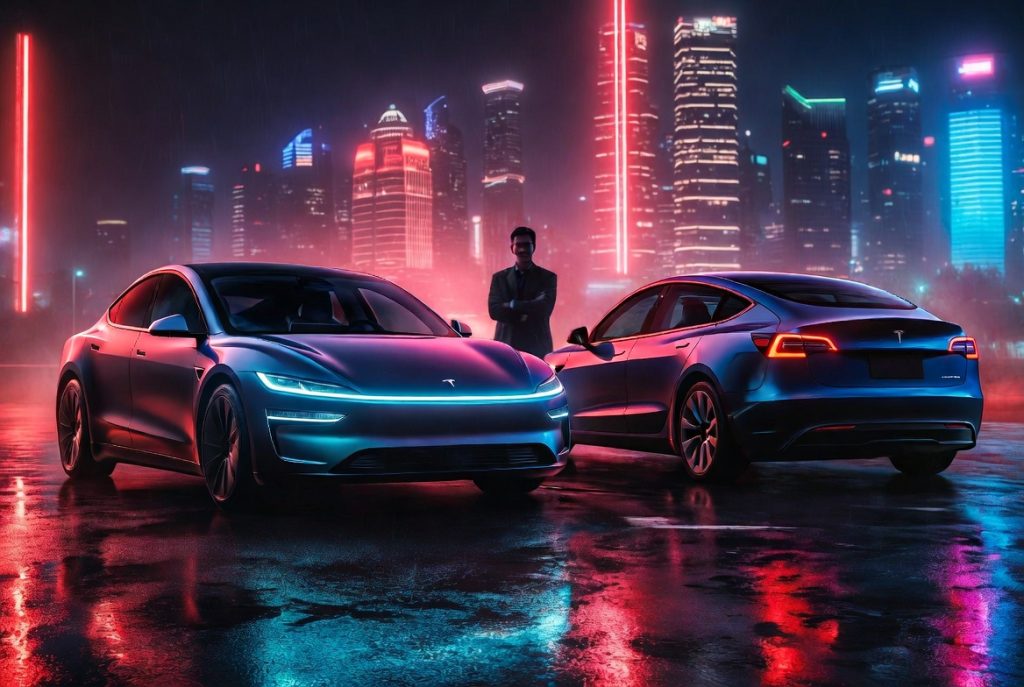
In China's fiercely competitive electric vehicle market, talent is the ultimate weapon. The engineers who design battery systems, the software developers who build autonomous driving stacks, and the executives who build sales networks and understand local consumer psychology are all in enormous demand. The race to hire the best people from established players — and to pull them away from competitors — is as intense as the race to build better cars.
Against this backdrop, Xiaomi's recruitment of Kong Yanshuang sent a clear signal to the entire Chinese automotive industry: the consumer electronics giant, which only entered the EV market with its SU7 sedan, is playing for keeps. Kong is not a typical automotive hire. He is an executive who spent years at Tesla China helping build the American company's sales network and driving the extraordinary volume growth that transformed Tesla from a niche premium import into a mainstream force in China's EV market.
Now Kong is applying those hard-won skills to Xiaomi's automotive division. He will serve as Director of Xiaomi Auto, succeeding Li Xiaorui in what is clearly a leadership transition designed to bring sharper commercial focus to a division that has received enormous investment and is now being tested in the real market with the SU7 launch. The appointment comes at a pivotal moment — Xiaomi Auto must convert its impressive early buzz into sustainable sales volume.
This comprehensive analysis examines Kong Yanshuang's background and what he achieved at Tesla China, the challenges and opportunities facing Xiaomi Auto, the competitive dynamics of China's EV market, what Kong's appointment signals about Xiaomi's automotive strategy, and what the future holds for a company that has bet its next decade on becoming a major player in the world's largest and most competitive electric vehicle market.
| KEY CONTEXT Why This Appointment Matters
Kong Yanshuang helped build Tesla's China sales network during the years when Tesla grew from a marginal player in China to one of the top-selling EV brands. His intimate knowledge of the China market, combined with Xiaomi's established brand and distribution infrastructure, creates a potentially powerful combination for Xiaomi Auto's commercial scale-up. |
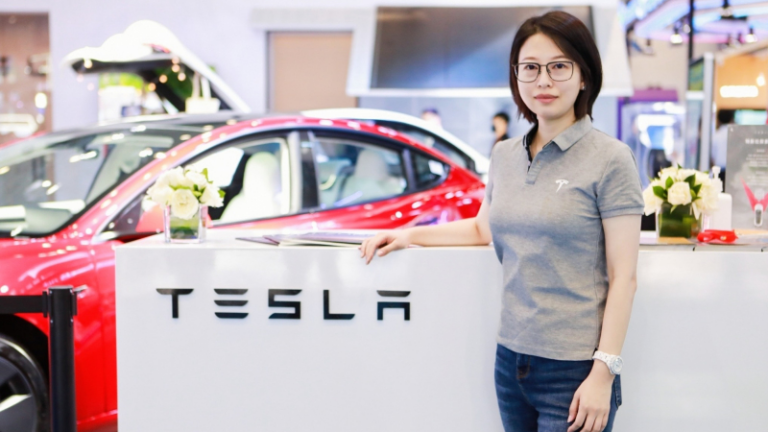
Kong Yanshuang — The Executive Tesla Built
Tesla China — A Transformation Story
To understand why Kong Yanshuang's hire matters, it is necessary to understand what Tesla accomplished in China during his tenure — and how extraordinary that achievement was. When Tesla began selling cars in China in the early 2010s, it faced an almost impossibly difficult challenge. It was a foreign brand in a market that had deep cultural preference for domestic products. It was a startup in a market dominated by established automotive giants. Its cars were expensive to import, expensive to maintain, and came with limited local service infrastructure.
The establishment of the Shanghai Gigafactory — announced in 2018 and operational in 2019 — changed everything. Local manufacturing allowed Tesla to dramatically reduce prices, eliminate import tariffs, and build a genuine local supply chain. But manufacturing capacity alone does not create sales. What drove Tesla's explosive China growth was the combination of competitive products, aggressive pricing strategy, and — critically — an effective local sales and distribution network.
This is where executives like Kong Yanshuang played a crucial role. Building Tesla's network of experience stores in China, training sales teams, adapting Tesla's direct-to-consumer sales model to Chinese consumer expectations and preferences, and expanding Tesla's geographic presence across China's vast and diverse market required deep local knowledge and executional skill. Kong's contribution to this network-building phase left him with expertise that is directly applicable to Xiaomi Auto's current challenge.
What Kong Accomplished at Tesla
While the specific details of Kong Yanshuang's tenure and responsibilities at Tesla have not been fully disclosed publicly, his career trajectory and the context of his appointment to Xiaomi Auto point to several key areas of expertise:
- Sales network expansion: Building and managing Tesla's retail presence across China, including the selection of locations, store design and customer experience, and partnership with local operators where appropriate.
- Sales volume growth: Tesla China's sales grew from tens of thousands of units in 2019 to several hundred thousand by the mid-2020s. Executives who drove this growth developed deep understanding of Chinese EV consumer psychology, competitive positioning, and sales optimization.
- Market development: Expanding Tesla's presence beyond China's tier-1 cities (Shanghai, Beijing, Shenzhen, Guangzhou) into the vast tier-2 and tier-3 city markets that represent enormous untapped potential for EV adoption.
- Competitive intelligence: Operating in China's EV market means constant awareness of domestic competitors — BYD, NIO, Li Auto, XPENG, and dozens of others — and the ability to position Tesla effectively against a rapidly improving domestic field.
- Government and regulatory navigation: Selling and manufacturing electric vehicles in China involves navigating complex regulatory requirements, government incentives, and relationships that require both knowledge and sensitivity.
The combination of these skills makes Kong precisely the kind of executive that Xiaomi Auto needs as it transitions from a product launch story to a sustainable automotive business. Designing and manufacturing the SU7 was a major achievement; selling hundreds of thousands of them over the next five years is an entirely different challenge.
The Decision to Leave Tesla
The decision to leave Tesla for Xiaomi must have been carefully considered. Tesla remains one of the most prestigious names in the global automotive industry and continues to invest heavily in China. For an executive who had built his career within Tesla China, leaving represented both an opportunity and a risk.
The opportunity is clear: Xiaomi Auto, at its current stage, offers the kind of ground-floor leadership opportunity that is rare in established companies. As Director of Xiaomi Auto, Kong will have the chance to define the strategic direction of a major product division at a company that is one of China's most recognized technology brands. If Xiaomi Auto succeeds in becoming a major EV player, Kong's contribution will be central to that success story.
The risk is equally clear: Xiaomi is an EV startup competing in the world's most competitive EV market against established players with years of manufacturing experience, established supply chains, and large installed customer bases. The SU7 has generated impressive early interest, but translating early momentum into long-term market position is an enormous challenge that has defeated many well-funded EV startups globally.
The fact that Kong made the move suggests he sees Xiaomi's advantages — brand recognition, ecosystem integration, price competitiveness, and financial resources — as sufficient to overcome the disadvantages of being a relative newcomer to automotive manufacturing.
Xiaomi Auto — From Smartphones to Electric Cars
The Bold Automotive Bet
When Xiaomi CEO Lei Jun announced in March 2021 that the company would enter the electric vehicle market, the reaction in the industry was a mix of skepticism and cautious interest. Lei Jun himself acknowledged the audacity of the move, calling it the biggest decision of his entrepreneurial life and committing to personally lead the automotive project. He staked not just Xiaomi's resources but his personal reputation on the bet that a consumer electronics company could succeed in automotive manufacturing.
The decision was audacious for good reasons. Building cars is fundamentally different from building smartphones. Automotive manufacturing requires managing supply chains of tens of thousands of components, maintaining quality control across complex mechanical and electrical systems, building service and repair networks, navigating automotive safety regulations, and managing the enormous capital intensity of building and operating manufacturing facilities. The history of EV startups — including several well-funded American companies — includes many failures despite significant capital and talent.
Yet the logic of Xiaomi's automotive entry was compelling. China's EV market is the world's largest and fastest-growing. Chinese consumers have shown strong preference for domestically produced EVs over foreign alternatives. Xiaomi already has extraordinary brand recognition across China — the kind of trust and enthusiasm that takes years for an automotive startup to build from scratch. And the convergence of automotive and consumer electronics, as cars become increasingly software-defined, plays to Xiaomi's core strengths.
The SU7 — Xiaomi's Opening Statement
The Xiaomi SU7 sedan was the company's first production vehicle and the product that defined Xiaomi Auto's initial positioning. Launched in 2024, the SU7 generated enormous pre-launch buzz in China — partly because of the company's aggressive social media presence and community engagement around the car, and partly because the pricing and specifications were genuinely competitive.
The SU7 was positioned as a premium performance sedan at a price that undercut equivalent offerings from NIO, Tesla, and other established players significantly. It featured Xiaomi's HyperOS deep integration, allowing seamless connection with Xiaomi smartphones, smart home devices, and the broader Xiaomi ecosystem. For existing Xiaomi ecosystem users — a massive base given Xiaomi's smartphone and IoT market share — this integration represented genuine functional value.
The design of the SU7 was deliberately ambitious — a sleek, aerodynamic sedan that drew comparison to the Porsche Taycan in its visual language. This was intentional brand positioning: Xiaomi wanted to establish itself as a premium product maker in automotive, not a budget alternative. The interior featured a large central display running a version of HyperOS and was designed to showcase the tight integration between the car and the broader Xiaomi digital ecosystem.
| #1
China EV Market World's largest EV market by volume |
SU7
First EV Model Xiaomi's opening automotive statement |
2021
Market Entry Decision Lei Jun's bold automotive commitment |
From Launch to Scale — The Commercial Challenge
The SU7's launch generated impressive demand signals. Order books opened to significant interest, and Xiaomi's existing community gave the brand a marketing advantage that pure automotive startups cannot replicate. But the automotive business is ultimately measured not in launch-day enthusiasm but in sustained delivery volume, customer satisfaction, service quality, and long-term customer retention.
This is precisely where Kong Yanshuang's expertise becomes critical. The SU7 needs to move from a launch story to a high-volume production and sales operation. Xiaomi needs to build service infrastructure across China to support the growing fleet of SU7 owners. It needs to develop a sales team and sales process that can efficiently convert the brand interest Xiaomi enjoys into consistent vehicle purchases. And it needs to plan and execute the next models in the Xiaomi Auto lineup to sustain momentum beyond the initial SU7 launch.
Li Xiaorui, Kong's predecessor as Xiaomi Auto Director, oversaw the launch phase of the automotive project. Kong's appointment suggests Xiaomi believes the launch phase is complete and the company is now entering the commercial scale-up phase — a phase that requires different leadership skills and experience. Sales executives with high-volume market experience, like Kong, are valued differently than product launch specialists.
The China EV Market — The World's Most Competitive Arena
Scale and Dynamics of China's EV Market
China's electric vehicle market is unlike any other in the world. It is the largest EV market by volume, accounting for more than half of all global EV sales. It is also the most competitive, with dozens of domestic manufacturers competing alongside international brands like Tesla, Volkswagen, and BMW. The pace of product launches, price adjustments, and competitive maneuvers is relentless — what is a competitive offering one quarter can be outdated the next.
The Chinese EV market has also evolved in character. In its early years, government subsidies and policy support drove much of the growth, and many buyers were motivated as much by subsidies and license plate advantages as by the products themselves. The removal or reduction of many subsidies has forced EV makers to compete more on product merit, price competitiveness, and customer experience — a shift that rewards companies with genuine product advantages and efficient operations.
The domestic manufacturers have emerged as the dominant force in this evolved market. BYD, with its vertical integration from battery cells to vehicles and its broad price range from budget to premium, is the undisputed volume leader. Li Auto, NIO, and XPENG have established strong positions in specific segments. New entrants like AITO (backed by Huawei) and Xiaomi are challenging established players with technology-forward positioning.
The China EV Market Landscape
| Brand | Origin | 2024 China EV Sales (est.) | Key Model |
| BYD | China | 3.7 million units | Seagull, Han, Atto 3 |
| Tesla China | USA | ~700,000 units | Model 3, Model Y |
| AITO (Huawei) | China | Rapid growth | M7, M9 |
| NIO | China | ~220,000 units | ET5, ES6 |
| Li Auto | China | ~500,000 units | L6, L7, L9 |
| XPENG | China | ~190,000 units | G6, P7 |
| Xiaomi Auto | China | Ramping (SU7 launch 2024) | SU7, SU7 Ultra |
Tesla's Position in China and What Kong Learned
Tesla's trajectory in China is both a success story and a cautionary tale. The company grew from a marginal player to a major volume brand on the strength of the Model 3 and Model Y, competitive pricing from local manufacturing, and brand prestige as the EV pioneer. At its peak, Tesla was one of the top-selling EV brands in China, competing directly with the best domestic offerings.
But Tesla has also faced increasing headwinds in China. Domestic competitors have closed the technology gap significantly, particularly in areas that Chinese consumers value: software-defined features, digital integration, over-the-air updates, and value for money. The Model 3 and Model Y, while excellent vehicles, no longer have the distinctive technological lead they once held. And as Sino-American trade tensions have escalated, Chinese consumers have shown increasing preference for domestic alternatives, particularly in categories where domestic products are genuinely competitive.
For Kong Yanshuang, observing Tesla's China trajectory from the inside provides invaluable market intelligence. He has seen what works in China's EV market — the importance of competitive pricing, strong digital integration, robust service networks, and effective community engagement — and what doesn't — overreliance on brand heritage, insufficient responsiveness to local consumer preferences, and the vulnerability of a foreign brand in an increasingly nationalist consumption environment.
This knowledge is directly applicable to Xiaomi Auto's situation. Xiaomi has the domestic brand advantage that Tesla lacks, and Kong's experience helps him understand how to maximize that advantage. The challenge is that many of Tesla's other advantages — years of manufacturing experience, established supply chain relationships, deep Autopilot development — take time to replicate.
Xiaomi's Competitive Position
| Dimension | Xiaomi Auto (SU7) | Tesla China |
| Brand Origin | China (domestic) | USA (foreign brand) |
| Price Range | ~$30,000–$50,000 RMB | ~$230,000–$500,000 RMB |
| Target Market | Mass market + enthusiast | Premium / aspirational |
| Ecosystem Integration | Xiaomi HyperOS deep integration | Tesla App + Autopilot |
| Production Location | Beijing (fully local) | Shanghai Gigafactory |
| Annual Sales Capacity | Ramping — early stage | 500,000+ units/year |
| EV Technology | Advanced (self-developed) | Industry-leading Autopilot |
| Brand Trust (China) | Extremely high (phones) | High (pioneer EV) |
| Key Competitive Edge | Price, ecosystem, local brand | Autopilot, brand prestige |
| Government Relations | Domestic manufacturer — favorable | Foreign brand — friction |
| Kong Yanshuang's Role | New Director — sales strategy | Former China executive |
Kong's Strategic Priorities at Xiaomi Auto
Building the Sales Infrastructure
Kong Yanshuang's most immediate challenge at Xiaomi Auto is building the sales and distribution infrastructure needed to support high-volume sales of the SU7 and future models. Xiaomi Auto currently operates a limited number of dedicated showrooms and experience centers, supplemented by digital sales channels. This may have been adequate for the launch phase, when demand outstripped supply and buyers were self-motivated enthusiasts willing to navigate a less-than-seamless purchase experience.
As the SU7 moves into its growth phase, attracting mainstream buyers who are comparing multiple vehicles and expect a professional, convenient purchase experience, the sales infrastructure needs to expand and professionalize rapidly. This means more showroom locations — not just in tier-1 cities but across the tier-2 and tier-3 markets where the bulk of China's EV growth is occurring. It means sales teams trained not just in product knowledge but in the consultative sales skills needed to guide undecided buyers toward a purchase. And it means integration of the online and offline sales experience in the way that Chinese consumers increasingly expect.
Kong's Tesla experience is directly relevant here. Tesla pioneered the direct-to-consumer automotive sales model in China — experience stores rather than traditional dealerships, online configuration and ordering, home delivery. Xiaomi Auto has already adopted a similar model, but executing it at scale across a large geographic market requires operational excellence that Kong has experience developing.
Leveraging the Xiaomi Ecosystem Advantage
One of Xiaomi Auto's most powerful competitive advantages is its ability to integrate deeply with Xiaomi's existing ecosystem of smartphones, smart home devices, and services. This integration is not merely a marketing talking point — it provides genuine functional value that competing EV brands cannot easily replicate.
A Xiaomi SU7 owner who also uses a Xiaomi smartphone can experience seamless connection between the two devices: phone-as-key functionality, instant syncing of navigation destinations from phone to car, viewing of car status on phone, remote control of car features from the phone. With Xiaomi's smart home ecosystem, the car can become part of the home automation system — the car arriving home triggers the house to turn on lights and set the thermostat to preferred settings.
Kong's strategic task is to make this ecosystem integration a central element of the SU7's sales story — not just a feature to mention in spec sheets, but a lived experience that is compelling enough to persuade Xiaomi ecosystem users that the SU7 is the natural car for them. If even a small percentage of China's tens of millions of active Xiaomi users consider the SU7 seriously because of ecosystem lock-in, that represents an enormous captive audience that no competitor can easily replicate.
Pricing Strategy and Market Positioning
Xiaomi Auto's initial positioning of the SU7 as a premium performance sedan at an accessible price point was a bold and largely successful launch strategy. But as the market evolves and competitors respond with their own competitive offerings, maintaining this positioning requires ongoing strategic management.
Price competition in China's EV market is intense. BYD, NIO, Li Auto, and XPENG all regularly adjust prices to maintain competitiveness, and Tesla has shown willingness to make dramatic price cuts when market conditions demand. Xiaomi Auto will need to manage the SU7's pricing carefully — maintaining the premium brand image that differentiates it from budget alternatives while ensuring the price remains competitive against mid-range rivals like the NIO ET5 and XPENG G6.
Kong's experience with Tesla's China pricing strategy is relevant here. Tesla has navigated the tension between premium brand positioning and competitive pricing more explicitly than almost any other automotive company, regularly making price adjustments that shocked markets and attracted criticism for their disruptiveness. Kong understands from the inside how these decisions are made and what their market consequences are — understanding that will be valuable in guiding Xiaomi Auto's pricing strategy.
Expanding the Model Lineup
The SU7 is just the beginning. Xiaomi Auto's long-term success depends on expanding its model lineup to serve different market segments and buyer profiles. The sedan segment is competitive but not the largest in China's EV market — SUVs and crossovers dominate volume sales. Xiaomi Auto's next models are expected to include an SUV that can compete in the highest-volume segments of the market.
Kong's role in product lineup planning will likely focus on commercial viability — ensuring that planned models target segments with sufficient volume potential, that pricing is calibrated correctly for each segment, and that launch timing is competitive with rival offerings. These commercial considerations complement the engineering and design decisions that other parts of the Xiaomi Auto organization are responsible for.
Broader Implications — What This Move Signals
The Talent War Between Chinese Tech and Foreign Auto
Kong Yanshuang's move from Tesla to Xiaomi is part of a broader pattern that is reshaping China's automotive talent market. As domestic EV companies have grown and matured, they have increasingly attracted talent that previously would have gravitated toward international companies. The career opportunity, compensation, and cultural alignment that Chinese tech companies can offer has made them increasingly competitive for top talent.
This talent migration has accelerated as China's domestic EV industry has demonstrated genuine technical competence. The days when Chinese automotive executives sought positions at foreign companies as the pinnacle of their careers are giving way to an era where top Chinese automotive talent sees domestic companies — particularly technology-forward ones like Xiaomi, NIO, and XPENG — as the most exciting places to build careers.
For international companies like Tesla, this talent competition is significant. As Chinese domestic companies attract executives who understand both the China market and global best practices, the local knowledge advantage that foreign companies carefully cultivated is being eroded. The institutional knowledge that people like Kong Yanshuang built at Tesla now flows to domestic competitors.
What the Appointment Says About Xiaomi's Ambitions
The decision to appoint Kong Yanshuang — specifically a sales and market development executive rather than a technology or manufacturing expert — as Director of Xiaomi Auto is a deliberate signal about where Xiaomi's automotive priorities lie at this stage of development.
Xiaomi has already made significant technology investments. The SU7's battery system, the HyperOS automotive integration, the advanced driver assistance features, and the manufacturing processes are all areas where Xiaomi has committed substantial R&D resources. The appointment of a commercial executive to lead the division suggests that the company believes the technology foundation is sufficiently strong and that commercial scale is now the critical success factor.
This is the right assessment for the current moment. A technically excellent car that doesn't sell in volume is a financial problem. Kong's mandate is to ensure that Xiaomi Auto's technical investments translate into the kind of sales performance that justifies the enormous financial commitment the company has made to enter automotive manufacturing.
The Signal to Competitors
In China's EV market, where every move is watched closely by competitors and analysts, Xiaomi's recruitment of a senior Tesla executive sends a clear competitive message: Xiaomi Auto is not a hobby project or a marketing exercise — it is a serious automotive business making serious competitive moves.
For domestic competitors like NIO, Li Auto, and XPENG, the appointment raises the competitive bar. Xiaomi already has brand recognition advantages that most EV startups lack; adding a senior executive with deep market development experience closes one of the gaps between Xiaomi Auto and more established domestic EV brands. Competitors will be watching Kong's moves carefully to anticipate Xiaomi Auto's sales strategy and network expansion plans.
For Tesla specifically, losing Kong to Xiaomi is more than a personnel setback — it is potentially an intelligence setback. Kong's institutional knowledge of Tesla's China strategy, its sales processes, its network footprint, and its competitive positioning is now available to inform Xiaomi Auto's strategies for competing against Tesla in China's mid-to-premium EV segment.
The Road Ahead for Xiaomi Auto
Short-Term Priorities (2025)
For 2025, Xiaomi Auto's most important objectives are clear. First, ramp SU7 production and delivery to meet demand and demonstrate manufacturing capability at scale. Second, build the service and maintenance infrastructure needed to support the growing SU7 fleet — this is often underestimated as a competitive factor, but customers who have bad experiences with vehicle service become vocal brand detractors. Third, establish Kong Yanshuang's commercial strategy and begin the network expansion needed to reach buyers outside tier-1 cities.
The SU7's first full year of sales will be a critical proof point. Strong, consistent quarterly delivery numbers will reinforce investor confidence and competitive credibility. Any significant manufacturing quality issues, delivery delays, or service failures will generate disproportionate negative attention in a market where every Xiaomi Auto development is closely scrutinized.
Medium-Term Strategy (2026-2027)
The medium-term strategy for Xiaomi Auto will likely involve the launch of at least one SUV model to compete in the highest-volume segments of China's EV market. An SUV from Xiaomi Auto would be expected to generate significantly higher volume than the SU7 sedan and would establish the brand across a broader demographic.
The medium term is also when Xiaomi Auto's autonomous driving development will face market tests. China's EV buyers have become increasingly sophisticated in evaluating ADAS (Advanced Driver Assistance Systems) capabilities, and competing with the likes of Huawei's intelligent driving systems and the domestic adaptations of Tesla's Autopilot requires sustained R&D investment and effective go-to-market communication.
Kong's role in the medium term will likely focus on building the organizational depth that a larger automotive lineup requires — more sales personnel, more service locations, more marketing investment, and the operational systems needed to manage a growing business with multiple models and a large customer base.
Long-Term Vision (2028 and Beyond)
Lei Jun's stated ambition for Xiaomi Auto is to become one of the top five global automotive manufacturers within a decade. This is an extraordinarily ambitious goal that, if achieved, would put Xiaomi in the same tier as Toyota, Volkswagen, and Ford. It would require sales volumes of several million vehicles annually — a scale that Xiaomi Auto is nowhere near today.
The path to that scale runs through several milestones: establishing a strong domestic position in China (which has the scale to support such ambitions), expanding internationally into Southeast Asia and other markets where Xiaomi's consumer electronics brand has strong recognition, and developing competitive technology across battery systems, autonomous driving, and software-defined vehicle features.
Kong's immediate contribution is to the domestic commercial foundation — building the sales and service infrastructure, driving SU7 volume, and establishing Xiaomi Auto's competitive commercial model. The long-term vision depends on this foundation being strong. If the SU7 era proves Xiaomi Auto's commercial model, subsequent models can scale on that foundation.
Kong Yanshuang's Career Journey — A Timeline
| Early Career | China Automotive Industry Foundations
Kong Yanshuang builds foundational experience in China's automotive sector during the early development of the domestic market, establishing the market knowledge and networks that would serve him throughout his career. |
| Tesla China — Early Phase | Joins Tesla During the Critical Expansion
Kong joins Tesla China during the critical period when the company is establishing its mainland China operations and building the retail and sales infrastructure needed to sell directly to Chinese consumers without traditional dealership networks. |
| Shanghai Gigafactory Era | Tesla's China Volume Acceleration
With local manufacturing underway at the Shanghai Gigafactory, Kong helps drive the commercial strategy that accompanies Tesla's dramatic price reductions and volume acceleration. Tesla goes from a premium import to a mainstream EV option. |
| Growth Phase | Network Expansion Across China
As Tesla China's sales network expands beyond tier-1 cities, Kong is involved in the geographic and demographic expansion that deepens Tesla's market penetration across China's diverse regional markets. |
| 2025 | Departure from Tesla and Xiaomi Appointment
Kong Yanshuang departs Tesla China and is appointed Director of Xiaomi Auto, succeeding Li Xiaorui. He takes the role at a critical juncture — as Xiaomi Auto transitions from the SU7 launch phase to commercial scale-up. |
China's EV Industry at an Inflection Point
The Global EV Race and China's Position
China's electric vehicle industry has transformed over the past decade from a government-subsidized nascent sector into the world's most advanced and competitive EV ecosystem. Chinese EV companies now lead in battery technology (CATL is the world's largest battery maker), manufacturing efficiency (BYD produces vehicles at costs that Western competitors cannot match), and software-defined vehicle features (Chinese OEMs consistently lead in in-car entertainment and connectivity features).
This technological and commercial maturity is changing the dynamics of global EV competition. Chinese EV companies are no longer content to serve the domestic market — they are expanding aggressively into Southeast Asia, Europe, and other global markets. BYD has overtaken Tesla in global EV sales. Chinese EV brands are increasingly visible at global auto shows and are beginning to establish dealership and service networks in international markets.
Xiaomi Auto's entry into the EV market comes at this inflection point — when Chinese EV companies are mature enough to compete globally but still building the brand equity and international presence needed for sustained global success. Xiaomi's existing global brand presence in smartphones and consumer electronics gives it a potential head start on international brand recognition that BYD and other domestic EV brands have had to build from scratch.
The Policy Environment
China's government remains a powerful force shaping the EV market. Subsidies, charging infrastructure investment, purchase incentives, and regulatory standards all influence EV adoption rates and competitive dynamics. Domestic manufacturers generally benefit from more favorable policy treatment than foreign brands — advantages in procurement, access to government fleet programs, and favorable regulatory interpretations that can provide meaningful competitive advantages.
For Xiaomi Auto, as a domestic Chinese technology company, these policy tailwinds are significant. As Sino-American trade tensions continue to influence business dynamics, Xiaomi's position as a domestic company insulates it from the geopolitical headwinds that affect Tesla and other foreign automotive brands in China. Kong Yanshuang's experience navigating the policy environment from the Tesla side gives him insight into how domestic companies can exploit these advantages more effectively.
The Technology Convergence
Perhaps the most significant structural trend shaping China's EV industry is the convergence of automotive and consumer technology. Cars are becoming increasingly software-defined, with over-the-air updates, app ecosystems, AI-powered features, and deep integration with smartphones and smart home systems becoming standard expectations rather than premium differentiators.
This convergence plays directly to the strengths of technology companies entering automotive manufacturing — and specifically to Xiaomi's strengths. A company that has spent years developing mobile operating systems, AI algorithms, smart home protocols, and consumer app ecosystems brings capabilities to automotive that traditional car makers are scrambling to acquire. Xiaomi Auto's HyperOS integration is an early demonstration of this advantage.
As autonomous driving matures further and as the car increasingly becomes a computing platform with wheels rather than a mechanical device with some electronics, the competitive advantage of technology companies in automotive will grow. Xiaomi's investment in its automotive software stack is not just about differentiating the SU7 — it is about building the capabilities that will matter most in the next decade of automotive competition.
Conclusion: A Strategic Move with Long-Term Implications
Kong Yanshuang's departure from Tesla and appointment as Director of Xiaomi Auto is more than an executive shuffle. It represents a deliberate strategic choice by Xiaomi Auto to prioritize commercial execution as the company transitions from a product launch story to a sustainable automotive business. And it represents a recognition by an experienced automotive executive that Xiaomi Auto offers a more compelling career opportunity than continuing at a foreign brand in an increasingly difficult domestic environment.
The synergies between Kong's experience and Xiaomi Auto's current needs are genuine. He understands the China EV market at an operational level that few executives can match. He has seen what it takes to build a sales network and drive volume growth in one of the world's most challenging automotive markets. And he has watched Tesla's China journey from the inside — understanding both its successes and the limits of a foreign brand's advantages in an increasingly domestically competitive market.
For Xiaomi Auto, the commercial challenge ahead is formidable. The SU7 launch demonstrated that Chinese consumers are interested in what Xiaomi has to offer in automotive. Kong's mandate is to convert that interest into consistent, high-volume sales that justify the enormous investment Xiaomi has made in entering automotive manufacturing. This requires building infrastructure, developing sales teams, expanding service networks, managing pricing strategy, and planning the model lineup expansion that will carry Xiaomi Auto from a one-model startup to a multi-segment automotive brand.
The combination of Xiaomi's existing brand equity, Kong's commercial expertise, and the structural tailwinds of China's continued EV adoption creates a genuinely promising trajectory for Xiaomi Auto. Whether the company can execute against this promise — in a market where dozens of well-funded competitors are pursuing the same consumers — will be determined over the next three to five years. Kong Yanshuang's appointment marks the beginning of that decisive phase.
| FINAL ASSESSMENT Will Xiaomi Auto Succeed?
Xiaomi Auto has three critical advantages: an established domestic brand, deep ecosystem integration, and now a commercially experienced director in Kong Yanshuang. The challenges — manufacturing scale, service network, technology development, and intense competition — are equally real. The SU7's trajectory over the next 18 months will be the most important indicator of whether Xiaomi's automotive bet will pay off. |
FAQ (Frequently Asked Questions)
1. Who is Kong Yanshuang?
Kong Yanshuang is a former senior executive at Tesla China who played a key role in expanding Tesla’s sales network and driving EV adoption across China.
2. Why did Kong Yanshuang join Xiaomi Auto?
He joined Xiaomi Auto to lead its next growth phase, focusing on scaling sales, expanding distribution, and turning early demand for the SU7 into long-term commercial success.
3. What is Xiaomi Auto?
Xiaomi Auto is Xiaomi’s electric vehicle division, launched after the company announced its EV ambitions in 2021 under CEO Lei Jun.
4. What is the Xiaomi SU7?
The Xiaomi SU7 is Xiaomi’s first electric car, positioned as a premium yet competitively priced sedan with deep integration into Xiaomi’s ecosystem.
5. Why is this executive move significant?
It signals Xiaomi’s shift from product launch to large-scale commercialization, bringing in leadership experienced in high-volume EV sales.
6. How competitive is China’s EV market?
China has the world’s most competitive EV market, with major players like BYD, NIO, XPENG, and Li Auto competing aggressively on price, technology, and features.
7. What advantage does Xiaomi have in the EV market?
Xiaomi benefits from strong brand recognition, a massive user ecosystem, and seamless integration between its devices and vehicles.
8. What challenges does Xiaomi Auto face?
Key challenges include scaling production, building a nationwide service network, competing on technology, and maintaining competitive pricing.
9. How does Tesla compare to Xiaomi Auto in China?
Tesla still leads in brand prestige and autonomous driving, but Xiaomi has advantages in local brand appeal, pricing, and ecosystem integration.
10. What is Xiaomi Auto’s long-term goal?
Xiaomi aims to become a top global automaker within the next decade, targeting millions of annual vehicle sales.
Leave a Reply