Comprehensive Veterinary Review: Feline Anorexia, Nutritional Therapeutics, and the Role of Rice in Gastrointestinal Management
2 months ago · Updated 2 months ago
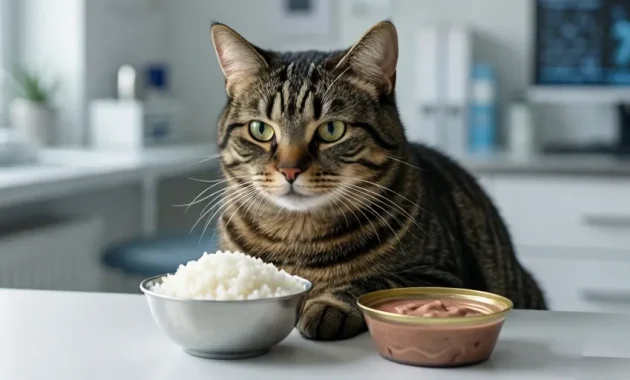
In veterinary medicine, a cat’s refusal to eat—clinically referred to as feline anorexia—is never a behavior to be ignored or dismissed as simple pickiness. Unlike humans or dogs, who can fast for several days without severe metabolic consequences, a cat that experiences prolonged food refusal faces rapid and life-threatening physiological complications.
                  THE ACCELERATED FATAL CATABOLIC LOOP
  [ Complete Food Refusal / Feline Anorexia ] ──► Rapid Fat Store Mobilization
                                                          │
                                                          ▼
  [ Overloaded Liver Processing ] ──► Hepatic Lipidosis (Fatty Liver Disease)
                                                          │
                                                          ▼
  [ Systemic Liver Failure ]      ──► Complete Metabolic Collapse & Death
When a cat stops eating, their metabolism quickly shifts to burn internal fat stores for energy. This massive rush of lipids can overwhelm the liver, leading to Hepatic Lipidosis (Fatty Liver Disease). If left untreated, this condition can cause total liver failure and death in as little as 2 to 3 days, especially in overweight cats.
Faced with a sick, anorexic cat, worried owners often look for quick, home-cooked alternatives to kickstart their pet's appetite. Because rice is a gentle, easily digestible starch for humans, the question frequently arises: Can cats eat rice, and can it help restore their appetite?
This comprehensive, human-authored clinical review examines the strict biological limits of feline carbohydrate metabolism, evaluates the specific conditions where rice can serve as a temporary therapeutic aid, and outlines a safe step-by-step strategy for managing an anorexic cat.
The Evolutionary and Enzymatic Reality of Carbohydrate Metabolism
To understand how a cat reacts to eating rice, we must first look at the unique internal chemistry of an obligate carnivore. Over millions of years of hunting prey, cats completely lost the metabolic pathways needed to digest large amounts of starches and sugars.
                     THE ENZYMATIC ARCHITECTURE COMPARISON

  [ OMNIVORE METABOLISM (Human/Dog) ]
  Salivary Amylase ──► Intestinal Amylase ──► Glucokinase ──► Rapid Starch Breakdown

  [ OBLIGATE CARNIVORE METABOLISM (Cat) ]
  Zero Salivary Amylase ──► Low Intestinal Amylase ──► Hexokinase ──► Limited Sugar Processing
1. The Absent Salivary Pathway
The breakdown of carbohydrates in humans and dogs begins the moment food enters the mouth, thanks to a digestive enzyme in saliva called amylase. Cats lack salivary amylase entirely. Their saliva is formulated solely to lubricate meat and bones for easy swallowing, meaning starches arrive in their stomach completely unbroken down.
2. Reduced Pancreatic and Intestinal Amylase Output
While a cat's pancreas does produce a small amount of amylase to process sugars in the small intestine, the volume is incredibly low compared to omnivores. If a cat's digestive tract is overloaded with a large portion of rice, the limited supply of amylase will be quickly exhausted, leaving the remaining starch to sit undigested in the gut.
3. Downregulated Liver Enzymes
Once carbohydrates are absorbed into the bloodstream as glucose, omnivores rely on a liver enzyme called glucokinase to process large spikes in blood sugar. Cats do not possess functional glucokinase pathways; they rely instead on hexokinase, an enzyme that can only handle small, steady trickles of glucose.
Clinical Reality: Feeding a cat a high-carbohydrate diet like rice provides no real nutritional benefit and can easily lead to persistent high blood sugar (hyperglycemia), placing a heavy strain on the pancreas and increasing the long-term risk of feline diabetes and obesity.
- 1. The Absent Salivary Pathway
- 2. Reduced Pancreatic and Intestinal Amylase Output
- 3. Downregulated Liver Enzymes
Clinical Guidelines When Rice Is Therapeutic vs. Toxic
Although rice holds no daily nutritional value for a healthy cat, it is not inherently toxic. In specific clinical scenarios, it can be used as a temporary tool to manage certain gastrointestinal issues.
                        THE THERAPEUTIC RICE RADAR
                                     │
         ┌───────────────────────────┴───────────────────────────┐
         ▼                                                       ▼
   [ CLINICAL BENEFITS (Short-Term) ]                     [ CLINICAL RISKS (Long-Term) ]
   • Firms up loose, watery stools.                       • Triggers severe nutritional deficiencies.
   • Soothes irritated intestinal lining.                 • Increases risk of obesity and diabetes.
   • Easy to digest during acute diarrhea.                • Ferments in the gut, causing gas and bloating.
1. Temporary Management of Acute Diarrhea
When a cat is suffering from bouts of acute diarrhea, their intestinal lining becomes highly inflamed, making it difficult to process heavy proteins and fats. In this specific situation, offering a tiny portion of plain, well-cooked rice can be beneficial:
Stool Firming Action: Rice is highly soluble and absorbs moisture along the intestinal wall, helping to bind loose stools together.
Gastrointestinal Rest: Because white or brown rice is bland and easy to break down, it allows an irritated digestive tract to rest and recover.
2. Brown Rice vs. White Rice: The Vet's Recommendation
When diarrhea or constipation is the primary issue, some veterinarians may recommend using brown rice in tiny amounts because of its higher natural fiber and nutrient content. However, this must be done with extreme caution. If a cat is not used to processing fiber, brown rice can cause gas, abdominal bloating, and mild vomiting.
3. Strict Contraindications: When Rice Must Be Banned
Diagnostic Roadmap for Managing an Anorexic Cat
If your cat is refusing to eat their daily food, do not try to fix the problem by offering them a bowl of plain rice. Feline anorexia is a clinical symptom of an underlying issue that requires a systematic approach to diagnose and treat:
Step-by-Step Loss of Appetite Protocol
  [ Day 1: Detection ] ──► Inspect the mouth for dental disease, swelling, or broken teeth.
                                  │
                                  ▼
  [ Day 1: Intervention ]──► Transition to highly palatable, smelly wet food or tuna broths.
                                  │
                                  ▼
  [ Day 2: Escalation ]  ──► If fasting hits 24-48 hours, seek emergency veterinary care.
Step 1: Conduct a Thorough Oral Inspection
Cats often abruptly stop eating because of hidden pain in their mouth. Wear gloves and gently lift your cat's lips to check for common oral issues:
Look for bright red, bleeding gums (gingivitis) or deep ulcers on the tongue.
Check for loose, fractured, or decayed teeth (feline resorptive lesions).
Look for foreign objects, like a stray fish bone or a piece of plastic string, caught between their teeth or under their tongue.
Step 2: Transition to High-Aroma Commercial Diets
If the mouth looks healthy, your cat may simply be suffering from mild nausea or temporary taste fatigue. Instead of offering bland starches like rice, try enticing them with highly palatable, moisture-rich foods designed for sensitive stomachs:
Switch to specialized options like PRO PLAN Adult Sensitive Skin & Stomach Salmon & Tuna. This formula uses easily digestible proteins that supply essential amino acids while including a safe, controlled amount of rice tailored specifically to a cat's metabolic needs.
Warm up wet food slightly to body temperature ($38.5^\circ\text{C}$) to release its natural aromas, which helps stimulate the cat's sense of smell and trigger their desire to eat.
Step 3: Know When to Seek Immediate Veterinary Care
If your cat completely refuses food for more than 24 to 48 hours, skip home remedies entirely and take them to a veterinary clinic immediately. The vet will perform an ultrasound, check for internal blockages, and run comprehensive blood tests to evaluate liver and kidney function, ensuring life-saving treatment can begin before Hepatic Lipidosis sets in.
Conclusion: Balancing Intuition with Feline Biology
While human intuition often suggests offering a simple bowl of rice to soothe an upset stomach or tempt a sick pet, a cat's true biological needs are very different. As strict obligate carnivores, cats are built to thrive on animal proteins and fats, not grains and starches.
Rice can be a helpful, short-term tool for firming up stools during a brief bout of diarrhea, but it should never be used as a primary meal or a long-term solution for an anorexic cat.
                    THE LIFELONG WELLNESS BALANCING ACT
  [ High-Protein Feline Diet ] ──► Sustains muscle mass, liver health, and daily energy.
  [ Tiny Starch Additions ]    ──► Useful only as a temporary aid for digestive distress.
When your cat loses their appetite, focus on offering high-quality, biologically appropriate foods tailored specifically for sensitive stomachs. By prioritizing correct animal nutrition and partnering with your veterinarian at the first sign of illness, you can protect your cat's liver function and support a safe, speedy recovery.
FAQ (English)
1. Can cats eat rice?
Yes, cats can eat plain cooked rice in small amounts. Rice is not toxic to cats, but it is not a biologically necessary part of their diet because cats are obligate carnivores that require animal-based proteins and fats.
2. Is rice good for a cat that refuses to eat?
No. Rice should not be used as a solution for a cat that has stopped eating. Loss of appetite in cats can indicate a serious medical problem, and prolonged fasting may lead to hepatic lipidosis (fatty liver disease). A veterinary examination is recommended if a cat refuses food for more than 24 hours.
3. Can rice help with diarrhea in cats?
In some cases, small amounts of plain, well-cooked rice may help firm loose stools during mild, short-term digestive upset. However, persistent diarrhea requires veterinary attention to identify the underlying cause.
4. Should I feed white rice or brown rice to my cat?
If a veterinarian recommends rice, plain white rice is generally easier to digest. Brown rice contains more fiber and nutrients but may cause bloating or digestive discomfort in some cats.
5. Can cats live on a rice-based diet?
No. Rice lacks essential nutrients cats need, including taurine, arachidonic acid, and sufficient animal protein. A rice-based diet can lead to severe nutritional deficiencies and serious health problems.
6. How much rice can a cat safely eat?
Rice should only be offered occasionally and in very small quantities. It should never make up more than a small portion of a cat's meal and should not replace complete and balanced cat food.
7. Can rice cause digestive problems in cats?
Yes. Excessive rice consumption may cause bloating, gas, constipation, digestive discomfort, or poor nutrient intake, especially when fed regularly.
8. What should I feed a cat that has lost its appetite?
Offer highly palatable wet cat food, warmed slightly to enhance aroma. Specialized sensitive-stomach diets, veterinary recovery foods, or veterinarian-recommended appetite stimulants may also help depending on the cause.
9. When should I take my cat to the veterinarian for not eating?
Seek veterinary care immediately if your cat refuses food for more than 24 hours, especially if accompanied by vomiting, lethargy, weight loss, jaundice, dehydration, or other signs of illness.
10. Can kittens eat rice?
Kittens should primarily eat nutritionally complete kitten food. Rice provides little nutritional value for growing kittens and should not be used as a regular part of their diet unless specifically recommended by a veterinarian.
11. Is rice safe for cats with diabetes?
Rice is relatively high in carbohydrates and may contribute to blood sugar fluctuations. Diabetic cats generally benefit from high-protein, low-carbohydrate diets, so rice should be avoided unless specifically advised by a veterinarian.
12. What is the biggest danger when a cat stops eating?
The most serious risk is hepatic lipidosis (fatty liver disease), a potentially fatal condition that can develop when a cat's body rapidly mobilizes fat stores during prolonged periods of fasting. Early veterinary intervention is critical.