The Persian Cat Nutritional Blueprint: Feline Brachycephalic Physiology, Metabolic Management, and Dietary Architecture
2 months ago
The Persian cat stands as one of the most structurally distinct and visually arresting breeds within the domestic feline landscape. Characterized by an ultra-typing visage, massive orbital presentation, and a dense, dual-layered longhair coat, the Persian is a triumph of selective breed development. Yet, the very morphological traits that define the breed's aesthetic standard introduce complex, highly specific physiological vulnerabilities.
For the first-time Persian owner, rescue coordinator, or feline nutritional advocate, navigating the dietary market can be overwhelming. Standard commercial cat foods are formulated for the generalized mesocephalic feline—cats with long muzzles, athletic frames, and standard coat lengths. Forcing a Persian cat to adapt to a generic diet frequently results in mechanical feeding failure, gastrointestinal distress, chronic hairball impactions, and systemic metabolic decay.
This comprehensive operational guide functions as a definitive blueprint for Persian nutritional management. It breaks down the mechanical, metabolic, and life-stage factors required to build an optimized nutritional program for this unique breed.
Morphological Determinants: How Physical Structure Dictates Nutritional Delivery
To design an effective nutritional program for a Persian cat, one must first analyze the breed’s anatomy. The Persian's skull configuration directly changes how it picks up, chews, and processes its food.
                  [Brachycephalic Craniofacial Layout]
                                   │
         ┌─────────────────────────┴─────────────────────────┐
         ▼                                                   ▼
[The Prehensile Tongue Shift]                       [Maxillary Crowding]
• Muzzle shortened; teeth inverted                  • Teeth crowded into a small jaw
• Cannot "scoop" standard round kibble              • Inefficient mechanical breakdown
• Must lap food with underside of tongue            • Increased risk of periodontal plaque
         │                                                   │
         └─────────────────────────┬─────────────────────────┘
                                   ▼
                     [Ergonomic Kibble Adaptation]
                     Requires specialized crescent
                     or almond-shaped kibbles for
                     easy tactile grasp.
The Brachycephalic Grasping Mechanism
The definitive physical trait of the modern Persian is brachycephaly—a significant shortening of the neurocranium and facial skeleton. This brings the nasal passages, maxilla, and mandible into a vertical alignment, creating a flat facial profile.
This facial structure completely alters how the cat takes in food:
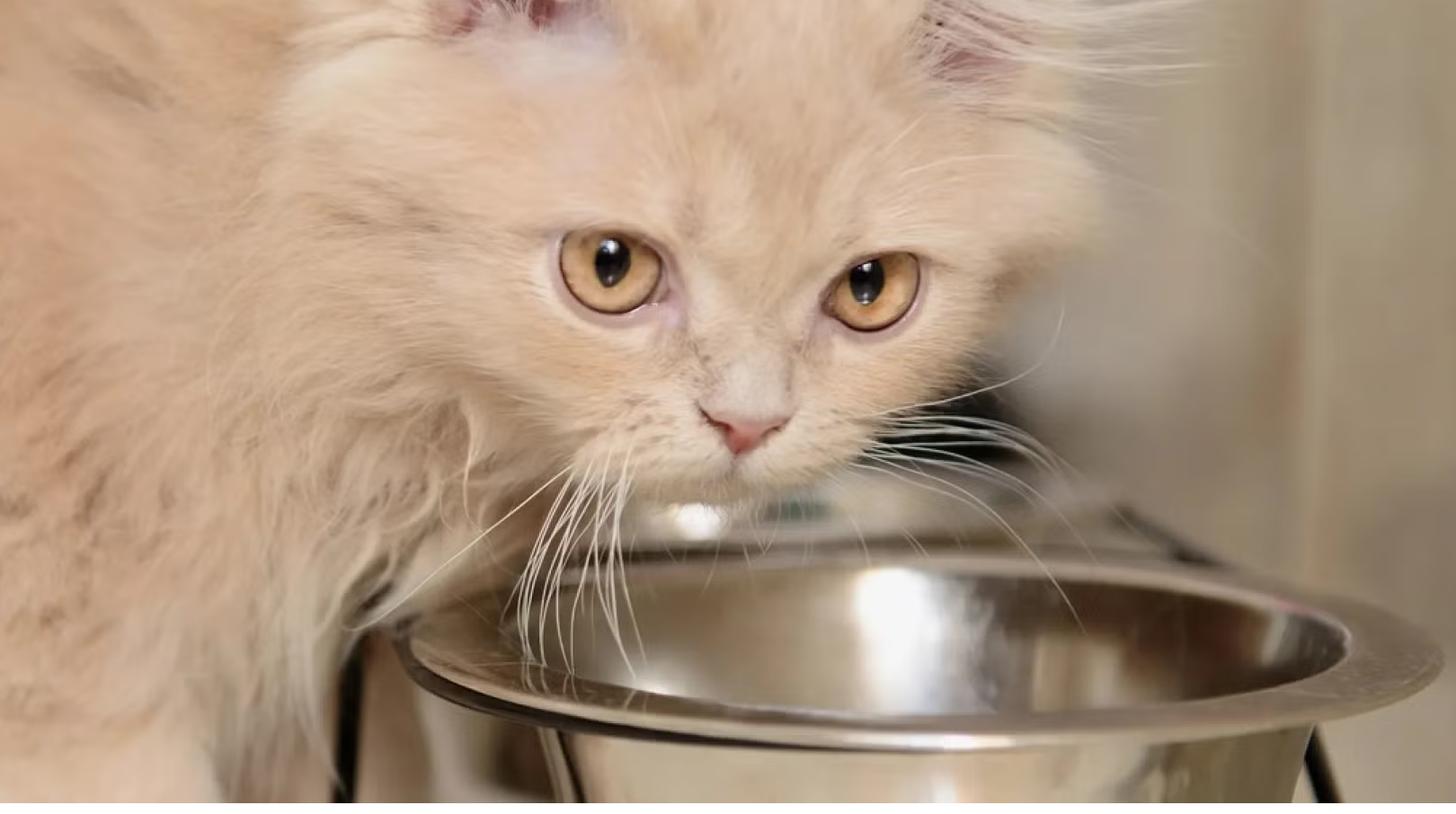
The Sublingual Lap: Normal cats use their incisors and upper lips to seize food pieces. A Persian cat cannot coordinate this mechanical movement because its upper jaw is recessed behind the lower jaw (prognathism). Instead, they rely on a sublingual grasping style, using the underside of their muscular tongue to lap up kibble or wet food.
Kibble Shape Requirements: If you feed a Persian standard, tiny round kibbles, the food will constantly slip away from their tongue, rolling out of the bowl and causing immense frustration. To fix this mechanical issue, they need large, ergonomically shaped kibbles—such as crescent, almond, or cross-shaped structures. These shapes provide an edge that the papillae of the tongue can grip, allowing the cat to lift the food into its mouth easily.
Periodontal Vulnerability and Jaw Crowding
Because the facial bones are compressed, the Persian’s 30 permanent teeth have very little space to develop normally. This leads to crowded tooth roots, tilted dental angles, and malocclusions.
Because the teeth are crowded together, food debris easily traps between them, accelerating the buildup of saliva, bacteria, and calcium carbonate to form tartar.
If their diet does not provide mechanical scraping across the teeth, Persians can develop early periodontal disease, gingivitis, and tooth root abscesses before they turn three years old.
- 1. Why do Persian cats need a different diet compared to other cat breeds?
- 2. What is the best type of food for a Persian cat?
- 3. Why is kibble shape important for Persian cats?
- 4. How much protein does a Persian cat need?
- 5. Why do Persian cats experience more hairballs than many other breeds?
- 6. What ingredients help reduce hairball formation?
- 7. Should Persian cats eat wet food or dry food?
- 8. How does hydration affect Persian cat health?
- 9. Are Persian cats prone to kidney disease?
- 10. What nutrients support kidney health in Persian cats?
- 11. Are Persian cats at risk for heart disease?
- 12. Which nutrients support heart health in Persian cats?
- 13. How can I identify a high-quality Persian cat food?
- 14. What ingredients should Persian cat owners avoid?
- 15. Why is coat quality directly connected to nutrition?
- 16. What fats are beneficial for a Persian cat's coat?
- 17. Can a poor diet increase matting?
- 18. How often should a Persian cat be fed?
- 19. How should I transition my Persian cat to a new food?
- 20. What type of bowl is best for a Persian cat?
- 21. Can Persian cats live on dry food alone?
- 22. How can I tell if my Persian cat's diet is working well?
- 23. Do Persian kittens need different nutrition than adults?
- 24. Should senior Persian cats have a special diet?
- 25. What is the single most important nutrition rule for Persian cats?
Dermatological Mechanics: High-Density Hair Synthesis and the Sebaceous Matrix
The Persian coat is a massive biological machine. It features a dense, insulating undercoat covered by a long, fine topcoat that can grow up to 20 centimeters in length. Maintaining this large network of fur places a massive, non-stop demand on the cat's metabolic resources.
                          [The Feline Protein Drain]

   Total Daily Protein Intake ──► 30% Consumed by Hair Growth & Skin Regeneration
                                 ──► 70% Distributed to All Other Internal Organs
The Metabolic Cost of Keratin Production
Up to 30% of a cat’s daily protein requirement is used just to maintain their skin and fur. For a longhaired Persian, this demand is even higher. Hair is made up almost entirely of keratin, a fibrous structural protein packed with sulfur-containing amino acids like methionine and cysteine.
If a Persian's diet lacks highly bioavailable animal proteins, the body will route its limited amino acids to vital internal organs first. This starves the coat, leading to a dull appearance, fragile hair strands, a brittle texture, and excessive shedding.
The Lipid Barrier and Sebaceous Secretion
Persian skin contains a high density of sebaceous glands that produce sebum—a natural oil blend that coats the hair shaft, making it waterproof and giving it a glossy shine. To prevent this oil from turning into a sticky paste that causes painful fur mats, the diet must contain a precise balance of specific fats:
Gastrointestinal Transit Dynamics: The Constant Threat of Hairball Impaction
Because Persian cats are relatively calm and inactive, they spend a large portion of their waking hours grooming. Their long, fine hairs easily catch on the backward-facing barbs (papillae) of their tongue, forcing the cat to swallow large amounts of loose fur every day.
       [The Safe Fecal Pathway]                 [The Intestinal Impaction Pathway]
             ┌───────────┐                             ┌───┐
             │           │                             │ █ │  ◄── (Fur binds with food fats)
             │  Soluble  │                             │ █ │  ◄── (Forms a hardened trichobezoar)
             │  Psyllium │                             │ █ │  ◄── (Blocks the duodenal opening)
             │  Fibers   │                             └───┐
             │           │
             └───────────┘
     (Sweeps fur out via stool)                     (Requires emergency surgery)
The Physics of Trichobezoar Formation
Once loose fur enters the stomach, the stomach acid cannot dissolve the tough keratin strands. In a standard shorthaired cat, these hairs pass through the stomach valve (pylorus) into the intestines without issue.
In the Persian, however, the sheer volume and length of the swallowed fur can cause individual strands to mat together inside the stomach. As this fur mixes with undigested food fats and mucus, it rolls into a hardened mass called a trichobezoar (hairball).
Gastric Irritation: If a hairball grows too large to pass into the intestines, it continually irritates the stomach lining, triggering chronic vomiting, low-grade nausea, and a poor appetite.
Intestinal Obstruction: If a large hairball does manage to push through into the narrow small intestine, it can jam inside the duodenum or jejunum. This creates a life-threatening blockage that cuts off blood flow and requires emergency surgery to correct.
Dietary Fiber Solutions
To prevent hairballs from forming, a Persian’s diet needs a specific blend of two different fiber types:
Insoluble Structural Fibers (Cellulose, Miscanthus Grass): These tough fibers do not dissolve in water. They act like a physical broom against the inside of the digestive tract, catching loose hairs and keeping them moving along with the rest of the digesting food.
Mucilaginous Soluble Fibers (Psyllium Seed Husk): When psyllium fiber meets water in the stomach, it swells into a slick, slippery gel. This gel coats the swallowed fur strands, allowing them to glide smoothly through the intestines and exit safely in the stool before they can mat together.
Cardiovascular and Renal Risk Management: PKD and HCM Protocols
Genetics play a large role in Persian health, and their diet can be tailored to support internal organs that are vulnerable to hereditary diseases.
                       [Genetic Risk Profiling]
                                   │
       ┌───────────────────────────┴───────────────────────────┐
       ▼                                                       ▼
[Polycystic Kidney Disease (PKD)]            [Hypertrophic Cardiomyopathy (HCM)]
• Fluid cysts slowly crush kidney tissue.   • Heart muscle thickens and becomes rigid.
• Requires low-phosphorus diets.            • Requires sodium restriction.
• Demands high-moisture hydration.          • Requires high taurine & L-carnitine levels.
Polycystic Kidney Disease (PKD) Hydration Protocols
Polycystic Kidney Disease is an inherited condition where fluid-filled cysts slowly grow inside the kidneys, multiplying and crushing the healthy surrounding tissue over time. This can eventually lead to chronic kidney disease.
While genetics dictate whether a cat has the disease, dietary management focuses on reducing the workload on the remaining healthy kidney tissue:
The Crucial Role of Hydration: Cats have a low natural thirst drive; they evolved from desert animals and expect to get most of their water directly from their food. If you feed a Persian exclusively dry kibble, they live in a state of low-grade dehydration. This concentrates their urine and forces their kidneys to work much harder. To protect the kidneys, at least 50% of a Persian’s daily calories should come from high-moisture wet food.
Phosphorus Restriction: High levels of phosphorus in food accelerate kidney damage. A Persian’s diet should use high-quality animal proteins that naturally keep phosphorus levels low, avoiding low-grade meat byproducts that are packed with excess bone scrap.
Hypertrophic Cardiomyopathy (HCM) Defenses
Persians are also prone to Hypertrophic Cardiomyopathy—a condition where the heart's muscular walls become abnormally thick and rigid, reducing its pumping efficiency.
Sodium Management: To protect a cat with early-stage heart disease, avoid foods with excess sodium. High sodium raises blood pressure, placing extra strain on the heart's stiffened ventricles.
Cardiomyocytic Nutrients: Ensure the diet includes plenty of taurine and L-carnitine. These specialized amino acids help the heart muscle pump efficiently and manage fatty acid metabolism within the cardiovascular system.
Life-Stage Dietary Customization Matrix
A Persian cat’s nutritional needs change dramatically as they grow from a young kitten into their senior years.
Commercial Label Analysis: How to Read a Ingredient List
When evaluating commercial pet food options for a Persian cat, look past the colorful marketing imagery on the front of the bag and flip it over to analyze the Guaranteed Analysis and Ingredient List.
   [Premium Quality Label]                     [Substandard/Low-Grade Label]
   • First Ingredient: Deboned Turkey          • First Ingredient: Ground Yellow Corn
   • Specific Fats: Salmon Oil                 • Specific Fats: "Animal Fat" (Anonymous)
   • Added Fibers: Psyllium Husk, Cellulose    • Added Fibers: Peanut Hulls, Wheat Gluten
1. The Primary Protein Source
What to Look For: The first three ingredients must be clearly named animal proteins (such as Deboned Chicken, Turkey, Salmon, or Lamb). These provide the essential amino acids needed for healthy hair growth and muscle maintenance.
What to Avoid: Avoid foods that list generic, unnamed ingredients like "Meat By-Products," "Poultry Meal," or "Animal Digest." These can vary widely in quality and often contain cheap bone scrap that spikes phosphorus levels.
2. Carbohydrate Fillers
What to Look For: Look for easily digestible, low-glycemic carbohydrates like whole brown rice, oats, or peas, kept in low amounts.
What to Avoid: Avoid foods packed with cheap fillers like ground yellow corn, corn gluten meal, wheat flour, or soy hulls. These ingredients raise the carbohydrate content, which can lead to obesity and digestive issues in relatively inactive breeds like the Persian.
3. Preservatives and Synthetics
What to Look For: Choose foods preserved naturally with mixed tocopherols (Vitamin E complexes) or rosemary extract.
What to Avoid: Avoid synthetic chemical preservatives like BHA, BHT, and Ethoxyquin. These are added to extend shelf life cheaply but have been linked to health concerns over long-term use.
Operational Implementation: Transitioning and Portion Protocols
Once you have chosen the right food for your Persian cat, you must introduce it carefully to avoid upsetting their sensitive digestive system.
                      [The 7-Day Dietary Transition]

   Days 1–2: 75% Old, 25% New ──► Days 3–4: 50% Old, 50% New ──► Days 5–6: 25% Old, 75% New ──► Day 7: 100% New Diet
The Seven-Day Transition Schedule
Feline digestive enzymes adapt slowly to changes in food ingredients. Rushing a diet change can cause stomach upset, vomiting, or diarrhea:
Days 1–2: Mix 75% of the old food with 25% of the new food in the bowl.
Days 3–4: Provide a 50% old and 50% new food split.
Days 5–6: Shift the balance to 25% of the old food and 75% of the new food.
Day 7: The transition is complete; you can now serve 100% of the new diet.
Feeding Geometry and Bowl Ergonomics
Because Persian cats have flat faces and use the bottom of their tongue to lap up food, the shape of their food bowl matters:
Never use narrow, deep bowls. These force the cat to jam their face deep inside, bending their whiskers backward against the sides, which causes a stressful condition called whisker fatigue.
Choose wide, shallow saucers. Wide dishes made from stainless steel, ceramic, or glass are ideal. They let the cat pick up food easily without rubbing their whiskers or pressing their flat face against a high rim.
Summary: Proactive Nutritional Sovereignty
The Persian cat's health is closely tied to its diet. You cannot treat this breed like a standard domestic shorthair and expect them to thrive. By understanding the mechanical limits of their flat facial structure, providing the extra protein and lipids their long coat demands, and using targeted fibers to keep hairballs at bay, you can protect your Persian from common breed vulnerabilities.
Choosing a high-quality, biologically appropriate diet is the most effective tool you have to ensure your Persian lives a long, comfortable, and healthy life.
FAQ (Frequently Asked Questions)
1. Why do Persian cats need a different diet compared to other cat breeds?
Persian cats have a unique brachycephalic (flat-faced) skull structure, dense long coats, and a higher tendency toward hairball formation. Their facial anatomy affects how they pick up food, while their long fur increases protein requirements and digestive challenges. A specialized diet helps support easier eating, healthier skin and coat condition, improved digestion, and reduced hairball accumulation.
2. What is the best type of food for a Persian cat?
The best diet for a Persian cat combines high-quality animal protein, moderate healthy fats, adequate fiber, and high moisture content. Premium wet food should make up a significant portion of the diet, while specially designed Persian kibble can provide dental benefits and easier food handling due to its unique shape.
3. Why is kibble shape important for Persian cats?
Because Persian cats have shortened muzzles and altered jaw alignment, they often struggle to pick up small round kibble. Crescent-shaped, almond-shaped, or larger specially designed kibble pieces are easier for them to grasp using their tongue and mouth structure, reducing feeding frustration and food wastage.
4. How much protein does a Persian cat need?
Persian cats require a protein-rich diet because maintaining their long, dense coat consumes a substantial amount of amino acids. High-quality animal proteins such as chicken, turkey, salmon, duck, and lamb should be the primary ingredients. Protein is essential for coat quality, muscle maintenance, immune function, and skin health.
5. Why do Persian cats experience more hairballs than many other breeds?
Persian cats spend a significant amount of time grooming, and their long fur is easily swallowed during the process. Because hair cannot be digested, it can accumulate in the stomach and form hairballs. Without sufficient dietary fiber and hydration, these hairballs can become larger and potentially cause digestive blockages.
6. What ingredients help reduce hairball formation?
Effective hairball-control diets often contain:
- Psyllium husk
- Cellulose
- Beet pulp
- Miscanthus grass fiber
- Pumpkin fiber
These ingredients help move swallowed hair through the digestive tract and out in the stool before it can accumulate into large hairballs.
7. Should Persian cats eat wet food or dry food?
Ideally, Persian cats should eat a combination of both. Wet food provides essential hydration and supports kidney health, while dry food may help with dental abrasion and convenience. Many veterinarians recommend that at least 50% of daily caloric intake come from wet food.
8. How does hydration affect Persian cat health?
Proper hydration supports kidney function, urinary tract health, digestion, and overall metabolism. Persian cats are genetically predisposed to certain kidney issues, including Polycystic Kidney Disease (PKD), making adequate water intake especially important.
9. Are Persian cats prone to kidney disease?
Yes. Persian cats have a higher risk of Polycystic Kidney Disease (PKD), an inherited condition that causes fluid-filled cysts to develop within the kidneys. While diet cannot cure PKD, high-moisture nutrition and phosphorus management can help support kidney function.
10. What nutrients support kidney health in Persian cats?
Important nutritional considerations include:
- High moisture content
- Controlled phosphorus levels
- Moderate sodium content
- High-quality animal protein
- Omega-3 fatty acids
These nutrients help reduce stress on kidney tissue and support long-term renal function.
11. Are Persian cats at risk for heart disease?
Yes. Persian cats may be predisposed to Hypertrophic Cardiomyopathy (HCM), a condition involving abnormal thickening of the heart muscle. Proper nutrition can support cardiovascular health alongside veterinary monitoring.
12. Which nutrients support heart health in Persian cats?
Key heart-supportive nutrients include:
- Taurine
- L-carnitine
- Omega-3 fatty acids
- Controlled sodium levels
These nutrients help maintain normal cardiac function and healthy circulation.
13. How can I identify a high-quality Persian cat food?
Look for:
- Named animal proteins listed first
- Clearly identified fat sources such as salmon oil
- Hairball-control fibers
- Natural preservatives like mixed tocopherols
- Appropriate moisture levels
Avoid foods heavily based on corn, wheat, soy, or vague animal by-products.
14. What ingredients should Persian cat owners avoid?
Avoid foods containing:
- Excessive corn fillers
- Wheat gluten
- Soy hulls
- Artificial preservatives (BHA, BHT, Ethoxyquin)
- Excessive sodium
- Poorly defined meat ingredients
These ingredients may contribute to digestive problems, obesity, or reduced nutritional quality.
15. Why is coat quality directly connected to nutrition?
The Persian coat requires continuous keratin production, which depends on amino acids, fatty acids, vitamins, and minerals. Nutritional deficiencies can quickly result in dull fur, increased shedding, matting, brittle hair, and poor skin condition.
16. What fats are beneficial for a Persian cat's coat?
Beneficial fats include:
- Salmon oil
- Fish oil
- Chicken fat
- Omega-3 fatty acids
- Omega-6 fatty acids
These nutrients help maintain skin hydration, coat shine, and reduce excessive shedding.
17. Can a poor diet increase matting?
Yes. Inadequate protein or fatty acid intake can weaken hair structure and reduce natural coat oils. This leads to increased tangling, mat formation, and coat breakage.
18. How often should a Persian cat be fed?
Adult Persian cats generally benefit from two to three measured meals daily. Kittens require more frequent feeding due to growth demands, while seniors may need individualized feeding schedules based on health conditions.
19. How should I transition my Persian cat to a new food?
A gradual transition over seven days is recommended:
- Days 1–2: 75% old food, 25% new food
- Days 3–4: 50% old food, 50% new food
- Days 5–6: 25% old food, 75% new food
- Day 7: 100% new food
This minimizes digestive upset and allows intestinal bacteria to adapt.
20. What type of bowl is best for a Persian cat?
Wide, shallow bowls made from stainless steel, ceramic, or glass are ideal. These bowls accommodate the breed's flat facial structure and help prevent whisker fatigue while making food easier to access.
21. Can Persian cats live on dry food alone?
While technically possible, exclusive dry-food diets are generally not ideal. Persian cats benefit significantly from the additional hydration provided by wet food, especially regarding kidney and urinary tract health.
22. How can I tell if my Persian cat's diet is working well?
Signs of a successful diet include:
- Glossy, soft coat
- Healthy body weight
- Minimal hairballs
- Good energy levels
- Consistent stool quality
- Healthy skin
- Strong appetite
- Clean teeth and gums
23. Do Persian kittens need different nutrition than adults?
Yes. Persian kittens require higher levels of protein, calories, vitamins, and minerals to support growth, immune development, skeletal formation, and coat development. Kitten-specific formulas are recommended until adulthood.
24. Should senior Persian cats have a special diet?
Senior Persians often benefit from diets that provide:
- Higher moisture content
- Controlled phosphorus
- Joint-support nutrients
- Easily digestible proteins
- Moderate calorie levels
These adjustments help address age-related changes in metabolism and organ function.
25. What is the single most important nutrition rule for Persian cats?
Prioritize high-quality animal protein, adequate hydration, and hairball-management fiber. Together, these three nutritional pillars support the breed's unique coat, digestive system, kidney health, and overall longevity.