The Science of Feline Body Condition: Energetics, Metabolic Engineering, and Behavioral Modulation for Achieving Ideal Weight
1 week ago
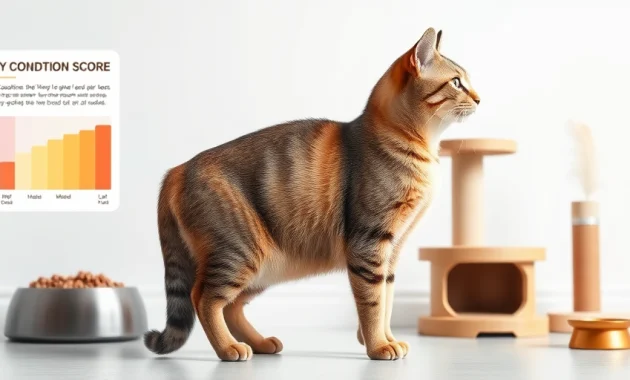
Achieving and maintaining an optimal weight in domestic felines (Felis catus) requires a precise balance of nutritional science, evolutionary biology, and behavioral engineering. In veterinary medicine, the focus has shifted away from raw weight metrics on a scale toward a more comprehensive evaluation: the Body Condition Score (BCS).
Because feline body shapes vary widely across breeds—from the naturally slender Cornish Rex to the large, heavy-boned Maine Coon—raw weight numbers can be misleading. A healthy body composition is instead defined by an ideal fat-to-muscle ratio, where the ribcage is easily felt under a minimal fat layer, a clear waistline is visible from above, and a taut abdominal tuck can be seen from the side.
                  [Body Condition Score (BCS) Spectrum]
 ┌──────────────────────────────────┼──────────────────────────────────┐
 ▼                                  ▼                                  ▼
[BCS 1-4: Cachexia/Underweight]   [BCS 5: The Ideal Window]      [BCS 6-9: Obesity Matrix]
Ribs visible; no palpable fat;    Palpable ribs; visible waist;  Ribs obscured; absent waist;
severe muscle wasting.            taut abdominal tuck.           distended ventral fat pad.
This guide details the internal mechanisms of feline metabolism, looks at how chronic stress impacts appetite, breaks down the nutritional needs of obligate carnivores, and outlines actionable steps to help your cat reach its ideal body condition safely.
Neuroendocrine Regulation: Cortisol, Stress, and Appetite Suppression
The central nervous system and the endocrine system work together closely to regulate a cat's appetite. At the center of this network is the hypothalamus, which processes chemical signals to balance hunger (orexigenic pathways) and fullness (anorexigenic pathways). When a cat experiences chronic environmental stress, this delicate balance breaks down.
[Chronic Environmental Stressor] ──► HPA-Axis Activation ──► Glucocorticoid (Cortisol) Spike
                                                                        │
    ┌───────────────────────────────────────────────────────────────────┴───────────────────────────────────────────────────────────────────┐
    ▼                                                                                                                                       ▼
[Pathology A: Hypothalamic Suppression]                                                                                [Pathology B: Gastrointestinal Stasis]
Downregulation of Neuropeptide Y (NPY); absolute anorexia.                                                             Reduced gastric emptying; nausea and systemic food aversion.
When a cat perceives a threat or faces long-term stress—such as a lack of territory, tension with other pets, or loud noises—the hypothalamus-pituitary-adrenal (HPA) axis activates, causing a steady release of the stress hormone cortisol.
Hypothalamic Suppression: High cortisol levels suppress Neuropeptide Y (NPY), a key chemical messenger in the brain that triggers hunger. This suppression can cause a sudden loss of appetite, making it very difficult for a thin or recovering cat to gain weight.
Gastrointestinal Stasis: Chronic stress slows down normal stomach contractions and digestive movement. Food sits in the digestive tract longer, causing mild nausea and an aversion to food, which often leads to weight loss and muscle wasting.
Clinical Environmental Strategies
To lower cortisol levels and encourage a healthy appetite, you must alter the cat's feeding environment to match their natural instincts:
Isolation Feeding: Kucing are solitary hunters and prefer to eat alone. Place food bowls away from busy areas of the home, noisy household appliances, or pathways used by other family pets.
The $N+1$ Resource Rule: In homes with multiple cats, competition for resources can cause silent, ongoing stress. Always provide one more feeding station than the total number of cats (e.g., three separate feeding stations for a two-cat home), and place them out of sight from one another to prevent cats from guarding the food.
- 1. What is the Body Condition Score (BCS) in cats, and why is it more important than body weight alone?
- 2. What does an ideal healthy body condition look like in a cat?
- 3. Why can’t cat owners rely on a target weight chart alone?
- 4. How does chronic stress affect a cat’s appetite and body weight?
- 5. What are common household stressors that can stop a cat from eating well?
- 6. What is the “N+1 resource rule,” and how does it help with feline weight management?
- 7. Why are cats considered obligate carnivores, and how does that affect their ideal diet?
- 8. Why is protein so important for cats trying to gain or maintain healthy weight?
- 9. Why can high-carbohydrate diets be problematic for cats?
- 10. Is a combination of wet food and dry food a good strategy for cat weight management?
- 11. Why is wet food helpful for cats that struggle to eat enough?
- 12. How should dry food be used without causing obesity?
- 13. What role does gut health play in a cat’s ability to maintain weight?
- 14. Can probiotics help a cat gain or maintain healthy weight?
- 15. Why is exercise necessary even when the goal is weight gain?
- 16. How much play does a cat need each day for healthy weight control?
- 17. Is using a laser pointer safe for cats during exercise?
- 18. How do cat trees, shelves, and vertical spaces help with body condition?
- 19. How can an owner tell if a cat is losing muscle rather than just body fat?
- 20. What is the safest overall strategy for helping a cat reach and maintain an ideal body condition?
The Carnivore Engine: Macronutrient Dynamics and Mixed Feeding Strategies
Felines are obligate carnivores, meaning their bodies are evolutionarily designed to process animal tissues rather than plant matter. Their metabolic pathways rely on dietary protein and fat as primary energy sources, rather than carbohydrates.
                                  [Feline Macronutrient Utilization]
                                                 │
         ┌───────────────────────────────────────┴───────────────────────────────────────┐
         ▼                                       ▼                                       ▼
 [Animal Proteins]                        [Lipids & Essential Fats]               [Soluble Carbohydrates]
 Used for gluconeogenesis; preserves     Concentrated energy; sources            Minimal metabolic use; excess
 lean structural muscle mass.            essential Arachidonic Acid.             stored as visceral fat tissue.
Continuous Gluconeogenesis: Unlike omnivores, which turn on sugar-producing pathways in the liver only when fasting, the feline liver constantly breaks down protein into glucose to maintain stable blood sugar levels. If a cat's diet lacks sufficient animal protein, its body will break down its own muscle tissue to fulfill this energy need, leading to unhealthy weight loss and loss of strength.
The Carbohydrate Limit: Felines have very low levels of amylase in their saliva and intestines, the enzyme responsible for breaking down starches. Diets high in carbohydrates often result in poorly digested nutrients, fluctuations in blood sugar, and an increase in body fat rather than healthy lean muscle.
Implementing a Balanced Mixed Feeding Protocol
To help a cat gain healthy muscle or maintain an ideal weight, a combination of high-quality wet and dry food is highly effective:
[Wet Food: High Moisture & Aroma] + [Dry Food: High Calorie Density] ──► Balanced Daily Caloric Intake
Wet Food (Hydration and Scent Identification): Cats choose food primarily by smell. Canned wet foods made with real chicken or salmon release strong aromas that stimulate the scent receptors in the brain, triggering a healthy appetite. The high moisture content also helps prevent urinary tract issues by supporting kidney health.
Dry Food (Energy Density): High-quality dry foods provide a concentrated source of calories and essential fats. This supports steady weight gain and muscle development, provided the daily portion is measured exactly to match the cat's target weight rather than their current weight.
Intestinal Health: Microflora and Nutrient Absorption
A cat cannot maintain an ideal body condition if its digestive tract cannot effectively absorb nutrients. Chronic diarrhea, gas, or soft stools are common signs of an unbalanced gut microbiome, which disrupts how food is processed.
[Healthy Intestinal Mucosa] ──► Probiotic Inoculation (E. faecium) ──► Enhanced Villi Absorption ──► Stable Weight Gain
Adding target strains of beneficial bacteria—such as Enterococcus faecium—helps stabilize the delicate environment of the intestines. These probiotics support digestive health by:
Strengthening the cellular lining of the gut wall to prevent harmful bacteria from crossing into the bloodstream.
Assisting in the breakdown of complex fats and proteins, making essential amino acids more bio-available to the body.
Reducing instances of chronic inflammation within the intestines, allowing the microscopic, finger-like villi to absorb nutrients at maximum efficiency.
Environmental Enrichment: Physical Conditioning and Hunting Simulation
Increasing food intake to build lean muscle must be paired with structured physical exercise. Without active movement, extra calories will simply be stored as excess body fat, moving the cat closer to obesity.
[Laser Pointer: Visual Stimulus] ──► Active Chase Sequence ──► Catch Phase (Physical Toy/Treat) ──► Psychological Resolution
Structured Play and Exercise Mechanics
Interactive Sessions: Dedicate 10 to 15 minutes twice a day to active play using toys that mimic prey, such as feather wands, string toys, or automated moving objects. This physical exertion burns fat, builds muscle strength in the hind legs, and helps keep the metabolism active.
The Laser Catch Rule: If you use a laser pointer for exercise, choose a safe, low-power device and avoid pointing the light near the cat's eyes. Always switch to a physical toy or offer a small treat at the end of the session. Because cats have a powerful instinct to hunt, chasing a light they can never physically catch can cause ongoing psychological frustration. Ending the game with a tangible object satisfies their natural hunting loop ("hunt, catch, eat").
Vertical Space Utilization: Cats naturally love to climb and observe their surroundings from a height. Installing vertical elements like cat trees, wall shelves, or window perches encourages jumping and climbing, which exercises core and leg muscles while keeping them mentally engaged.
Feline Weight Management Framework
| Step | Focus Area | Actionable Directive | Intended Outcome |
| 1 | Stress Reduction | Separate food dishes in multi-cat homes; place feeding stations in quiet areas. | Lowers cortisol, allowing natural hunger signals to return. |
| 2 | Diet Adjustment | Combine high-protein wet food with portion-controlled dry food. | Provides appropriate fuel for building lean muscle while maintaining proper hydration. |
| 3 | Digestive Support | Use veterinary-formulated probiotics (e.g., Enterococcus faecium). | Improves nutrient absorption and calms chronic gut inflammation. |
| 4 | Daily Exercise | Provide two 15-minute interactive play sessions daily; introduce climbing spaces. | Converts dietary calories into healthy muscle tissue rather than stored fat. |
FAQ
1. What is the Body Condition Score (BCS) in cats, and why is it more important than body weight alone?
The Body Condition Score (BCS) is a veterinary assessment system used to evaluate a cat’s body fat and muscle balance rather than relying only on the number shown on a scale. This matters because cats vary widely in size, bone density, and breed structure. A slim Cornish Rex and a large Maine Coon can have very different healthy weights, so the scale alone cannot tell you whether the cat is underweight, ideal, or overweight.
BCS focuses on visible and palpable body landmarks. A cat in the ideal range should have ribs that can be felt easily under a thin layer of fat, a visible waistline when viewed from above, and an abdominal tuck when viewed from the side. Cats below the ideal range may show prominent ribs, spine, and muscle loss, while cats above the ideal range often lose their waistline and accumulate a hanging belly fat pad. In practical terms, BCS is the most useful framework for weight management because it measures body composition, not just total mass.
2. What does an ideal healthy body condition look like in a cat?
A healthy cat is not defined by “chubbiness” or by appearing large. The ideal body condition is a balanced ratio of muscle and fat. When you run your hands along the chest and sides, the ribs should be easy to feel but not sharply protruding. Looking down from above, the cat should have a noticeable waist behind the ribcage. From the side, there should be a gentle upward abdominal tuck rather than a sagging belly.
This body shape suggests that the cat has enough energy reserves without carrying excess fat that can stress the joints, heart, liver, and metabolism. If the ribs are impossible to feel, the waist is absent, or a large abdominal fat pad hangs from the belly, the cat may be overweight. If the bones are very obvious and there is visible muscle wasting, the cat may be underweight and should be evaluated more closely.
3. Why can’t cat owners rely on a target weight chart alone?
Weight charts can be misleading because they don’t account for breed differences, frame size, sex, muscle mass, age, or neuter status. Two cats can weigh the same amount but have completely different body compositions. One might be muscular and healthy, while the other might be overweight with excess fat and low muscle tone.
That’s why veterinarians place more value on BCS and muscle condition scoring. Weight is still useful for tracking progress over time, but it should be interpreted alongside physical examination. If you’re trying to help a cat gain weight, lose weight, or maintain a stable condition, the goal should be to improve body composition—not simply push the number on the scale up or down.
4. How does chronic stress affect a cat’s appetite and body weight?
Stress can profoundly disrupt a cat’s ability to eat normally. In a stressed cat, the hypothalamic-pituitary-adrenal (HPA) axis becomes activated, causing increased release of cortisol, the body’s primary stress hormone. High cortisol can interfere with hunger signaling in the brain by suppressing appetite-related pathways, which can lead to reduced food intake or complete anorexia.
Stress also affects the digestive tract. Chronic anxiety can slow stomach emptying and intestinal movement, making the cat feel nauseous, full, or uncomfortable after eating. Over time, this can result in weight loss, muscle wasting, and poor body condition. In some cats, the issue isn’t the food itself—it’s the environment around the food. Household conflict, noise, lack of privacy, or competition with other pets can all keep a cat in a stress state that suppresses appetite.
5. What are common household stressors that can stop a cat from eating well?
Cats are highly sensitive to their environment, and many stressors are subtle enough that owners may not notice them at first. Common triggers include feeding bowls placed in noisy laundry rooms, near heavy foot traffic, or close to litter boxes. Tension with other cats, dogs, or even children can also create enough stress to suppress appetite. Some cats will avoid eating if they feel watched or if another pet frequently approaches their food bowl.
Environmental instability is another major factor. Moving furniture, introducing new pets, changing feeding times, loud construction noise, or a lack of safe resting spaces can all keep cortisol elevated. Even if the cat still eats, chronic stress can reduce digestive efficiency and make weight gain harder. A calm feeding environment is often one of the most effective ways to restore appetite in a thin or anxious cat.
6. What is the “N+1 resource rule,” and how does it help with feline weight management?
The “N+1 resource rule” means you should provide one more feeding station than the number of cats in the household. For example, if you have two cats, you should ideally provide three separate food stations. This rule helps reduce competition, territorial guarding, and silent intimidation around food.
Cats are naturally solitary hunters and generally prefer to eat alone. In multi-cat homes, one confident cat can dominate the feeding area without overt fighting, causing a more timid cat to eat less than it needs. By separating feeding stations and keeping them out of each other’s line of sight, you lower stress, reduce cortisol-driven appetite suppression, and give each cat a better chance to eat enough to maintain a healthy body condition.
7. Why are cats considered obligate carnivores, and how does that affect their ideal diet?
Cats are obligate carnivores because their bodies are biologically designed to derive most of their energy and essential nutrients from animal tissue. Unlike omnivores, they rely heavily on dietary protein and fat rather than carbohydrates. Their metabolism is built around using amino acids from animal protein for constant glucose production, a process called gluconeogenesis.
This means cats need diets rich in animal-based protein to maintain muscle mass, organ function, and overall health. If protein intake is too low, the body may begin breaking down its own muscle tissue to meet metabolic needs. That is why a cat’s diet should not be centered on fillers or excessive starch. A good feline diet supports lean muscle, stable energy, and a body condition that stays within the ideal BCS range rather than causing either muscle wasting or fat accumulation.
8. Why is protein so important for cats trying to gain or maintain healthy weight?
Protein is the foundation of feline metabolism. Cats use amino acids not only for muscle maintenance and tissue repair but also to generate glucose continuously, even when they are not fasting. This is different from many other animals, which shift into glucose production only when food is scarce. Because cats do this constantly, their dietary protein needs are much higher.
If a cat doesn’t get enough high-quality animal protein, weight gain can become unhealthy or ineffective. Instead of building lean muscle, the cat may lose muscle while storing small amounts of fat. In underweight cats, this can worsen weakness and poor body condition. In overweight cats, a low-protein, calorie-dense diet can increase fat mass while still failing to support healthy muscle. Protein quality matters just as much as protein quantity.
9. Why can high-carbohydrate diets be problematic for cats?
Cats are not metabolically designed to process large carbohydrate loads efficiently. They have limited natural starch-processing capacity compared with omnivores, and excessive carbohydrate intake can contribute to poor nutrient balance, unstable energy utilization, and fat accumulation rather than lean muscle development.
That doesn’t mean every food containing carbohydrates is automatically harmful, but it does mean carbohydrate-heavy diets are often not ideal for feline body composition. When the goal is healthy weight maintenance, recovery from weight loss, or controlled weight gain, diets centered on animal protein and appropriate fat are usually more aligned with a cat’s physiology than formulas dominated by starches or plant fillers.
10. Is a combination of wet food and dry food a good strategy for cat weight management?
Yes—when done thoughtfully, a mixed feeding approach can work very well. Wet food and dry food offer different benefits, and combining them can support both appetite and energy intake. Wet food is especially useful because cats are strongly driven by smell. The stronger aroma of wet food can stimulate appetite in picky, stressed, or recovering cats. It also contributes extra hydration, which supports urinary and kidney health.
Dry food, on the other hand, is calorie-dense and convenient for measured portions. It can help maintain energy intake in cats that need more calories, provided the amount is carefully controlled. The key is not to free-feed indiscriminately. Portions should be based on the cat’s ideal target body condition, not just on how hungry the cat seems at the moment. A mixed feeding plan works best when it is consistent, measured, and built around a high-protein nutritional profile.
11. Why is wet food helpful for cats that struggle to eat enough?
Wet food can be extremely valuable for cats with reduced appetite because it is more aromatic and usually more palatable than dry kibble. Since cats rely heavily on smell when deciding whether to eat, the stronger scent of wet food can trigger interest even when appetite is low. This is especially useful in cats recovering from illness, stress-related anorexia, or chronic low-grade nausea.
Wet food also increases water intake. Cats naturally have a low thirst drive compared with many other animals, so moisture-rich meals help support hydration and urinary tract health. In cats that are underweight or prone to stress, improving hydration can make them feel better overall and indirectly improve food intake. For many cats, simply warming wet food slightly to enhance aroma can make a noticeable difference in willingness to eat.
12. How should dry food be used without causing obesity?
Dry food is useful because it provides concentrated calories and can support stable daily intake, but it must be portion-controlled. One of the biggest mistakes in feline weight management is leaving a full bowl of kibble available all day without measuring how much the cat actually consumes. This can gradually push the cat into a BCS range associated with overweight or obesity.
The better strategy is to use dry food as part of a structured feeding plan. Measure the portion based on the cat’s ideal weight target and overall caloric needs, not just current body weight. If the cat is underweight, the amount can be adjusted upward gradually while monitoring body condition. If the cat is overweight, dry food should still be used carefully, with an emphasis on preserving muscle while reducing excess fat. The goal is precision, not restriction for its own sake.
13. What role does gut health play in a cat’s ability to maintain weight?
A cat can only maintain a healthy body condition if it can digest and absorb nutrients properly. Even a high-quality diet may fail to support healthy weight if the intestinal tract is inflamed or the gut microbiome is imbalanced. Chronic soft stools, diarrhea, gas, or inconsistent appetite can all interfere with nutrient absorption and contribute to either weight loss or poor-quality weight gain.
The intestinal lining contains microscopic villi that absorb amino acids, fats, vitamins, and other nutrients. If this lining is inflamed or damaged, the body may not extract enough value from the food being eaten. Over time, this can result in muscle loss, low energy, and unstable body condition. Supporting gut health is therefore a core part of feline weight management, especially in cats with chronic digestive signs.
14. Can probiotics help a cat gain or maintain healthy weight?
Probiotics may help in some cats, particularly those with chronic digestive upset or signs of intestinal imbalance. Veterinary-formulated probiotic strains such as Enterococcus faecium are often used to support a healthier intestinal environment. These beneficial microbes can help stabilize the gut barrier, reduce inflammatory irritation, and improve the breakdown and absorption of nutrients.
That doesn’t mean probiotics are a universal solution, but they can be useful as part of a broader weight management plan when digestive efficiency is a problem. A cat that digests protein and fat more effectively is better able to maintain lean muscle and stable body condition. If a cat has ongoing diarrhea, poor stool quality, or repeated appetite problems, digestive support may be just as important as adjusting calories.
15. Why is exercise necessary even when the goal is weight gain?
Weight gain is not automatically healthy if it consists mainly of body fat. Cats need exercise to direct calories toward muscle maintenance and functional strength rather than fat storage. This is especially important in indoor cats, which often have fewer opportunities for natural movement, climbing, and hunting-like behavior.
Regular activity helps maintain muscle tone in the hind limbs, shoulders, and core. It also supports metabolic health and keeps the cat mentally stimulated. In a thin cat, exercise paired with proper nutrition can help rebuild lean tissue. In a cat at ideal weight, it helps preserve body composition. In an overweight cat, it helps burn energy while protecting muscle mass during calorie control. Exercise is not separate from weight management—it is part of it.
16. How much play does a cat need each day for healthy weight control?
A practical target is two interactive play sessions per day lasting around 10 to 15 minutes each. These sessions should mimic natural hunting patterns with toys that move like prey, such as feather wands, strings, rolling objects, or motorized toys. Short, focused bursts of activity are usually more effective than passive access to toys alone.
The goal is not just to “make the cat run.” It is to engage the cat’s predatory instincts in a way that feels natural and rewarding. Consistent daily movement helps maintain muscle, improves mood, and supports a healthier appetite pattern. For many cats, this routine also reduces boredom-related overeating and stress-related under-eating.
17. Is using a laser pointer safe for cats during exercise?
A laser pointer can be useful as a visual chase stimulus, but it should be used carefully. The beam should never be pointed near the cat’s eyes, and the session should not end with the cat endlessly chasing something it can never catch. Cats have a strong instinctive hunting sequence: stalk, chase, capture, and consume. If the game ends without a “catch,” some cats may become frustrated.
The best way to use a laser pointer is to transition at the end of the session to a physical toy or a small food reward. This gives the cat a sense of completion and helps satisfy the hunting loop. When used in moderation and paired with a real catch opportunity, laser play can be an effective part of a daily activity plan.
18. How do cat trees, shelves, and vertical spaces help with body condition?
Vertical spaces are more than entertainment—they are a form of functional exercise and stress reduction. Climbing, jumping, balancing, and descending all use major muscle groups, especially the hind legs and core. This kind of movement helps cats maintain strength and agility while burning calories in a way that feels natural.
Vertical territory also gives cats more control over their environment. A cat that can perch above ground level often feels safer and less stressed, which can indirectly improve appetite and feeding behavior. In homes with multiple pets, vertical spaces can also reduce conflict by giving each cat more personal territory. For weight management, they serve both a physical and behavioral purpose.
19. How can an owner tell if a cat is losing muscle rather than just body fat?
Muscle loss often shows up along the spine, hips, shoulders, and thighs. A cat may feel bony even if it still has some abdominal fat. In some cases, the scale may not change much, but the body condition worsens because lean tissue is being lost while fat remains. This is why visual assessment and hands-on examination are so important.
Signs that warrant closer attention include weakness, reluctance to jump, a more prominent spine, sunken areas around the hips, and a generally frail appearance despite normal or near-normal body weight. Muscle loss can occur in underfed cats, senior cats, cats with chronic disease, or cats eating diets that are not protein-appropriate. If muscle wasting is suspected, the diet and the underlying health status both need review.
20. What is the safest overall strategy for helping a cat reach and maintain an ideal body condition?
The safest strategy is a structured, multi-part plan rather than a quick fix. First, reduce stress around feeding by providing quiet, private eating areas and enough food stations in multi-cat homes. Second, feed a high-protein diet appropriate for an obligate carnivore, often using a combination of wet food for hydration and appetite stimulation plus measured dry food for controlled calorie density. Third, support digestive health if the cat has chronic stool issues or poor nutrient absorption. Finally, pair the diet with daily interactive exercise and access to climbing spaces so calories support muscle and metabolic health rather than excess fat storage.
Most importantly, evaluate progress through body condition rather than the scale alone. The goal is not just for the cat to weigh more or less—it is for the cat to have palpable ribs under a light fat covering, a visible waist, good muscle tone, and steady energy. That is the true marker of healthy feline weight management.