Feline Pyrexia (Fever): Clinical Signs, Causes, and Emergency Protocols
2 months ago
Pyrexia (fever) in cats is an adaptive immune response, typically activated by the hypothalamus to combat underlying pathogens. While a elevated body temperature helps inhibit bacterial and viral replication, prolonged or extreme pyrexia can lead to cellular damage, dehydration, and organ failure.
Clinical Identification: Normal Temperature vs. Pyrexia
A cat's baseline body temperature is significantly higher than a human's. Visual or tactile assessments (such as feeling the ears or nose) are unreliable diagnostic indicators.
Normal Baseline: 38.0°C – 39.2°C (100.4°F – 102.5°F)
Pyrexia (Fever): $\ge$ 39.3°C (102.7°F)
Hyperpyrexia (Critical Emergency): $\ge$ 40.0°C (104.0°F)
Companion Symptoms to Monitor
Pyrexia rarely occurs in isolation. It is typically accompanied by a cluster of systemic signs:
Anorexia and Adipsia: Complete refusal of food and water exceeding 24 hours.
Lethargy and Depression: Decreased movement, avoidance of interaction, and hiding in dark, isolated spaces.
Postural Changes: Crouching with the head tucked down, or rapid, shallow breathing (tachypnea) as the body attempts to dissipate heat.
Poor Coat Quality: Shivering, piloerection (fur standing on end), or a sudden lack of self-grooming.
Primary Etiologies (Root Causes)
A fever is a symptom, not a primary disease. The most frequent triggers include:
Infectious Pathogens (Most Common): Viral or bacterial invasions entering via the ocular, nasal, oral, or respiratory tracts (e.g., Feline Calicivirus, Rhinotracheitis, or localized bacterial abscesses from fight wounds).
Systemic Inflammatory Diseases: Immune-mediated disorders or Inflammatory Bowel Disease (IBD).
Neoplasia: Internal tumors or malignancies that disrupt metabolic functions.
Toxin Exposure: Ingestion of household hazards or toxic plants.
Immediate First-Aid Protocol (Home Stabilization)
If veterinary care is temporarily inaccessible, execute these stabilization measures immediately to safely lower core body temperature:
                      [ EMERGENCY HOME STABILIZATION ]
                                     │
       +─────────────────────────────┼─────────────────────────────+
       │                             │                             │
 [ Objective Metrics ]      [ Thermal Reduction ]        [ Hydration Support ]
 - Deploy lubricated        - Apply cool, damp cloth     - Syringe lukewarm water
   rectal thermometer.        to axillae/groin.            slowly (oral spuit).
 - Confirm temp >= 39.3°C.  - NO ice or ice water.       - Feed highly palatable wet food.
A. Accurate Thermal Measurement
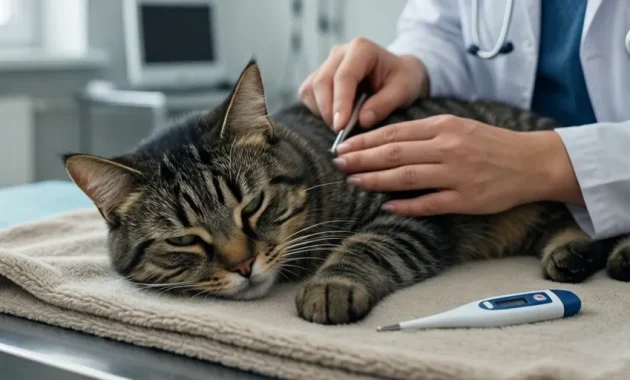
The only definitive method to diagnose pyrexia is via a digital rectal thermometer.
Lubricate the tip with a water-soluble jelly or petroleum jelly.
Gently insert the thermometer into the rectum approximately 1–2 cm.
Hold in place until the digital reading stabilizes.
B. Controlled Thermal Reduction
Cool Compresses: Dampen a small towel with cool or room-temperature water (do not use ice water, as it causes rapid vasoconstriction, trapping heat inside the core). Apply it directly to areas with sparse fur and high vascularity: the armpits (axillae), groin, and paws.
Environmental Adjustments: Relocate the cat to a quiet, well-ventilated, air-conditioned, or tiled room. Ensure a bowl of fresh, clean water is nearby.
C. Hydration and Nutritional Maintenance
Assisted Hydration: Pyrexia rapidly depletes bodily fluids. If the cat refuses to drink voluntarily, administer lukewarm water very slowly using a needleless oral syringe (spuit) via the side of the mouth to avoid aspiration.
Dietary Support: Offer highly palatable, easily digestible wet food or pureed treats. Do not forcefully compel a severely lethargic cat to eat, as this can trigger nausea or vomiting; focus heavily on fluid intake.
Critical Warning: Fatal Toxicity Countermeasures
CRITICAL WARNING: Never administer human antipyretics (fever reducers) to a cat.
Over-the-counter human medications such as Acetaminophen (Paracetamol), Ibuprofen, and Aspirin are highly toxic to felines. Cats lack the specific hepatic enzymes (glucuronosyltransferase) required to metabolize these compounds. Even a microscopic dose of paracetamol can cause irreversible oxidative damage to red blood cells (Heinz body anemia), severe liver failure, and death within hours.
When to Seek Immediate Veterinary Intervention
Home care is strictly a temporary stabilization measure. Professional intervention is non-negotiable if:
The rectal temperature meets or exceeds 40.0°C (104.0°F).
The fever persists continuously for more than 24 hours.
The pyrexia is paired with dyspnea (difficulty breathing), vomiting, open-mouth panting, or neurological signs.
A veterinarian will perform diagnostic testing (such as complete blood counts and blood chemistry panels) to isolate the root cause, and administer intravenous fluid therapy along with targeted, feline-safe antipyretics, NSAIDs, or antibiotics.
FAQ
1. What is pyrexia in cats?
Pyrexia is the medical term for fever. It occurs when a cat's body temperature rises above the normal range due to an immune response against infections, inflammation, toxins, or other underlying health conditions.
2. What is a normal body temperature for a cat?
A healthy cat's normal body temperature typically ranges between:
- 38.0°C–39.2°C (100.4°F–102.5°F)
Temperatures within this range are generally considered normal.
3. When is a cat considered to have a fever?
A cat is considered to have a fever when its body temperature reaches:
- 39.3°C (102.7°F) or higher
At this point, veterinary monitoring is recommended.
4. What is hyperpyrexia in cats?
Hyperpyrexia is an extremely high fever and a medical emergency. It occurs when body temperature reaches:
- 40.0°C (104.0°F) or higher
Immediate veterinary care is necessary.
5. Can I tell if my cat has a fever by touching its nose or ears?
No. Feeling a cat's ears, nose, or paws is not a reliable way to diagnose fever. The only accurate method is measuring body temperature with a thermometer.
6. How do I accurately measure a cat's temperature?
The most accurate method is using a digital rectal thermometer:
- Apply a pet-safe lubricant.
- Gently insert the thermometer 1–2 cm into the rectum.
- Wait for the reading to stabilize.
- Record the temperature.
7. What symptoms usually accompany fever in cats?
Common symptoms include:
- Loss of appetite
- Reduced water intake
- Lethargy
- Hiding behavior
- Weakness
- Shivering
- Rapid breathing
- Reduced grooming
- Poor coat condition
8. Why does my cat hide when it has a fever?
Cats instinctively hide when they feel unwell. Fever often causes weakness, discomfort, and sensitivity to stimulation, making secluded spaces feel safer.
9. Can fever cause a cat to stop eating?
Yes. Fever frequently reduces appetite because illness affects metabolism, energy levels, and the sense of smell.
10. Why is hydration important when a cat has a fever?
Fever increases fluid loss through respiration and body heat regulation. Without adequate hydration, dehydration can develop quickly and worsen the cat's condition.
11. What causes fever in cats?
Common causes include:
- Viral infections
- Bacterial infections
- Fungal infections
- Inflammatory diseases
- Immune-mediated disorders
- Cancer
- Toxin exposure
12. Which infections commonly cause fever in cats?
Examples include:
- Feline Calicivirus
- Feline Herpesvirus (Rhinotracheitis)
- Abscesses from cat fights
- Respiratory infections
- Dental infections
- Urinary tract infections
13. Can stress cause fever in cats?
Stress itself does not usually cause true fever, but it can worsen existing illnesses and contribute to physiological changes that mimic illness symptoms.
14. Can cancer cause fever in cats?
Yes. Certain tumors and cancers can trigger chronic inflammation, resulting in persistent or recurring fever.
15. What should I do if my cat develops a fever?
Initial steps include:
- Confirming temperature with a thermometer
- Moving the cat to a cool, quiet environment
- Encouraging hydration
- Monitoring symptoms closely
- Contacting a veterinarian if symptoms persist
16. How can I safely cool down a feverish cat?
Use:
- Cool (not ice-cold) damp towels
- Gentle airflow from a fan
- Air-conditioned rooms
- Cool tile flooring
Avoid sudden or extreme cooling methods.
17. Where should cool compresses be applied?
Apply cool, damp cloths to:
- Armpits (axillae)
- Groin area
- Paw pads
These areas contain major blood vessels that assist heat dissipation.
18. Should I use ice packs on a feverish cat?
No. Ice packs and ice water can cause blood vessels to constrict, trapping heat within the body and potentially worsening the condition.
19. How can I encourage a sick cat to drink water?
You can:
- Offer fresh water frequently
- Use a pet fountain
- Add water to wet food
- Offer low-sodium broth approved by your veterinarian
- Use a syringe carefully if instructed by a veterinarian
20. What food should I offer a cat with a fever?
Offer highly palatable foods such as:
- Wet cat food
- Recovery diets
- Soft prescription diets
- Pureed cat treats
Focus on hydration and easy digestion.
21. Can I force-feed a feverish cat?
No. Force-feeding a severely ill cat may cause stress, aspiration, vomiting, or further complications. Seek veterinary advice if appetite loss continues.
22. Can I give my cat paracetamol (acetaminophen)?
Absolutely not. Paracetamol is extremely toxic to cats and can cause:
- Severe liver damage
- Red blood cell destruction
- Respiratory distress
- Death
Even very small doses can be fatal.
23. Is ibuprofen safe for cats?
No. Ibuprofen is highly toxic to cats and may cause:
- Kidney failure
- Stomach ulcers
- Gastrointestinal bleeding
- Neurological symptoms
24. Is aspirin safe for cats?
Aspirin should never be given without direct veterinary supervision. Incorrect dosing can result in serious toxicity.
25. Why are human fever medications dangerous for cats?
Cats lack certain liver enzymes needed to metabolize many common human medications, making them extremely vulnerable to poisoning.
26. When should I seek emergency veterinary care?
Immediate veterinary attention is required if:
- Temperature reaches 40.0°C (104.0°F) or higher
- Fever lasts longer than 24 hours
- Breathing becomes difficult
- Vomiting occurs repeatedly
- Neurological signs appear
- Open-mouth panting develops
27. What diagnostic tests might a veterinarian perform?
Common tests include:
- Physical examination
- Complete blood count (CBC)
- Blood chemistry profile
- Urinalysis
- X-rays
- Ultrasound
- Infectious disease screening
28. How do veterinarians treat fever in cats?
Treatment depends on the underlying cause and may include:
- Intravenous fluids
- Antibiotics
- Anti-inflammatory medications
- Pain management
- Nutritional support
- Hospitalization in severe cases
29. Can a fever go away on its own?
Some mild fevers may resolve when the immune system successfully controls a minor infection. However, persistent fever should always be investigated to identify the underlying cause.
30. What is the long-term outlook for cats with fever?
The prognosis depends entirely on the underlying condition. Most cats recover well when fever is identified early and treated appropriately. Delayed treatment can lead to dehydration, organ damage, or life-threatening complications.