
How to Cut Your Cat's Nails at Home: The Complete, Honest Guide to Feline Claw Care
19 hours ago
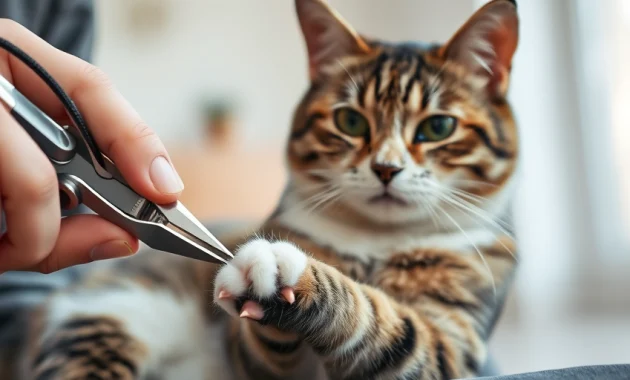
Let's be honest about something right at the start: a significant number of cat owners have never trimmed their cat's nails, have tried once and decided never again, or rely entirely on their veterinarian or a groomer to handle it during professional appointments. The mental image that tends to accompany the idea of home nail trimming — a writhing, deeply offended cat, a panicked owner with a pair of clippers they're not sure how to use, and a fifty-fifty chance of someone bleeding — is not an encouraging one.
Here's what's also true: cat nail trimming, done correctly and with the right preparation, is a genuinely manageable routine task that you can perform in your living room in about five minutes once you've built the right habits around it. Thousands of cat owners do it every two weeks without incident. The cats they do it on aren't unusually compliant or specially trained. The owners aren't professional groomers or veterinary technicians. They've simply learned the technique, built a foundation of trust with their cats through consistent paw-handling practice, and established a routine that both parties are used to.
Getting from "I can't possibly do this" to "this is just a regular Tuesday evening thing" requires some knowledge, some preparation, and some patience during the initial learning phase. This guide covers all of it — the reasons nail trimming matters (including some that might surprise you), the anatomy you need to understand to do it safely, the desensitization work that makes the actual trimming possible, the step-by-step technique, what to do when things go wrong, and how to set yourself and your cat up for long-term success with this skill.
Let's start with the question that should always come before the "how": the "why."
Why Nail Trimming Actually Matters
 cat nail trimming, cat grooming, indoor cat care, cat claw care, trimming cat claws, cat nail care guide, cat grooming tips, how to trim cat nails, feline grooming, cat health, cat paw care, indoor cat maintenance, pet grooming, cat hygiene, cat owner guide, kitten nail trimming, senior cat care, cat claw trimming tutorial, cat wellness, pet care
The Scratching Post Misconception
There's a belief among some cat owners that if a cat has regular access to scratching surfaces — a post, a cardboard scratcher, a sisal mat — nail trimming is unnecessary. The cat scratches, the outer husks of the claws shed, and the nails take care of themselves. For an outdoor cat with access to rough natural surfaces like bark and stone, this picture is closer to accurate. For the typical indoor cat, it's only partially true, and the partial truth matters.
Scratching does serve a nail-related function. The action of dragging the claws downward against a resistant surface helps peel away the outermost layer of the nail — the dead keratin sheath — exposing a sharper, cleaner nail underneath. This is genuine maintenance, and it's one of the primary reasons cats scratch in the first place. But there's a critical distinction between shedding the outer layer and reducing the nail's length. Scratching accomplishes the former. It does not reliably accomplish the latter. A cat who scratches enthusiastically and regularly can still develop nails that grow longer than is comfortable or safe, because the scratching activity refines the nail's condition more than it controls its overall length.
The practical result for many indoor cats is a gradual, easily missed lengthening of nails that goes unaddressed until there's a visible problem — caught fabric, an accidental scratch that draws blood, or in the most neglected cases, a nail that has curved far enough to begin pressing against or penetrating the paw pad. None of these outcomes is inevitable, but all of them are common, and all of them are entirely preventable with a consistent trimming routine.
Reason One: Your Physical Safety and Comfort
Cats and their owners have a physical relationship. Cats communicate affection through physical contact — following, rubbing, jumping into laps, kneading, climbing onto shoulders. Most cat owners spend some portion of every day in close physical contact with their cats, often with skin directly exposed. And cats with long, needle-sharp nail tips can turn these genuinely loving interactions into uncomfortable or painful experiences, not through any aggressive intent but simply through the geometry of a sharp point meeting thin skin.
The kneading behavior is a good example. Many adult cats knead — the rhythmic pressing and releasing of paws against a soft surface, sometimes called "making biscuits" — as a comfort behavior associated with the contentment of nursing as kittens. It's one of the more endearing things cats do, and most owners find it charming in concept. In practice, kneading done with untrimmed nails against bare arms or legs produces a series of small, sharp pressure points that range from uncomfortable to genuinely painful. A cat with trimmed, blunted nail tips kneading against the same skin produces a very different experience — the same rhythmic pressure without the puncturing.
The same principle applies to jumping onto laps, climbing up onto shoulders, and the various ways cats use their paws in everyday interaction. Trimmed nails don't eliminate the physical nature of the cat's engagement — they simply remove the sharp points that turn ordinary feline affection into a source of minor injuries.
For households with young children, whose skin is thinner and more sensitive, or elderly family members on blood-thinning medications where even minor scratches have greater consequence, this consideration is meaningfully more important than it might be for a single adult living alone.
Reason Two: Safety in Multi-Pet Households
If your household includes more than one cat, or cats alongside dogs or other animals, the nail-trimming calculus changes in a specific way. Animals who share a home play with each other. They wrestle, chase, swat, and engage in the full range of social interactions that come with close cohabitation. Most of this is entirely normal, healthy behavior — genuine play rather than aggression, with no intent to injure.
But intention doesn't determine outcome. A swatting paw during play, aimed with the casual force of a game rather than an attack, carries its nail tips with it regardless of the context. A glancing swipe past another cat's face during a chase can produce a corneal scratch — a genuinely serious injury that requires veterinary treatment and can have lasting consequences for the affected cat's vision. A deeper swipe across another animal's skin can produce lacerations that become infected.
Trimmed nails don't prevent cats from playing with each other or from using their paws in interaction. They reduce the likelihood that a normal play interaction produces unintended injury, simply by removing the sharpest edges from the equation. In multi-pet households, this isn't a minor quality-of-life consideration — it's a genuine harm-reduction measure.
Reason Three: The Cat's Own Health and Mobility
This is the reason most commonly underestimated or overlooked by owners who aren't thinking about nail trimming yet, and it's arguably the most important one in terms of direct impact on the cat's wellbeing.
Cat nails don't grow straight outward indefinitely. When they grow unchecked — without the length reduction that trimming provides and that scratching alone typically cannot fully replicate indoors — they follow a curved trajectory, growing in an arc rather than a line. As this arc continues, the nail curves increasingly downward and eventually inward, toward the underside of the paw. In the most neglected cases, and this is more common in older cats whose activity levels have decreased and in cats who have never had their nails trimmed, the nail tip grows far enough to complete the curve and pierce the paw pad itself.
A nail grown into a paw pad produces exactly what you'd expect: significant pain, localized swelling, and a wound that's prone to infection given the bacteria-rich environment that paws inhabit. The cat typically walks less, may limp, and exhibits the behavior changes associated with chronic pain — reduced activity, irritability, reduced grooming of the affected area, and the general withdrawal that cats use to mask discomfort. By the time many owners notice something is wrong, the problem requires veterinary treatment — sedation, careful removal of the embedded nail, cleaning and treatment of the wound, and often antibiotics.
All of this is completely preventable with a nail trimming routine. The nail never reaches the curve severe enough to be a problem because you've been removing the length before it can accumulate.
Beyond the embedded nail scenario, there's a more subtle and more common mobility effect that starts well before nails become dangerously long. As nails extend beyond their normal functional length, they change the angle at which the cat's toes contact the ground. On the smooth, hard floors that characterize most modern indoor homes — tile, hardwood, laminate, polished concrete — longer nails reduce traction rather than increasing it. The nail points contact the floor at an angle that interferes with the natural pad-first grip the cat's paw is designed to use. Many cats with overly long nails visibly slide or hesitate on smooth floors, and this discomfort affects their willingness to move freely through spaces where those surfaces dominate.
Reason Four: Protecting Your Home
This reason is genuinely less important than the preceding three, but it's worth naming honestly because it's often the one that actually motivates people to start trimming who weren't moved by the other considerations. Cats scratch. They scratch furniture, carpets, curtains, rugs, and walls. They do this because scratching is a behavioral and physiological need — it maintains their nails, stretches muscles and tendons in the paws and shoulders, and deposits scent from glands in the paw pads as a territorial marking behavior. Providing appropriate scratching surfaces redirects some of this activity away from your furniture, but doesn't eliminate the drive.
Shorter, blunter nail tips cause meaningfully less structural damage than long, sharp ones. A cat with trimmed nails dragging their paws down your couch is less likely to pull threads, snag fabric loops, and create visible damage than the same cat with long, hooked nail tips performing the same action. This isn't a reason to start trimming your cat's nails above preventing embedded nails or protecting other pets, but it's a real and reasonable secondary benefit worth noting.
- The Scratching Post Misconception
- Reason One: Your Physical Safety and Comfort
- Reason Two: Safety in Multi-Pet Households
- Reason Three: The Cat's Own Health and Mobility
- Reason Four: Protecting Your Home
- 1. Why is trimming my cat's nails important?
- 2. How often should I trim my cat's nails?
- 3. Do indoor cats need nail trimming more than outdoor cats?
- 4. Can scratching posts replace nail trimming?
- 5. At what age should I start trimming my kitten's nails?
- 6. What tools should I use to trim my cat's nails?
- 7. What is the "quick" in a cat's nail?
- 8. How can I see the quick on dark-colored nails?
- 9. What happens if I accidentally cut the quick?
- 10. Should I trim all of my cat's nails in one session?
- 11. Which nails are most important to trim?
- 12. How can I make nail trimming easier?
- 13. Why does my cat hate nail trimming?
- 14. Can I trim my cat's nails by myself?
- 15. How do I know if my cat's nails are too long?
- 16. What if my cat refuses to cooperate?
- 17. Can overgrown nails cause health problems?
- 18. Should senior cats have their nails trimmed more often?
- 19. Is nail trimming painful for cats?
- 20. When should I let a professional trim my cat's nails?
The Anatomy That Makes Safe Trimming Possible
What You're Actually Looking At
Before you pick up a pair of clippers, you need to understand what a cat's nail actually looks like in cross-section, because the single most important safety principle in nail trimming — the one that prevents the only genuinely bad outcome of an otherwise benign procedure — depends entirely on understanding the nail's anatomy.
Unlike human nails, which are relatively uniform in color and composition throughout, a cat's nail has two clearly distinguishable zones visible to the naked eye when the nail is extended and held against light.
The first zone is the nail's outer structure — the clear, translucent keratin that makes up the outermost portion of the nail, particularly toward the tip. This material is entirely inert, containing no nerves, no blood vessels, and no living tissue. It's biologically equivalent to the dead white portion of your own fingernail past the fingertip. Cutting through this zone produces no sensation whatsoever for the cat, causes no bleeding, and has no biological consequence beyond the physical shortening of the nail that's the entire point of the exercise.
The second zone is what veterinary professionals and experienced groomers call the quick — a pink or reddish central core visible through the translucent nail, running from the nail's base toward (but not reaching) the tip. The quick contains the nail's blood supply and a network of nerve endings. It's living tissue. Cutting into it causes immediate, genuine pain and produces bleeding that, while not dangerous in any serious medical sense, is distressing for the cat, distressing for the owner, and dramatically less likely to result in future cooperation from the cat during nail trimming sessions.
The goal of every nail trim is simply and entirely to remove the clear tip without touching the pink quick. In most cats with lighter-colored nails — white, cream, light gray — this distinction is very easy to see under ordinary room lighting, making the safe cutting zone obvious at a glance. In cats with dark nails — black, dark brown — the quick is not visible through the nail, which requires a different approach: trimming very small amounts at a time from the tip, staying well away from the base where the quick is certainly present, and using stronger light or a flashlight behind the nail when in doubt.
The Quick's Relationship to Nail Length
Here's a nuance that matters for cats whose nails have been allowed to grow very long: the quick is not fixed in location. As the nail grows outward, the quick tends to grow with it, extending toward the tip. This means that a nail which has been consistently trimmed throughout the cat's life has a quick that remains relatively short, staying well away from the tip and providing a generous safe cutting zone. A nail that has been allowed to grow for months without trimming may have a quick that has extended further toward the tip, leaving less clear keratin between the end of the quick and the nail tip.
For cats with previously untrimmed or rarely trimmed nails, this means that the first several trimming sessions should be more conservative — taking less from each nail to avoid the extended quick — with the understanding that as you establish a consistent trimming routine, the quick will gradually recede over time as the nail tip is regularly shortened, eventually creating the more generous safe zone that well-maintained nails have.
This is worth knowing because it explains why some owners who attempt nail trimming for the first time on a cat with long, neglected nails find the experience more nerve-wracking than it will be once they've been maintaining a regular schedule. The quick really is closer to the tip in those cases, and caution is genuinely warranted. But it's not a permanent state — it improves with consistent care.
Equipment Matters More Than Most Guides Admit
Why Dedicated Cat Nail Clippers Make a Real Difference
The choice of cutting tool for cat nail trimming is not trivial, and attempting to use scissors, human nail clippers, or improvised alternatives often produces worse outcomes than a proper feline nail clipper would. Here's why.
Human nail clippers are designed for flat human nails and their straight-across cutting action doesn't translate well to the curved, round cross-section of a cat's nail. They tend to crush and splinter the keratin before cutting through it cleanly, which creates rough nail edges, is more painful even when the quick is avoided, and is more likely to cause the nail to crack in ways that extend the split further than intended. The sound of the crushing action is also more alarming to cats than a clean cut, which is relevant to the desensitization challenge we'll discuss in the next section.
Scissors, even sharp ones, present similar problems and introduce the additional challenge of coordination — using scissor handles rather than a clipper mechanism when you're simultaneously managing an extended cat claw and a cat who may be moving.
Dedicated feline nail clippers come in two main formats, each with proponents. The guillotine-style clipper has a circular opening through which the nail is inserted, and a blade that slides across to cut when the handles are squeezed. The scissor-style clipper (which is shaped like scissors but has curved, concave blades designed for a rounded nail cross-section) cuts with a more conventional squeezing action. Both work well in experienced hands. Most beginners find the scissor-style slightly more intuitive because the cutting action is more similar to something familiar, and the curved blades accommodate the nail's shape without requiring precise positioning in a circular hole.
Whatever style you choose, sharpness is the most important single quality. A dull clipper — even a dedicated feline one — compresses and crushes the nail before cutting it cleanly, increasing the vibration transmitted to the quick, increasing the likelihood of nail splintering, and producing a less clean cut that needs more passes. Replace clippers when they start feeling like they're squeezing through the nail rather than cutting through it cleanly.
Styptic Powder: The Safety Net You Should Always Have
Styptic powder — a clotting agent that stops bleeding quickly when applied to a minor wound — deserves its own mention in the equipment discussion because it represents the difference between a minor accident and a memorable, stressful one.
Even experienced nail trimmers occasionally nick a quick. Cats move. Lighting isn't always ideal. The quick is closer than expected in a nail that hasn't been maintained. When it happens, the nail bleeds, the cat reacts to the pain, and the situation needs to be managed quickly and calmly. Styptic powder applied directly to the nail tip stops the bleeding within seconds. Without it, even a minor quick nick bleeds for what feels like a long time, the cat tracks small amounts of blood on surfaces, and the whole episode is considerably more alarming than it needs to be.
Styptic powder is inexpensive, available at any pet supply store, and something that should be in arm's reach during every nail trimming session — not because you expect to need it, but because the one time you do need it, having it immediately available is the difference between a quickly resolved minor incident and a stressful ordeal.
In the absence of styptic powder in an emergency, cornstarch pressed firmly against the nail tip can slow bleeding, though less effectively than a proper clotting agent.
The Foundation Work That Makes Everything Else Possible
Why Desensitization Comes Before Clippers
The most common reason cat nail trimming goes badly has nothing to do with technique and everything to do with the cat's mental state going into the procedure. A cat who has never had their paws handled regularly, who has never experienced the sound or touch of nail clippers, and who is picked up out of their normal activity and subjected to an unfamiliar procedure in an unfamiliar posture is not a cat who is going to cooperate. They're a cat who is going to make their objection to the situation very clear, usually through a combination of squirming, vocalizing, and deploying whatever physical leverage they have to make themselves extremely difficult to hold.
The solution to this isn't technique — it's preparation. Specifically, it's what veterinary behaviorists call desensitization: a gradual, patient process of introducing a cat to paw handling through repeated, low-stakes, positive-association exposures long before any actual nail trimming happens.
Building Paw Tolerance Over Time
The process of building a cat's comfort with paw handling doesn't need to be elaborate or time-consuming. It does need to be consistent and gradual.
Begin with exactly what you're probably already doing — petting and handling your cat generally, establishing that your touch is pleasant and associated with good things. From there, incorporate paw touching into these regular interactions. During a petting session when your cat is genuinely relaxed, gently rest your hand on their paw without squeezing or moving it. Just contact. If the cat doesn't pull away or tense up, maintain the contact for a few seconds and then release it without comment. If they do pull away, don't pursue the paw or increase pressure — simply let it go and return to normal petting. The next time you try, be even more gentle and brief.
Over multiple sessions — which might span days or weeks depending on the individual cat — gradually progress from passive contact to gentle movement. Cup the paw loosely in your hand. Then gently compress it slightly to simulate the pressure you'll use to extend the claws. Then introduce the gentle pressing of the individual toe pad that extends a single claw. None of this happens in a single session. You're building an association across many sessions, each one ending before the cat reaches a point of significant discomfort or protest.
Simultaneously, introduce the sound and presence of the clipper during non-trimming contexts. Let the cat sniff the clipper during a relaxed petting session. Operate the clipper's mechanism near the cat without making contact, letting them hear the snapping sound and realize it doesn't involve them. Some trainers suggest trimming a dry piece of spaghetti near the cat to replicate the snap of a nail being cut, helping the cat associate the sound with something completely neutral before it happens during an actual trim.
This preparation work is the element most often skipped by owners who read a nail-trimming guide and want to get to the actual trimming. The temptation is understandable — the preparation feels slow and the payoff isn't immediate. But the investment here is what determines whether nail trimming becomes a quick, regular, low-stress routine or an ongoing struggle that leaves both the cat and the owner dreading the next session.
Recognizing Genuine Readiness
How do you know when a cat is ready to progress from desensitization practice to actual trimming? The threshold is when the cat tolerates — ideally with relaxed body language, minimally with neutral (not alarmed or protesting) body language — the complete action of having a paw held, a toe pressed to extend the claw, and the clipper placed near (not yet on) the extended claw. That's the minimum baseline for a first trimming attempt.
A cat who is tense, pulling away, vocalizing, or showing flattened ears, dilated pupils, or a tucked or thumping tail during paw handling isn't ready. That's valuable information, not a reason to push through. Pushing through a session when the cat is clearly over their threshold doesn't accomplish the trimming in a useful way — a stressed, struggling cat is much harder to trim safely than a calm one — and it undermines the desensitization work by creating exactly the negative associations you've been working to avoid.
The Actual Trimming Process
Choosing the Right Moment
Timing is not a trivial consideration in successful nail trimming, and ignoring it is one of the more reliable ways to turn a manageable session into a difficult one. The ideal moment for nail trimming is when your cat is in a state of genuine, deep relaxation — not just calmly sitting, but the kind of heavy, drowsy relaxation that follows a long nap or a large meal, when their body is loose and their engagement with the environment is minimal.
An alert cat who is actively watching the room, an energetic cat in a playful mood, a hungry cat angling toward their feeding area, and especially a cat who is already showing any mild tension or irritability are all cats who should be left alone until a better moment arrives. These states aren't fixed — they cycle throughout the day — and the patience to wait for genuine relaxation before initiating a trimming session pays consistent dividends in how smoothly the session goes.
Evening tends to work well for many cats, who often settle into their deepest rest periods in the hours after their evening meal. But individual cats have their own rhythms, and paying attention to your specific cat's patterns will tell you more reliably than any general advice when the optimal window occurs in your household.
Setting Up for Success
Before touching the cat, have everything you need within reach: your clippers (sharp, dedicated feline clippers), your styptic powder or cornstarch, and optionally a towel if your cat tends to squirm and you anticipate needing a wrapping option. Good lighting in your chosen location matters — you need to see the nail clearly enough to distinguish the quick from the clear tip, and this is harder in dim light than in a brightly lit room or with a task light nearby.
Sit in a comfortable, stable position. Your cat will likely be in your lap, on a surface at your level, or held gently against your body depending on your cat's preferences and your working style. The key element of positioning is stability — both you and the cat should be in a position where neither of you needs to strain or shift to maintain contact.
Extending a Claw Safely
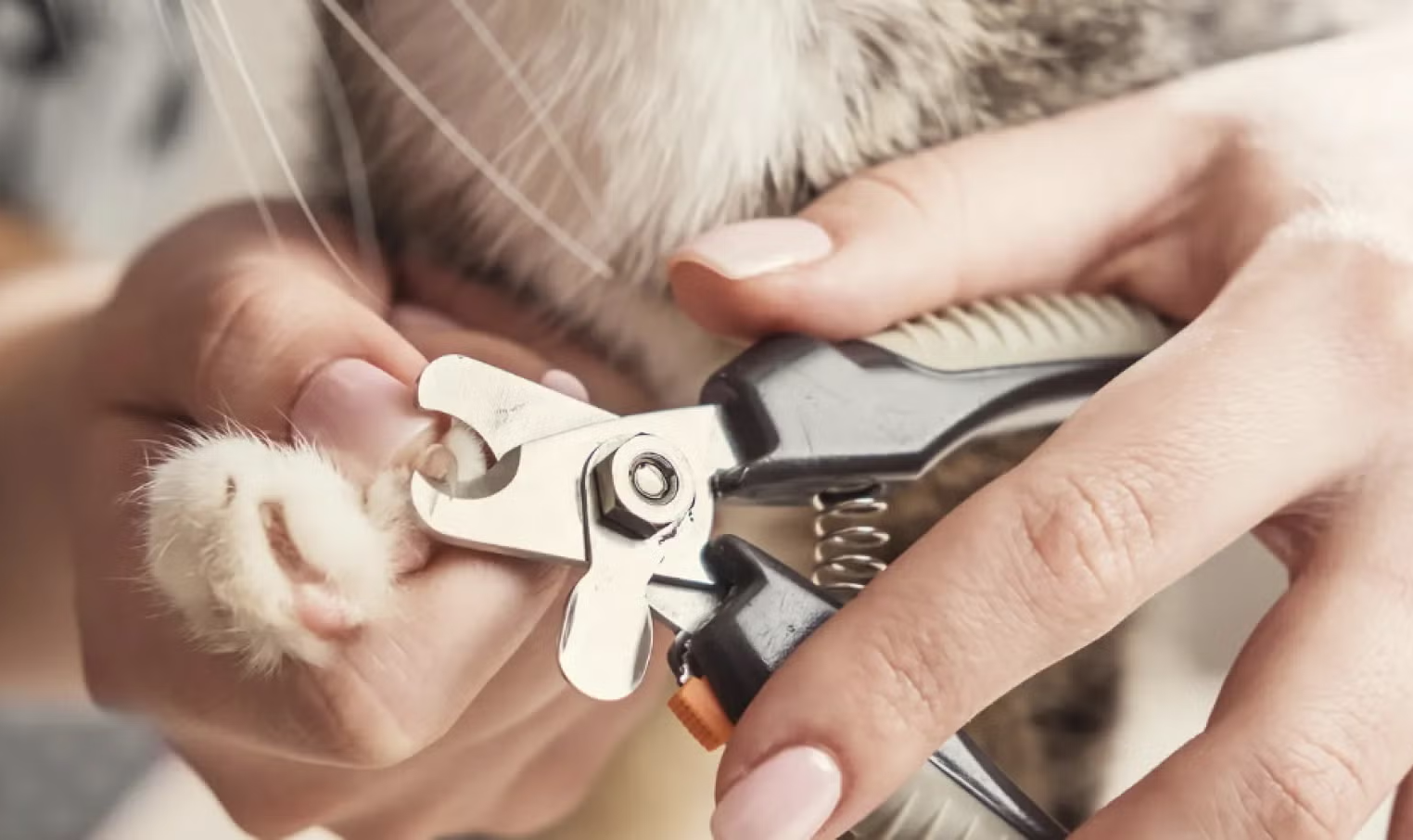
With the paw in your hand, locate the individual toe you're starting with. Using your thumb on the upper surface of the toe and your index finger on the pad below, apply gentle, steady downward pressure against the toe pad. The cat's retraction mechanism for their claws operates passively — the claws are held retracted by a ligament at rest, and extended by muscle action when needed. The pressure of your thumb and finger disrupts the resting retraction, causing the claw to extend and hold in a visible position.
The pressure required is very light — significantly lighter than most first-time trimmers use. The claw should extend smoothly and hold extended without resistance if the pressure is applied in the right place. If you're finding the claw won't stay extended, experiment with the exact placement of your thumb and finger along the toe rather than increasing pressure.
The Cut Itself
With the claw extended, look at it under your available lighting. The pink quick should be clearly visible through the translucent nail if the nail is light-colored, appearing as a pinkish or reddish triangle or wedge shape within the nail that extends from the base toward the tip. In light-colored nails, you can typically identify a clear zone of two to four millimeters between the end of the quick and the nail tip. You're going to cut the nail within this clear zone, staying two to three millimeters away from the edge of the quick as a safety margin.
Position the clipper blades around the nail in the clear zone — past the end of the quick, toward the tip. The blades should be oriented to cut straight across the nail rather than at an angle, and they should be fully around the nail before any cutting force is applied. Then squeeze the handles in a single, smooth, decisive motion. Hesitation and slow squeezing produces the crushing action of a dull cut even with sharp blades. One smooth motion through the nail is what produces a clean cut.
For dark nails where the quick isn't visible, work conservatively. Look at the nail tip from the front — if you see a solid dark core beginning to appear in the cross-section, you're approaching the quick and should stop. Otherwise, take only the very tip, a millimeter or two at most, until you've established a regular trimming routine that allows the quick to recede over time.
Working Through the Paws
A full set of cat nail trims covers ten claws — four on each back paw and four on each front paw, plus the dewclaw on the front paws that sits slightly above the other toes and is easily missed if you're not specifically looking for it. The dewclaws are particularly important to remember because they make no contact with the ground during walking and have no opportunity for any passive wear, meaning they can grow unchecked faster than the other nails and are disproportionately likely to be the ones that curve into the paw pad if neglected.
You don't need to do all ten in a single session, particularly in the early stages of establishing a trimming routine. Two or three nails and then release, with a treat and positive interaction, followed by the remaining nails at a second brief session later in the day or the following day, is a completely reasonable approach. Completing fewer nails in a session that remains positive for the cat is always better than completing all nails in a session that becomes progressively more stressful as the cat's tolerance runs out.
When Things Go Wrong — And How to Handle It
Nicking the Quick
It happens to every cat owner who trims nails long enough. A cat shifts slightly, the lighting wasn't quite right, the quick had extended further than expected — and you feel and hear the difference immediately, as does the cat. The nail bleeds and the cat reacts.
The appropriate response is calm and immediate: apply your styptic powder to the nail tip with a cotton swab or direct application and hold gentle, steady pressure for thirty seconds to a minute. The bleeding will stop. Speak calmly to the cat throughout. Once the bleeding has stopped, release the cat and end the session for the day — continuing immediately after a quick nick, even if only one or two other nails remain, is not advisable. The cat is now associating nail trimming with pain, and the best thing you can do is provide positive attention, a treat, and allow the session to end on the most neutral note possible.
At the next session, begin extra conservatively, taking very small amounts from the tips, until your confidence in the safe cutting zone is fully restored.
A Cat Who Won't Cooperate Despite Preparation
Some cats, regardless of thorough desensitization work, remain genuinely difficult to trim at home — not because the preparation was inadequate but because their individual temperament makes this kind of handling intolerable beyond a very limited threshold. This is not a failure on your part or the cat's. It's information.
For these cats, the most appropriate response is to work with your veterinarian or a professional groomer for regular trims, and to continue gentle paw-handling practice at home between professional sessions to gradually build more tolerance over time. Some cats who start their nail-trimming history at a professional clinic eventually become manageable at home once the procedure has become familiar; others continue to do better with professional handling indefinitely. Both outcomes are fine.
The Schedule and the Long Game
Every Ten to Fourteen Days
The appropriate trimming interval for most cats is every ten to fourteen days. This frequency keeps nails consistently short enough that they never approach the length at which curving becomes a concern, never develop the extended quick that makes trimming more nerve-wracking, and never accumulate the sharpness that causes problems during routine handling.
Setting a phone reminder on a recurring schedule within this window removes the mental load of remembering and ensures the routine actually stays routine rather than drifting to "whenever I notice the nails are getting long" — which, in practice, usually means they've already gotten longer than ideal before the reminder registers.
The Reward System: Why It's Non-Negotiable
The moment immediately following a nail trimming session is not the time to put the cat down, return to what you were doing, and consider the job done. It's the most important moment in the entire process for the next session's success.
Positive reinforcement given immediately after the cat has been cooperative — or tolerated — nail trimming creates the behavioral association that makes future sessions incrementally easier. The association the cat is building is: calm during nail trimming produces something excellent. The strength of this association depends on the timing (immediately after) and the quality of the reward (something the cat genuinely values highly, not a token treat they're indifferent to).
A small serving of wet food. A prized treat that doesn't appear at other times. A play session with a favored wand toy. Whatever your specific cat finds most rewarding and most exciting should appear within seconds of the trimming session ending on a cooperative note. The consistency of this reward across sessions, over months and years, is what transforms nail trimming from an occasional battle into a routine the cat recognizes and, eventually, approaches with relative equanimity — because they've learned, through many repetitions, that what follows is reliably worth whatever the mild inconvenience of sitting still for it was.
Professional Support and Knowing Your Limits
When to Let a Professional Handle It
There are genuine circumstances where home nail trimming isn't the right choice, and recognizing them is part of responsible cat ownership rather than an admission of failure.
A cat with significant existing nail pathology — an embedded nail, severely overgrown and curled nails, or signs of infection around the nail bed — needs veterinary assessment and treatment before any trimming happens at home. These aren't starting-point situations for a home trimming routine. They're clinical conditions.
A cat who becomes genuinely aggressive during nail handling — not squirmy or vocal, but actively biting or scratching with real force, or showing the kind of fear response where stress hormones are clearly running high — is a cat whose nail trimming should be handled professionally until the relationship to the procedure has been significantly improved, potentially with professional behavioral guidance. Forcing a high-fear response during nail trimming doesn't build tolerance. It deepens the association between nail trimming and extreme discomfort.
And an owner who is genuinely uncertain about their ability to distinguish the quick from the clear nail tip, particularly in a cat with dark nails, is an owner who benefits from a demonstration by a veterinarian or groomer before attempting the procedure independently. Watching someone experienced navigate the process once, with your specific cat's nail anatomy visible in real time, provides more confidence than any written guide can fully replicate.
What a Professional Session Can Teach You
Many veterinary clinics and professional grooming salons will allow you to observe a nail trimming session on your cat and ask questions as it happens. If you're starting from uncertainty, one professional session used as an active learning opportunity — rather than simply as a service to have done for you — can provide the hands-on reference point that makes independent practice considerably less intimidating.
Conclusion: Five Minutes Every Two Weeks for a Lifetime of Difference
There's no dramatic transformation on either side of a successful cat nail trimming session. Your cat doesn't emerge looking visibly different. You don't feel a particular sense of achievement. It's a mundane, routine act that happens and is finished and gets scheduled again for two weeks later.
But the cumulative effect of that small, consistent act over the months and years of a cat's life is genuinely significant. It's a cat whose paws remain comfortable and healthy throughout their life. It's a cat who never faces the pain and infection of an ingrown nail. It's a multi-pet household where play stays play. It's an owner whose relationship with their cat is physically comfortable rather than punctuated by accidental injuries. It's furniture that ages more gracefully than it would otherwise.
None of that is dramatic. All of it matters.
Learn the anatomy. Get the right equipment. Do the preparation work with your cat's paws before you ever touch a clipper. Start conservatively, keep sessions brief, end every session positively. Build the routine and maintain it. And when in doubt — on any specific cut, on any specific session — stop and seek professional guidance rather than pushing through uncertainty.
This is not a difficult skill. It is a learnable one. And once it's learned and routinized, it takes about as much time and mental energy as any other small, regular task that simply becomes part of how you care for the animal sharing your home.
FAQ
1. Why is trimming my cat's nails important?
Regular nail trimming helps prevent overgrown claws, reduces accidental scratches, protects furniture, improves your cat's mobility, and prevents painful ingrown nails that can penetrate the paw pads. It is an essential part of routine cat grooming, especially for indoor cats.
2. How often should I trim my cat's nails?
Most cats benefit from nail trimming every 10 to 14 days. However, kittens, senior cats, and less active indoor cats may need more frequent trims because their nails grow at different rates.
3. Do indoor cats need nail trimming more than outdoor cats?
Yes. Indoor cats usually don't wear down their nails naturally as much as outdoor cats. While scratching posts help remove the outer nail sheath, they rarely shorten the nail enough to eliminate the need for regular trimming.
4. Can scratching posts replace nail trimming?
No. Scratching posts help cats remove dead nail layers, stretch muscles, and mark territory, but they do not significantly shorten nail length. Regular trimming is still necessary.
5. At what age should I start trimming my kitten's nails?
You can begin handling your kitten's paws at around 6 to 8 weeks old and introduce gentle nail trimming shortly afterward. Starting early helps kittens become comfortable with the process throughout adulthood.
6. What tools should I use to trim my cat's nails?
Use:
- Cat-specific nail clippers (scissor-style or guillotine-style)
- Styptic powder for accidental bleeding
- Good lighting
- Treats for positive reinforcement
Avoid using scissors or human nail clippers whenever possible.
7. What is the "quick" in a cat's nail?
The quick is the pink area inside the nail that contains blood vessels and nerves. Cutting into it causes pain and bleeding. Only trim the transparent tip of the nail.
8. How can I see the quick on dark-colored nails?
Dark nails make the quick difficult to see. Trim only a very small amount from the tip each time and use a bright light if necessary. When unsure, it's always safer to trim less.
9. What happens if I accidentally cut the quick?
Stay calm. Apply styptic powder immediately to stop the bleeding. The injury is usually minor but may make your cat nervous during future trimming sessions. End the session, reward your cat, and try again another day.
10. Should I trim all of my cat's nails in one session?
Not necessarily. Many cats tolerate trimming just two or three nails at a time. Completing the trim over multiple short sessions is often less stressful than forcing one long session.
11. Which nails are most important to trim?
All claws should be maintained, but dewclaws deserve extra attention because they don't touch the ground and can easily become overgrown or curl into the paw pad.
12. How can I make nail trimming easier?
Practice touching your cat's paws daily, reward calm behavior with treats, trim nails after naps or meals, keep sessions short, and never force a frightened cat.
13. Why does my cat hate nail trimming?
Most cats dislike restraint rather than trimming itself. Building trust through gradual paw handling and positive reinforcement usually improves cooperation over time.
14. Can I trim my cat's nails by myself?
Yes. Most owners can safely trim their cat's nails after learning proper technique and using the correct tools. If you're uncomfortable, ask your veterinarian or groomer for a demonstration.
15. How do I know if my cat's nails are too long?
Signs include:
- Nails catching on carpets or furniture
- Loud clicking on hard floors
- Curled nail tips
- Difficulty walking
- Nails growing toward the paw pads
16. What if my cat refuses to cooperate?
Some cats require gradual desensitization over weeks. If your cat becomes aggressive or extremely fearful, consult a veterinarian or professional groomer instead of forcing the procedure.
17. Can overgrown nails cause health problems?
Yes. Overgrown nails may:
- Grow into the paw pads
- Cause infections
- Affect walking posture
- Reduce traction
- Increase the risk of injuries during play
18. Should senior cats have their nails trimmed more often?
Yes. Older cats scratch less frequently, making them more likely to develop overgrown or ingrown nails. Weekly nail inspections are highly recommended.
19. Is nail trimming painful for cats?
No, as long as only the clear tip is trimmed. Proper nail trimming is painless and becomes easier as both you and your cat gain experience.
20. When should I let a professional trim my cat's nails?
Seek professional help if your cat:
- Has severely overgrown or ingrown nails
- Shows signs of nail infections
- Becomes highly aggressive during trimming
- Has black nails that make you uncomfortable trimming
- Has medical conditions affecting the paws or claws