Advanced Nutritional Breakdown & Clinical Efficacy Assessment: Tiki Cat Baby Chicken, Salmon & Chicken Liver Recipe (Grain-Free Mousse & Shreds)
2 months ago · Updated 2 months ago
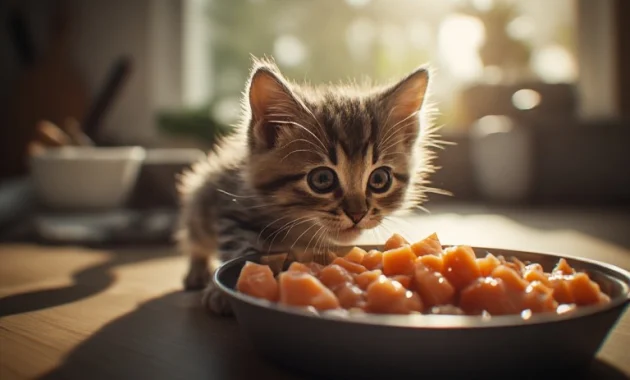
The weaning and early growth phases represent the most immunologically vulnerable and metabolically demanding periods in a cat's life. Between the ages of 4 and 12 weeks, kittens transition from the passive immunity provided by maternal colostrum to developing their own active immune systems—a phase frequently referred to by veterinary neonatologists as the "immunity gap."
During this short window, a kitten’s body demands a highly concentrated, biologically appropriate nutrient profile to support rapid muscle growth, skeletal calcification, neurological profiling, and gastrointestinal development.
This comprehensive clinical evaluation breaks down the ingredients, guaranteed analysis, caloric density, and therapeutic benefits of Tiki Cat Baby Chicken, Salmon & Chicken Liver Recipe. We will evaluate its structural suitability for weaning kittens, analyze its macronutrient profile, and provide clear feeding calculations for both veterinary professionals and dedicated pet parents.
Ingredient Matrix & Structural Efficacy
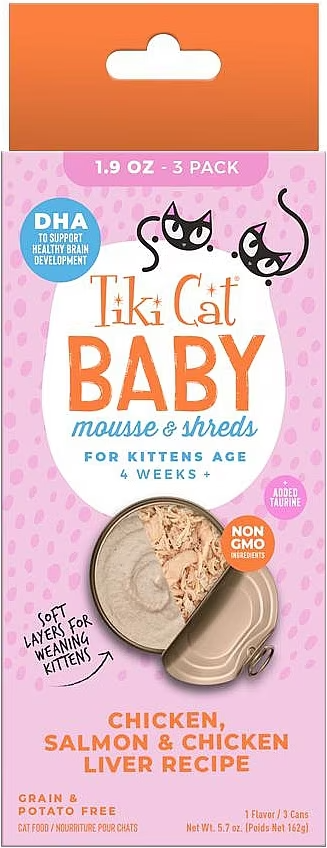
A biological evaluation of any feline diet begins with an analysis of its ingredient deck. Cats are obligate carnivores, meaning their bodies are metabolically hardwired to utilize animal tissues for energy, amino acids, and essential fatty acids.
               TIKI CAT BABY INGREDIENT DECK ARCHITECTURE
 ┌───────────────────────────────────────────────────────────────────────┐
 │ ANIMAL PROTEINS   - Chicken, Chicken Broth, Salmon, Chicken Liver.   │
 ├───────────────────────────────────────────────────────────────────────┤
 │ LIPID SPECIFICS   - Sunflower Seed Oil, Salmon Oil (Pure DHA source). │
 ├───────────────────────────────────────────────────────────────────────┐
 │ PREBIOTIC MATRIX  - Inulin (Gently balances microflora populations).  │
 └───────────────────────────────────────────────────────────────────────┘
1. High-Value Apex Animal Proteins
Chicken & Chicken Broth: Positioned as the primary ingredients, these provide highly digestible, bioavailable structural proteins rich in essential branch-chain amino acids (leucine, isoleucine, and valine) required for skeletal muscle development.
Salmon: A premium marine protein that diversifies the amino acid profile while naturally introducing vital polyunsaturated fatty acids into the diet.
Chicken Liver: Often designated as nature's multivitamin, liver is an exceptional source of highly bioavailable pre-formed Vitamin A, iron, copper, and B-complex vitamins (especially B12). It also acts as a natural palatability enhancer for young kittens with an underdeveloped sense of taste.
2. Functional Lipid Sources and Brain Development
Salmon Oil: This is a crucial addition to kitten nutrition. Salmon oil is packed with pre-formed Docosahexaenoic Acid (DHA) and Eicosapentaenoic Acid (EPA). DHA is an essential omega-3 fatty acid that makes up a significant portion of the brain's cerebral cortex and retina. Clinical studies confirm that kittens fed diets enriched with marine DHA show superior visual acuity, enhanced trainability, and accelerated cognitive development compared to those on low-DHA diets.
Sunflower Seed Oil: Provides a clean source of Linoleic Acid (LA), an omega-6 fatty acid essential for maintaining skin barrier integrity and a healthy, shiny coat.
3. Gastrointestinal Support Agents
Inulin: A soluble prebiotic fiber derived from chicory root. Inulin escapes digestion in the small intestine and travels to the colon, where it selectively feeds beneficial microflora like Bifidobacterium and Lactobacillus. This gentle fermentation produces short-chain fatty acids (SCFAs), which nourish colon cells, improve water absorption, and help prevent the loose stools frequently seen during diet changes.
Xanthan Gum: A natural stabilizer used to create the smooth mousse texture. This soft consistency is essential for weaning kittens, as their fragile deciduous teeth cannot yet process hard, dry kibble.
- 1. High-Value Apex Animal Proteins
- 2. Functional Lipid Sources and Brain Development
- 3. Gastrointestinal Support Agents
Guaranteed Analysis & Biochemical Metrics
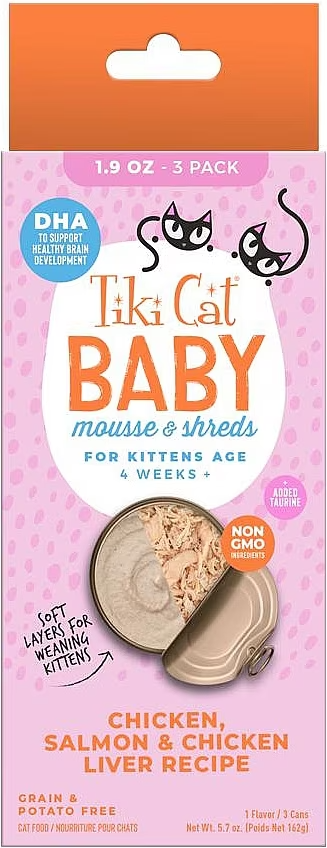
To properly evaluate a wet kitten food, we must look past the raw numbers on the can and assess how those nutrients function on a Dry Matter (DM) Basis. This conversion removes the water content, allowing for an accurate comparison against standard nutritional profiles.
                 MOISTURE CONVERSION TO DRY MATTER (DM)
  [ Wet Weight Crude Protein: 15% ] ───► [ Remove 78% Water Content ] ───► [ Dry Matter Protein: 68.18% ]
Dry Matter Calculations
Nutritional Profile Analysis
Clinical Indications & Target Life-Stage Application
1. The Weaning Phase (Ages 4 to 8 Weeks)
The soft mousse texture of this formula is explicitly engineered to bridge the gap between liquid queen’s milk and solid adult food. During weaning, a kitten’s tongue mechanics are transitioning from a lapping motion to chewing. The smooth mousse can be easily licked off a flat saucer, minimizing mouth fatigue and reducing the risk of accidental food inhalation.
                  THE WEANING TRANSITION PATHWAY
  [ Liquid Queen's Milk ] ───► [ Smooth Mousse Defile ] ───► [ Solid Kibble Elements ]
  Lapping mechanics            Licking/Soft chewing          Advanced chewing
2. Cognitive Support for Growing Kittens
With a calculated Dry Matter DHA level of 0.59%, this recipe serves as an excellent support system for neurological development. It provides the structural building blocks required to optimize neural pathways during peak learning phases.
3. Gestating and Lactating Queens
Pregnancy and nursing place an immense metabolic strain on female cats, often requiring two to four times their baseline energy intake. The high protein level (68.18% DM) and balanced calcium profile make this formula an ideal option for maintaining the queen's muscle mass and supporting milk production.
Quantitative Feeding Protocols
Kittens have a small stomach capacity combined with an incredibly high metabolic rate. To avoid stretching their stomach or causing digestive upset, their daily food portion should be split into 3 to 5 small meals spread across the day.
                      DAILY PORTION CALCULATION
 ┌───────────────────────────────────────────────────────────────────────┐
 │ ENERGY INTAKE    - 67 kcal per 1.9-oz can.                           │
 ├───────────────────────────────────────────────────────────────────────┤
 │ KITTEN RATIO     - 1.75 cans per 1 lb of body weight daily.           │
 ├───────────────────────────────────────────────────────────────────────┤
 │ ADULT MATERNAL   - 2.5 cans per 7 lbs of body weight daily.           │
 └───────────────────────────────────────────────────────────────────────┘
Precise Pediatric Feeding Matrix
1.0 lb Kitten: Requires 1.75 cans per day (Approximately 117 kcal/day divided into 4 meals of $\sim 0.4$ cans each).
2.0 lb Kitten: Requires 3.50 cans per day (Approximately 234 kcal/day divided into 4 meals of $\sim 0.8$ cans each).
3.0 lb Kitten: Requires 5.25 cans per day (Approximately 351 kcal/day divided into 4 meals of $\sim 1.3$ cans each).
Transitional Feeding Protocol
To protect a kitten's sensitive gut microflora, always transition to a new food gradually over a 7 to 14-day window:
                    DIETARY TRANSITION MATRIX
  [ Days 1 - 3 ]     ──► 25% New Food  / 75% Baseline Food
  [ Days 4 - 7 ]     ──► 50% New Food  / 50% Baseline Food
  [ Days 8 - 11 ]    ──► 75% New Food  / 25% Baseline Food
  [ Day 12 and Beyond ] ──► 100% Pure New Wet Food Formulation
Purchasing Options & Value Optimization
When purchasing this formula through Chewy, buyers can leverage several savings codes and scheduling options to maximize value:
One-Time Chewy Price: $6.30 per 3-pack case ($1.11 per ounce).
First-Time Autoship Incentive: Setting up an Autoship delivery reduces the price to $4.10 for the first order, offering a 35% savings (up to a $20 cap).
Recurring Autoship Program: Future automated deliveries maintain a 5% discount, bringing the ongoing case cost to $5.98 with the flexibility to pause, adjust, or cancel shipments at any time.
Active Promotional Codes
WELCOME20: Exclusive for new customers. When you spend $49 or more, this code adds a $20 Chewy eGift Card to your account and unlocks free shipping.
SP25OFF: Applies a 25% discount directly to eligible items in your cart.
Final Clinical Outlook: The Pediatric Nutrition Verdict
Tiki Cat Baby Chicken, Salmon & Chicken Liver Recipe is a standout choice in feline pediatric nutrition. By prioritizing real animal proteins and completely excluding grains, it aligns perfectly with the evolutionary and metabolic needs of the species.
The combination of iron-rich chicken liver, brain-supporting salmon oil, and digestion-friendly inulin creates a well-rounded formula that addresses the key pillars of kitten health: smooth weaning, strong immunity, and healthy cognitive growth. For veterinarians looking for an ideal weaning food, or pet owners wanting to give their kitten an optimal start in life, this recipe provides an excellent, nutritionally complete foundation.
FAQ: Tiki Cat Baby Kitten Nutrition Guide
1. What is Tiki Cat Baby Chicken, Salmon & Chicken Liver Recipe?
It is a high-protein wet kitten food designed for kittens in the weaning and early growth stages (4–12 weeks), formulated to support immunity, brain development, and rapid physical growth.
2. Is this food suitable for weaning kittens?
Yes. The soft mousse texture is specifically designed to help kittens transition from mother’s milk to solid food without digestive stress.
3. What are the main benefits of this kitten food?
Key benefits include:
- High-quality animal protein for muscle growth
- DHA from salmon oil for brain and vision development
- Prebiotics (inulin) for digestive health
- Highly digestible ingredients for sensitive kitten stomachs
4. Does it support brain development?
Yes. The salmon oil provides DHA, an essential omega-3 fatty acid that supports brain function, learning ability, and visual development in kittens.
5. Is this food good for sensitive stomachs?
Yes. It contains gentle ingredients and prebiotics like inulin, which help balance gut bacteria and reduce digestive issues during diet transitions.
6. Can pregnant or nursing cats eat this food?
Yes. It is also suitable for pregnant and lactating queens due to its high calorie density and protein content, which supports milk production and energy needs.
7. How often should kittens be fed?
Kittens should be fed 3–5 small meals per day to support their fast metabolism and small stomach capacity.
8. How do I transition my kitten to this food?
Use a gradual 7–14 day transition:
- Days 1–3: 25% new food
- Days 4–7: 50% new food
- Days 8–11: 75% new food
- Day 12+: 100% new food
9. How much should I feed my kitten?
A general guideline is:
- 1 lb kitten → ~1.75 cans/day
- 2 lb kitten → ~3.5 cans/day
- 3 lb kitten → ~5.25 cans/day
(Adjust based on activity level and vet advice)
10. Is this better than dry kitten food?
Wet food like this provides higher moisture content, better palatability, and easier digestion, making it ideal for young kittens compared to dry kibble.
11. Can it cause diarrhea or stomach issues?
Not usually, but sudden diet changes can cause soft stool. Always transition gradually to avoid digestive upset.
12. Is this food grain-free?
Yes, it is grain-free and focuses on animal-based proteins to match a cat’s natural carnivorous diet.
13. Is it safe for long-term feeding?
Yes. It is formulated as a complete and balanced diet for kittens and can be fed throughout the growth stage when used properly.
14. Do kittens like the taste?
Most kittens find it highly palatable due to chicken liver, which naturally enhances flavor and aroma.
15. When should I switch to adult cat food?
Typically around 12 months of age, depending on breed, size, and veterinary recommendations.