Clinical Review of FirstMate Limited Ingredient Diet: Chicken Meal & Blueberries Formula for Felines
2 weeks ago
When managing a feline patient with chronic gastrointestinal distress, suspected cutaneous adverse food reactions (CAFR), or idiopathic inappetence, selecting an appropriate commercial diet requires strict evaluation of macronutrient architecture and molecular antigen sources.
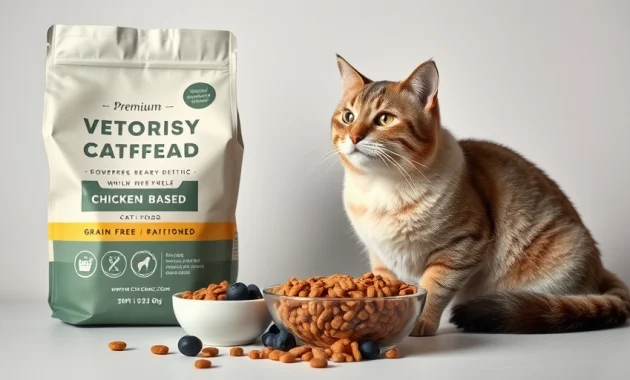
FirstMate’s Grain-Free Chicken Meal with Blueberries Formula is engineered as a Limited Ingredient Diet (LID). It minimizes antigenic complexity while maximizing protein bioavailability for all feline life stages.
Ingredient Architecture and Biochemical Profile
                 [FirstMate LID Nutrient Matrix]
                                │
         ┌──────────────────────┴──────────────────────┐
         ▼                                             ▼
[Protein Fraction]                            [Lipid & Fiber Fraction]
- Chicken Meal (Low moisture, 4x density)     - Purified Chicken Fat (Protein-free)
- Supplemental DL-Methionine & Taurine        - Whole Blueberries & Minerals
Dehydrated Protein Efficiency
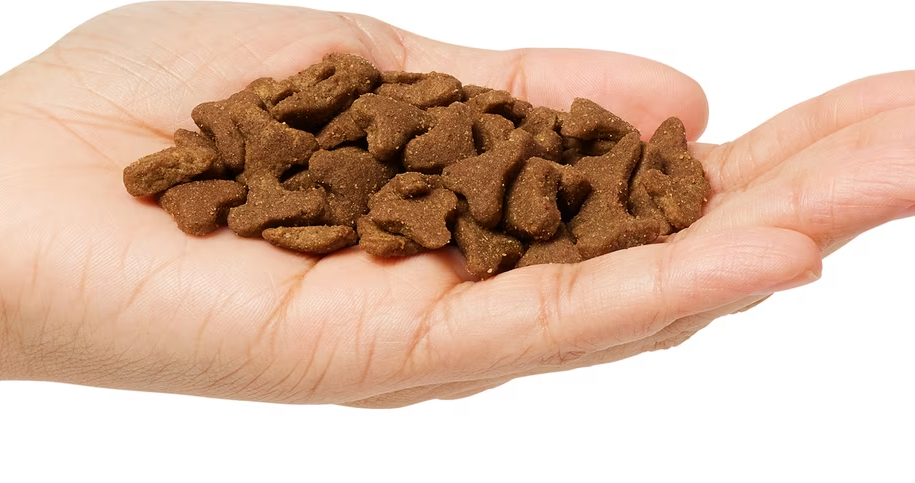
Unlike standard commercial diets that list fresh chicken as the primary ingredient, this formula utilizes Chicken Meal as its foundational protein source. Fresh chicken contains up to $70\%$ moisture by weight, which is lost during thermal processing, significantly dropping its actual protein yield.
Chicken meal is pre-rendered and dehydrated, offering a concentrated source of animal protein with a minimum guaranteed analysis of $36.0\%$ Crude Protein. This provides roughly four times the amino acid density of fresh meat per unit mass.
The Non-Allergenic Lipid Strategy
A common point of confusion in veterinary clinical nutrition is the inclusion of chicken fat in diets designed for animals with suspected chicken hypersensitivities.
An immune-mediated food allergy is triggered by structural glycoproteins within the ingredient. FirstMate utilizes a purified Chicken Fat lipid source ($16.0\%$ min) that is completely free of chicken protein macromolecules. Consequently, this fat source will not cross-react or trigger an IgE-mediated response in patients with a diagnosed chicken allergy.
Antioxidant and Urinary Tract Stabilization
Whole Blueberries: Serve as a non-grain source of dietary fiber to optimize cecal fermentation and stool consistency. Blueberries are rich in proanthocyanidins, which inhibit the adherence of pathogenic E. coli to the urothelium, supporting long-term urinary tract health.
Phosphoric Acid: Acts as an exogenous urinary acidifier. By shifting the postprandial urine pH into a slightly acidic range, it aids in dissolving and preventing the crystallization of magnesium ammonium phosphate (struvite) calculi.
- Dehydrated Protein Efficiency
- The Non-Allergenic Lipid Strategy
- Antioxidant and Urinary Tract Stabilization
- 1. What is FirstMate Grain-Free Chicken Meal with Blueberries Formula?
- 2. Is this cat food considered a Limited Ingredient Diet (LID)?
- 3. What makes chicken meal different from fresh chicken in cat food?
- 4. Why does this formula use chicken meal instead of fresh chicken?
- 5. Is chicken meal a good ingredient for cats?
- 6. What is the crude protein level of this formula?
- 7. Is 36% protein good for cats?
- 8. What is the fat content of this food?
- 9. Why is chicken fat included if the food is meant to be simple or sensitive-diet friendly?
- 10. Can a cat with a chicken allergy eat a food containing chicken fat?
- 11. What role do blueberries play in this cat food?
- 12. Do blueberries provide meaningful health benefits for cats?
- 13. Is this food grain-free?
- 14. Is grain-free always better for cats?
- 15. Is this food appropriate for cats with sensitive stomachs?
- 16. Can this formula help cats with suspected food sensitivities?
- 17. Is this a good food for cats with itchy skin or food allergies?
- 18. Does this formula support urinary health?
- 19. Is dry food enough for cats with urinary concerns?
- 20. What is taurine, and why is it important in this food?
- 21. What is DL-methionine, and why is it included?
- 22. What is the calorie content of this formula?
- 23. Is 540 kcal per cup high for cat food?
- 24. Can this food cause weight gain if overfed?
- 25. How much of this food should I feed my cat each day?
- 26. Is this food suitable for kittens?
- 27. Is it suitable for adult cats?
- 28. Is it suitable for senior cats?
- 29. Is this a good choice for a picky cat?
- 30. Can this help a cat with chronic vomiting or diarrhea?
- 31. How should I transition my cat onto this food?
- 32. Why is a slow transition important?
- 33. Can I free-feed this formula?
- 34. Does this formula contain enough fiber for hairball support?
- 35. Is this food high in ash or minerals?
- 36. Is the calcium-to-phosphorus ratio important?
- 37. Is this food good for cats with kidney disease?
- 38. Can this be used in a food trial for suspected allergies?
- 39. Is this food better than wet food for cats with digestive or appetite issues?
- 40. What type of cat owner might consider this formula?
- 41. What are the main strengths of this formula?
- 42. What are the main limitations of this formula?
- 43. Should I choose this food for a cat with chronic GI issues without seeing a vet?
- 44. What is the overall takeaway on FirstMate Grain-Free Chicken Meal with Blueberries Formula?
Guaranteed Analysis and Macro-Nutrient Metrics
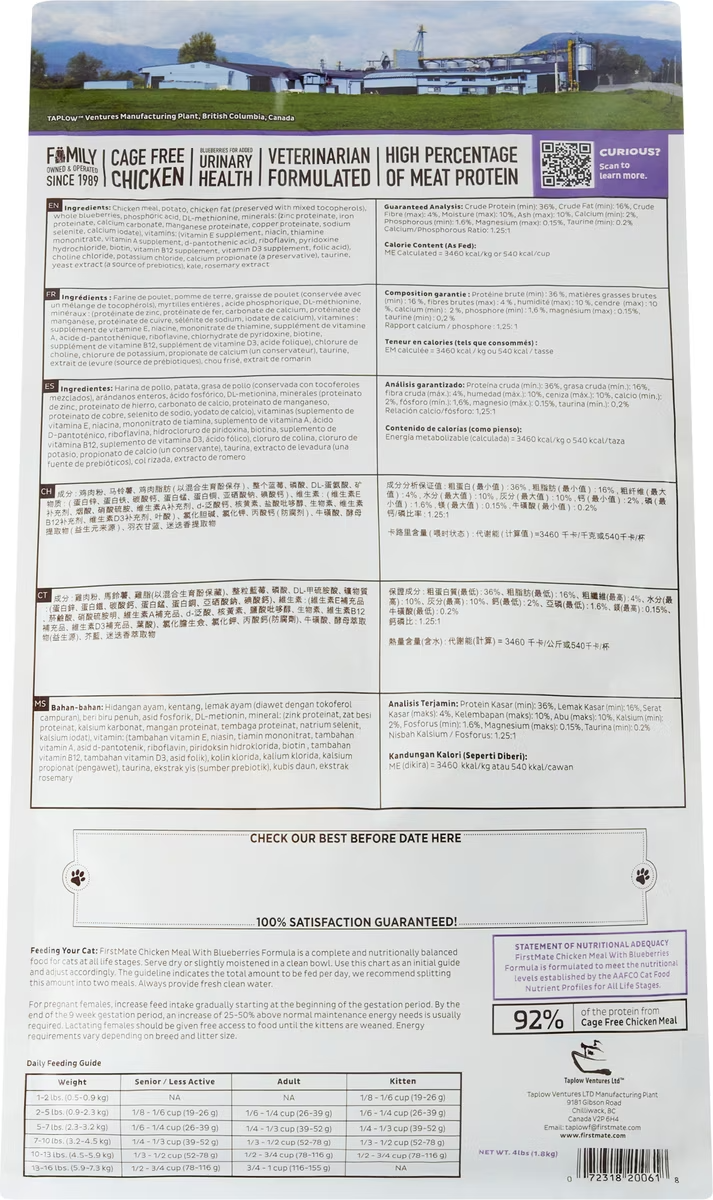
The formula's dry matter analysis reveals an energy-dense profile optimized for metabolic maintenance, growth, and tissue repair:
| Nutrient Component | Guaranteed Analysis (Minimum/Maximum) | Clinical Utility & Physiological Significance |
| Crude Protein | $36.0\%$ min | Supports lean muscle mass retention and hepatic gluconeogenesis. |
| Crude Fat | $16.0\%$ min | Supplies essential fatty acids; drives metabolic energy production. |
| Crude Fiber | $4.0\%$ max | Regulates gastrointestinal transit time and prevents hairball formation. |
| Moisture | $10.0\%$ max | Low water activity inhibits microbial growth without artificial preservatives. |
| Ash | $10.0\%$ max | Total mineral matrix; structured to maintain structural integrity. |
| Calcium / Phosphorus | $2.0\%$ min / $1.6\%$ min | $1.25:1$ ratio; optimized for skeletal development across all lifestages. |
| Taurine | $0.2\%$ min | Prevents dilated cardiomyopathy ($DCM$) and central retinal degeneration. |
Due to its high caloric density ($540\text{ kcal/cup}$), precise portion management is necessary to prevent excessive adipose tissue deposition and secondary metabolic issues like feline obesity.
Clinical Feeding Allocations and Transition Protocol
[Current Maintenance Diet] ──► [7-Day Stepwise Titration] ──► [100% FirstMate LID Formula]
Daily Rations (Based on Metabolic Status)
Portion allocations must be adjusted based on the patient's current body condition score (BCS) and life-stage energy requirements:
Kittens ($2\text{ to }5\text{ lbs}$): Require $1/6\text{ to }1/4\text{ cup}$ daily to support rapid tissue synthesis and skeletal growth.
Active Adults ($7\text{ to }10\text{ lbs}$): Require $3/8\text{ to }1/2\text{ cup}$ daily to match their daily metabolic output.
Less Active/Obese-Prone Adults ($10\text{ to }13\text{ lbs}$): Should be restricted to $1/3\text{ to }1/2\text{ cup}$ daily to preserve lean body mass while preventing unnecessary fat storage.
The 7-Day Cross-Over Titration Schedule
To avoid acute dysbiosis, osmotic diarrhea, or dietary aversion, transition to the new food gradually over seven days:
[Days 1-2]: 25% New Diet / 75% Ancestral Diet
[Days 3-4]: 50% New Diet / 50% Ancestral Diet
[Days 5-6]: 75% New Diet / 25% Ancestral Diet
[Day 7]:    100% Monofocal FirstMate LID Feeding
Procurement and Financial Architecture
For multi-cat environments or long-term clinical trials, purchasing options can be optimized via automated delivery structures to maximize cost efficiency:
Cost Spectrum:
[10-lb Single Unit: $4.50/lb] ──► [20-lb Bundle: $4.46/lb] ──► [First Autoship Promotion: $2.92/lb]
Baseline Retail Value: A standard 10-lb single unit retails at $\$44.99$ ($\$4.50/\text{lb}$).
Volume Optimization: Purchasing a 20-lb bundle reduces the long-term cost to $\$4.46/\text{lb}$.
Initial Autoship Discount: Setting up automated delivery drops the initial order price to $\$29.24$, offering an immediate cost reduction for patients starting a new dietary trial.
FAQ (FirstMate Grain-Free Chicken Meal with Blueberries Formula for Cats)
1. What is FirstMate Grain-Free Chicken Meal with Blueberries Formula?
FirstMate Grain-Free Chicken Meal with Blueberries Formula is a limited ingredient dry cat food designed for cats of all life stages. It is built around a relatively simple ingredient profile, using chicken meal as the primary protein source and avoiding grains, which may make it appealing to owners looking for a more streamlined diet for cats with food sensitivities, digestive issues, or picky eating habits.
2. Is this cat food considered a Limited Ingredient Diet (LID)?
Yes. This formula is marketed as a Limited Ingredient Diet (LID), meaning it contains a more restricted list of core ingredients than many conventional cat foods. The purpose of an LID is to reduce ingredient complexity, which may be useful for cats with suspected food sensitivities or owners trying to identify possible dietary triggers.
3. What makes chicken meal different from fresh chicken in cat food?
Chicken meal is a rendered, dehydrated form of chicken protein. Unlike fresh chicken, which contains a large amount of water, chicken meal has already had most of its moisture removed before it is added to the formula. This means:
- It is more protein-dense by weight
- It contributes a more concentrated animal protein source
- It does not “shrink” as dramatically during processing compared with fresh meat ingredients
This is why many high-protein dry foods use meat meal as a primary ingredient.
4. Why does this formula use chicken meal instead of fresh chicken?
Chicken meal provides a concentrated protein source that helps support:
- Lean muscle maintenance
- Growth in kittens
- General body tissue repair
- Daily energy metabolism in obligate carnivores
Because it is already dehydrated, chicken meal can deliver a substantial amount of animal protein in a dry kibble format.
5. Is chicken meal a good ingredient for cats?
In many cases, yes. Cats are obligate carnivores and require diets rich in animal-based protein. A properly sourced chicken meal can be a practical ingredient in dry food because it offers concentrated protein and amino acids in a shelf-stable form.
6. What is the crude protein level of this formula?
The guaranteed analysis lists 36.0% minimum crude protein, which is relatively high for a dry cat food. This level can be useful for supporting:
- Muscle maintenance
- Growth and development
- Tissue repair
- General feline metabolic needs
7. Is 36% protein good for cats?
For many healthy cats, 36% crude protein in a dry formula is a solid protein level, especially when the protein is largely animal-based. Cats generally do well on protein-rich diets because their metabolism is adapted to rely heavily on amino acids for energy and body maintenance.
8. What is the fat content of this food?
This formula provides 16.0% minimum crude fat, which contributes:
- Energy density
- Palatability
- Essential fatty acids
- Support for skin, coat, and overall body condition
Fat is an important energy source for cats, especially active adults and growing kittens.
9. Why is chicken fat included if the food is meant to be simple or sensitive-diet friendly?
Chicken fat is commonly used in cat food as a palatable and energy-rich fat source. In many food formulations, purified fat contains far less intact protein than meat ingredients do. Since food allergies are generally triggered by proteins, not pure fats, some cats with food sensitivities may tolerate a fat source better than a full chicken protein ingredient. However, if a cat has a confirmed chicken allergy, owners should always consult a veterinarian before using any chicken-derived ingredient.
10. Can a cat with a chicken allergy eat a food containing chicken fat?
It depends on the individual cat and the severity of the allergy. While purified fat may contain much less protein than meat or meal ingredients, it is not automatically safe for every allergic cat. If a veterinarian suspects or confirms a true chicken allergy, it is best to use a diet chosen specifically for elimination trials or allergy management under professional guidance.
11. What role do blueberries play in this cat food?
Blueberries are included as a supplementary ingredient that may contribute:
- Small amounts of fiber
- Natural phytonutrients
- Antioxidant compounds
In practical terms, blueberries are not the main nutritional driver of the formula, but they may add minor functional and marketing appeal as part of the ingredient profile.
12. Do blueberries provide meaningful health benefits for cats?
Blueberries may contribute antioxidant compounds and a small amount of fiber, but in most dry cat foods they are present in relatively modest quantities. The primary nutritional value of the diet still comes from the animal protein, fat, and overall nutrient balance, not the blueberries alone.
13. Is this food grain-free?
Yes. This formula is grain-free, meaning it does not rely on traditional grains such as wheat, corn, or rice as part of its ingredient design. Grain-free diets are often chosen by owners who want a simpler formula or are avoiding certain carbohydrate sources, although grain-free does not automatically mean better for every cat.
14. Is grain-free always better for cats?
Not necessarily. Some cats do very well on grain-free diets, while others do well on foods that contain grains. The best diet depends on the individual cat’s:
- Health status
- Digestive tolerance
- Body condition
- Medical history
- Ingredient sensitivities
- Preference for dry vs wet food
Grain-free is a feature, not a guarantee of superior nutrition for every cat.
15. Is this food appropriate for cats with sensitive stomachs?
It may be helpful for some cats with sensitive digestion because it uses a relatively simple ingredient structure and a concentrated animal protein source. However, not every digestive issue is caused by food intolerance. If a cat has chronic vomiting, diarrhea, weight loss, or poor appetite, a veterinarian should evaluate the underlying cause rather than relying on diet changes alone.
16. Can this formula help cats with suspected food sensitivities?
Possibly, but it depends on the suspected trigger. Limited ingredient diets are often used to reduce dietary complexity, but if the cat is reacting to chicken, then a chicken-based LID would not be the best choice. For a true elimination trial, veterinarians often recommend:
- A novel-protein diet
- A hydrolyzed protein diet
- A tightly controlled prescription diet
17. Is this a good food for cats with itchy skin or food allergies?
It can be an option in some cases, but not automatically. If a cat has suspected cutaneous adverse food reactions (CAFR) such as chronic itching, ear inflammation, or overgrooming, the most reliable way to investigate food allergy is usually a formal elimination diet trial supervised by a veterinarian. A chicken-based food is not ideal if chicken is a suspected trigger.
18. Does this formula support urinary health?
The formula includes ingredients and mineral balance considerations that may be relevant to urinary health, but it is not the same as a prescription urinary diet. Because this is a dry food with relatively low moisture compared with canned food, cats prone to urinary issues may still benefit more from strategies that increase total water intake, such as:
- Wet food
- Water fountains
- Multiple water stations
- Vet-directed urinary diets if medically necessary
19. Is dry food enough for cats with urinary concerns?
Not always. Cats with a history of urinary crystals, cystitis, urinary blockage, or chronic low water intake often benefit from higher moisture diets, especially wet food. Dry food can still be part of the diet for some cats, but hydration is a major part of urinary tract management.
20. What is taurine, and why is it important in this food?
Taurine is an essential amino acid for cats. Unlike some other species, cats cannot make enough taurine on their own, so they must get it from their diet. Adequate taurine is critical for:
- Heart health
- Vision
- Reproductive health
- Nervous system function
- Normal bile acid metabolism
This formula lists 0.2% minimum taurine, which supports the cat’s nutritional requirements.
21. What is DL-methionine, and why is it included?
DL-methionine is an amino acid supplement often added to cat food to support overall amino acid balance and, in some formulas, urinary tract considerations. It can also contribute to the protein quality profile of the food.
22. What is the calorie content of this formula?
The metabolizable energy is listed as approximately 3460 kcal/kg or about 540 kcal per cup, making it a relatively calorie-dense dry cat food.
23. Is 540 kcal per cup high for cat food?
Yes, that is fairly calorie-dense for a dry cat food. This means portion control is important, especially for:
- Indoor cats
- Less active adults
- Cats prone to weight gain
- Multi-cat households where free-feeding can lead to overeating
24. Can this food cause weight gain if overfed?
Yes. Because the formula is calorie-dense, overfeeding can contribute to:
- Weight gain
- Excess body fat
- Reduced mobility
- Increased risk of obesity-related health issues
Measuring portions accurately is important, particularly for indoor or low-activity cats.
25. How much of this food should I feed my cat each day?
Feeding amounts depend on several factors, including:
- Age
- Weight
- Activity level
- Body condition score
- Whether the cat is intact or neutered
- Whether the cat also eats wet food
- Health conditions such as obesity, diabetes, or gastrointestinal disease
The manufacturer’s guidelines can be a starting point, but the ideal amount should be adjusted based on the cat’s body condition and veterinary advice.
26. Is this food suitable for kittens?
Yes, it is positioned as an all life stages formula, which generally means it is formulated to meet the nutritional needs of growth as well as adult maintenance. Kittens, however, often require:
- More calories per pound
- More frequent meals
- Close weight monitoring during growth
27. Is it suitable for adult cats?
Yes, this formula can be used for adult maintenance as long as the cat tolerates it well and portions are managed appropriately.
28. Is it suitable for senior cats?
It may be suitable for some senior cats, but older cats often have special considerations such as:
- Dental disease
- Kidney disease
- Reduced appetite
- Arthritis affecting access to food
- Need for increased moisture intake
Some senior cats do better with more wet food or a diet tailored to specific medical needs.
29. Is this a good choice for a picky cat?
It can be, especially if the cat likes chicken-based dry food. The chicken fat and overall aroma may improve palatability for some cats. However, truly picky or inappetent cats often do better with wet food, warmed food, or stronger-smelling textures rather than dry kibble alone.
30. Can this help a cat with chronic vomiting or diarrhea?
Not automatically. While a limited ingredient formula may help some cats with food sensitivity, chronic vomiting or diarrhea can also be caused by:
- Parasites
- Inflammatory bowel disease
- Pancreatitis
- Hyperthyroidism
- Hairballs
- Food intolerance
- Food allergy
- Liver or kidney disease
If symptoms are persistent, the cat needs veterinary evaluation rather than repeated food switching alone.
31. How should I transition my cat onto this food?
A gradual transition is usually best to reduce the chance of digestive upset. A common 7-day transition looks like this:
- Days 1–2: 25% new food / 75% old food
- Days 3–4: 50% new food / 50% old food
- Days 5–6: 75% new food / 25% old food
- Day 7 onward: 100% new food
Some sensitive cats may need an even slower transition over 10–14 days.
32. Why is a slow transition important?
A sudden diet change can increase the risk of:
- Loose stools
- Vomiting
- Refusal to eat
- Gas
- Stress around meals
Gradual mixing gives the digestive system and gut microbiome time to adjust.
33. Can I free-feed this formula?
Free-feeding is possible in some households, but it is often not ideal for cats eating a calorie-dense dry food. Measured meals are usually better if:
- The cat gains weight easily
- There are multiple cats with different calorie needs
- You want to monitor appetite changes
- The cat is on a special diet trial
34. Does this formula contain enough fiber for hairball support?
The guaranteed analysis lists 4.0% maximum crude fiber, which may provide some digestive support and help with stool quality, but it is not specifically a dedicated hairball-control diet. Some cats with chronic hairball issues may benefit from additional moisture, grooming, and a diet designed specifically for hairball management.
35. Is this food high in ash or minerals?
The formula lists 10.0% maximum ash, which reflects the mineral content of the food. Mineral balance matters, but the full health impact depends on the complete nutrient profile, the cat’s hydration status, and whether the cat has any specific urinary or kidney conditions.
36. Is the calcium-to-phosphorus ratio important?
Yes. Calcium and phosphorus balance is especially important for:
- Growing kittens
- Bone development
- General mineral balance
This formula lists a calcium and phosphorus profile intended to support all life stages, which is relevant for growth as well as maintenance.
37. Is this food good for cats with kidney disease?
Not automatically. Cats with chronic kidney disease often need careful management of:
- Phosphorus
- Protein balance
- Hydration
- Sodium
- Overall calorie intake
A regular commercial diet, even a high-quality one, may not be appropriate for a cat with kidney disease unless a veterinarian confirms it fits the cat’s needs.
38. Can this be used in a food trial for suspected allergies?
Only if the cat has not previously been exposed to the protein source or if chicken is not suspected as the problem ingredient. In many true food-allergy investigations, veterinarians prefer prescription elimination diets because they reduce the risk of hidden cross-contamination and improve diagnostic accuracy.
39. Is this food better than wet food for cats with digestive or appetite issues?
Not necessarily. Dry food and wet food serve different purposes. Wet food often has advantages for cats with:
- Low appetite
- Dehydration risk
- Urinary issues
- Some digestive sensitivities
- Need for higher moisture intake
Dry food can still be useful, but it is not always the best option for every medical situation.
40. What type of cat owner might consider this formula?
This food may appeal to owners looking for:
- A grain-free dry cat food
- A limited ingredient formula
- A chicken-based diet with relatively high protein
- A food for healthy adult cats or all life stages
- A simpler ingredient list compared with some mainstream kibbles
41. What are the main strengths of this formula?
Potential strengths include:
- Concentrated chicken meal as a primary protein source
- High protein level for a dry formula
- Limited ingredient design
- Grain-free structure
- Taurine inclusion
- Suitable for multiple life stages
- Calorie density that may help active cats or cats needing energy-dense food
42. What are the main limitations of this formula?
Potential limitations include:
- It is still a dry food, so moisture is low compared with canned diets
- It may not be appropriate for cats with confirmed chicken allergy
- It is calorie-dense, so portion control matters
- It is not automatically a substitute for a prescription gastrointestinal, urinary, or allergy diet
- Some cats with chronic illness may need a more specialized formula
43. Should I choose this food for a cat with chronic GI issues without seeing a vet?
No. Chronic vomiting, diarrhea, appetite loss, weight loss, or suspected food reactions should always be discussed with a veterinarian. Diet can be an important tool, but it works best when paired with a proper diagnosis and a feeding plan tailored to the cat’s medical condition.
44. What is the overall takeaway on FirstMate Grain-Free Chicken Meal with Blueberries Formula?
FirstMate Grain-Free Chicken Meal with Blueberries Formula is a protein-forward, grain-free limited ingredient dry cat food that may be a good fit for some healthy cats and for some owners looking for a simpler ingredient profile. Its chicken meal base, taurine inclusion, and relatively high protein content are notable strengths. However, it is still a dry, chicken-based commercial diet—not a universal solution for every cat with digestive, urinary, skin, or appetite problems. For cats with chronic symptoms or suspected allergies, the best choice should be made with veterinary guidance.