
Amazfit Helio Strap vs Polar Loop vs Whoop 5.0: Which Screen-Free Fitness Tracker Should You Buy in 2026?
2 weeks ago

The wearable world is entering a new phase in 2026: the rise of screen-free fitness trackers. These minimalist bands focus purely on data collection and recovery insights without the distraction of notifications, apps, or bright screens. They promise to monitor your activity, sleep, strain, and recovery 24/7 while staying comfortable and unobtrusive on your wrist.
Three of the most compelling options right now are the Amazfit Helio Strap, Polar Loop, and Whoop 5.0. Each takes a different approach to the screen-free lifestyle:
- Whoop 5.0 — The original pioneer, now a decade old, known for its deep recovery metrics and subscription model.
- Polar Loop — A stylish, affordable alternative from a trusted fitness brand, emphasizing simplicity and no subscription.
- Amazfit Helio Strap — The most budget-friendly option, delivering solid performance with a strong focus on training load and exertion.
In this in-depth comparison, we break down design, features, performance, battery life, app experience, pricing, and real-world usability to help you decide which screen-free tracker best fits your lifestyle and budget in 2026.
Pricing and subscription models are the biggest differentiators among these three devices.
- Whoop 5.0: Sold through membership plans (One, Peak, Life) that bundle the hardware with 12 months of access. Prices start at around $149 for the base plan and go up to $359 for the premium Life tier (which includes the Whoop MG variant with ECG). After the first year, you pay recurring monthly or annual fees ($25–$40/month depending on tier). This is the most expensive long-term option.
- Polar Loop: One-time purchase at $199 with no mandatory subscription. All core features are included. Polar offers an optional €9.99/month Fitness Program for training plans, but it’s not essential for basic use.
- Amazfit Helio Strap: The most affordable at just $99.99. No subscription required for core tracking. Amazfit offers an optional Zepp Aura Premium subscription ($11.99/month or $69.99/year) focused on sleep sounds and wellness, but it’s entirely optional.
Winner: Amazfit Helio Strap for lowest upfront and ongoing cost. Polar Loop is a strong middle ground. Whoop is the most expensive but justifies it with deeper insights for serious users.
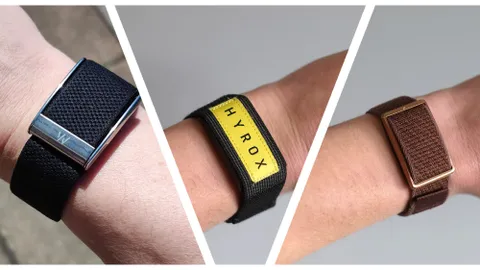
All three are fabric-band wearables with the “brain” (sensors and battery) integrated into the strap.
- Whoop 5.0: Classic minimalist design with a metal clasp. Weighs 29g. The clasp can sometimes come undone unintentionally — a known minor annoyance.
- Polar Loop: Stylish mottled fabric with metal accents. Weighs 29g. Feels more fashion-oriented and comfortable for everyday wear.
- Amazfit Helio Strap: Lightweight all-plastic construction at just 20g. It “disappears” on the wrist. Available in a vibrant Hyrox edition with yellow accents.
All three are water-resistant enough for swimming (IP68 / 5ATM / WR30 ratings), though none are suitable for scuba diving.
Winner: Tie between Polar Loop (style) and Amazfit Helio Strap (lightest and most comfortable).
- Whoop 5.0: Best-in-class recovery metrics (Strain, Recovery, Sleep Coach). The app is highly polished and provides actionable daily advice. Higher tiers add ECG, blood pressure insights, and advanced coaching. Strong focus on long-term holistic health.
- Amazfit Helio Strap: Uses “Biocharge” to balance exertion vs recovery. Strong emphasis on training load, VO2 Max, and workout tracking. The Zepp app is sporty and straightforward. Includes vibration motor for alarms/timers and heart rate live-sharing.
- Polar Loop: Simpler experience with activity cards in the Polar Flow app. Solid heart rate tracking but the software feels less polished and intuitive than the other two. Lacks advanced features like vibration alerts or live HR sharing.
Winner: Whoop for depth and coaching. Amazfit for workout-focused users. Polar feels like the most basic of the three.
All three use optical heart rate sensors and motion tracking. When tested against a high-end Garmin watch:
- Heart rate accuracy during workouts was very close across all three (within 2–3 bpm of the reference).
- Amazfit and Polar performed reliably even during indoor cycling.
- Whoop excels at recovery metrics but can occasionally struggle with manual ECG readings.
Battery life:
- Whoop: Up to 9–14 days (real-world ~9 days with heavy use)
- Polar Loop: ~7–8 days
- Amazfit Helio Strap: ~10 days
Winner: Whoop for recovery insights. Amazfit for consistent battery and value.
- Choose Whoop 5.0 if you want the deepest recovery data, coaching, and don’t mind the subscription. Best for serious athletes and biohackers.
- Choose Polar Loop if you want a stylish, no-subscription tracker from a trusted brand and prefer simplicity.
- Choose Amazfit Helio Strap if you want maximum value, solid performance, and a lightweight design with no ongoing fees. Ideal for most everyday users and budget-conscious fitness enthusiasts.
The Amazfit Helio Strap emerges as the best overall value in 2026 for most people — affordable, lightweight, accurate enough, and subscription-free. Whoop remains the premium choice for those who want the most sophisticated recovery insights. Polar Loop sits in the middle but is held back slightly by software polish.
If you’re tired of screen distractions and want simple, effective 24/7 tracking, any of these three is worth considering — but the Amazfit Helio Strap offers the smartest balance of price, comfort, and performance for the majority of users.
FAQ (Frequently Asked Questions)
Q1: What is a screen-free fitness tracker?
A1: A screen-free fitness tracker is a minimalist wearable that focuses on tracking activity, sleep, strain, and recovery without notifications, apps, or bright screens.
Q2: Which tracker is the best in 2026?
A2: Best overall value: Amazfit Helio Strap. Best for recovery and coaching: Whoop 5.0. Best stylish and subscription-free option: Polar Loop.
Q3: Does Whoop 5.0 require a subscription?
A3: Yes, Whoop 5.0 is sold via subscription plans, starting at $149/year for the base plan.
Q4: How long is the battery life for each tracker?
A4: Whoop 5.0: 9–14 days, Polar Loop: 7–8 days, Amazfit Helio Strap: ~10 days.
Q5: Are all trackers water-resistant?
A5: Yes, all three are water-resistant for swimming (IP68 / 5ATM / WR30), but not suitable for scuba diving.
Q6: Which tracker is the most lightweight and comfortable?
A6: Amazfit Helio Strap is the lightest (20g) and most comfortable. Polar Loop is stylish and comfortable. Whoop 5.0 is slightly heavier (29g).
Leave a Reply