
GOOGLE PIXEL 10a The Flat, Fearless Flagship Killer of 2026 A Comprehensive In-Depth Review & Analysis | March 2026
3 weeks ago · Updated 3 weeks ago
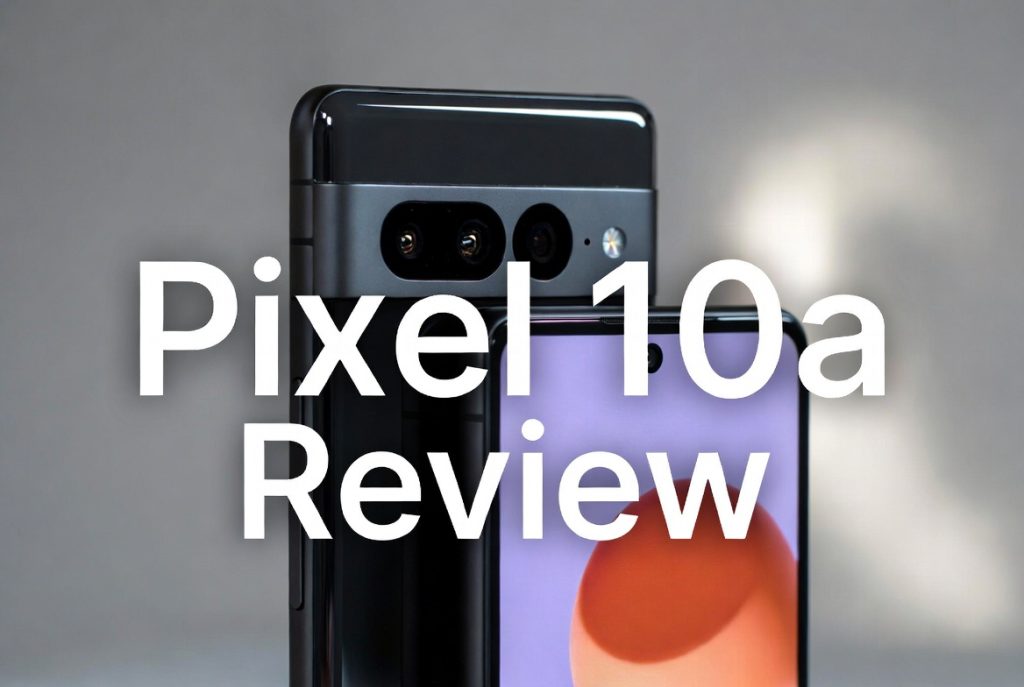
In the fiercely competitive world of smartphones, Google has long been celebrated for its camera prowess, clean software experience, and tight hardware-software integration. But with the Google Pixel 10a, launched on March 5, 2026, the company has made a statement that goes beyond incremental upgrades — it has fundamentally redefined what a budget flagship smartphone can look and feel like in the modern era.
The Pixel 10a arrives as part of Google's celebrated A-series, a line of devices designed to bring the best of the Pixel experience to a wider audience at a more accessible price point. Historically, the A-series has delivered excellent value, and the Pixel 10a is no exception — but this time, Google has pushed the design boundaries further than ever, introducing a camera system that lies completely flush with the back of the phone, a practice almost unheard of in today's camera-centric smartphone landscape.
Priced starting at $499 for the 128GB variant and $599 for the 256GB model, the Pixel 10a positions itself as a device that punches well above its weight class. This article provides a thorough, comprehensive analysis of everything the Pixel 10a has to offer — from design and build quality to camera performance, AI capabilities, battery life, software experience, and how it stacks up against the competition.
Design & Build: Flat is the New Bold
For years, the smartphone industry has been defined by a relentless race to fit larger, more capable camera sensors into devices — a race that has inevitably resulted in increasingly pronounced camera bumps. These protrusions, while functionally necessary, have been a point of aesthetic contention among users who prefer a sleeker, more uniform device profile. With the Pixel 10a, Google has taken a remarkably different approach.
The Camera Bump That Isn't There
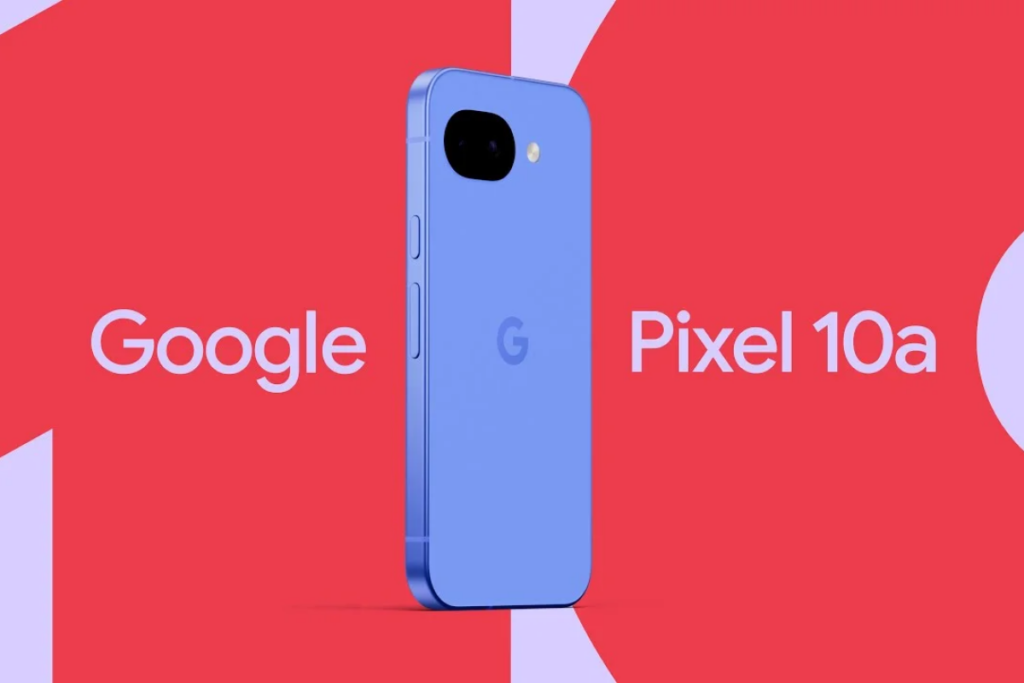
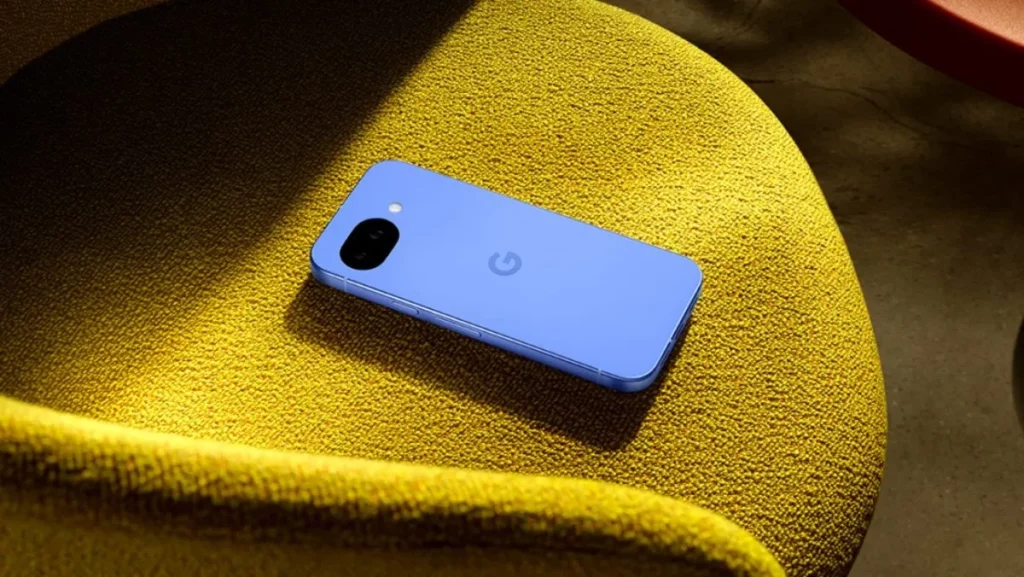
The most immediately striking feature of the Pixel 10a is the complete absence of a camera bump. The rear cameras are entirely flush with the body of the phone, lying perfectly flat against its matte plastic back. This is not merely a cosmetic decision — it has real-world functional implications. The device does not rock or wobble when placed on a flat surface, making it more stable for hands-free use cases like watching videos, video calling, or using the phone as a stand-in tripod.
The camera bar — Google's official term for the horizontal strip housing the rear cameras — is technically on a slightly recessed layer beneath the matte rear cover, though this distinction is imperceptible to the naked eye and barely detectable to the fingertip. The result is a device that looks and feels exceptionally clean, minimal, and modern. Industry observers have noted that this design choice could set a precedent for the direction of the entire Pixel A-series going forward.
Build Quality and Materials
The Pixel 10a is constructed with a satin aluminum frame, giving it a premium feel despite its mid-range positioning. The front is protected by Corning Gorilla Glass 7i — a significant upgrade from the Gorilla Glass 3 that protected previous A-series devices. This new protection standard offers substantially improved resistance to scratches and accidental drops, greatly enhancing the device's long-term durability.
The rear panel is made from recycled plastic, a choice that not only reduces the device's environmental footprint but also contributes to a lighter and more comfortable in-hand feel. Google has been careful to note that the Pixel 10a is made with the highest proportion of recycled materials of any A-series Pixel ever produced, including recycled cobalt, copper, gold, and tungsten — a first for the lineup.
The device carries an IP68 rating for water and dust resistance, confirming that it can withstand submersion in up to 1.5 meters of water for 30 minutes. This is an exceptional feature for a sub-$500 device and underscores Google's commitment to durability. Physical dimensions are 153.9 mm in height, 73.0 mm in width, and 9.0 mm in depth, making it slightly shorter and narrower than its predecessor, the Pixel 9a, while being marginally thicker.
Color Options
The Pixel 10a launches in four color options: Obsidian (a deep matte black), Fog (a gray-green matte tone), Lavender (a bright mix of blue and purple), and Berry (a vibrant coral tone). Each finish is applied to the matte plastic rear, giving the phone a premium, fingerprint-resistant surface that resists smudging and adds to the device's tactile appeal. To complement the new colors, Google simultaneously announced new color variants for its Pixel Buds 2a wireless earbuds, allowing users to coordinate their accessories.
Display: Brighter and Better Than Ever
The Pixel 10a features a 6.3-inch OLED display — identical in size to its predecessor, the Pixel 9a. While some users may have hoped for a larger screen, Google has focused on improving the quality rather than the quantity of the display real estate, and the results are impressive.
Actua Display Technology
The phone's screen now uses Google's Actua Display technology, the same standard found in the flagship Pixel 10 series. This technology allows the display to reach a peak brightness of 3,000 nits, representing an 11% improvement over the Pixel 9a. In practical terms, this means the Pixel 10a's display remains clearly legible even in direct sunlight — a common pain point for many competing devices in this price range.
The display supports a smooth 120Hz refresh rate with adaptive capabilities, meaning it can dynamically adjust the refresh rate based on on-screen content to conserve battery. This results in silky smooth scrolling and animations while also extending battery life during less demanding tasks. The OLED panel delivers deep blacks, vivid colors, and excellent contrast ratios, contributing to an immersive viewing experience whether you're watching videos, browsing social media, or gaming.
Bezels and Form Factor
One area where the Pixel 10a falls slightly short compared to ultra-premium flagship devices is the bezel size. The display is framed by noticeable bezels — more prominent than those found on competitors like Samsung's Galaxy A-series or Apple's iPhone 17e. For some users, this may be a minor aesthetic concern, though the practical impact on the viewing experience is minimal. The punch-hole selfie camera remains in a centered position at the top of the display, consistent with previous Pixel designs.
Performance: The Tensor G4 at the Core
Under the hood, the Pixel 10a is powered by Google's Tensor G4 chipset, paired with 8GB of LPDDR5X RAM. This is the same core configuration found in the Pixel 9a, and it represents an interesting strategic decision by Google — one driven primarily by cost considerations rather than a lack of ambition.
Why Not the Tensor G5?
Google's flagship Pixel 10 series uses the newer Tensor G5 chip, which is manufactured by TSMC on a 3nm process and delivers meaningful performance and efficiency gains over its predecessor. The decision to retain the Tensor G4 in the Pixel 10a was explicitly cited by Google as a measure to keep the device affordable. This is the first time in the A-series history that the budget variant uses a chip from a previous generation rather than the same generation as the flagship — a departure that tech reviewers have noted with mixed reactions.
In raw benchmark terms, this means the Pixel 10a does not benefit from the CPU, GPU, and TPU improvements introduced with the Tensor G5. In everyday use, this may manifest as slightly reduced performance when multitasking heavily, running demanding games, or processing complex AI tasks. However, for the vast majority of day-to-day smartphone activities — web browsing, social media, photography, video calls, navigation — the Tensor G4 remains a capable and responsive processor.
AI Performance and On-Device Processing
The Tensor G4 was designed with AI workloads as a primary use case, and this remains one of its strongest suits. Google has optimized the chip for on-device machine learning tasks including the computational photography pipeline, real-time language processing, and the various Gemini-powered features that define the Pixel experience. The device runs Android 16 out of the box, and Google's Gemini AI assistant is deeply integrated throughout the operating system.
However, it is important to note that because the Pixel 10a uses the older Tensor G4, it is unable to run the updated Gemini Nano AI model that powers some of the more advanced on-device AI features available on the Pixel 10 series. Features like notification summaries, the Pixel Screenshot app, Magic Cue (a contextual suggestion engine spanning Gmail, Messages, and Maps), call notes, and on-device call translation are not available on the Pixel 10a. These omissions may matter to power users who want the most cutting-edge AI experience, but for the average user, the available feature set remains impressively comprehensive.
Storage Options
The Pixel 10a is available in two storage configurations: 128GB and 256GB. Both use UFS 3.1 storage technology for fast read and write speeds. There is no microSD card slot for expandable storage, which is consistent with Google's approach across the Pixel lineup. Users who consume large amounts of media or capture significant amounts of video should consider the 256GB variant.
Google Pixel 10a — Full Specifications
| Display | 6.3-inch OLED Actua Display, 120Hz, 3,000 nits peak brightness |
| Chipset | Google Tensor G4 (Samsung 4nm), Octa-core |
| RAM / Storage | 8GB LPDDR5X RAM | 128GB / 256GB UFS 3.1 |
| Rear Cameras | 48MP main (f/1.7) + 13MP ultrawide (120°), Super Res Zoom up to 8x |
| Front Camera | 13MP f/2.2, 96.1° FOV |
| Battery | 5,100 mAh, 30W wired, 10W wireless charging |
| Fast Charge | 50% in ~30 minutes with 45W USB-C PPS charger |
| OS | Android 16, 7 years of updates guaranteed |
| Security | Titan M2 chip, Tensor security core, Trusty TEE |
| Connectivity | 5G, Wi-Fi 6E, Bluetooth 6, NFC, USB-C 3.2 |
| Satellite SOS | Yes — emergency services without cellular/Wi-Fi |
| Durability | IP68 water/dust resistance, Gorilla Glass 7i front |
| Dimensions | 153.9 × 73.0 × 9.0 mm, ~183g |
| Colors | Obsidian, Fog, Lavender, Berry |
| Price | $499 (128GB) | $599 (256GB) |
Camera System: The Best Under $500
Photography has always been the crown jewel of the Pixel lineup, and the Pixel 10a continues this tradition with a dual-camera system that Google boldly claims offers the best camera performance available in any smartphone under $500. For five consecutive generations, Google has maintained this claim for its A-series devices, and the Pixel 10a aims to extend that streak.
Hardware: Sensors and Optics
The rear camera system consists of a 48-megapixel main camera with an f/1.7 aperture and a 13-megapixel ultrawide camera with a 120-degree field of view. The main sensor uses quad-pixel binning technology, combining four pixels into one to produce effective 12MP images with significantly enhanced light-gathering capability, particularly useful in low-light and nighttime conditions.
The ultrawide camera provides an expansive 120-degree field of view, making it ideal for landscape photography, architectural shots, and group photos where fitting more into the frame is essential. A front-facing 13-megapixel camera with a 96.1-degree field of view handles selfies and video calls with commendable quality.
Video recording capabilities reach 4K at 30 frames per second, and the camera supports up to 8x Super Res Zoom — a computational photography feature that uses machine learning to produce clean, detailed zoomed images. While this falls short of the 100x zoom available on the flagship Pixel 10, for most everyday photography purposes, 8x optical-quality zoom is more than sufficient.
AI-Powered Camera Features
Where the Pixel 10a truly distinguishes itself from competing hardware in its price range is through its suite of AI-powered camera tools, many of which are making their A-series debut with this device.
Auto Best Take is one of the most practically useful of these features. When taking group photos, the camera automatically captures multiple frames in rapid succession and then uses AI to analyze each person's expression in every frame. The result is a composite photo where everyone is shown with their best expression — blinking and looking away are replaced with picture-perfect moments. This feature alone justifies the Pixel camera experience for anyone who regularly photographs friends and family.
Camera Coach represents a new application of Gemini's language understanding capabilities to photography. Rather than simply suggesting technical adjustments, Camera Coach uses Gemini models to analyze the scene being photographed in real time, providing step-by-step guidance on lighting, composition, and framing. This can help users of any skill level take consistently better photos and gradually improve their photography instincts.
Night Sight continues to be one of the strongest low-light photography tools in the industry, using long-exposure computational techniques to capture bright, detailed, and natural-looking photos in near-darkness without the artificial look that plagues many competing implementations. Photo Unblur, Magic Eraser, and the ability to edit photos using natural language voice commands round out an exceptional suite of post-processing tools accessible through Google Photos.
The Pixel 10a also introduces Macro Focus, allowing users to get extremely close to small subjects for detailed macro photography. Add Me is another crowd-pleasing feature that enables one person to take a group photo and then step into frame to be digitally composited into the shot afterward — a clever solution to the perennial problem of the photographer always being absent from group photos.
Quick Share and Cross-Platform Sharing
One notable practical improvement in the Pixel 10a is the updated Quick Share feature, which now works seamlessly with Apple's AirDrop on iOS, iPadOS, and macOS devices. This cross-platform file sharing capability means Pixel users can effortlessly share photos, videos, and files with friends and family who use Apple devices — without requiring an internet connection. For anyone operating in a mixed-device environment, this is a genuinely useful quality-of-life improvement.
Battery Life: Outpowering Its Own Flagship
Battery life is an area where the Pixel 10a makes a bold statement, particularly when compared to the more expensive Pixel 10. The device is equipped with a 5,100 mAh battery — slightly larger than the 4,970 mAh found in the standard Pixel 10, though marginally smaller than the 5,200 mAh battery in the Pixel 10 Pro XL. In real-world usage, this translates to over 30 hours of mixed usage on a standard charge, making the Pixel 10a one of the longest-lasting devices in its class.
Charging Speed Improvements
Wired charging has been improved significantly compared to the Pixel 9a. The Pixel 10a now supports 30W wired charging, up from 23W on its predecessor. Using a compatible 45W USB-C PPS charger (sold separately), the device can charge from 0 to 50% in approximately 30 minutes — a substantial improvement that addresses one of the most common criticisms of previous A-series devices.
Wireless charging is also supported, at 10W — up from 7.5W on the Pixel 9a. While this falls short of the 15W magnetic wireless charging available on the flagship Pixel 10, it remains a convenient option for overnight charging. The Pixel 10a notably omits Pixelsnap magnets, meaning it is not compatible with the magnetic Qi2 accessory ecosystem that the Pixel 10 supports. For users who have invested in Qi2 accessories, this may be a notable limitation.
Extreme Battery Saver Mode
The Pixel 10a's Extreme Battery Saver mode has been enhanced to extend the battery life to up to 120 hours — an increase from the 100 hours achievable on the Pixel 9a. While this mode severely limits functionality to only essential apps and features, it serves as a valuable lifeline in emergency situations or during extended periods without access to power. For frequent travelers, outdoor enthusiasts, or users in regions with unreliable power infrastructure, this capability can be genuinely life-saving.
Software Experience: Android 16 and Gemini AI
The Pixel 10a launches with Android 16, the latest version of Google's mobile operating system. The clean, unmodified Android experience has always been one of the Pixel lineup's most compelling differentiators, and this remains true with the Pixel 10a. There is no bloatware, no duplicate apps, and no manufacturer modifications that dilute or complicate the user experience.
Seven Years of Software Support
Perhaps the single most compelling value proposition of the Pixel 10a — beyond its camera and design — is Google's commitment to seven years of software updates. This means the Pixel 10a will receive major Android version updates, monthly security patches, and quarterly Pixel Drop feature updates through 2033. For a device priced at $499, this longevity guarantee is extraordinary and significantly exceeds what most competing Android manufacturers offer.
This commitment to long-term software support has significant environmental implications as well. By supporting the device for seven years, Google enables users to keep their devices in use for far longer than the typical two-to-three-year upgrade cycle, directly reducing electronic waste. For environmentally conscious consumers, this is a meaningful differentiator that aligns with Google's broader sustainability commitments.
Gemini AI Integration
Gemini, Google's AI assistant, is deeply integrated throughout the Pixel 10a's software experience. From the camera app to the phone dialer, from Google Photos to the Messages app, Gemini's capabilities are woven into the fabric of the operating system rather than existing as a separate, standalone application.
Gemini Live enables natural, conversational interactions with the AI assistant — users can have extended back-and-forth conversations about virtually any topic, ask for help with complex tasks, or request information in real time. The assistant can analyze images captured by the camera, summarize web content, draft emails and messages, and provide contextual suggestions based on what is currently on the screen.
Circle to Search, a feature introduced earlier in the Pixel lineup, allows users to instantly search for anything they see on their screen by simply drawing a circle around it. Whether identifying a product in a photo, looking up information about a landmark, or searching for more details about something in a video, Circle to Search provides instant contextual information without leaving the app you're in.
On the phone side, AI-powered features like Call Screen and Hold For Me use on-device processing to screen calls from potential spammers, transcribe voicemails in real time, and even wait on hold with customer service lines on your behalf. Clear Calling uses AI-powered audio processing to improve call quality in noisy environments, making conversations clearer and more intelligible.
Pixel Drops
One of the most compelling aspects of owning a Pixel device is the Pixel Drop program — periodic software updates that Google releases to bring new features, improvements, and capabilities to existing devices. The March 2026 Pixel Drop introduced Scam Detection powered by AI, which can identify potential scam calls in real time, and Loss of Pulse Detection — a health safety feature that uses the device's sensors to detect if a user has lost consciousness and automatically contact emergency services.
Future Pixel Drops may also bring some of the Pixel 10 AI features to the Pixel 10a, as Google has indicated that on-device AI capabilities continue to evolve. While the Tensor G4 chip imposes certain limits on the complexity of AI models that can run locally, incremental improvements through software optimization may unlock additional features over time.
Security: Built on Multiple Layers
Security has always been a priority for Google's Pixel devices, and the Pixel 10a continues this tradition with a multi-layered hardware and software security architecture. At the hardware level, the device includes a certified Titan M2 security chip — the same chip used in Google's Pixel 10 flagship — which provides a dedicated, isolated environment for storing sensitive cryptographic keys, processing biometric authentication data, and verifying the integrity of the device's firmware at boot time.
The Tensor security core is integrated directly into the Tensor G4 chipset, providing an additional layer of hardware-based security for AI inference tasks and cryptographic operations. The Trusty Trusted Execution Environment (TEE) operates as a secure, isolated processor environment separate from the main Android OS, ensuring that sensitive operations cannot be compromised even if the main operating system is somehow exploited.
Regular monthly security patches, guaranteed for seven years, ensure that known vulnerabilities are addressed promptly. This combination of hardware security, regular software updates, and Google's reputation for transparent security practices makes the Pixel 10a one of the most secure mid-range smartphones available.
Connectivity: Into a New Era with Satellite SOS
The Pixel 10a supports a comprehensive range of modern connectivity standards: 5G (sub-6GHz and mmWave in compatible markets), Wi-Fi 6E for fast and low-latency wireless networking, and Bluetooth 6 — an upgrade from Bluetooth 5.3 on the Pixel 9a that brings improved range, connection stability, and audio quality. NFC is included for contactless payments and file transfers, and the USB-C 3.2 port handles both charging and high-speed data transfers.
Satellite SOS: A Potential Lifesaver
The most significant connectivity addition to the Pixel 10a is Satellite SOS — a feature that allows users to contact emergency services even when there is no cellular network coverage and no Wi-Fi available. This capability is made possible by an upgraded modem — Samsung's Exynos 5400, the same modem used in the Pixel 10 series — and represents the first time this feature has been available in an A-series Pixel device.
Google offers a two-year free trial of the Satellite SOS service with every Pixel 10a purchase. For hikers, campers, travelers visiting remote areas, and anyone who spends time in regions with poor cellular coverage, this feature provides a meaningful safety net. It joins a growing list of smartphones — including Apple's iPhone series and certain Samsung Galaxy devices — that offer satellite-based emergency communication, but having this capability at the $499 price point is genuinely noteworthy.
Sustainability: Google's Greenest A-Series Yet
Environmental responsibility has become an increasingly important consideration for smartphone buyers, and Google has made sustainability a central part of the Pixel 10a's identity. The device is made with the highest proportion of recycled materials of any A-series Pixel to date.
The aluminum in the device's housing is made from 100% recycled content. The back cover is made with at least 81% recycled plastic. Overall, at least 36% of the device's total weight consists of recycled materials. For the first time in the A-series, the Pixel 10a incorporates recycled cobalt (from batteries), copper, gold, and tungsten — materials that are notoriously difficult to recycle responsibly due to the complexity of their sourcing and refining processes.
Combined with Google's seven-year software support commitment — which directly reduces the frequency with which users need to replace their devices — the Pixel 10a represents a genuinely thoughtful approach to reducing the environmental impact of consumer electronics. For buyers who care about their ecological footprint, these commitments are a meaningful differentiator.
How Does It Compare? Pixel 10a vs. the Competition
To fully appreciate where the Pixel 10a stands in the market, it is helpful to compare it directly against its closest competitors. The most relevant comparison points are the Apple iPhone 17e, which launched around the same time, and the Samsung Galaxy A56.
Pixel 10a vs. Key Competitors
| Feature | Pixel 10a | iPhone 17e | Samsung Galaxy A56 |
| Price | $499 | ~$499 | ~$449 |
| Display | 6.3" OLED 120Hz | 6.1" OLED 60Hz | 6.7" AMOLED 120Hz |
| Chipset | Tensor G4 | A16 Bionic | Exynos 1580 |
| RAM | 8GB | 4GB | 8GB |
| Main Camera | 48MP f/1.7 | 48MP f/1.6 | 50MP f/1.8 |
| Battery | 5,100 mAh | ~3,279 mAh | 5,000 mAh |
| Wired Charging | 30W | 20W | 45W |
| Software Support | 7 years | 5-6 years | 4 years |
| Satellite SOS | Yes | Yes | No |
| IP Rating | IP68 | IP68 | IP67 |
| Camera Bump | None (flat) | Small bump | Moderate bump |
The comparison table above highlights the Pixel 10a's unique strengths. Its seven-year software support commitment stands alone in the Android landscape and rivals or exceeds what Apple offers. The flat camera design is genuinely distinctive. The 5,100 mAh battery significantly outpaces the iPhone 17e's considerably smaller cell. And the Tensor G4's AI-optimized processing pipeline, while not the newest chip available, delivers a camera experience that is arguably unmatched at this price point.
The Samsung Galaxy A56 offers a larger display and faster wired charging but falls behind significantly in software support longevity and does not offer Satellite SOS connectivity. The iPhone 17e benefits from Apple's incredibly efficient A16 Bionic chip and the premium iOS ecosystem, but its smaller battery and lower refresh rate display are notable disadvantages.
Who Should Buy the Pixel 10a?
Ideal Buyer Profile
The Pixel 10a is ideally suited for a broad range of users, but it particularly excels for:
- Photography enthusiasts who want the best computational camera system available at this price point
- Users who prioritize long-term value and want a device that will remain supported and functional for many years
- Android purists who prefer a clean, unmodified software experience without manufacturer bloatware
- Environmentally conscious consumers who want to invest in a sustainably manufactured device with a long lifespan
- Outdoor adventurers and travelers who value the safety net of Satellite SOS connectivity
- Users upgrading from an older Pixel, Galaxy, or iPhone who want a meaningful step up in both performance and camera quality
When to Look Elsewhere
The Pixel 10a may not be the ideal choice for every buyer. If your primary concerns are raw gaming or multitasking performance, the Tensor G4's inability to run the latest Gemini Nano model and the absence of the Tensor G5's performance gains may be limiting factors. Heavy media consumers who want the largest possible screen would be better served by devices with 6.7-inch or larger displays. Users who are already invested in the Qi2 magnetic accessory ecosystem will miss the absence of Pixelsnap magnets. And anyone who heavily relies on advanced AI features like notification summaries or on-device call translation will need to consider that these features are not available on this device.
Final Verdict: A New Standard for the Mid-Range
The Google Pixel 10a is a device that manages to be both quietly refined and boldly innovative at the same time. Its flat camera design is a statement — an assertion that sleek, elegant hardware is not the exclusive domain of ultra-premium flagship devices. Its software longevity commitment remains unmatched in Android. Its camera, powered by years of machine learning research and a new generation of AI-assisted tools, continues to set the standard for what a smartphone camera can achieve at this price point.
The decision to retain the Tensor G4 chip rather than upgrading to the G5 is a compromise, and it does result in some AI feature gaps compared to the Pixel 10. But for the vast majority of users, these omissions are unlikely to materially impact the day-to-day experience. The 30W wired charging, 10W wireless charging, Satellite SOS, IP68 water resistance, Gorilla Glass 7i, and seven years of software updates all add up to a package that represents extraordinary value for $499.
If you are in the market for a smartphone that offers excellent cameras, a clean and intelligent software experience, exceptional longevity, a distinctive and modern design, and is made with sustainability in mind — all at an accessible price — the Google Pixel 10a deserves to be at the very top of your consideration list.
Rating: 9.0 / 10 | Best Mid-Range Android of 2026
Pros & Cons at a Glance
| ✓ PROS | ✗ CONS |
| Flat, bump-free camera design | Tensor G4 is one generation behind |
| Best-in-class camera under $500 | No Pixelsnap / Qi2 magnets |
| 7 years of software updates | Missing some Gemini Nano AI features |
| Satellite SOS included | Thicker bezels than competitors |
| IP68 water resistance | No microSD card slot |
| 5,100 mAh long-lasting battery | Plastic back (vs Gorilla Glass on Pixel 10) |
| Gorilla Glass 7i (major upgrade) | 30W charging still slower than some rivals |
| Made with recycled materials | Limited market availability outside US |
Google Pixel 10a 2026 FAQ
1. When was the Google Pixel 10a released?
The Pixel 10a was launched on March 5, 2026.
2. How much does the Pixel 10a cost?
The Pixel 10a starts at $499 for the 128GB model and $599 for the 256GB model.
3. What are the Pixel 10a’s camera features?
It has a dual-camera setup: 48MP main + 13MP ultrawide, with a completely flat design (no camera bump). AI-powered features include Auto Best Take, Camera Coach, Night Sight, Photo Unblur, Magic Eraser, and Macro Focus. Supports 8x Super Res Zoom and 4K video recording.
4. What chipset and performance does it have?
Powered by the Tensor G4 with 8GB RAM. Suitable for everyday tasks, on-device AI, and light gaming. Does not support the latest Gemini Nano AI features found on the Pixel 10.
5. What display does it use?
6.3-inch OLED Actua Display, 120Hz adaptive refresh rate, 3,000 nits peak brightness.
6. What is the battery capacity and charging speed?
5,100 mAh battery, 30W wired fast charging (50% in ~30 minutes), 10W wireless charging. Extreme Battery Saver mode extends up to 120 hours.
7. Is the Pixel 10a water and dust resistant?
Yes, IP68 rated — can withstand up to 1.5 meters of water for 30 minutes.
8. What colors are available?
Obsidian, Fog, Lavender, and Berry.
9. Does it support Satellite SOS?
Yes, users can contact emergency services even without cellular or Wi-Fi connectivity, with a 2-year free trial included.
10. How long is Google’s software support?
7 years of Android updates, monthly security patches, and regular Pixel Drops through 2033.
11. Does it have a microSD slot?
No, storage is internal only: 128GB or 256GB UFS 3.1.
12. How does the Pixel 10a compare to the iPhone 17e and Samsung Galaxy A56?
Pixel 10a excels in camera performance, battery life, IP68, 7-year software updates, and Satellite SOS. Galaxy A56 has a larger display and faster charging. iPhone 17e offers iOS ecosystem advantages and a more efficient chipset.
13. Who should buy the Pixel 10a?
Photography enthusiasts, users seeking long-term value with a clean Android experience, environmentally conscious consumers, travelers and outdoor enthusiasts, and those upgrading from older Pixels, Galaxies, or iPhones.
14. What are the drawbacks of the Pixel 10a?
Tensor G4 is a generation older than Pixel 10, missing some latest AI features, no Pixelsnap/Qi2 magnets, thicker bezels, plastic back, and slower 30W charging compared to some rivals.
Leave a Reply