
Google Pixel G6 The Most Powerful AI Camera Phone Google Has Ever Made
3 weeks ago · Updated 3 weeks ago
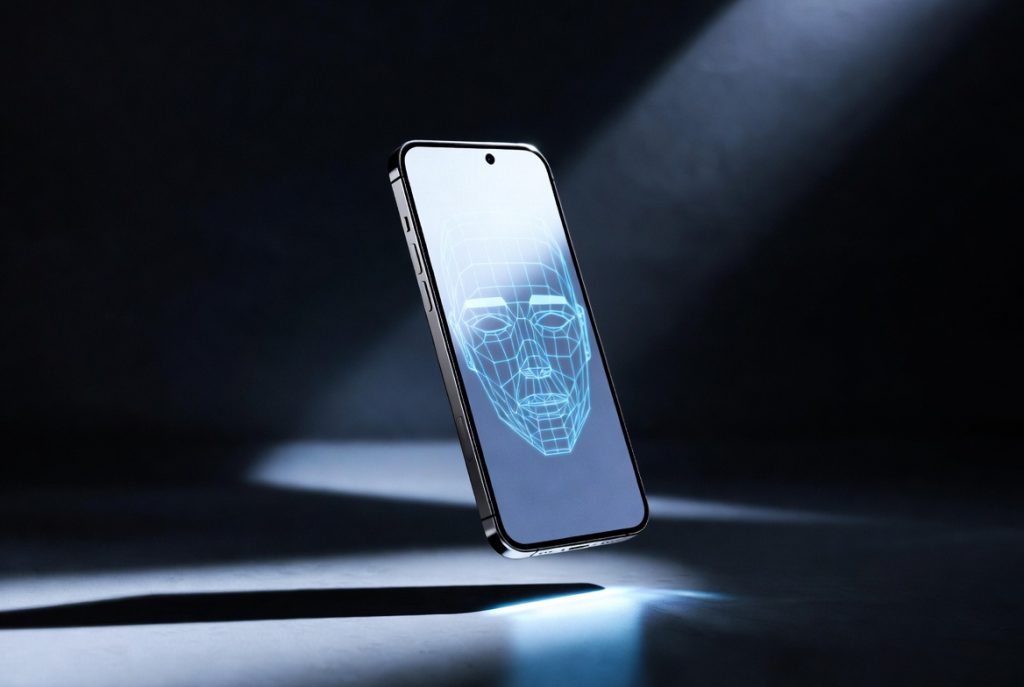
Every year, Google uses its Pixel smartphones to deliver something beyond a simple hardware refresh. More than any other Android manufacturer, Google treats the Pixel as a showcase for what happens when the most advanced mobile AI and computational photography capabilities meet thoughtfully designed hardware. The result is always a phone that punches well above its weight in camera performance, offers uniquely powerful software features, and provides the purest, most up-to-date Android experience available on any device.
The Pixel G6 continues and extends this tradition. Built around the new Tensor G5 chip — Google's most powerful custom silicon to date, manufactured on a 3nm process — the Pixel G6 brings a new generation of on-device AI capabilities to a well-rounded flagship package. It also introduces two camera features that represent genuine firsts for the Android ecosystem: Video Ultra-Low-Light, which uses AI to shoot bright, clear video in conditions where most cameras produce nothing but noise, and Cinematic Blur in 4K, which applies professional-quality background blur to video recording at the highest resolution the device supports.
These are not incremental improvements to existing features. They are step-change advances in what a smartphone camera can do — the kind of capability that, just a few years ago, required dedicated cinema cameras and expensive post-production software. The fact that Google is delivering these features on a smartphone camera at this price point is a testament to how rapidly AI-powered computational photography has advanced and to Google's leadership in applying these advances to consumer products.
Beyond the headline camera features, the Pixel G6 brings a complete flagship specification: a 120Hz OLED display, 12 GB of RAM with 128 GB or 256 GB of storage, a 4,700 mAh battery with fast wired and wireless charging, seven years of guaranteed software updates, and the full suite of Gemini-powered AI features that Google has been developing across its product ecosystem. This is a comprehensive upgrade over the Pixel 9 series across virtually every dimension.
This comprehensive review and analysis examines every significant aspect of the Pixel G6: the Tensor G5 chip and its AI capabilities, the camera system and its breakthrough features, the display and design, battery performance, Google's AI ecosystem, how it compares to competing flagships, and who should buy it. Whether you are considering upgrading from an older Pixel, switching from another Android brand, or even considering moving from iPhone, this guide gives you everything you need to make an informed decision.
| HEADLINE FEATURES What Makes the Pixel G6 Special
The Pixel G6 introduces Video Ultra-Low-Light (AI-powered bright video in darkness) and Cinematic Blur at 4K resolution — two camera innovations that set a new standard for smartphone videography. Combined with the Tensor G5 chip and 12 GB RAM, this is Google's most capable Pixel ever. |
Design, Display, and Build Quality
A Familiar Form, Refined
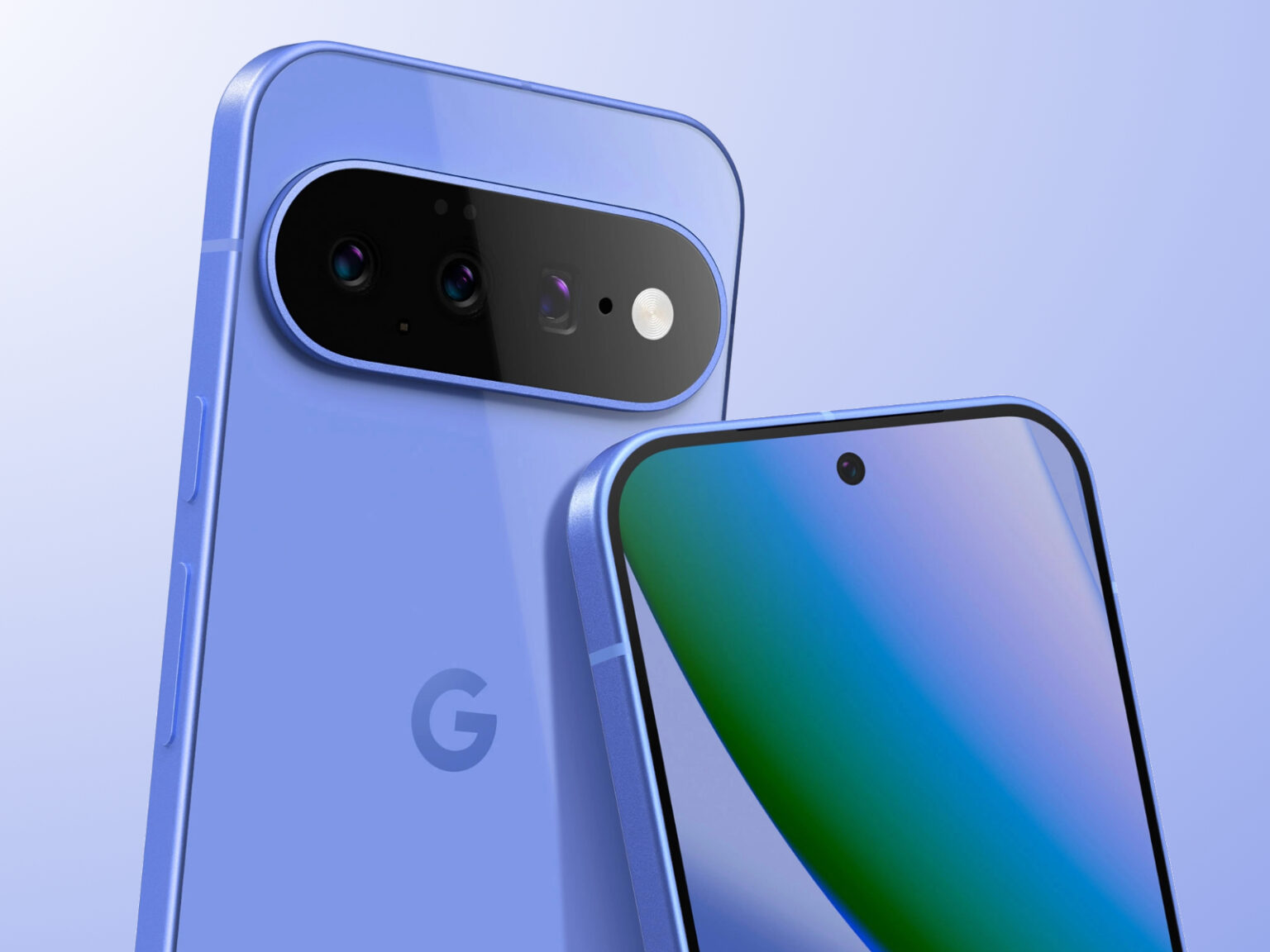
The Pixel G6 continues Google's distinctive design language that has evolved through the Pixel 6, 7, 8, and 9 series — a clean, modern aesthetic with the signature horizontal camera bar that runs across the back of the device. This design choice serves both functional and aesthetic purposes: functionally, the wide camera bar allows Google to house a sophisticated multi-lens system with the mechanical stability needed for OIS and the heat dissipation needed by the computational photography processing; aesthetically, it gives the Pixel a distinctive identity in a market full of phones with similar rounded-rectangle rear camera arrays.
The Pixel G6 is available in four colors: Porcelain (a warm off-white), Obsidian (deep matte black), Jade (a muted earthy green), and Iris (a soft purple-gray). All four options use a matte finish on the back panel — a practical choice that reduces fingerprints and feels premium in hand, though it is slightly less visually dramatic than the glossy finishes used by some competitors. The frame is polished aluminum, providing a satisfying contrast with the matte back.
At 152.2 x 71.3 x 8.5 mm and approximately 185 grams, the Pixel G6 occupies the sweet spot between compact and comfortable. It is meaningfully smaller than many competing flagships — the Samsung Galaxy S25 Ultra and iPhone 16 Plus, for example — while still offering a display large enough for media consumption, navigation, and productivity tasks. One-handed use is feasible for most users, though the 6.3-inch screen does require some hand stretching to reach the top corners.
The Display — 120Hz OLED Brilliance
The Pixel G6 features a 6.3-inch OLED display running at 2424 x 1080 resolution (Full HD+) with a 120Hz LTPO adaptive refresh rate. The LTPO technology allows the display to dynamically lower its refresh rate to as low as 1Hz when displaying static content — saving significant battery power — and ramp up to 120Hz for smooth scrolling, gaming, and video playback.
Google has tuned the display for both accuracy and vibrancy. The default Natural color mode prioritizes color accuracy, making it ideal for photo editing and content creation where precise color representation matters. The Adaptive color mode allows the display to boost saturation for a more visually impactful look that many users prefer for casual media consumption. Peak brightness reaches 2,700 nits — high enough to be clearly visible in direct sunlight, a practical concern for outdoor use.
The in-display fingerprint sensor has been upgraded in the Pixel G6, offering faster recognition and a larger recognition area than previous generations. The sensor works reliably through most screen protectors — a practical improvement given how many Pixel users use screen protection. Face unlock is also available as an alternative biometric authentication method.
Build Quality and Durability
The Pixel G6 carries an IP68 dust and water resistance rating, certifying it to survive submersion in up to 1.5 meters of fresh water for 30 minutes. This is the gold standard for smartphone water resistance and covers the most likely real-world scenarios: rain, accidental drops in water, and splashes.
The front glass is Corning Gorilla Glass Victus 2, which provides improved drop and scratch resistance compared to previous generations. The back uses a similar hardened glass that provides reasonable scratch resistance while maintaining the premium feel of the matte finish. The aluminum frame adds structural rigidity and provides the premium tactile experience that differentiates flagship phones from mid-range alternatives.
Tensor G5 — Google's Most Powerful Chip
The Philosophy Behind Tensor
Google's decision to develop its own custom silicon for Pixel phones — starting with the Tensor chip in the Pixel 6 — was driven by a specific philosophy: that the most important computation in a modern smartphone is AI inference, and that optimizing silicon specifically for the AI workloads that make Pixel features possible would deliver a better experience than using general-purpose chips from Qualcomm.
This philosophy has proven itself across successive Tensor generations. Pixel phones have consistently led the Android market in computational photography, speech recognition quality, and on-device AI feature sophistication — not because Google had the fastest raw processor, but because it had a chip specifically designed to run the AI models that power these features efficiently. Tensor's Neural Processing Unit (NPU) and Image Signal Processor (ISP) are custom-designed around the specific models Google uses for Pixel features.
The Tensor G5, manufactured on TSMC's 3nm process, represents a significant advance over the G4. The 3nm process reduces power consumption and heat generation while increasing the density of transistors — allowing Google to pack more neural processing capability into the same chip area. The result is on-device AI that runs faster, runs longer on battery, and generates less heat than previous generations.
What Tensor G5 Enables
The Tensor G5's enhanced AI capabilities directly power several of the Pixel G6's most distinctive features:
- Video Ultra-Low-Light: The real-time AI processing required to boost dark video frames without introducing excessive noise requires massive neural compute at the video capture rate. The G5's enhanced NPU makes this possible without throttling or overheating.
- Cinematic Blur at 4K: Real-time background segmentation and blur application while capturing 4K video is one of the most computationally demanding tasks in smartphone photography. The G5's ISP and NPU work together to make this possible at 30fps.
- On-device Gemini processing: More AI model inference for Gemini features can run directly on the device without requiring cloud connectivity, improving privacy and responsiveness for tasks like document summarization, email drafting, and image analysis.
- Live Translate: Faster, more accurate real-time translation of speech and on-screen text, with support for more language pairs than previous Tensor generations.
- Call Screen and Direct My Call: More accurate speech recognition for spam call filtering and automated phone menu navigation.
| 3nm
Tensor G5 Process TSMC's most advanced node |
12 GB
LPDDR5X RAM Fastest mobile memory standard |
4K
Cinematic Blur Industry-first AI video bokeh at 4K |
Performance in Practice
In everyday use, the Tensor G5 delivers smooth, responsive performance across all tasks — app launching, multitasking, web browsing, and media consumption. Google has continued to optimize One UI... wait, Android 16 for Tensor's specific architecture, ensuring that the most commonly performed tasks are as efficient as possible on the chip's specific pipeline.
Gaming performance has improved significantly with the G5, though the Tensor family still prioritizes AI efficiency over raw GPU performance. Games like Genshin Impact, Call of Duty Mobile, and other demanding titles run smoothly at medium-to-high settings, but GPU-benchmark enthusiasts will find that Snapdragon 8 Elite-equipped phones like the Samsung Galaxy S25 lead in raw graphics performance. For the overwhelming majority of users — who do not play the most graphically intensive mobile games at maximum settings — Tensor G5's performance is entirely adequate.
Thermal management has been an area where previous Tensor generations faced criticism — extended CPU/GPU-intensive tasks could cause throttling and warmth that users noticed. The G5's 3nm process generates significantly less heat than the 4nm G4, and Google has also improved the Pixel G6's thermal system with a larger vapor chamber that distributes heat more effectively. Extended use — long video recording sessions, extended gaming, large AI processing tasks — is notably more comfortable than on Pixel 9.
The Camera System — Google Reinvents Smartphone Video
Hardware Overview
The Pixel G6 camera system consists of three cameras: a 50 MP main camera with a wide aperture of f/1.68 and optical image stabilization, a 48 MP ultra-wide camera with an unusually fast f/1.7 aperture and autofocus capability, and a 13 MP front camera. The absence of a dedicated telephoto lens — which Samsung and Apple both include in their flagship phones — remains a point of differentiation, with Google relying instead on its superior computational zoom algorithms to deliver telephoto-equivalent results from the main camera's pixel crop.
The camera hardware choices are deliberate. The f/1.68 main camera aperture is among the widest in the smartphone market, allowing more light onto the sensor than competitors' f/1.8 or f/1.9 apertures. This is particularly important for the low-light photography and video that Pixel cameras have always excelled at. The f/1.7 ultra-wide is even more unusual — most ultra-wide cameras use significantly narrower apertures, resulting in noticeably worse low-light performance than the main camera. Google's choice to use an ultra-wide with fast aperture and autofocus eliminates this weak-link phenomenon that affects most competing phones.
Video Ultra-Low-Light — The Breakthrough Feature
Video Ultra-Low-Light is the Pixel G6's most technically impressive and most practically useful new camera feature. To understand why it matters, consider what happens when you try to record video in a dimly lit environment on a conventional smartphone camera. The camera faces a fundamental trade-off: it can use a short exposure time (keeping motion sharp but producing dark, noisy footage) or a long exposure time (brightening the footage but creating motion blur). The result is either dark, grainy video or blurry, smeared video — neither is acceptable.
Google's Video Ultra-Low-Light uses the Tensor G5's neural processing to solve this problem at the computational level. Rather than capturing a single frame per video frame time, the system captures multiple sub-frames and uses AI to analyze them together — detecting motion across the sub-frames, maintaining sharp edges where motion is occurring, and accumulating light information where the scene is static. The result is video that appears as if it was shot in substantially better light than it actually was, with acceptable noise levels and preserved motion sharpness.
The practical implications are transformative. You can record video at concerts, in restaurants, at evening outdoor events, or in any of the dozens of everyday scenarios where current smartphone cameras produce footage that looks terrible, and get results that are genuinely watchable and shareable. This is not a marginal improvement — it is the difference between video you might post to social media and video you wouldn't bother keeping.
Cinematic Blur in 4K — Professional Video for Everyone
Cinematic Blur — the application of shallow depth-of-field blur to video footage to create the cinematic 'bokeh' effect that separates subjects from backgrounds — has been available on Pixel phones since the Pixel 7 series. But previous implementations were limited to 1080p resolution, a limitation driven by the computational demands of real-time AI segmentation at video capture rates.
The Pixel G6, powered by the Tensor G5, removes this limitation entirely. Cinematic Blur now works at 4K resolution — delivering the full resolution of modern display standards while simultaneously applying the AI-powered background blur that creates the cinematic look. This is a first for Android and puts the Pixel G6 in a category of its own for smartphone videography.
The practical significance is that content creators — whether professional videographers, social media content creators, or simply people who want their family videos to look professional — can now capture 4K footage with the separated subject/background look that was previously only achievable with cinema cameras and expensive lenses or complex post-production. The AI segmentation is accurate enough to handle challenging edges (hair, transparent glasses, pets) that would defeat simpler depth-estimation approaches.
Complete AI Camera Feature Set
| Camera Feature | Technology | What It Does |
| Video Ultra-Low-Light | Tensor G5 AI + multi-frame | Shoots bright, clear video in near-darkness |
| Cinematic Blur (4K) | AI real-time bokeh | Professional background blur in 4K video |
| Night Sight Video | Computational photography | Vivid night video without flash |
| Real Tone | AI color science | Accurate skin tones across all complexions |
| Best Take | AI frame selection | Auto-picks sharpest group photo from burst |
| Photo Unblur | ML deblur model | Fixes blurry old photos post-capture |
| Magic Eraser | Generative AI inpainting | Remove unwanted objects from photos |
| Zoom Enhance | AI upscaling | Sharpens cropped/zoomed photos |
| Add Me | AI scene stitching | Includes the photographer in group shots |
| Astrophotography | Long-exposure + ML stacking | Captures stars and Milky Way handheld |
| Macro Focus | Ultra-wide autofocus | Close-up shots at 3 cm distance |
Still Photography Performance
While the video innovations are the Pixel G6's most newsworthy camera features, still photography performance remains at the top of the smartphone class. Google's approach to computational photography continues to produce images with excellent dynamic range, accurate colors (particularly for human skin tones across all complexions, courtesy of the Real Tone technology), and impressive low-light performance.
The Pixel G6's Night Sight mode has been further refined, producing bright, color-accurate images in conditions where most smartphones require flash. The HDR+ computational photography pipeline processes multiple exposures to recover shadow and highlight detail simultaneously — delivering photos where faces in the foreground are properly exposed and sunset skies in the background still retain their color and detail.
Portrait mode benefits from the improved AI segmentation models that also power Cinematic Blur, producing more accurate edge detection particularly around challenging subjects like hair and glasses. The level of blur and the 'natural light' quality of the portrait effect have been tuned to look less artificial than competing implementations.
Google AI and Gemini — The Intelligence Layer
Gemini Integration
The Pixel G6 is the most deeply Gemini-integrated Pixel device to date. Google's Gemini AI assistant is woven into the operating system at every level — not just as a voice assistant replacement but as an active intelligence layer that can understand, analyze, and act on content across the device.
| 🔍 Gemini Overlay |
| A persistent AI assistant that can see and understand anything on the phone's screen. Point the camera at a menu, a landmark, a piece of text, or any visual content and Gemini can provide information, translate, explain, or take action. Works in real time with conversational follow-up questions. |
| ✍️ AI Writing Assistance |
| Gemini can help compose, rewrite, summarize, or respond to text throughout the operating system — in emails, messages, notes, and any text input field. The style can be adjusted from professional to casual. Summaries of long articles, threads, and documents are generated on-device for privacy. |
| 🎵 Circle to Search |
| Highlight any element on the screen — text, image, video, product — and instantly search for it using Google's full web search capabilities. Works across all apps without leaving the current context. Particularly useful for shopping, identifying music, looking up information while watching video. |
| 📞 Call Screen & Live Translate |
| Call Screen intercepts unknown callers and screens them with AI, presenting a real-time transcript of what the caller is saying before you decide whether to answer. Live Translate handles real-time translation in phone calls, video calls, and face-to-face conversations, with translated audio playing through the speaker. |
On-Device vs. Cloud AI
One of the Pixel G6's most important AI design decisions is the allocation of AI tasks between on-device processing and cloud processing. Google has been progressively moving more AI features to on-device processing — running AI models directly on the Tensor G5's NPU rather than sending data to Google's servers — for reasons of both privacy and responsiveness.
The Pixel G6 processes on-device: voice recognition (for most Pixel-specific features), computational photography, live translation, call screening, real-time photo editing features like Magic Eraser and Best Take, and the smaller Gemini Nano model for basic AI assistant functions. Tasks that require the full capability of Gemini's larger models — complex reasoning, creative writing, sophisticated image generation — still require cloud connectivity.
This hybrid approach delivers the best of both worlds: privacy-sensitive and latency-critical tasks run locally, while tasks that benefit from maximum AI capability leverage Google's cloud infrastructure. Users in areas with poor connectivity still get a capable AI experience for the most important features, while cloud-connected users get access to Google's full AI capability when needed.
Battery Life and Charging
Battery Performance
The Pixel G6 houses a 4,700 mAh battery — a meaningful increase over the Pixel 9's 4,700 mAh (same capacity but more efficient Tensor G5 chip) and a significant step up from the Pixel 8's 4,575 mAh. Combined with the efficiency improvements of the Tensor G5's 3nm process and the LTPO display's ability to reduce refresh rate during low-activity periods, the Pixel G6 delivers excellent battery life for a 6.3-inch flagship.
In typical use — a mix of social media, messaging, photography, some video streaming, maps navigation, and light productivity — the Pixel G6 comfortably delivers a full day of battery life and often extends into the second day before needing a charge. Heavier users who spend significant time using the camera (particularly for video), playing games, or using AI features extensively may need to charge before the end of a very long day.
The Tensor G5's improved efficiency is most noticeable in AI-heavy tasks. Previous Tensor generations could drain battery rapidly when processing demanding computational photography or AI features. The G5 handles these tasks significantly more efficiently, meaning that using the Pixel G6's AI camera features throughout a day's shooting drains the battery far less than the equivalent usage on Pixel 9.
Charging Speeds
The Pixel G6 supports 30W wired charging — a modest but practical speed that charges the phone from empty to approximately 50% in 30 minutes and to full in approximately 90 minutes. This is not the fastest charging on the market (OnePlus and Xiaomi offer 65W to 120W on their flagship phones) but it is adequate for most users' overnight charging habits and for a quick top-up during a lunch break.
Wireless charging is supported at up to 23W using Google's Pixel Stand 2 or compatible Qi2 chargers — among the fastest wireless charging available in the Android ecosystem. The Pixel G6 also supports wireless battery share, allowing it to reverse-wirelessly-charge compatible accessories like the Pixel Buds Pro or a friend's compatible phone, though this feature drains the battery and is best used sparingly.
Software Experience — Android 16 and Beyond
Android 16 — First to Ship, First to Update
The Pixel G6 will ship with Android 16 — Google's latest Android release — or receive it as an update within the first week of the phone's availability. This is one of the most consistent and most valued advantages of owning a Pixel device: Pixel phones always receive new Android versions first, often by months ahead of other manufacturers' devices.
Android 16 brings a range of improvements including refined adaptive refresh rate management, improved privacy dashboard with more granular permission controls, enhanced Material You theming capabilities, and new notification management features. The AI-powered features in Android 16 — many of which build on the Gemini integration — are available on day one for Pixel G6 users, while owners of other Android phones may wait six months to a year for their manufacturer's Android 16 update.
Seven Years of Updates
Google has committed to providing the Pixel G6 with seven years of OS updates, security patches, and Pixel Feature Drops — guaranteed through 2032. This is an extraordinary commitment in the smartphone industry, where many Android manufacturers provide only two to three years of major OS updates.
Seven years of guaranteed updates means the Pixel G6 purchased today will still be running the latest version of Android in 2032, still receiving security patches, and still getting new Pixel features as Google develops them. For users who value longevity and security — and for environmentally conscious consumers who want to keep their phone as long as possible — this commitment is a major purchasing argument.
In practice, a seven-year-old smartphone will inevitably feel slower than current hardware as apps grow more demanding. But the security and feature update commitment means users can make an informed decision about when to upgrade rather than being forced off by a lack of security patches, which is the fate of phones that run unsupported software versions.
Pixel Feature Drops
Beyond OS updates, Google periodically releases 'Pixel Feature Drops' — software updates that add new capabilities to existing Pixel phones rather than requiring new hardware. These drops have historically added features like improved Night Sight, new camera modes, enhanced call screening capabilities, and new Gemini integrations to Pixel phones long after their launch.
The Pixel G6's hardware capabilities — particularly the Tensor G5's AI processing power — mean it is well-positioned to receive demanding new AI features in future Pixel Feature Drops. Features that are currently too computationally intensive for the G4 may become available on the G6 through future software updates, meaning the phone's capabilities can improve meaningfully over time rather than plateauing at launch.
Google Pixel G6 vs. The Competition
| Feature | Pixel G6 | Samsung Galaxy S25 | iPhone 16 |
| Processor | Tensor G5 (3nm) | Snapdragon 8 Elite | Apple A18 |
| RAM | 12 GB | 12 GB | 8 GB |
| Base Storage | 128 GB | 128 GB | 128 GB |
| Main Camera | 50 MP f/1.68 | 50 MP f/1.8 | 48 MP f/1.6 |
| Video Ultra-Low-Light | Yes — AI-powered | Yes — Nightography | Yes — Action mode |
| 4K Cinematic Video | Cinematic Blur 4K | Director's View | Cinematic mode (4K) |
| AI Features | Gemini — deep on-device | Galaxy AI — hybrid | Apple Intelligence |
| Battery | 4,700 mAh | 4,000 mAh | 3,561 mAh |
| Charging (wired) | 30W | 25W | 20W |
| OS Updates | 7 years guaranteed | 7 years | 5-6 years (typical) |
| Price (base) | ~$699 | ~$799 | ~$799 |
vs. Samsung Galaxy S25
The Samsung Galaxy S25 is the Pixel G6's primary Android competitor. Samsung's offering features the Snapdragon 8 Elite chipset — which leads in raw CPU and GPU benchmarks — and the full Samsung Galaxy AI suite. The Galaxy S25's camera system includes a dedicated telephoto lens that the Pixel G6 lacks, providing optical zoom capability that Google's computational zoom cannot fully replicate at long distances.
The Pixel G6's advantages over the Galaxy S25 are substantial, however. The Video Ultra-Low-Light and Cinematic Blur at 4K features are genuinely ahead of Samsung's video capabilities. The Gemini AI integration is deeper and more coherently designed than Samsung Galaxy AI. Android update delivery is significantly faster on Pixel than on Galaxy. And the Pixel G6's starting price is meaningfully lower than the Galaxy S25.
The choice between them often comes down to ecosystem preference and specific use cases. Power users who need the fastest raw performance, dedicated telephoto zoom, and the Samsung DeX desktop experience will prefer the Galaxy S25. Users who prioritize camera AI, clean software, timely updates, and value will find the Pixel G6 more compelling.
vs. Apple iPhone 16
Comparing the Pixel G6 to the iPhone 16 requires acknowledging the fundamental ecosystem difference: Android vs. iOS is a platform choice that goes far beyond any individual feature comparison. For users committed to Android, the iPhone is not a relevant alternative; for users considering switching, the ecosystem lock-in of iCloud, iMessage, FaceTime, and Apple's app ecosystem is a significant practical consideration.
On camera performance, the iPhone 16's 48 MP main camera and Apple's Photonic Engine produce excellent results that match the Pixel G6 in most conditions. Apple's Cinematic mode for video — while not available at 4K — produces high-quality depth-of-field video at 1080p and remains one of the best implementations of this feature on any phone. The Pixel G6's Video Ultra-Low-Light has no equivalent on any iPhone, however, which is a meaningful differentiator for low-light video.
Battery life strongly favors the Pixel G6, which has a significantly larger battery than the iPhone 16. Software update longevity is comparable — Apple typically supports iPhones for 5-6 years, while the Pixel G6's 7-year guarantee slightly exceeds this. Price is similar at base configuration.
Who Should Buy the Google Pixel G6?
The Pixel G6 Is Perfect If...
The Pixel G6 is the right phone for you if any of the following describes your situation:
- You care deeply about camera quality, particularly for video: The Video Ultra-Low-Light and Cinematic Blur at 4K features are class-leading and genuinely transformative for everyday video capture.
- You want the best AI integration in an Android phone: Gemini's integration on Pixel is the deepest and most coherently designed AI experience in the Android ecosystem.
- You value long-term software support: Seven years of guaranteed updates provides exceptional longevity and security.
- You want a clean, fast, unmodified Android experience: Pixel runs stock Android with no manufacturer bloatware or heavily customized UI.
- You are coming from an older Pixel (6, 7, or 8): The Tensor G5's AI improvements, the new camera features, and the display quality improvements make this a substantial upgrade.
- You want flagship performance at a competitive price: The Pixel G6 is priced below equivalent Samsung and Apple flagships while offering comparable or superior performance in several key areas.
Consider Alternatives If...
The Pixel G6 may not be the right choice if:
- Telephoto zoom is essential to your photography: The Pixel G6 lacks a dedicated telephoto lens. Google's computational zoom is good but not equivalent to the optical telephoto on Galaxy S25+ or iPhone 16 Pro at distances over 2x.
- You are heavily invested in Samsung's ecosystem (DeX, SmartThings, One UI): Samsung's ecosystem integration is extensive and difficult to replicate on Pixel.
- You need the fastest possible raw performance for gaming: Snapdragon 8 Elite-equipped phones lead in GPU benchmarks. For serious mobile gamers, this matters.
- You prefer iOS: The Pixel G6 is an Android phone. If you prefer the iOS ecosystem, the iPhone 16 (or 16 Pro for telephoto) remains the right choice.
Complete Specifications
| Specification | Details |
| Display | 6.3-inch OLED, 120Hz LTPO, 2424 x 1080 (Full HD+) |
| Processor | Google Tensor G5 (3nm) |
| RAM | 12 GB LPDDR5X |
| Storage | 128 GB / 256 GB UFS 3.1 |
| Main Camera | 50 MP, f/1.68, OIS, PDAF |
| Ultra-Wide Camera | 48 MP, f/1.7, autofocus |
| Front Camera | 13 MP, f/2.2 |
| Video | 4K @ 60fps, Cinematic Blur 4K, Video Ultra-Low-Light |
| Battery | 4,700 mAh |
| Charging | 30W wired, 23W wireless |
| OS | Android 16 (day-one update expected) |
| Connectivity | 5G, Wi-Fi 7, Bluetooth 5.4, NFC, UWB |
| Security | Titan M3 security chip, fingerprint under display |
| Water Resistance | IP68 |
| Colors | Porcelain, Obsidian, Jade, Iris |
| Dimensions | 152.2 x 71.3 x 8.5 mm |
| Weight | ~185 g |
Conclusion: The Android Flagship That Raises the Bar
The Google Pixel G6 is the most compelling Android flagship Google has ever produced. The combination of the Tensor G5 chip's AI processing power, the breakthrough Video Ultra-Low-Light and Cinematic Blur at 4K camera features, deep Gemini AI integration, clean Android software, and seven years of guaranteed updates creates a phone that is genuinely hard to beat in its price range.
The camera innovations deserve particular emphasis. Video Ultra-Low-Light is not a marginal improvement — it is a fundamental advancement in what smartphone cameras can do in the dark. Cinematic Blur at 4K is the first implementation of this feature at full resolution on any smartphone. These are the kinds of innovations that change how people use their phones, not just incremental specification improvements.
The Pixel G6 does have limitations: no dedicated telephoto lens, charging speeds that trail some competitors, and GPU performance that lags Snapdragon-powered phones. But for the overwhelming majority of users — people who want a fast, reliable, clean-software Android phone with a brilliant camera and the best AI features available — these limitations are irrelevant to the daily experience.
If you are looking for an Android flagship that delivers genuine innovation rather than just specification increments, that gives you the best AI camera on the market, that will receive updates and stay current for seven years, and that does all of this at a price that undercuts many competitors — the Google Pixel G6 is the phone to buy in 2025.
| FINAL VERDICT Should You Buy the Pixel G6?
Yes — emphatically, for most Android users. The Pixel G6 offers class-leading camera AI (Video Ultra-Low-Light, Cinematic Blur 4K), the deepest Gemini integration on any phone, seven years of updates, and clean Android at a competitive price. The only users who should look elsewhere are those who need dedicated telephoto zoom or maximum raw GPU performance. |
Leave a Reply