
Hoppers vs. Zootopia 2: Can Pixar's Bold New Vision Stand Up to Disney's Record-Breaking Sequel?
1 month ago · Updated 1 month ago
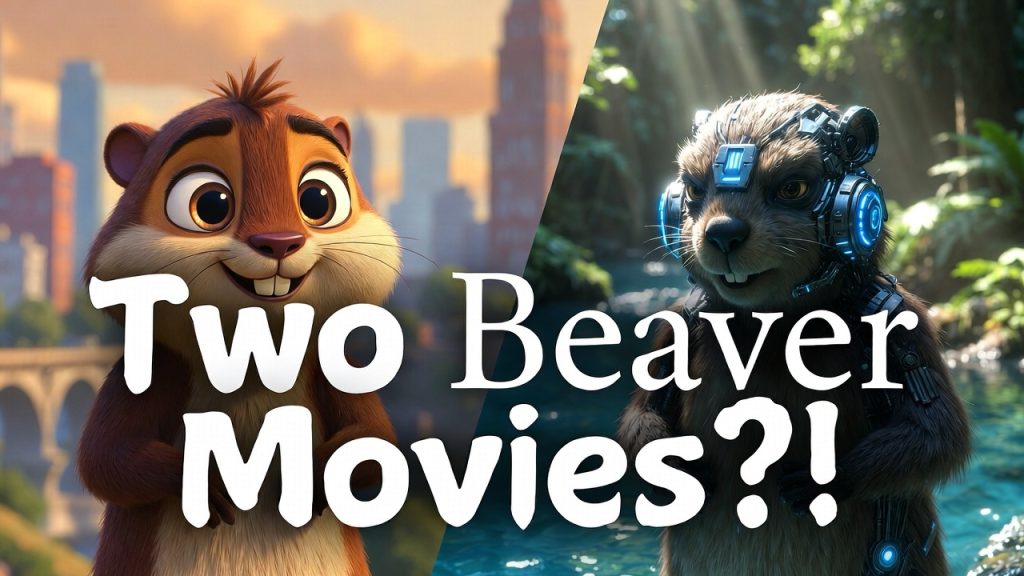
There is something quietly audacious about releasing an original animated film in the wake of one of the highest-grossing movies in cinema history. Yet that is precisely the position in which Pixar finds itself in 2026. With Zootopia 2 having cemented itself as the eighth highest-grossing film of all time, pulling in an astonishing $1.85 billion worldwide, the question hanging over every conversation in Hollywood's animation circles is simple: what comes next, and can it possibly match up?
The answer, for better or worse, is Hoppers Pixar's new original feature directed by Daniel Chong, best known as the creator of the beloved television series We Bare Bears. Set in a world where cutting-edge science allows human consciousness to be transferred into robotic animal bodies, Hoppers follows Mabel, a young and curious girl who dives headfirst into the mysteries of the natural world by becoming, of all things, a beaver.
That last detail the beaver is where things get interesting. Because Zootopia 2, the Disney film that Hoppers now follows into theatres, introduced audiences to Nibbles Maplestick, a hilarious, true-crime-obsessed beaver who became one of the film's most talked-about breakout characters. Two major studio animated films. Two beavers. Same release window. It sounds, on paper, like a recipe for disaster. In practice, it may be one of the most intriguing coincidences to shape the 2026 animated film landscape.
"People are hungry for more stuff, and I think we'll deliver. — Director Daniel Chong"
This article takes a deep and considered look at both films: what makes each of them tick, why the overlap is less alarming than it first appears, and what Hoppers must do — and seems poised to do — to carve out its own identity. More broadly, we examine what this moment tells us about the state of animated cinema, the relationship between originality and franchise safety, and why the world, as it turns out, needs more beavers.
The Shadow of Zootopia 2: Understanding the Giant Pixar Must Follow
A Sequel That Exceeded All Expectations
To understand why Hoppers faces a unique set of pressures, one must first appreciate the sheer scale of Zootopia 2's success. Released in late 2025, the sequel to Disney's 2016 smash hit arrived carrying enormous commercial expectations and, remarkably, surpassed almost all of them. It became the eighth highest-grossing film of all time, a milestone reserved for a very small, rarefied club that includes only a handful of franchises in the history of modern cinema.
The original Zootopia, released in 2016, was itself a phenomenon — an animated film that used its animal metropolis not merely as a backdrop for adventure, but as a rich allegorical canvas for examining prejudice, systemic inequality, and the complexity of trust between different social groups. Critics and audiences adored it. It won the Academy Award for Best Animated Feature and grossed over $1 billion worldwide, cementing the partnership of its two leads — the optimistic rabbit police officer Judy Hopps, voiced by Ginnifer Goodwin, and the sly, reformed con-fox Nick Wilde, voiced by Jason Bateman — as one of the most beloved in modern animation.
Zootopia 2 picked up the baton with aplomb. Expanding the world of Zootopolis significantly, the sequel introduced a wider cast of new characters, deepened the mythology of its universe, and delivered a story that rewarded both new viewers and longtime fans of the original. Critics praised its ambition; audiences turned up in extraordinary numbers. The film crossed the $1.85 billion mark and showed no signs of slowing down in its extended theatrical run.
The Nibbles Factor: When a Side Character Steals the Show
Among the new characters introduced in Zootopia 2, one in particular captured the public imagination with surprising force. Nibbles Maplestick, voiced by comedian Fortune Feimster, is a gregarious, enthusiastic beaver with a passion for true crime podcasting that borders on the obsessive. She is warm, funny, slightly chaotic, and immediately quotable — the kind of supporting character who generates fan art, merchandise proposals, and endless online discussion within days of a film's release.
Nibbles is not a lead character. She does not carry the film's central narrative. But her presence is felt, her jokes land, and her beaver-ness — the flat tail, the dam-building instincts played for comic effect, the gnawed wood scattered in her wake — is front and centre in ways that make her genuinely memorable. Audiences left theatres talking about her. Social media lit up with Nibbles content. Disney, characteristically, leaned into the enthusiasm.
And then, a few weeks later, word began to circulate about Hoppers — a new Pixar film in which the main character, a human girl named Mabel, transforms herself into a beaver using futuristic technology. The irony was not lost on anyone. Two studio animated films, from sister companies within the same parent corporation, both centred in significant ways on a beaver, arriving in the same cultural moment. The press, unsurprisingly, had questions.
Hoppers: An Original Vision in a Franchise-Dominated Landscape
The Concept: Consciousness, Technology, and Nature
At its core, Hoppers is a film about what it means to truly understand something — and whether that understanding requires you to become it. The science-fiction premise posits that researchers have developed a technology capable of transferring human consciousness into the body of a robotic animal. You do not merely observe nature from a distance; you inhabit it, fully and completely, experiencing the world through senses radically different from your own.
Mabel, the film's protagonist, is a young girl with boundless curiosity and a deep passion for the natural world. When she gains access to this technology, she chooses — with characteristic decisiveness — to become a beaver. Why a beaver? Because beavers, Mabel argues, are engineers. They reshape their environment. They build. They transform rivers and forests through nothing but instinct, determination, and their remarkable teeth. To Mabel, understanding a beaver means understanding one of nature's great problem-solvers.
This is a film, then, not merely about animals — but about the relationship between humans and animals, between technology and nature, between curiosity and consequence. Director Daniel Chong has been emphatic on this point in interviews: Hoppers is not an animal film in the Zootopia tradition of a world populated entirely by anthropomorphic creatures. It is a film about what happens when a human steps across the threshold into the animal world and must reckon with what she finds there.
Daniel Chong: The Director Bringing a Unique Sensibility
Daniel Chong is not a name that every film-goer will immediately recognise, but within the world of animation, he is a figure of considerable respect. As the creator of Cartoon Network's We Bare Bears, Chong built a devoted audience over multiple seasons with a show that balanced absurdist comedy with genuine warmth and emotional intelligence. The three bears at the show's centre — Grizzly, Panda, and Ice Bear — were beloved precisely because they occupied a human world while remaining recognisably, irreducibly animal. That tension, between human familiarity and animal otherness, is clearly something Chong has been thinking about for a long time.
In Hoppers, he has the opportunity to explore that tension at feature length, with Pixar's extraordinary technical resources behind him and a story that goes well beyond what episodic television allows. Early responses to the film's trailers have been enthusiastic, with many commentators noting that the film feels genuinely different in tone and ambition from recent Pixar output — less rooted in nostalgia, more interested in ideas, more willing to ask uncomfortable questions about the relationship between human beings and the natural world.
Chong has spoken openly about his initial concerns when he learned that Zootopia 2 would feature a beaver character. 'We found out a couple of years ago that they had a beaver too,' he has said. 'I think initially we were a little concerned, obviously. But I think ultimately it's not a main character.' He goes further, arguing that the similarity is ultimately more helpful than harmful — that Zootopia 2's success has primed audiences to be receptive to animated animal stories, and that Hoppers is different enough in its fundamental approach to stand apart.
The Cast and Characters of Hoppers
Mabel is voiced by Piper Curda, a young actress with strong comedic instincts and the ability to convey both the excitement and the terror of stepping into genuinely unknown territory. Curda has spoken in interviews about the challenge of voicing a character who spends much of the film inside a robotic animal body — a performance that required her to think carefully about how Mabel's personality and voice would change under those extraordinary circumstances.
The supporting cast of Hoppers is rich and varied. The scientists who develop the consciousness-transfer technology are drawn with a careful blend of idealism and ethical ambiguity — they genuinely believe in what they have created, but the film does not shy away from the questions their invention raises. The animal characters whom Mabel encounters in her beaver form are portrayed with a naturalistic specificity that reflects Chong's deep commitment to research; the film's team spent considerable time studying actual beaver behaviour and the ecosystems in which beavers operate.
The world of Hoppers is, visually, extraordinarily beautiful. Pixar's rendering capabilities have always been remarkable, but the film's natural environments — the rivers, the wetlands, the dense woodland areas in which beavers build their dams — are rendered with a level of detail and atmospheric richness that sets the film apart from almost anything the studio has produced before. Water, in particular, has always been a technical challenge for animation, and Hoppers reportedly pushes the boundaries of what is possible in ways that will leave audiences gasping.
The Beaver Coincidence: Threat or Opportunity?
Why the Overlap Matters Less Than You Think
Let us address the elephant — or perhaps the beaver — in the room. The surface-level similarity between Hoppers and Zootopia 2's Nibbles Maplestick is real, and it was noted immediately by film journalists and online commentators when both projects became public knowledge. Two major animated films, both featuring beavers as significant characters, arriving in the same cultural moment? It sounds, at minimum, awkward.
But the more one examines what each film is actually doing with its beaver, the clearer it becomes that the overlap is almost entirely superficial. Nibbles Maplestick is a supporting character in a film primarily about Judy Hopps and Nick Wilde's latest crime-solving adventure. She is defined by her obsession with true crime podcasting, her effusive personality, and her tendency to take over any scene she occupies. She is funny, beloved, and memorable — but she is a personality, a comic creation, a fan favourite. She is not a symbol of anything larger.
Mabel, in Hoppers, becomes a beaver in order to understand what it means to be a creature that builds, adapts, and shapes its environment. Her transformation is not played for laughs, though the film certainly has its comedic moments. It is played as a genuine act of curiosity and, eventually, empathy — a human being trying to understand the world from a completely different vantage point. The beaver, in Hoppers, is not a personality quirk. It is a philosophical choice.
"For me, this is a movie about humans and animals rather than about just animals. — Daniel Chong"
Different Audiences, Different Needs
There is also the question of audience. Zootopia 2, as a sequel to one of Disney's most beloved animated features, arrived with a built-in audience of enormous proportions. Families who loved the original film returned with their children, many of whom had grown up watching Judy and Nick and were ready for another adventure. The film's success was in large part a function of that loyalty — Disney had earned it over nearly a decade since the original's release.
Hoppers arrives as an original film with no pre-existing fanbase, no familiar characters, and no nostalgic hook. It must earn its audience from scratch, which is both a significant challenge and, in its own way, a freedom. Chong and his team have spoken about the liberty that comes with originality — the ability to take genuine risks with story and character without worrying about disappointing fans of an established property.
The pressure on original animated films in the current marketplace is considerable. The massive success of sequels and franchise-based films has made studios increasingly cautious about greenlit originals, but Pixar has historically been one of the few major studios willing to back genuinely new ideas at scale. Films like Up, WALL-E, Inside Out, and Soul were all original concepts that went on to become critical and commercial benchmarks. Hoppers, in that tradition, represents a bet that audiences still have an appetite for something genuinely new.
Disney and Pixar: Sibling Rivalry or Complementary Strengths?
It is worth pausing to note the unusual corporate dynamic at play here. Both Zootopia 2 and Hoppers are produced under the umbrella of Disney, which acquired Pixar in 2006. The two studios have developed distinct creative identities in the years since — Disney Animation tends toward epic, emotionally sweeping narratives with strong musical elements and a deep investment in its animated universes; Pixar leans into conceptual boldness, emotional complexity, and a willingness to tackle themes — mortality, identity, the nature of consciousness — that mainstream family entertainment rarely touches.
The fact that both studios produced beaver-featuring films in the same period is, in the grand scheme of things, a coincidence of the kind that happens regularly in a large corporation with multiple creative teams working simultaneously on multi-year projects. Neither team had visibility into the other's specific character choices until relatively late in production. That Chong heard about Nibbles only 'a couple of years' before Hoppers' release speaks to how long the gestation period for major animated films tends to be.
What is perhaps more interesting is the way the two films complement each other as a showcase for what Disney's animation empire is capable of. Zootopia 2 demonstrates Disney's mastery of the crowd-pleasing sequel — the ability to expand a beloved universe, satisfy a devoted fanbase, and deliver the kind of crowd-pleasing spectacle that drives blockbuster numbers. Hoppers, if it succeeds, will demonstrate Pixar's continued ability to create original worlds and original emotional experiences that leave audiences not just satisfied, but changed.
The State of Animated Cinema in 2026
Sequels, Franchises, and the Risk of Originality
The animated film landscape of 2026 is, in many ways, a microcosm of the broader tensions in contemporary cinema. On one side, the franchise machine rumbles on with extraordinary efficiency. Sequels to beloved animated properties — Zootopia, Toy Story, Finding Nemo, The Incredibles — consistently outperform most original offerings at the box office. Audiences know what they are getting, marketing is straightforward, and the risk of costly failure is reduced.
Toy Story 5, which had its trailer released earlier in 2026, is another example of this phenomenon. The trailer alone generated enormous online traffic and enthusiasm, with fans responding not merely to the prospect of another adventure for Woody and Buzz, but to a specific thematic hook — the idea that technology has disrupted the relationship between children and their toys in ways that call into question the very premise of the original film. It is, by all accounts, a sequel that is also genuinely trying to say something new.
Original films, meanwhile, occupy an increasingly difficult position. Without the built-in awareness that comes with established characters, they must work harder to earn audience attention in a media environment that is both more fragmented and more saturated than at any point in history. Marketing budgets for original films are typically higher, the window for establishing word-of-mouth is shorter, and the consequences of a misfire are more severe.
Why Pixar Keeps Betting on Originals
And yet Pixar persists. The studio's history is one of remarkable original creation — not merely in the sense of technical innovation, for which it has long been celebrated, but in the deeper sense of narrative and philosophical originality. Pixar has made films about a rat who wants to cook (Ratatouille), a robot left alone on a dying Earth (WALL-E), a child's emotional life rendered as literal characters in the mind (Inside Out), and a musician who travels to the Land of the Dead to save his family's legacy (Coco). These are not obvious pitches. They are acts of creative courage.
The studio's willingness to continue taking those risks, even in a commercial environment that increasingly rewards the familiar, is one of the most admirable things about Pixar's creative identity. It is also, arguably, the thing that has made the studio's sequels so good — because the team behind Toy Story 4, or Incredibles 2, or Finding Dory, has always been composed of filmmakers who know what genuine creative ambition looks like and who are unwilling to settle for anything less.
Hoppers, in this context, is not merely a film. It is a statement. It says: Pixar still believes in the power of original storytelling. It still believes that audiences will come if the idea is compelling enough, the characters are vivid enough, and the emotional truth is deep enough. Whether the marketplace agrees will become clear when the film opens — but the fact that Chong and his team were given the resources to make the film at all is itself a form of institutional faith.
The Technology Theme: Timely and Urgent
One of the things that makes Hoppers feel particularly well-timed is its engagement with the theme of technology and its relationship to the natural world. In 2026, that theme has never been more pressing. The rise of artificial intelligence, the increasing speed of technological change, the growing anxiety about the ecological consequences of human innovation — all of these currents run through contemporary culture with an urgency that would have been difficult to imagine even a decade ago.
A film about a technology that allows human consciousness to inhabit the body of an animal is, inevitably, a film about what we gain and what we lose when we use technology to cross boundaries that were previously uncrossable. Is it better to understand nature from the outside, armed with data and observation, or to understand it from within, at the cost of your own human perspective? Does technology bring us closer to the natural world, or does it simply give us another way to impose our own needs and narratives upon it?
These are not questions that Hoppers will answer definitively — good films rarely do. But the fact that they are embedded in the film's premise means that it arrives with a weight and relevance that purely escapist entertainment cannot match. Parents taking their children to see Hoppers may find themselves leaving the theatre with questions as well as answers, which is perhaps the most that cinema can hope to achieve.
Critical and Commercial Prospects: What Success Looks Like for Hoppers
Measuring Success for an Original Film
It would be unfair — and frankly absurd — to hold Hoppers to the same commercial standard as Zootopia 2. Sequels to massively beloved franchises operate in a different commercial register from original films, and the metrics by which their success is measured should reflect that. A Pixar original that grosses $500 million worldwide and earns strong critical notices is, by any reasonable assessment, a significant success. A sequel to Zootopia that grosses $500 million would be considered a disappointment.
For Hoppers, the markers of success are likely to be a combination of critical reception, word-of-mouth, and the kind of cultural staying power that distinguishes genuinely great animated films from merely competent ones. The film does not need to be the highest-grossing animated film of the year to validate Pixar's investment in it. It needs to be good — genuinely, deeply, memorably good — and it needs to find its audience, however long that takes.
Daniel Chong has spoken about the pressure that comes with following a box office phenomenon, but has framed it, characteristically, in positive terms. 'I think it's gonna be helpful, to be honest,' he has said. 'I mean, I think I'd rather it this way than the opposite. I think there would be more pressure if things weren't working, and then everything was riding on us to come out the gate swinging, especially for an original movie.'
Early Responses and the Road to Release
Early responses to the Hoppers trailer have been broadly positive, with many viewers noting the film's distinctive visual style and the freshness of its central premise. The film's approach to its natural environments — rendered with Pixar's characteristic technical mastery but also with an unusual documentary-style attention to ecological detail — has been particularly praised. The beaver sequences, in particular, appear to offer something genuinely new in the history of animated cinema: a creature portrayed not as a character or a metaphor, but as a being in full possession of its own complex, instinct-driven intelligence.
The film has also benefited from favourable comparisons to some of Pixar's most adventurous previous work. Reviewers at early screenings have invoked the names of WALL-E and Inside Out — films that were willing to ask genuinely difficult questions and trust their audiences to engage with the answers. Whether Hoppers ultimately belongs in that company remains to be seen, but the comparisons alone suggest that the film has something to say, and says it with conviction.
The release of the Hoppers end-credits scene — which, according to early reports, contains references to six or seven previous Pixar films — has also generated considerable online enthusiasm. Such Easter eggs have become an expected feature of Pixar films, and this one, by all accounts, is particularly rich and carefully constructed, serving not merely as fan service but as a thematic statement about the interconnectedness of the studio's creative universe.
Box Office Competition and the 2026 Animation Calendar
Hoppers arrives into a 2026 animation calendar that is competitive but not impossibly crowded. The major animated releases of the year are spread across a broad range of styles, premises, and target demographics, which means that Hoppers should have sufficient breathing room to find its audience without having to fight too hard for screen time or opening-weekend dominance.
The film's primary competition in its release window is likely to come not from other animated films but from the general competition for family entertainment spending in a market that continues to fragment across streaming and theatrical platforms. Disney+ subscribers will be watching the situation closely, knowing that Hoppers will eventually arrive on the platform, but Pixar has historically performed best when it encourages audiences to experience its films in the cinema first — the scale, the sound, the communal experience of watching something extraordinary on a large screen.
If the film delivers on its promise, the theatrical experience should speak for itself. Natural environments rendered at the level of detail that early footage suggests, underwater sequences explored with full Pixar technical resources, and a story that reaches for something emotionally profound — all of this is material that benefits enormously from the theatrical environment in ways that a streaming viewing simply cannot replicate.
The Larger Cultural Conversation: What Hoppers Says About Us
The Human-Animal Relationship in Contemporary Culture
One of the most striking things about the premise of Hoppers is how it positions itself within a broader cultural conversation about the relationship between human beings and the natural world. In recent years, that conversation has grown both more urgent and more nuanced, driven by the twin pressures of ecological crisis and technological acceleration. We know more about animal consciousness, animal emotions, and animal intelligence than at any previous point in human history — and what we know has complicated, sometimes radically, our sense of what separates us from the other species with whom we share the planet.
The idea of a human being literally inhabiting an animal body — not metaphorically, not through empathy alone, but through a technology that transfers consciousness itself — takes that conversation to its logical extreme. It asks: if you could truly know what it is like to be a beaver, would you? And if you did, what would you bring back with you? What would you have to give up? The film is, in this reading, a meditation on the nature of empathy, on the limits of human understanding, and on the possibility — terrifying and exhilarating in equal measure — of genuinely crossing the species boundary.
This is heady material for a film aimed primarily at families with children, but Pixar has never been afraid of heady material. The studio's best films have always operated on multiple levels simultaneously — entertaining enough for children to enjoy without reservation, deep enough for adults to find genuine substance. Hoppers, based on everything that has been revealed about it, seems designed to operate in exactly that mode.
What Children Learn From Hoppers
For its youngest audience members, Hoppers offers something particularly valuable: a story that takes the natural world seriously. In an era of screens, streaming services, and algorithmically curated digital entertainment, children have more opportunities than ever before to engage with fictional worlds and considerably fewer organic opportunities to engage with the actual world around them. A film that makes a beaver's life genuinely interesting — that shows the engineering intelligence, the ecological importance, and the extraordinary sensory richness of a creature that most people barely think about — is doing something valuable.
The beavers of Hoppers are not cartoons. They are not Nibbles Maplestick, beloved as she is. They are, by all accounts, rendered and portrayed with a fidelity to actual beaver behaviour that reflects extensive research and a genuine desire to get it right. If Mabel's fascination with beavers as nature's engineers translates to even a fraction of the film's audience developing a genuine interest in the species and its role in ecosystems, that is a contribution to ecological literacy that no amount of formal education could easily replicate.
There is also the matter of Mabel herself as a protagonist. Young female characters in animated films have come a long way since the era of the passive princess, but genuinely curious, intellectually driven female protagonists — girls who are primarily interested in understanding how things work, who are drawn to science and technology not as tools for romance or adventure but as ends in themselves — remain rarer than they should be. Mabel, in this respect, feels like a meaningful addition to animation's gallery of female leads.
Hoppers and the Future of Pixar
Whatever Hoppers achieves at the box office, it represents something important about Pixar's creative direction. The studio has been navigating a complicated period — a run of sequels and franchise entries that, while often excellent, raised questions about whether Pixar's appetite for genuine originality was waning. Soul and Luca and Turning Red were original films that found genuine critical success, but their theatrical runs were complicated by the COVID-19 pandemic and by Disney's decisions about streaming release strategies.
Hoppers, arriving in a more settled theatrical landscape and carrying the weight of a major marketing campaign and the goodwill built by Zootopia 2's extraordinary success, has the opportunity to reassert Pixar's original identity in the strongest possible terms. If it succeeds — critically and commercially — it will send a message to the broader industry that original animated films, with the right idea and the right execution, can still compete with franchise sequels for audience attention and affection.
If it struggles, the lesson drawn will inevitably be more cautious: that in the current marketplace, original IP faces headwinds that even the best execution cannot fully overcome. Neither outcome is predetermined. The film has real strengths and real challenges, and the market will render its verdict with its customary indifference to the anxieties of filmmakers and critics alike.
Conclusion: Why the World Needs More Beavers — And More Hoppers
At the end of a long conversation about box office dynamics, corporate strategy, franchise fatigue, and the philosophy of empathy, it is worth returning to the simple, compelling image at the heart of Hoppers: a young girl, consumed by curiosity, choosing to become a beaver in order to understand the world more fully. It is, when you strip away all the analysis, a wonderful premise for a film. It is warm and strange and ambitious and funny and earnest in all the right proportions.
Zootopia 2 was an extraordinary achievement — a sequel that delivered on every promise of the original and then some, a film that reminded audiences why they fell in love with its world in the first place, and a commercial phenomenon that will be studied in business schools for years. Nibbles Maplestick, the beaver who became its breakout character, is a creation that deserves every bit of the affection she has received.
But Hoppers is something different. It is not trying to replicate Zootopia 2's achievement or capitalise on its success. It is trying to tell a different kind of story about a different kind of relationship between humans and animals and the technologies that increasingly mediate our experience of the world. It is, in the best Pixar tradition, a film with something to say.
Director Daniel Chong's confidence is, ultimately, grounded in something real: the quality of the idea, the rigour of the execution, and the belief that audiences, given the opportunity, will choose to engage with something genuinely original. 'People are hungry for more stuff,' he says, 'and I think we'll deliver.' The beavers, both the irrepressible Nibbles and the philosophically burdened Mabel, await your verdict. Go see both films. The world is richer for having them.
FAQ – Hoppers (Pixar 2026)
1. What is the movie Hoppers about?
Hoppers is an original Pixar animated film about a young girl named Mabel who uses advanced technology to transfer her consciousness into a robotic animal body. She chooses to become a beaver in order to explore and understand nature from the perspective of an animal.
2. Who directed Hoppers?
The film is directed by Daniel Chong, best known as the creator of the animated series We Bare Bears. His storytelling style blends humor, emotional depth, and themes about animals living alongside humans.
3. Who voices the main character in Hoppers?
The main character Mabel is voiced by Piper Curda, who brings energy and curiosity to the role of a young girl exploring the natural world in an unusual way.
4. Why do people compare Hoppers to Zootopia 2?
The comparison comes from the coincidence that both films feature beavers. Zootopia 2 introduced the character Nibbles Maplestick, while Hoppers has a protagonist who becomes a beaver through futuristic technology.
5. Are the beaver characters in Hoppers and Zootopia 2 similar?
Not really. In Zootopia 2, Nibbles is a supporting comedic character, while in Hoppers, the beaver form is central to the story’s themes about nature, technology, and empathy.
6. When will Hoppers be released?
Hoppers is scheduled to release in theaters in 2026 as Pixar’s major original animated film for that year.
7. What themes does Hoppers explore?
The movie explores several deeper themes, including:
-
The relationship between humans and animals
-
The impact of technology on nature
-
Empathy and understanding different forms of life
-
Environmental awareness and curiosity about ecosystems
8. Is Hoppers connected to other Pixar movies?
The film itself is an original story, but early reports say the end-credits scene includes references or Easter eggs to several previous Pixar films.
9. Why is Hoppers considered important for Pixar?
Because it is an original film, not a sequel or franchise entry. Pixar has built its reputation on bold original ideas like WALL-E, Up, and Inside Out, and Hoppers continues that tradition.
10. Will Hoppers be available on Disney+?
Like most recent Pixar films, it is expected to arrive on Disney+ after its theatrical release, although the exact streaming date has not been announced yet.
Leave a Reply