How to Show Your Cat You Love Them: The Real Language of Feline Affection
4 days ago
There's a particular kind of heartbreak that comes with loving an animal who can't tell you, in words, that they love you back. You can talk to your cat all day long — and plenty of us do — but they're never going to answer in a language we'd recognize as conversation. For a long time, this led a lot of cat owners to a quiet, unspoken conclusion: cats are simply harder to read than dogs, more private, more mysterious, maybe even a little less affectionate by nature.
I want to push back on that conclusion gently, because it's not really accurate. Cats are extraordinarily communicative animals. They've simply built their entire expressive vocabulary around a completely different set of cultural assumptions than humans have — assumptions shaped by millions of years as small, solitary predators who also occasionally needed to avoid becoming prey themselves. Once you learn to read that vocabulary, you start to realize your cat has probably been telling you "I love you" dozens of times a day, in a dialect you simply hadn't learned to translate yet.
This guide walks through ten genuine, evidence-informed ways to understand and reciprocate feline affection — not generic tips, but an actual look at the behavioral psychology underneath each one. By the end, you'll be able to read your cat's signals more accurately, respond to them in ways that genuinely register as love in feline terms, and hopefully feel a lot closer to the animal sharing your home.
The Love Blink — Learning to Speak With Your Eyes
Why Direct Eye Contact Means Something Different to a Cat
Let's start with one of the most subtle and most misunderstood pieces of feline communication, because getting this one wrong actually has real consequences for how safe your cat feels around you.
In human social interaction, sustained, direct eye contact generally signals attentiveness, sincerity, focus — we're taught from childhood that looking someone "in the eye" demonstrates honesty and engagement. Cats did not grow up with that cultural framework, and their evolutionary one runs in nearly the opposite direction. Among solitary hunting animals — and cats, descended from largely solitary wildcat ancestors, fall firmly into this category — an unbroken, direct stare reads as a threat signal. In the animal kingdom more broadly, a fixed, unblinking gaze is closely associated with predatory focus, territorial challenge, or the prelude to a physical confrontation.
This is precisely why a nervous or unfamiliar cat tenses up, freezes, or bolts when a well-meaning person leans in and stares directly at them, even with the kindest intentions in the world. The cat isn't being paranoid or overly sensitive — they're responding accurately to a signal that, in their evolutionary context, genuinely does carry threatening connotations.
The Antidote: Slow, Deliberate Blinking
So how does a cat communicate the opposite — safety, comfort, trust? The behavior that animal behaviorists have come to call the "love blink" or "slow blink" is the answer, and it's one of the most charming pieces of interspecies communication you'll ever witness.
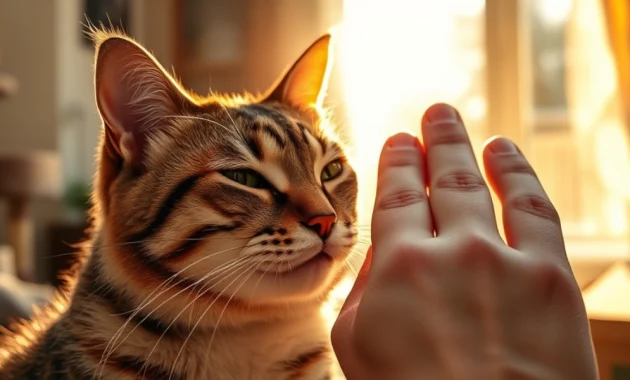
When a cat feels genuinely relaxed, safe, and content in your presence, they'll often look toward you with half-closed eyes and deliver a slow, deliberate series of blinks — nothing like a nervous, rapid blink, but an unhurried, almost luxurious closing and opening of the eyes. This gesture is, in a very real sense, the opposite of the predatory stare. A cat that's prepared to drop their guard enough to close their eyes around you, even briefly, is demonstrating real trust — in the wild, closing your eyes around another creature is a genuine vulnerability, and a cat offering you that vulnerability is making a meaningful statement.
The genuinely lovely part is that this is a two-way language. You can return a slow blink to your cat — looking toward them, softening your gaze, and deliberately closing your eyes slowly before opening them again. Many cats respond to this with a return blink of their own, and over time, this becomes a recognizable little ritual between you. It's a remarkably simple gesture, but it crosses the species barrier in a way that feels genuinely mutual, activating calming responses on both ends of the exchange rather than relying on words neither of you can fully share with the other.
- 1. How do cats show love if they can't speak?
- 2. What does a slow blink from a cat mean?
- 3. Why does my cat rub its head or cheeks against me?
- 4. Is sleeping near me a sign that my cat loves me?
- 5. Why is interactive play important for bonding?
- 6. Which toys are best for strengthening my bond with my cat?
- 7. Why do cats knead on their owners?
- 8. How does brushing improve my relationship with my cat?
- 9. Why should I create an enriched environment for my cat?
- 10. Is catnip safe for cats?
- 11. How many treats should I give my cat?
- 12. How can I tell if my cat wants attention or wants to be left alone?
- 13. Why does my cat follow me from room to room?
- 14. Why does my cat bring me toys or even prey?
- 15. Why are regular veterinary checkups considered an act of love?
- 16. Can cats understand human affection?
- 17. Do all cats enjoy cuddling?
- 18. What is the best way to build trust with a new cat?
Why Proximity Is Affection, Not Just Habit
Cats that are genuinely bonded — whether to other cats in a colony or to the humans in their household — express that bond partly through a simple, consistent behavior: choosing to spend time in close physical proximity, even when there's no obvious functional reason to do so. In feral and semi-feral cat colonies, related and bonded individuals will sleep curled together, groom near one another, and generally orient their resting and relaxing time around shared space rather than isolated solitude.
When your cat chooses to curl up against your leg on the couch, or settles onto the bed near your feet rather than across the room, this is the same underlying social instinct expressing itself toward you specifically. It's worth recognizing this as a genuine choice and a genuine signal rather than simply incidental — your cat has plenty of other places they could be resting, and choosing proximity to you is itself a form of communication.
Making time for regular cuddle sessions and gentle petting taps directly into this instinct, mirroring the kind of physical closeness cats naturally seek with trusted companions. This doesn't need to be elaborate or scheduled — simply being receptive and welcoming when your cat initiates physical closeness reinforces, in their terms, that you are a safe and valued part of their social world.
Head Bunts and Cheek Rubs: A Chemical Signature of Trust
If you've ever had a cat walk up and press their forehead firmly against your hand, leg, or face, you've experienced what's commonly called "head bunting," and it's worth understanding the biology behind why this particular gesture is so significant in feline social life.
Cats have specialized scent glands concentrated along their face — particularly around the cheeks, the base of the ears, and the forehead — that release pheromones, chemical signals largely undetectable to human senses but rich with meaning to other cats. When your cat rubs these facial glands against you, whether through a deliberate head bunt or by sweeping their cheek along your hand or leg, they're depositing their own scent onto you.
This isn't a random or incidental behavior. In feline social and territorial logic, this act of scent-marking functions as a way of incorporating you into their recognized, trusted territory — essentially marking you as familiar, safe, and theirs. It's a genuinely significant gesture in feline terms, roughly analogous to the kind of trust and claiming that happens in close human relationships, just expressed through scent rather than words.
The right response, when your cat initiates this kind of contact, is to lean into it rather than pull away. Allowing the rub to happen, perhaps gently reciprocating with a scratch under the chin or around the cheeks (areas rich in those same scent glands), reinforces the bond rather than disrupting a gesture your cat is offering in good faith.
Play as an Act of Love — Honoring the Hunter Inside
Why Unspent Predatory Drive Becomes a Problem
Every domestic cat, regardless of how many generations removed they are from a genuinely wild ancestor, carries an intact, deeply wired drive to stalk, chase, and capture prey. This isn't a learned behavior that can simply be trained away or ignored — it's a fundamental piece of feline neurology and instinct, present in even the most thoroughly domesticated, pampered indoor cat.
When that drive goes consistently unaddressed — when a cat has no real outlet for stalking, chasing, and "catching" something on a regular basis — the resulting unspent energy doesn't simply dissipate. It tends to surface elsewhere, often in ways that frustrate owners without them realizing the underlying cause: scratching furniture aggressively, sudden bursts of nighttime zoomies that disrupt everyone's sleep, occasional play-aggression directed at human hands or feet, or a general restlessness and irritability that can be hard to pin down without recognizing the predatory drive sitting underneath it.
Providing genuine, focused, interactive playtime is one of the most direct and effective ways to address this need — and it functions as a real expression of love, because you're actively meeting a core biological need your cat cannot meet entirely on their own in an indoor environment.
Finding What Actually Triggers Your Specific Cat
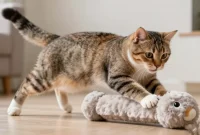
Here's something worth knowing: cats don't all respond to the same play stimuli in the same way, and figuring out what genuinely excites your particular cat is worth some experimentation. Some cats become intensely focused chasing a laser pointer's moving red dot across the floor and walls. Others show much more interest in a feather wand that mimics the erratic, fluttering movement of a bird, or a toy mouse dragged along the ground with the herky-jerky unpredictability of an actual fleeing rodent. Some cats prefer pouncing on something that disappears under a blanket or behind furniture, simulating the experience of prey going to ground.
Discovering your cat's particular preference is itself a worthwhile project — pay attention to which toys genuinely engage their focus (ears forward, body low, tail twitching with anticipation) versus which ones generate only passing, half-hearted interest.
One practical detail worth keeping in mind: rotate the toys available to your cat rather than leaving the exact same items out indefinitely. Novelty matters in maintaining engagement — a toy that's been sitting in the same spot for weeks loses its capacity to trigger genuine predatory interest, in much the same way that any repeated stimulus eventually becomes background noise. Keeping a small rotating collection, swapping out what's accessible every week or so, helps preserve the excitement and mental engagement that focused play is meant to provide.
Cats are famously meticulous about self-grooming, spending a substantial portion of their waking hours licking and cleaning their own coat. But grooming in feline social life serves a function that extends well past basic hygiene maintenance. Among cats who share a genuine social bond — littermates, bonded pairs, members of the same colony — a behavior called allogrooming occurs: cats licking and cleaning one another, frequently accompanied by purring, in a ritual that serves to reduce social tension and reinforce the bond between the participants.
This is a meaningful detail, because it means grooming, in feline social terms, isn't purely functional — it's relational. A cat that grooms another cat is communicating closeness and trust through the act itself, beyond whatever practical hygiene benefit results.
Recreating That Bond Through Brushing
You can tap into this same social mechanism through regular, gentle brushing sessions with a quality pet brush, and many cats come to genuinely look forward to and request this kind of attention once it's established as a positive, low-stress ritual.
For cats who are initially nervous or unfamiliar with grooming tools, the right approach is gradual rather than thorough from the start. Begin with very short sessions — a minute or two at most — focused on areas cats generally find comfortable and non-threatening, like under the chin or along the cheeks (areas, notably, that overlap with those scent-gland-rich regions discussed earlier in the context of head bunting). As your cat builds positive associations with the brush itself, you can gradually extend the duration and the areas covered.
Over time, many cats come to associate the brush specifically with comforting social attention, sometimes actively approaching their owner and soliciting a grooming session, the same way they might solicit petting.
There's also a genuinely practical benefit layered into this affectionate ritual: regular brushing gives you a built-in, low-pressure opportunity to check your cat's skin and coat for early signs of problems — painful matting, hidden scratches or wounds, unusual lumps, flea activity, or other dermatological issues that might otherwise go unnoticed until they've become more serious. A loving ritual and a practical health check, accomplished simultaneously.
Designing an Environment That Says "I Thought About You While I Was Gone"
The Loneliness Problem of Modern Indoor Life
No matter how attentive and devoted a cat owner you are, there are simply hours of every day — work, errands, sleep — when you can't be actively present with your cat. An indoor environment that offers nothing but bare floors and closed doors during those hours can become genuinely dull and understimulating, and over time, that lack of stimulation contributes to stress, boredom-driven behavioral issues, and a generally diminished quality of life.
Showing love, in this context, means thinking proactively about what your cat's environment offers them even when you're not actively in the room — building a space that keeps them engaged, safe, and mentally stimulated independent of your direct presence.
What Genuine Environmental Enrichment Looks Like
A few specific, well-supported additions make a real difference here. Tall, multi-tier cat trees give cats access to vertical space and elevated vantage points — both genuinely important to feline psychology, since cats instinctively feel safer and more in control of their environment when they can survey it from above, a behavior rooted in their dual identity as both predator and occasional prey.
Durable scratching posts, placed thoughtfully near favorite resting spots, serve the dual purpose of satisfying a deeply instinctive behavioral need (scratching maintains claw health and serves as both a stretching exercise and a scent-marking behavior) while protecting your furniture from becoming the default scratching outlet.
Interactive toys scattered throughout different areas of the home — rather than concentrated in one single spot — give your cat opportunities for spontaneous engagement and exploration throughout the day, rather than relegating all stimulation to scheduled play sessions alone.
And don't discount the genuinely low-cost options: something as simple as an empty cardboard box left in a common area can provide a cat with hours of genuine exploration, hiding, and comfort. Cats have a well-documented affinity for enclosed spaces, likely related to the sense of security and concealment such spaces provide, and an empty box, however unglamorous, taps directly into that instinct at essentially zero cost.
Catnip and Treats — Small Joys, Used Wisely
The Science Behind the Catnip Reaction
Catnip — botanically Nepeta cataria, a member of the mint family — contains an aromatic compound that triggers a distinctive sensory and behavioral response in many cats, a response observed not just in domestic house cats but across a range of feline species, including several larger wild cats. Introducing catnip into your cat's environment is a genuinely safe, natural way to offer a periodic mood boost and source of enjoyment.
Individual reactions to catnip vary considerably based on each cat's unique genetic makeup — it's worth knowing that not every cat responds to catnip at all, and that's entirely normal rather than a sign anything is wrong. Among cats who do respond, some become energized and playful, rolling, rubbing, and zooming around with apparent delight, while others settle into a calmer, more tranquil, almost meditative state. Neither response is "better" — they simply reflect different individual reactions to the same compound.
You can introduce catnip in a number of low-effort ways: rubbing a small amount onto a cardboard scratcher, tucking it inside a fabric toy, or sprinkling a pinch near a favorite resting spot or bed. A little goes a long way, and the effect tends to be temporary, fading after fifteen to thirty minutes, after which most cats develop a brief period of reduced responsiveness before becoming receptive to the effect again later.
Treats: A Tool for Both Reward and Bonding — Used in Moderation
High-quality, flavorful treats serve a genuinely useful dual purpose: they're an effective tool for reinforcing and rewarding desired behavior, and the act of offering and receiving a treat itself can function as a small, regular bonding ritual between you and your cat.
The important caveat here is portion control. It's easy to underestimate how quickly treat calories add up relative to a cat's relatively small daily caloric needs, and habitual overfeeding of treats is a meaningfully common contributor to feline obesity. Treating generously out of love is a completely understandable impulse, but genuine care means balancing that impulse with restraint — keeping treats as an occasional reward and bonding tool rather than a significant, unmonitored portion of daily caloric intake.
Learning to Actually Read Your Cat
Why Body Language Is the Real Foundation of Connection
Everything covered so far in this guide depends, at some level, on a broader skill: genuinely learning to read your cat's body language. Cats communicate constantly, but rarely loudly — their signals come through subtle shifts in tail position, ear angle, whisker movement, posture, and the occasional, carefully deployed vocalization, rather than dramatic or obvious displays.
A tail held high with a slight curl at the tip generally signals confidence and friendliness. A tail tucked low or wrapped tightly around the body often indicates anxiety or discomfort. A tail thrashing rapidly back and forth, despite sometimes being misread by newer owners as playful excitement, is frequently a sign of irritation or overstimulation — a genuine warning signal that more petting or attention right now might not be welcome. Ears pinned flat against the head signal fear or aggression; ears rotated forward and alert signal interest and engagement. Slow, relaxed blinking, as covered earlier, signals trust and contentment.
Why Respecting These Signals Matters as Much as Sending Your Own
Learning to read these signals accurately allows you to recognize, in real time, whether your cat is actively seeking attention and connection, feeling energetic and ready for a play session, or signaling that they'd genuinely prefer some quiet, undisturbed time alone. This last category matters more than it might initially seem — cats are autonomous creatures with real preferences about personal space, and consistently respecting a cat's signal that they want to be left alone, rather than overriding it because you want affection in that particular moment, builds a deeper and more durable foundation of trust than insisting on physical contact regardless of their signals would ever achieve.
In other words: real affection toward a cat isn't only about what you offer them. It's equally about what you're willing to withhold when they're communicating that they need space. A relationship built on consistently respecting those boundaries tends to produce a cat far more willing to initiate closeness on their own terms, which, in feline relational terms, is itself a profound expression of trust.
Embracing the Eccentric Stuff
Why Cats Express Love in Ways That Can Genuinely Confuse Us
Because feline social customs diverge so dramatically from human ones, it's entirely possible for a well-intentioned, loving owner to accidentally misread — or even gently discourage — a behavior that is, in feline terms, a profound expression of affection and trust.
Kneading — the rhythmic, alternating pressing of paws against a soft surface, often your lap — is one of the most commonly misunderstood of these behaviors. It traces back to kittenhood, where kneading against a mother cat's belly stimulates milk flow during nursing. Adult cats who knead, often purring contentedly while doing so, are generally expressing a deep sense of comfort, safety, and contentment — essentially regressing momentarily into that early, secure, nurtured state.
Head bunting and forehead pressing, as covered earlier, are scent-based trust markers rather than odd quirks to be tolerated.
Weaving tightly between your legs, particularly while you're trying to walk somewhere, can feel like an inconvenient obstacle course in the moment, but it's frequently a combination of seeking attention, greeting behavior, and — again — scent marking, as the cat brushes their flanks and tail against your legs.
Presenting their backside directly toward your face is, perhaps counterintuitively to a human sensibility, one of the more significant trust gestures a cat can offer. In feline social greeting customs, presenting the rear for sniffing is a standard, vulnerable greeting behavior between cats who trust one another, and a cat offering this same gesture to you is, in their cultural terms, extending you a genuine and somewhat intimate sign of familiarity and trust.
Recognizing these behaviors for what they actually represent — rather than dismissing them as merely odd or inconvenient — makes it much easier to welcome them appropriately, rather than inadvertently discouraging a cat who is, in their own way, doing everything they can to express genuine devotion.
The Less Glamorous, More Important Love — Preventive Veterinary Care
Why This Belongs on a List About Affection
It might seem like an odd inclusion in a guide about emotional bonding and affectionate gestures, and your cat will very likely voice loud, theatrical disapproval the moment they're loaded into a carrier bound for the vet's office. But genuinely, proactively protecting your cat's long-term physical health is among the most meaningful expressions of love available to any pet owner, even though it doesn't look or feel particularly warm or cuddly in the moment.
Why Regular Checkups Matter More Than They Might Seem To
Cats are, as a species, extraordinarily skilled at concealing physical discomfort and illness — a survival adaptation rooted in their evolutionary history as animals who could not afford to display visible weakness to potential predators. This means that by the time a cat shows obvious, undeniable symptoms of illness, the underlying problem has frequently been developing, unseen, for some time already.
Maintaining a consistent schedule of veterinary wellness checkups, staying current on appropriate vaccinations, and keeping up with regular parasite control aren't simply bureaucratic boxes to check — they're the mechanism through which a veterinary professional, trained to notice subtle physical signs that owners might easily miss, can catch developing health concerns early, when they're generally far more manageable and treatable than they would be if allowed to progress unnoticed.
In a very real sense, this kind of consistent, proactive care is a long-term investment in simply having more good years with your cat — more time for slow blinks, head bunts, brushing sessions, and quiet afternoons curled up together. It might be the least immediately rewarding item on this list in the moment, but it may well be the one that matters most over the full span of your cat's life.
Conclusion: Love in a Language Worth Learning
What strikes me most, looking back across all ten of these expressions of feline affection, is how consistently they require the same underlying shift from us: a willingness to set aside our own human assumptions about what love and connection are supposed to look like, and instead learn to recognize and speak in the particular, subtle, evolved language cats actually use.
A slow blink instead of a stare. Leaning into a head bunt instead of pulling away. Rotating toys to keep a hunting instinct genuinely engaged. Brushing as a form of social bonding rather than a chore. An empty cardboard box as a meaningful gift. Respecting the moments your cat wants space as much as celebrating the moments they want closeness. And, underneath all of it, the quieter, less glamorous commitment of consistent veterinary care that keeps your relationship going for as many years as possible.
None of this requires grand gestures or expensive purchases. It requires attention, patience, and a genuine willingness to meet your cat in their own native language rather than expecting them to fully translate themselves into ours. Do that consistently, and you'll likely find that your cat has been fluent in expressing love all along — you simply needed to learn how to listen.
FAQ
1. How do cats show love if they can't speak?
Cats express affection through body language and behaviors rather than words. Common signs include slow blinking, head bunting, cheek rubbing, purring, kneading, following you around, sleeping near you, grooming you, and choosing to spend time close to you. These actions demonstrate trust, comfort, and social bonding.
2. What does a slow blink from a cat mean?
A slow blink is one of the clearest signs that a cat feels safe and trusts you. Unlike direct staring, which cats often interpret as threatening, a slow blink communicates relaxation and peaceful intentions. Returning a slow blink to your cat can strengthen your bond.
3. Why does my cat rub its head or cheeks against me?
Cats have scent glands on their cheeks, forehead, and around their ears. When they rub against you, they deposit pheromones that mark you as part of their trusted social group. This behavior is a strong sign of affection and acceptance.
4. Is sleeping near me a sign that my cat loves me?
Yes. Cats naturally choose safe sleeping locations because they are vulnerable while resting. If your cat sleeps beside you, on your bed, or close to your feet, it indicates they trust you and feel secure in your presence.
5. Why is interactive play important for bonding?
Interactive play satisfies your cat's natural hunting instincts. Regular play sessions reduce boredom, prevent destructive behaviors, provide mental stimulation, and strengthen your relationship by creating positive experiences together.
6. Which toys are best for strengthening my bond with my cat?
Every cat has unique preferences. Popular options include feather wands, toy mice, interactive puzzle toys, balls, tunnels, and laser pointers (always finish laser play with a physical toy your cat can catch). Rotating toys regularly helps maintain excitement.
7. Why do cats knead on their owners?
Kneading is a comforting behavior that originates during kittenhood when nursing. Adult cats often knead when they feel safe, relaxed, and emotionally secure. It's one of the strongest indicators that your cat feels comfortable around you.
8. How does brushing improve my relationship with my cat?
Brushing mimics social grooming (allogrooming), which bonded cats naturally perform for each other. Regular brushing not only strengthens your emotional connection but also removes loose fur, reduces hairballs, and allows you to monitor your cat's skin and coat health.
9. Why should I create an enriched environment for my cat?
Environmental enrichment prevents boredom and stress, especially for indoor cats. Cat trees, scratching posts, hiding places, puzzle feeders, window perches, and interactive toys encourage natural behaviors like climbing, scratching, exploring, and hunting.
10. Is catnip safe for cats?
Yes. Catnip is generally safe for most healthy cats. About 50–70% of cats inherit the ability to respond to it. Reactions vary from energetic playfulness to deep relaxation. Occasional use is recommended rather than daily exposure.
11. How many treats should I give my cat?
Treats should make up no more than about 10% of your cat's daily calorie intake. Overfeeding treats can contribute to obesity and related health issues. Use treats primarily for rewards, training, or strengthening positive interactions.
12. How can I tell if my cat wants attention or wants to be left alone?
Pay attention to body language. Signs your cat welcomes interaction include:
- Slow blinking
- Tail held upright
- Relaxed ears
- Gentle purring
- Rubbing against you
Signs they need space include:
- Flattened ears
- Swishing or thrashing tail
- Dilated pupils
- Hissing or growling
- Tense posture
Respecting these signals builds long-term trust.
13. Why does my cat follow me from room to room?
Following you is often a sign of attachment, curiosity, or companionship. Many cats simply enjoy being near the people they trust. It can also indicate they're anticipating food, playtime, or affection.
14. Why does my cat bring me toys or even prey?
Cats may present toys—or, for outdoor cats, prey—as part of their natural hunting behavior. This can represent sharing resources, teaching behavior, or simply inviting interactive play. While it may seem unusual to humans, it's generally a positive social behavior.
15. Why are regular veterinary checkups considered an act of love?
Cats instinctively hide illness and pain, making early health problems difficult to detect. Routine veterinary exams, vaccinations, dental care, and parasite prevention help identify issues before they become serious, allowing your cat to enjoy a longer, healthier life.
16. Can cats understand human affection?
While cats don't interpret affection exactly as humans do, they recognize consistency, gentle handling, positive routines, and respectful interactions. Over time, they learn to associate your presence with safety, comfort, food, play, and companionship.
17. Do all cats enjoy cuddling?
No. Every cat has a unique personality. Some enjoy sitting on laps, while others prefer sitting nearby without physical contact. Respecting your cat's individual comfort level is one of the best ways to strengthen your relationship.
18. What is the best way to build trust with a new cat?
Allow the cat to approach you first, avoid prolonged direct eye contact, use slow blinking, speak softly, establish predictable routines, provide hiding places, engage in gentle play, and never force physical interaction. Trust develops gradually through consistent positive experiences.