
Nvidia RTX 5060 and 5060 Ti Rumored with 9GB VRAM: A Strange Fix for the Memory Crisis?
4 days ago
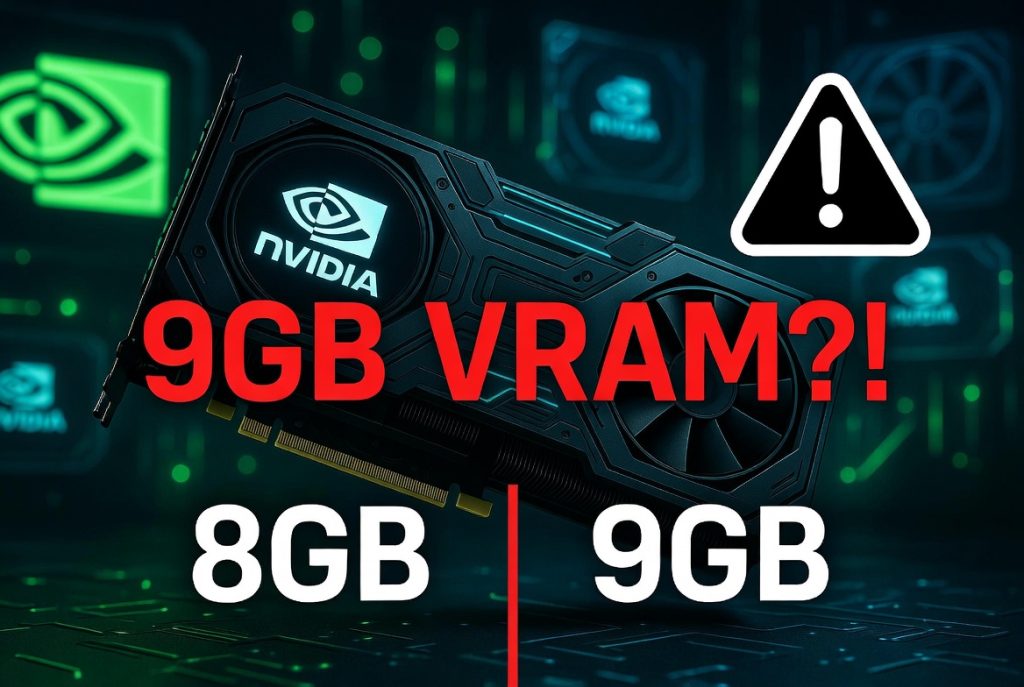
Nvidia appears to be preparing a surprising mid-cycle refresh for its entry-level Blackwell RTX 50-series graphics cards. According to fresh leaks, the company is developing RTX 5060 and RTX 5060 Ti variants equipped with 9GB of VRAM instead of the standard 8GB, in an effort to address growing complaints about insufficient memory in modern games.
While adding an extra 1GB of VRAM might sound like a welcome upgrade, the rumored implementation raises several concerns about performance trade-offs, memory bandwidth reduction, and overall value for gamers.
In this in-depth report, we break down the latest rumors, analyze the technical implications, compare them to existing cards, and discuss what this unusual move could mean for the GPU market in 2026.

The Rumored RTX 5060 and 5060 Ti 9GB Variants
According to well-known hardware leaker Hakuitado on the Board Channels forum, Nvidia is working on two new SKUs:
- RTX 5060 9GB
- RTX 5060 Ti 9GB
These cards would use newly developed 3GB GDDR7 memory chips — the same modules already found in certain RTX 5090 mobile (laptop) configurations. By combining three of these 3GB chips, Nvidia can reach exactly 9GB of VRAM without requiring a completely new memory controller design.
This move follows earlier leaks from March 2026 suggesting Nvidia was also considering a 9GB version of the RTX 5050, likely for the same reasons: to give budget gamers a little more headroom in VRAM-intensive titles at 1080p and 1440p resolutions.
Why Is Nvidia Doing This?
The graphics card industry continues to face a persistent VRAM shortage in the mid-range segment. Many modern games — especially those with ray tracing, high-resolution textures, and advanced effects — now regularly exceed 8GB of VRAM at 1440p, and sometimes even at 1080p with maximum settings.
Examples of problematic titles include:
- Cyberpunk 2077 with full path tracing
- Alan Wake 2
- Black Myth: Wukong
- Starfield with high texture packs
- Upcoming 2026 titles using Unreal Engine 5.4+
Gamers with 8GB cards often find themselves forced to lower texture quality or resolution to avoid stuttering and frame drops. By bumping capacity to 9GB, Nvidia hopes to provide a modest but meaningful buffer without jumping all the way to 12GB (which would require more expensive memory configurations and higher pricing).
The Technical Trade-Off: Smaller Memory Bus?
A second leaker on X (formerly Twitter) added a concerning detail: to implement the 9GB configuration, Nvidia may reduce the memory bus width on both cards from the standard 128-bit to a narrower 96-bit interface.
This change would use faster 24 Gbit/s GDDR7 chips but with fewer memory channels. The net result could be a reduction in overall memory bandwidth, potentially offsetting any gains from the extra 1GB of VRAM.
Estimated Impact:
- Original 8GB RTX 5060 (128-bit): ~448 GB/s bandwidth (estimated)
- New 9GB RTX 5060 (96-bit): ~432 GB/s or lower
While the difference may not be drastic on paper, in real-world gaming scenarios — especially at higher resolutions or with heavy ray tracing — reduced bandwidth can lead to lower frame rates and more stuttering, even if VRAM capacity is higher.
Interestingly, the same leaker noted that the RTX 5050 9GB variant might actually benefit from the switch because it uses faster memory chips that more than compensate for the narrower bus. However, on the more powerful 5060 and 5060 Ti, the bandwidth penalty could make the cards perform worse overall than their 8GB counterparts.
Release Timeline and Pricing Speculation
Both leakers suggest these 9GB variants could arrive as early as late May or early June 2026, possibly debuting at Computex 2026 in Taipei.
Pricing remains unknown, but analysts expect these cards to carry a small premium over the standard 8GB models due to the new memory chips and potential SKU complexity. This creates a strange situation: cards with slightly more VRAM but potentially weaker performance at a higher price.
How Do These Rumored Cards Compare?
RTX 5060 8GB vs 9GB (Rumored)
- VRAM: 8GB → 9GB
- Bus Width: 128-bit → 96-bit (possible)
- Bandwidth: Likely lower
- Target Resolution: 1080p / light 1440p
- Use Case: Budget gaming, esports, entry-level ray tracing
RTX 5060 Ti 8GB vs 9GB (Rumored)
- VRAM: 8GB → 9GB
- Bus Width: 128-bit → 96-bit (possible)
- Target Resolution: 1440p
- Use Case: Mainstream 1440p gaming
For comparison, the current RTX 4060 Ti launched with both 8GB and 16GB versions, showing that Nvidia is willing to offer multiple memory configurations when demand justifies it.
Is 9GB Enough in 2026?
This is the core question. While 9GB provides a small safety net over 8GB, many new games launching in 2026 and beyond are expected to push VRAM requirements even higher, especially with:
- Widespread adoption of Unreal Engine 5 features (Nanite, Lumen)
- Higher-resolution texture packs
- Advanced AI upscaling (DLSS 5 rumored)
- Ray tracing at scale
Serious 1440p or 4K gamers will still likely need at least 12GB–16GB for comfortable future-proofing. The 9GB variants seem targeted at budget-conscious buyers who want to avoid the most severe VRAM-related stuttering but aren’t ready to spend on higher-tier cards like the RTX 5070.
Potential Impact on the GPU Market
If these cards launch as rumored, they could create confusion in Nvidia’s lineup:
- Shoppers might struggle to decide between the cheaper 8GB version (potentially better performance) and the 9GB version (more VRAM but possible bandwidth penalty).
- It highlights ongoing supply chain challenges with GDDR7 memory and the difficulties Nvidia faces balancing cost, performance, and VRAM capacity.
- It may also signal that the rumored “RTX 50 Super” refresh series was quietly canceled or scaled back due to manufacturing constraints.
What Should Gamers Do?
If you need a GPU now:
- Consider waiting until Computex 2026 for clearer official announcements.
- The standard 8GB RTX 5060 and 5060 Ti may still offer better real-world performance for many users.
- Look at AMD’s Radeon RX 7600 or RX 7700 series as alternatives — they often provide more VRAM at similar price points.
If you can wait:
- Monitor official announcements from Nvidia.
- Watch for independent benchmarks once these 9GB cards (if real) become available.
- Consider stepping up to the RTX 5070 or higher if your budget allows, as 12GB+ VRAM will offer much better longevity.
Final Thoughts: A Band-Aid Solution?
Nvidia’s rumored 9GB RTX 5060 and 5060 Ti cards represent an interesting but awkward compromise. They acknowledge the real pain point of VRAM starvation in modern gaming without committing to more expensive 12GB configurations across the board.
However, the potential reduction in memory bandwidth makes this a risky move. Gamers could end up with cards that have “more” VRAM on paper but deliver worse frame rates and overall experience than the original 8GB models.
Until we see official specifications and independent testing, treat these leaks with healthy skepticism. The GPU market in 2026 remains challenging, with high prices, limited options in the mid-range, and ever-increasing demands from new game engines.
Will 9GB be enough to satisfy budget gamers? Or will it just create more confusion in an already complicated product stack? Only time — and benchmarks — will tell.
FAQ: Nvidia RTX 5060 & 5060 Ti 9GB (2026 Leaks)
1. What is new about the RTX 5060 and 5060 Ti 9GB variants?
The main change is the increase from 8GB to 9GB of VRAM using new 3GB GDDR7 memory modules. However, this may come with a reduced memory bus width.
2. Why is Nvidia adding 9GB VRAM instead of 12GB?
Likely due to cost and manufacturing constraints. Using 3GB memory chips allows Nvidia to slightly increase VRAM without redesigning the entire memory system.
3. Will 9GB VRAM improve gaming performance?
Not necessarily. While more VRAM helps in memory-heavy games, performance could decrease if memory bandwidth is reduced due to a narrower bus.
4. What is the concern with a 96-bit memory bus?
A smaller memory bus reduces bandwidth, which can negatively impact performance—especially in higher resolutions or ray-traced games.
5. Is 9GB VRAM enough for modern games in 2026?
For 1080p gaming, it may be sufficient. For 1440p and beyond, especially with ray tracing, 12GB or more is recommended for better future-proofing.
6. When are the RTX 5060 9GB models expected to launch?
Leaks suggest a possible release around May–June 2026, potentially announced at Computex 2026.
7. Should I buy the 8GB or wait for the 9GB version?
It depends. The 8GB version may offer better raw performance, while the 9GB version may reduce stuttering in VRAM-heavy games. Waiting for benchmarks is the safest choice.
8. Will the 9GB models be more expensive?
Most likely yes. New memory configurations and GDDR7 modules could result in slightly higher pricing.
9. How do these GPUs compare to AMD alternatives?
AMD GPUs in the same price range often offer more VRAM (e.g., 10GB–12GB), which may provide better value for certain games.
10. Are these RTX 5060 9GB leaks confirmed?
No. These are based on credible leaks but remain unconfirmed until Nvidia makes an official announcement.
Leave a Reply