
Samsung Galaxy S26 vs Google Pixel 10: This Flagship Phone Fight Is a Real Nail-Biter
2 weeks ago
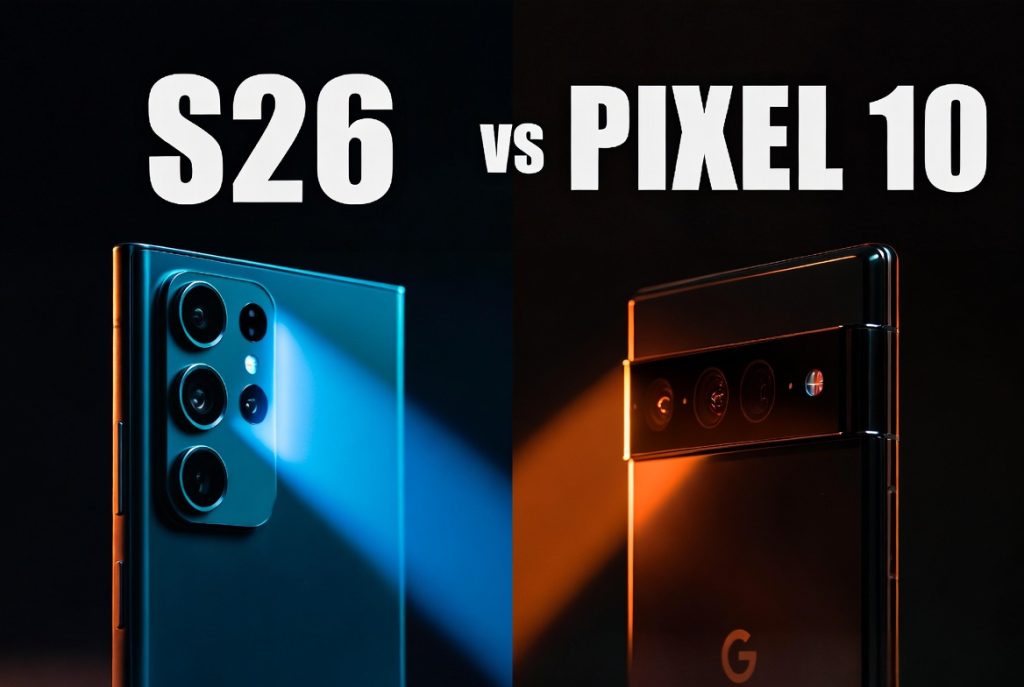
In the fiercely competitive flagship Android market of 2026, two giants continue to define the category: Samsung with its Galaxy S26 lineup and Google with the Pixel 10 series. Samsung brings cutting-edge hardware, innovative display technology, and raw performance, while Google counters with smarter AI integration, cleaner software, excellent cameras, and more aggressive pricing.
The Galaxy S26 (announced February 2026, released March 2026) includes the base S26, S26+, and S26 Ultra. The Pixel 10 family (launched August 2025) comprises the standard Pixel 10, Pixel 10 Pro, and Pixel 10 Pro XL. Both lines run Android 16 and promise seven years of OS and security updates, but their philosophies differ significantly.
Samsung emphasizes premium build, multitasking power (especially with DeX), and hardware innovation like the new Privacy Display on the Ultra model. Google focuses on on-device AI powered by the Tensor G5 chipset, natural photography processing, and a bloat-free experience.
This in-depth comparison covers every major aspect: pricing, design, displays, performance, cameras, battery life, software/AI features, and real-world usability. We’ll declare category winners and help you decide which lineup better suits your needs — whether you’re a power user, photographer, or value seeker.
Pricing plays a crucial role in this showdown. The Galaxy S26 starts at $899.99 (256GB), the S26+ at $1,099.99, and the S26 Ultra at $1,299.99 (up to $1,799.99 for 1TB). All models include at least 256GB base storage in many configurations.
In contrast, the Pixel 10 starts at $799 (128GB base, $899 for 256GB), the Pixel 10 Pro at $999 (128GB base), and the Pixel 10 Pro XL at $1,119 (with 256GB variants aligning closely with Samsung pricing). The 1TB Pixel 10 Pro XL lands at $1,549 — noticeably cheaper than the S26 Ultra’s top tier.
Google’s strategy undercuts Samsung by $100–$200 across comparable models, making the Pixel lineup more accessible, especially for buyers prioritizing software and cameras over raw specs. However, Samsung often offers generous trade-in deals and carrier promotions that can close the gap.
Winner: Pixel 10 series for outright affordability, though Samsung wins on storage value in base models.
From the front, both lineups feature sleek, rounded rectangular designs with minimal bezels. Samsung’s Galaxy S26 series is generally thinner and lighter: the base S26 measures approximately 5.89 x 2.82 x 0.28 inches and weighs around 5.89 oz, while the Ultra is 6.44 x 3.07 x 0.31 inches at 7.55 oz. The Pixel 10 is slightly thicker at 0.34 inches and heavier (around 7.2–8.18 oz depending on the model).
All phones boast IP68 dust and water resistance and aluminum frames. Samsung uses advanced Gorilla Glass Armor (or Armor 2 on Ultra), while Google opts for Gorilla Glass Victus 2.
Visually, Samsung’s vertical pill-shaped camera module (with additional sensors on the Ultra) contrasts with Google’s signature horizontal Camera Bar. Color options include Samsung’s Cobalt Violet, Sky Blue, and online exclusives, versus Google’s Frost, Indigo, Lemongrass, and Obsidian tones.
Samsung feels more premium and compact in hand for many users, while the Pixel’s design remains instantly recognizable and practical.
Winner: Tie — style is subjective, but Samsung edges out in thinness and lightness.

Both families deliver excellent AMOLED panels with high refresh rates and HDR support. The Pixel 10 series reaches up to 3,300 nits peak brightness, ensuring superb outdoor visibility. Samsung counters with vibrant colors and the standout Privacy Display exclusive to the S26 Ultra.
This innovative feature uses advanced pixel-level technology to narrow the viewing angle, making the screen nearly unreadable from the side while remaining clear head-on. It can activate app-by-app or for specific areas like notifications — a genuine privacy innovation ideal for public transport or crowded spaces.
Screen sizes range from 6.3 inches (base models) to 6.9 inches on the S26 Ultra. Most support adaptive 1-120Hz refresh rates for smooth scrolling and power efficiency (note: base Pixel 10 may have slight limitations compared to Pro models).
Samsung’s panels often feel more saturated and punchy, while Google’s offer natural color accuracy.
Winner: Galaxy S26 Ultra thanks to the unique Privacy Display feature, which adds real-world utility beyond specs.
Samsung equips the entire S26 lineup with the customized Qualcomm Snapdragon 8 Elite Gen 5 for Galaxy, paired with 12GB RAM (up to 16GB on Ultra 1TB). This chipset delivers superior benchmark scores, gaming performance, and multitasking capabilities.
Google’s Tensor G5 (built on TSMC’s 3nm process) focuses on AI efficiency rather than peak CPU/GPU power. It brings noticeable improvements over the Tensor G4 (34% faster CPU, 60% more powerful TPU), enabling smoother on-device AI tasks, but it trails the Snapdragon in raw benchmarks and sustained gaming.
In real-world use, the Galaxy S26 feels snappier for heavy gaming, video editing, and DeX desktop mode. The Pixel 10 excels in AI-optimized tasks like real-time photo editing, voice transcription, and proactive assistance without draining the battery as quickly in lighter use.
Winner: Galaxy S26 series for raw performance and gaming.
Both lineups rank among the best camera phones of 2026. The Galaxy S26 and S26+ feature a 50MP main, 12MP ultrawide, and 10MP 3x telephoto. The Ultra steps up dramatically with a 200MP main, 50MP ultrawide, 50MP 5x telephoto, and additional 3x telephoto.
The Pixel 10 offers a 48MP main, 13MP ultrawide, and 10.8MP 5x telephoto (base model gains telephoto this year). Pro models boost selfie cameras to 42MP.
Samsung delivers higher resolution, more saturated colors, and superior 8K video recording at 30fps. Google’s computational photography shines with more accurate skin tones, better low-light performance, natural processing, and powerful post-capture AI editing tools (e.g., generative fill, object removal).
Video on Pixel emphasizes 4K/60fps stability and AI enhancements, while Samsung pushes resolution and zoom versatility.
For enthusiasts wanting pixel-peeping detail and zoom, Samsung wins. For point-and-shoot magic with minimal editing, Pixel often feels more “human.”
Winner: Tie (or choose your preferred style) — Samsung for hardware versatility, Pixel for processing magic.
Battery life favors Samsung in lab tests, with the S26 series averaging around 15 hours and 10 minutes in mixed use. Pixel 10 models hover around 12–13 hours. Capacities vary, with larger batteries on bigger models and efficient chipsets playing a role.
Charging speeds are comparable at base levels (25W wired, 15W wireless), but higher-end models improve. Pixel supports PixelSnap magnetic wireless charging, a convenient MagSafe-like feature absent on Samsung.
Winner: Galaxy S26 for longer real-world endurance.
Both run Android 16 with seven years of updates. Samsung’s One UI adds multitasking, customization, and enhanced Galaxy AI (including advanced Circle to Search). Google delivers the purest Android experience, fastest feature drops, and deep Gemini integration with on-device processing via Tensor G5.
Samsung feels feature-rich (sometimes bloated), while Pixel emphasizes simplicity and intelligence.
AI tools overlap in image editing, summarization, and transcription, but implementations differ in speed and integration.
- Choose Galaxy S26 series if you want top performance, innovative hardware (Privacy Display, S Pen on Ultra), versatile cameras, and don’t mind paying a premium.
- Choose Pixel 10 series if you prioritize value, natural photography, clean software, strong AI, and magnetic charging convenience.
This remains one of the closest flagship battles in years. Many users will be happy with either.
The Samsung Galaxy S26 and Google Pixel 10 deliver excellent experiences with different strengths. Samsung wins on hardware power and innovation; Google excels in value, cameras, and software purity. Test both in-store if possible — the “nail-biter” lives up to its name.
FAQ — Samsung Galaxy S26 vs Google Pixel 10
1. What are the main differences between the Galaxy S26 and Pixel 10?
Samsung Galaxy S26 focuses on powerful hardware, premium design, and advanced display features, while Google Pixel 10 emphasizes AI-driven software, clean Android experience, and natural photography.
2. Which phone is more affordable?
The Pixel 10 series is generally more affordable, with prices typically $100–$200 lower than Samsung’s Galaxy S26 lineup.
3. Which phone has better performance?
The Galaxy S26 series offers better raw performance thanks to the Snapdragon 8 Elite Gen 5 chipset, making it ideal for gaming and heavy multitasking.
4. Which phone has better cameras?
It depends on your preference:
- Galaxy S26: better zoom, higher resolution, and 8K video
- Pixel 10: more natural colors, better low-light, and AI-powered editing
5. Which phone has better battery life?
The Galaxy S26 lineup generally lasts longer in real-world usage compared to the Pixel 10 series.
6. What is the Privacy Display on the Galaxy S26 Ultra?
The Privacy Display is a feature that limits screen visibility from side angles, helping protect your content in public spaces.
7. Which phone is better for AI features?
The Pixel 10 series leads in AI thanks to Google’s Tensor G5 chip, offering advanced on-device AI features like photo editing and voice processing.
8. Do both phones get long-term updates?
Yes, both Samsung and Google offer up to 7 years of Android OS and security updates.
9. Which phone is better for gaming?
The Galaxy S26 is better for gaming due to its stronger GPU performance and more stable thermal management.
10. Which phone has a cleaner software experience?
The Pixel 10 provides a cleaner, stock Android experience, while Samsung’s One UI includes more features but can feel heavier.
11. Is the design very different between the two?
Yes. Samsung uses a vertical camera layout, while Pixel features a horizontal camera bar, giving each a distinct look.
12. Which phone is better for photography beginners?
The Pixel 10 is often better for beginners because it produces great results with minimal effort using AI processing.
13. Does Samsung still have advantages over Pixel?
Yes, especially in hardware innovation, display technology, multitasking (DeX), and camera zoom capabilities.
14. Which phone should I choose overall?
- Choose Galaxy S26 if you want power, premium hardware, and versatility
- Choose Pixel 10 if you want value, AI features, and simplicity
15. Is this a close competition?
Yes, this is one of the closest flagship battles in recent years, with both phones excelling in different areas.
Leave a Reply