
The Insta360 CEO Just Leaked Two Upcoming Cameras in One Teaser Image
1 month ago · Updated 1 month ago
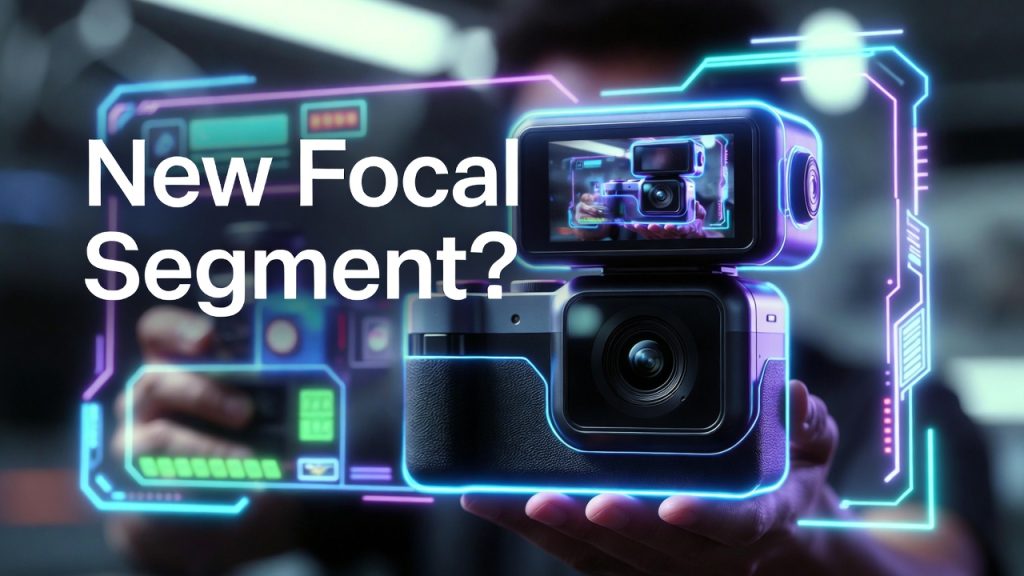
Product leaks in the camera industry are a familiar ritual. A blurry photograph emerges on a Chinese forum. A regulatory filing surfaces in an FCC database. A retailer accidentally lists a product a week too early. These are the normal channels through which information about upcoming cameras trickles into the public consciousness. What is not normal and what makes Insta360 CEO Jingkang Liu's recent Weibo post so fascinating is a company's own chief executive deliberately, publicly, and somewhat enigmatically teasing not one but two unannounced cameras in a single image.
The post, shared on Weibo China's dominant microblogging platform, roughly equivalent to X/Twitter in the Western market shows a person framing a photograph with an unknown camera. The caption reads simply: "go to a new focal segment." It is the kind of cryptic corporate tease that generates exactly the kind of conversation Insta360 presumably wants: enthusiasts, journalists, and competitors all scrutinizing every pixel for clues about what the company is planning next.
What has made this particular teaser especially intriguing is the discovery, pointed out by The New Camera, that there are actually two unknown cameras in the image. The first is the camera being held by the person in the foreground, used to frame and presumably capture the photograph. The second is a different camera visible through the viewfinder of the first — the subject of the photograph being taken. Two cameras, one image, one caption, and enough ambiguity to sustain weeks of speculation.
This article is a comprehensive examination of what those two cameras might be, why they matter in the context of Insta360's competitive position in 2026, what the history and trajectory of Insta360's product development tells us about what to expect, and how these potential new models fit into the broader landscape of action, vlogging, and compact photography. We will go beyond the speculation to provide the context that makes the speculation meaningful.
"Go to a new focal segment." Insta360 CEO Jingkang Liu on Weibo, January 2026. Four words that have launched hundreds of discussions about what Insta360 might have up its sleeve for the year ahead.
Decoding the Teaser: What the Image Actually Shows
Before diving into speculation, it is worth carefully examining what the teaser image actually contains, because the clues embedded in it however fragmentary provide the most reliable basis for analysis.
Camera One: The Mystery in the Foreground
The camera being held in the foreground of the teaser image is, by TechRadar's assessment, unlike anything Insta360 currently makes. This is the most significant single data point from the image: Insta360 is a company defined by its 360-degree action cameras and, more recently, its single-lens action cameras, but the camera visible in the foreground does not appear to fit either category.
PetaPixel, one of the most closely followed photography news sites, has speculated that this camera might be a compact, fixed-lens camera a form factor most commonly associated with cameras like the Canon PowerShot G series, the Ricoh GR series, or the Sony RX100 series. These are cameras designed for portability and image quality above action-camera durability, typically featuring larger image sensors than action cameras in a pocketable but non-ruggedized body.
The visible controls around the side of the viewfinder include buttons for toggling between video and photo modes, and a playback button for reviewing captured content. These are standard controls for any camera with serious photo and video capabilities, but their visible presence and apparent layout suggest a device with a more conventional camera interface than Insta360's current touch-screen-dominated lineup.
The fixed-lens compact category is one that Insta360 has never entered. It is also a category that is undergoing something of a renaissance in 2025 and 2026, driven by a combination of nostalgia for the pre-smartphone camera era and genuine appetite from content creators and travel photographers for pocketable cameras that deliver image quality beyond what smartphones can offer. The Ricoh GR IIIx, the Fujifilm X100VI, and various Sony RX100 variants have all sold extremely well in this context.

Figure 2: The DJI Osmo Pocket 3, currently the dominant product in the pocket vlogging camera segment. The second camera visible through the viewfinder of the mystery camera in the Insta360 CEO's teaser image has been identified by The New Camera as potentially being a pocket vlogging camera in this category — suggesting Insta360 is preparing a direct Osmo Pocket rival for 2026. (Credit: Tim Coleman / TechRadar)
Camera Two: The Subject Through the Viewfinder
The second camera the one visible through the viewfinder of the first, essentially the subject being photographed by the mystery compact camera is a different proposition. The New Camera has identified this as appearing to be a pocket vlogging camera, specifically along the lines of the DJI Osmo Pocket 3.
The DJI Osmo Pocket 3 occupies a specific and well-defined niche: a compact, gimbal-stabilized camera designed primarily for video content creation, particularly vlogging. It combines a small physical footprint with a mechanically stabilized camera system that delivers smooth, professional-looking video without the need for post-processing stabilization. The DJI Osmo Pocket 3 has been extremely well-received, and the rumored DJI Osmo Pocket 4 is already generating anticipation.
If Insta360 is preparing a pocket vlogging camera in this mold, it would represent a direct challenge to DJI in one of DJI's strongest product categories. The competitive implications of this are significant, which we will explore in detail later in this article.
The Caption: "Go to a New Focal Segment"
Liu's caption deserves more than passing attention. "Go to a new focal segment" is carefully phrased it is not "introducing a new camera" or "announcing an expansion of our lineup." The word "focal" is interesting given its double meaning: it can refer literally to focal length (as in a new focal length capability, perhaps suggesting a fixed-lens compact with a specific prime lens) or more figuratively to a new area of focus or attention.
If interpreted literally, a "new focal segment" could mean Insta360 is moving into a focal length range it has not previously served perhaps a camera with a 28mm equivalent wide-angle prime, or a camera with a more telephoto 50mm or 75mm equivalent lens. The compact fixed-lens camera category is often defined by its primary lens choice, and different focal lengths serve radically different photographic purposes.
If interpreted more broadly, "a new focal segment" could simply mean a new product category a new area of the camera market that Insta360 has not previously occupied. Given that both cameras in the image appear to be from categories Insta360 has not previously served, this broader interpretation seems equally plausible.
🔭 SPECULATION — Camera 1: A compact fixed-lens camera with a prime lens (possibly 28mm or 50mm equivalent), designed for travel and street photography Insta360's first entry into the enthusiast compact market, potentially competing with the Ricoh GR IIIx and Canon PowerShot G series.
🔭 SPECULATION — Camera 2: A pocket vlogging camera with mechanical gimbal stabilization, designed for content creators a direct competitor to the DJI Osmo Pocket 3 and the anticipated Osmo Pocket 4, arriving sooner than Camera 1 (possibly February–March 2026).
Insta360: A Company Profile and Product History
To properly contextualize what these teased cameras might mean, it helps to understand Insta360 as a company — its origins, its trajectory, and the strategic logic that has driven its product decisions over the past decade.
Origins and Rise
Insta360 was founded in 2015 in Shenzhen, China, initially focused on 360-degree cameras devices with multiple lenses pointing in different directions simultaneously to capture the full spherical environment around the photographer. The company's early products, like the Insta360 ONE, targeted early adopters and VR content creators interested in immersive media before the mainstream market had fully developed.
The company grew rapidly by iterating aggressively on its core 360-degree camera technology. Each generation brought meaningful improvements in image quality, stitching accuracy, stabilization, and ease of use. By the early 2020s, Insta360 had established itself as arguably the leading brand in consumer 360-degree cameras, with products that genuinely outperformed rivals in most objective measures.
A pivotal expansion came when Insta360 moved beyond 360-degree cameras into single-lens action cameras with the Insta360 ONE RS and later the Insta360 GO and Ace series. This brought the company into direct competition with GoPro, which had long dominated the action camera market. Insta360's action cameras offered competitive and often superior specifications at price points that challenged GoPro's premium positioning.
Current Lineup: The Products That Define Insta360 Today
Insta360's current lineup spans several distinct categories, each targeting a different user segment:
- 360-degree cameras: The Insta360 X series (currently X5 and X4) are the flagship 360-degree consumer cameras, offering spherical video and photo capture with advanced stabilization and AI-powered editing features.
- Single-lens action cameras: The Insta360 Ace Pro and related models compete directly with GoPro's HERO series, offering 4K and higher video with action-oriented ruggedness and mounting systems.
- Compact action cameras: The Insta360 GO 3 series targets users who want the smallest possible camera for day-to-day capture, with a clip-on form factor that sacrifices some image quality for extreme portability.
- Specialty cameras: The Insta360 LINK and similar products serve webcam and professional video applications.
What is notably absent from Insta360's current lineup is a pocket vlogging camera with gimbal stabilization (the DJI Osmo Pocket's territory) and any form of compact fixed-lens camera for stills-focused enthusiasts. These are exactly the two categories that the CEO's teaser image suggests may be coming.
Insta360 vs. DJI: The Central Rivalry
Understanding the competitive dynamics between Insta360 and DJI is essential context for interpreting the teaser. DJI, also a Chinese technology company headquartered in Shenzhen, is Insta360's most direct and consequential competitor. The two companies have been converging on each other's core markets with increasing speed and aggression.
DJI began as a drone manufacturer but has aggressively expanded into cameras. Its Osmo Pocket line established the pocket vlogging camera category that the teaser's Camera 2 appears to be targeting. Its Osmo Action series competes directly with Insta360's action cameras. And DJI has recently made moves into 360-degree cameras with products like the DJI Avata 360, bringing the competition full circle.
Insta360 has responded by expanding into categories where DJI is strongest. An Insta360 pocket vlogging camera would be the most direct assault yet on DJI's most premium non-drone consumer product line. It would signal that Insta360 is not content to defend its 360-camera territory but is actively seeking to expand into every adjacent category that DJI dominates.

Figure 3: The current Insta360 action camera lineup, anchored by the X5 (360-degree) and the Ace Pro (single-lens action). Both cameras represent Insta360's existing strengths. The teased cameras appear to point in entirely new directions — toward compact fixed-lens photography and gimbal-stabilized pocket vlogging — suggesting a significant strategic expansion of the Insta360 product portfolio. (Credit: Insta360 / TechRadar)
Camera One Deep Dive: The Case for an Insta360 Compact
If the first camera in the teaser is indeed a compact, fixed-lens camera, this would represent the most dramatic product category expansion in Insta360's history. Let's examine what such a camera might look like, who it would be for, and how it might differentiate itself in a crowded market.
The Compact Camera Renaissance
The compact digital camera was widely considered a dying product category by the mid-2010s, killed by the smartphone. As smartphone camera systems improved year over year, adding computational photography features, multiple lenses, and AI-powered processing, the rationale for carrying a separate compact camera became harder to justify for most consumers.
But a funny thing happened around 2022-2024: compact cameras stopped dying. A specific segment of the market enthusiast compact cameras with large sensors and prime lenses began selling out and commanding premium prices. The Fujifilm X100VI sold out globally within days of launch and remained backordered for months. The Ricoh GR IIIx, a camera originally launched in 2021, continued selling strongly years later with minimal updates. Sony's RX100 series maintained a loyal following.
What these cameras share: a large sensor (APS-C or larger) for genuine depth of field control and low-light capability, a fixed prime lens of specific character, and a physical size small enough to go in a jacket pocket. They offer something smartphones cannot despite all their computational tricks: the optical physics of a large sensor behind a quality prime lens.
If Insta360 is developing a camera in this category, it has several potential advantages. The company has deep expertise in image sensor technology, having developed or sourced the sensors for its 360-degree cameras that can capture compelling images in challenging light conditions. It has software processing expertise, with algorithms developed for stitching and stabilizing 360-degree video that demonstrate serious computational photography capability. And it has established distribution channels and brand awareness in the action and adventure photography space.
What Differentiators Could Insta360 Bring?
A simple me-too compact camera would not be worth Insta360's development resources. The company's track record suggests it would identify specific differentiators features or capabilities that existing compact cameras lack and that align with the interests of Insta360's existing and target customer base. Several possibilities stand out:
- AI-powered shooting modes: Insta360 has invested heavily in computational photography features across its action camera lineup, including subject tracking, automated editing, and AI-generated highlights. These capabilities applied to a compact camera could differentiate it meaningfully from the more traditional photography experience of cameras like the Ricoh GR.
- Video optimization: Insta360's user base is heavily video-oriented. A compact camera from Insta360 would almost certainly offer video capabilities that exceed what compact cameras from traditional photography brands prioritize, potentially including the kind of LOG format video recording and advanced stabilization that content creators demand.
- Ecosystem integration: Insta360 has built a software ecosystem around its cameras, including the Insta360 app for editing and sharing. A compact camera that integrates with this ecosystem — allowing footage to be managed, edited, and shared through familiar tools — would have built-in appeal for existing Insta360 users.
- Action-camera durability in a compact body: Insta360's expertise in ruggedized, action-oriented design could yield a compact camera with better weather sealing, drop resistance, or environmental protection than cameras like the Ricoh GR IIIx (which has no official weather sealing).
Timeline and Launch Window
TechRadar's analysis, based on the visibility of the camera in the teaser image and the apparent stage of development, suggests that the compact fixed-lens camera may still be in the prototype stage. This positions it as a product more likely to launch in the second half of 2026 than in the near term. Camera product development timelines at companies of Insta360's scale typically run 12-24 months from early prototype to consumer launch, and a camera that appears in a teaser image is often 6-12 months from a formal announcement.
This is not surprising for a camera category that would be new to Insta360. The company would need to develop new lens systems, camera bodies without the 360-degree or action-camera architecture that defines its existing designs, and user interfaces optimized for the different use cases of a compact camera. These are not trivial engineering challenges.
Camera Two Deep Dive: An Insta360 Pocket Vlogging Camera
The second camera the pocket vlogging camera visible through the first camera's viewfinder is assessed by TechRadar as the more immediately imminent product. The combination of its apparent development stage and the competitive context of the DJI Osmo Pocket category suggest it could launch as early as February or March 2026.
The DJI Osmo Pocket Benchmark
The DJI Osmo Pocket 3 is the product that any Insta360 pocket vlogging camera would need to beat or at least match. Understanding the Osmo Pocket 3's strengths is therefore essential for understanding what Insta360 would need to deliver.
The DJI Osmo Pocket 3 features a 1-inch CMOS sensor significantly larger than typical action cameras paired with a 3-axis mechanical gimbal that physically stabilizes the camera module rather than relying solely on digital stabilization. The result is video footage with a genuinely cinematic quality that is very difficult to achieve with software stabilization alone, particularly in the smooth panning movements and steady walking shots that define vlogging content.
Additional strengths of the Osmo Pocket 3 include a rotating magnetic display for convenient framing from any angle, 4K/120fps video recording capability, excellent color science from DJI's processing pipeline, and tight integration with DJI's editing software ecosystem. It has been the dominant product in its category since launch and has no serious rivals at the time of writing.
Insta360 Luna: A Potential Preview
Interestingly, Insta360 has recently launched the Insta360 Luna a camera that TechRadar has described as a 'two-eyed' camera designed to offer a different perspective on vlogging. While the Luna is distinct from the pocket vlogging form factor of the Osmo Pocket, it demonstrates that Insta360 is actively experimenting with non-traditional camera designs oriented toward content creation.
The Luna's design philosophy — capturing front and rear simultaneously for immersive vlogging content reflects Insta360's heritage in 360-degree capture and its deep understanding of what content creators want. A pocket vlogging camera from Insta360 would likely incorporate some of this thinking, potentially offering capabilities that go beyond what the Osmo Pocket 3 can do while matching its core video quality and stabilization.
What Insta360 Would Need to Deliver
To genuinely compete with the Osmo Pocket 3, an Insta360 pocket vlogging camera would need to meet a high bar across multiple dimensions:
- Video stabilization quality: Mechanical gimbal stabilization is the defining feature of the Osmo Pocket category. Insta360 would need to deliver comparable gimbal performance — or find a different solution (advanced electronic stabilization, for example) that achieves similar results.
- Image sensor size and quality: A 1-inch or larger sensor is now the baseline expectation for this category. A smaller sensor would represent a compromise that content creators would notice.
- Audio: Good microphone audio is critical for vlogging cameras, and this is an area where DJI has invested significantly. Insta360 would need to match this.
- Software ecosystem: The Insta360 app would need to provide editing tools and workflow integration that makes using the camera for content creation seamless.
- Price: DJI Osmo Pocket 3 prices start around $519 USD. An Insta360 competitor would need to offer compelling value at a similar or lower price point to attract buyers from DJI's established product.

Figure 4: The DJI Osmo Pocket 3 in detail, showing its rotating display, compact gimbal stabilization system, and 1-inch sensor. Any Insta360 pocket vlogging camera competitor would need to match or exceed these specifications to be taken seriously in the market. The anticipated DJI Osmo Pocket 4 means Insta360 would be entering a category where the incumbent product is also evolving rapidly. (Credit: TechRadar)
Market Context: The 2026 Camera Landscape
Both cameras teased by Jingkang Liu's Weibo post would be entering markets in significant flux. Understanding the broader camera landscape of 2026 provides essential context for evaluating Insta360's strategic timing.
The Action Camera Market: Stabilizing After Years of Growth
The action camera market has matured significantly since GoPro's explosive growth period in the 2010s. The core use case mounting a small, rugged camera on helmets, vehicles, or athletes for first-person perspective footage remains popular, but the growth of this market has slowed as saturation has increased. Most serious action sports enthusiasts who want an action camera already own one.
Growth in the segment now comes primarily from upgraders (existing action camera users replacing older models) and from content creators who use action cameras as secondary cameras for specific shots rather than primary devices. This pressure has pushed manufacturers including Insta360 to continuously innovate on image quality, stabilization, and features to justify upgrades.
The Vlogging Camera Segment: Rapid Growth and High Attention
The pocket vlogging camera segment, by contrast, is in a growth phase. The rise of short-form video content on platforms like YouTube Shorts, TikTok, and Instagram Reels has created demand for cameras that can produce high-quality video in a form factor that is practical for daily carry and spontaneous shooting. The DJI Osmo Pocket series has capitalized on this demand effectively.
The segment's growth is attracting competition. Reports of the DJI Osmo Pocket 4 suggest DJI is aware it needs to continue innovating to maintain its position. Insta360's rumored pocket vlogging camera would add another significant competitor. And other manufacturers, including Sony and Canon, have products that peripherally serve this market with their compact system cameras and vlogging cameras.
The Compact Enthusiast Camera Segment: Defying Expectations
The compact enthusiast camera segment where Camera 1 from the teaser would potentially sit continues to defy the narrative of inevitable decline. The Fujifilm X100VI's global sellout demonstrated that demand for premium compact cameras is real and significant, even among consumers who already own smartphones with excellent cameras.
This demand is driven by several converging factors: a growing aesthetic preference for film-like image rendering that computational photography struggles to replicate authentically; the tactile pleasure of a dedicated camera experience versus a smartphone; and the specific creative constraints that a fixed-lens camera imposes (you cannot zoom, you must move with your feet), which many photographers find liberating rather than limiting.
Competitive Landscape Analysis: What This Means for DJI, GoPro, and Others
The potential addition of two new camera categories to Insta360's lineup would have ripple effects across the competitive landscape. Understanding how existing players are positioned helps predict how the market might respond.
DJI: The Primary Target
DJI faces the most direct competitive challenge from both teased cameras. If Camera 2 is indeed an Osmo Pocket rival, DJI faces a credible new competitor in its strongest consumer camera segment from a company that has already proven it can deliver action cameras that challenge DJI's own Osmo Action series. DJI's response presumably in the form of the Osmo Pocket 4 will need to raise the bar sufficiently to justify its incumbent premium.
Camera 1, the potential compact fixed-lens camera, is less of a direct DJI challenge DJI has no significant presence in the compact enthusiast camera segment. However, it represents Insta360 diversifying into a product category where it would not be competing with DJI, which could be read as a strategic move to reduce its dependence on the action camera segment where DJI has significant scale advantages.
GoPro: A Weakened Position
GoPro is the company most vulnerable to the cumulative effect of Insta360's market expansion. GoPro has struggled financially in recent years, posting losses and reducing its product lineup as both Insta360 and DJI have taken market share from it. GoPro's competitive position is based almost entirely on its action camera product line — it has no meaningful presence in 360-degree cameras, pocket vlogging cameras, or compact enthusiast cameras.
If Insta360 successfully enters two new camera categories while continuing to compete effectively in action cameras, GoPro's ability to differentiate and maintain premium pricing becomes even more challenging. Insta360's growth is not GoPro's primary problem, but it is a significant contributing factor.
Traditional Camera Manufacturers: Fujifilm, Canon, Sony, Ricoh
If Camera 1 is a compact enthusiast camera, traditional camera manufacturers face a new type of competitor one that brings software, AI, and computational photography expertise that the traditional photography industry has been slower to develop. Fujifilm's X100 series' success is partly built on its distinctive film simulation modes and aesthetic rendering. If Insta360 brings genuinely differentiated computational photography capabilities to the compact category, it could attract buyers who might otherwise consider the X100VI or GR IIIx.
However, traditional camera manufacturers have deep advantages in lens design, optical physics, and the accumulated decades of photographic color science that produce the distinctive rendering that their most loyal customers love. Insta360 would be competing on different terms innovation, software, and ecosystem integration — rather than on the territory where Fujifilm, Canon, and Ricoh have the strongest advantages.
| Company | 360° Cameras | Action Cams | Pocket Vlogging | Compact Enthusiast | Competitive Position vs. Teased Insta360 Products |
| Insta360 (current) | ★★★★★ | ★★★★☆ | ☆☆☆☆☆ | ☆☆☆☆☆ | Expanding into 2 new categories |
| DJI | ★★★☆☆ | ★★★★☆ | ★★★★★ | ☆☆☆☆☆ | Primary target for Camera 2 |
| GoPro | ★☆☆☆☆ | ★★★★☆ | ☆☆☆☆☆ | ☆☆☆☆☆ | Continued margin pressure |
| Fujifilm | ☆☆☆☆☆ | ☆☆☆☆☆ | ☆☆☆☆☆ | ★★★★★ | Potential rival for Camera 1 |
| Ricoh | ☆☆☆☆☆ | ☆☆☆☆☆ | ☆☆☆☆☆ | ★★★★☆ | Potential rival for Camera 1 |
| Sony | ☆☆☆☆☆ | ★★★☆☆ | ★★★☆☆ | ★★★★☆ | Peripheral competitor in both |
Table 1: Competitive positioning matrix for the major camera manufacturers across the four relevant product categories. Star ratings reflect estimated market strength in each segment. The two cameras teased by Insta360's CEO would place the company in direct competition with DJI (pocket vlogging) and traditional camera brands (compact enthusiast) for the first time.
Insta360's Strategic Logic: Why These Two Cameras, Why Now?
Beyond the speculation about specifications, there is a strategic question worth examining: why would Insta360 choose these two specific categories for expansion, and why in 2026?
The Case for Diversification
Insta360's current business is heavily dependent on the 360-degree camera and action camera segments. While the company is a leader in both, these segments face headwinds: market maturation, intense competition from DJI, and the ever-improving camera capabilities of flagship smartphones that continue to erode the addressable market for lower-end cameras.
Diversification into adjacent categories pocket vlogging cameras and compact enthusiast cameras serves multiple strategic purposes simultaneously. It reduces dependence on any single product category. It opens the company to new customer segments who may not currently consider Insta360 products. And it positions Insta360 as a broader camera brand rather than a niche 360-degree specialist, which has long-term brand equity value.
Capitalizing on the Content Creator Economy
Both teased camera categories are strongly aligned with the content creator economy that has been the dominant driver of consumer electronics demand in the 2020s. Pocket vlogging cameras are, by definition, built for content creators. Compact enthusiast cameras have seen their demand surge in part because of content creators on Instagram and YouTube who value the distinctive aesthetic of film-like digital images from large-sensor compact cameras.
Insta360 is already a brand trusted by content creators. The company's marketing, its software ecosystem, and its product design have all been oriented toward the needs of people who create video and photo content for online distribution. Expanding into categories that serve these same users more comprehensively is a natural strategic progression.
Timing: The DJI Ban Wildcard
No analysis of Insta360's competitive positioning in 2026 can ignore the shadow cast by ongoing regulatory scrutiny of DJI in Western markets, particularly the United States. DJI has faced and continues to face national security-related restrictions in the US market, and while the full implications of this continue to evolve, any sustained restriction on DJI's ability to sell in Western markets would create a significant market opportunity for Insta360 which, despite also being a Chinese company, has not faced the same level of regulatory attention as DJI.
If Insta360 can establish strong product lines in the pocket vlogging and compact camera categories before or as DJI faces increased regulatory headwinds, it would be well positioned to capture market share from buyers who want alternatives to DJI products. This is not to suggest that regulatory action against DJI is certain or imminent, but it is a strategic consideration that likely factors into Insta360's planning.
What to Watch For: Timeline, Launch Expectations, and What Would Make These Cameras Successful
With the teaser now public and speculation at a high pitch, what should photographers, content creators, and industry watchers actually look for in the coming months?
Launch Timeline Expectations
Based on TechRadar's assessment and the visible development stage of both cameras in the teaser image:
- Camera 2 (pocket vlogging camera): Potentially as early as February or March 2026. The assessment that this camera appears closer to market-ready suggests a relatively near-term formal announcement. February-March would position it ahead of the spring content creator buying season and before any anticipated DJI Osmo Pocket 4 announcement.
- Camera 1 (compact fixed-lens camera): More likely in the second half of 2026, possibly at Photokina or another major photography trade event. This camera appears to still be in earlier prototype stages based on its appearance in the teaser.
- Official announcement: A formal Insta360 event or product announcement could come within weeks of this teaser, given that the CEO's deliberate sharing of the image suggests the company is ready to begin building pre-launch buzz.
Key Questions to Watch
Several specific questions will determine how significant these cameras actually are for the market:
- Sensor size: For Camera 1, will Insta360 use a 1-inch sensor (matching Sony RX100), an APS-C sensor (matching Fujifilm X100VI and Ricoh GR IIIx), or something else? For Camera 2, a 1-inch sensor matching the Osmo Pocket 3 is the minimum expectation.
- Gimbal quality: For Camera 2, the quality of the mechanical stabilization system will be the defining test. If it cannot match the Osmo Pocket 3's smooth stabilization, the camera will struggle to attract buyers from DJI's established user base.
- Price: Both cameras will need to be priced competitively. The compact camera market is price-sensitive among enthusiasts who have strong alternatives at various price points.
- Software and AI features: What Insta360-specific software capabilities will these cameras bring? AI shooting modes, automated editing, and ecosystem integration will likely be key differentiators.
- Availability: Will these cameras be sold globally, or primarily in Asia initially? Insta360 has good global distribution, but launch timing and regional availability will affect their competitive impact.
What Success Would Look Like
For Camera 2 (pocket vlogging), success means winning meaningful market share from the DJI Osmo Pocket 3 and/or positioning Insta360 well for the competition with the anticipated Osmo Pocket 4. A well-reviewed camera with differentiated features and competitive pricing that establishes a beachhead in the pocket vlogging segment would be a strong result.
For Camera 1 (compact enthusiast), success is a longer-term proposition. Establishing Insta360 as a credible brand in a category dominated by beloved, established products like the Fujifilm X100 series and Ricoh GR series will take more than one product generation. A first-generation compact camera from Insta360 that receives strong reviews and demonstrates genuine differentiation — even if it does not immediately outsell its rivals — would be a meaningful foundation for what could become a major product line.
Conclusion: The Most Interesting Camera Teaser of 2026
Jingkang Liu's Weibo post a single image with four cryptic words of caption — has done what the best product teasers always do: it has generated genuine excitement and substantive conversation about what Insta360 might be building. The hybrid nature of this disclosure — official enough to be credible, ambiguous enough to leave room for imagination is either deliberate marketing genius or a CEO who simply could not resist sharing a preview of something he is excited about. Possibly both.
What we can say with reasonable confidence is that both cameras appear to be real products in active development, not concept exercises. The level of detail visible in the teaser image suggests hardware that is approaching production-readiness, at least for Camera 2. Insta360's track record of aggressive product development and its history of successfully entering new camera segments gives credibility to the idea that these are not just aspirational prototypes.
The broader significance extends beyond the specific products. A successful Insta360 pocket vlogging camera would represent a genuine challenge to DJI's most prized non-drone consumer product. A successful Insta360 compact enthusiast camera would place a Chinese technology company with computational photography expertise into a segment long dominated by Japanese brands with optical heritage. Either development would reshape the competitive landscape in meaningful ways.
For consumers, the prospect of more competition in both segments is straightforwardly positive. Competition drives innovation, improves quality, and tends to apply downward pressure on prices. If Insta360's entries into these categories are as competitive as its 360-degree and action cameras have been, buyers will have better choices in 2026 than they had in 2025. And for DJI, GoPro, and the traditional camera brands, the message from Liu's Weibo is clear: Insta360 is not content with the territory it already holds.
FAQ: Teaser Dua Kamera Insta360 2026
1. Apa yang diumumkan oleh Insta360 CEO Jingkang Liu?
CEO membagikan satu foto di Weibo dengan caption “Go to a new focal segment”, yang menampilkan dua kamera misterius: satu di tangan orang yang memotret, satu lagi terlihat di viewfinder. Ini merupakan teaser resmi, bukan kebocoran biasa.
2. Kamera apa yang terlihat di gambar?
-
Kamera 1 (di tangan): Diduga kamera compact fixed-lens untuk street/travel photography, masuk kategori enthusiast.
-
Kamera 2 (di viewfinder): Diduga pocket vlogging camera dengan gimbal, mirip DJI Osmo Pocket 3.
3. Apa arti “new focal segment”?
Bisa berarti:
-
Secara literal: Insta360 masuk ke range focal length baru atau jenis lensa baru.
-
Secara figuratif: produk baru di kategori kamera yang belum pernah dimasuki Insta360 sebelumnya.
4. Kapan kamera ini kemungkinan diluncurkan?
-
Pocket vlogging camera: Februari–Maret 2026 (lebih dekat ke pasar).
-
Compact fixed-lens camera: Kemungkinan H2 2026 (masih dalam prototipe).
5. Mengapa dua kategori ini penting untuk Insta360?
-
Diversifikasi dari 360-degree dan action cameras.
-
Memasuki pasar content creator & enthusiast photography.
-
Menantang DJI (pocket vlogging) dan brand kamera Jepang (compact enthusiast).
6. Bagaimana dampaknya pada kompetitor?
-
DJI: Target utama Camera 2 (pocket vlogging).
-
GoPro: Tertekan karena Insta360 ekspansi ke kategori baru.
-
Fujifilm, Ricoh, Sony: Kamera 1 menambah kompetisi di segment compact enthusiast.
7. Fitur apa yang bisa membedakan kamera Insta360?
-
AI & computational photography.
-
Integrasi dengan ekosistem Insta360.
-
Video optimization (stabilization, LOG recording).
-
Desain tahan banting dan ergonomi action-camera di body compact.
8. Apa yang harus diperhatikan calon pengguna dan pengamat pasar?
-
Ukuran sensor, kualitas gimbal, harga, software, ketersediaan global.
-
Review awal akan menentukan reputasi dan adopsi pasar.
Leave a Reply