The Master Guide to Feline Bathing: Science, Behavior, and Practical Techniques
2 months ago
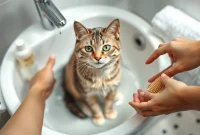
For centuries, cats have carried a reputation for their absolute disdain for water. Yet, as any seasoned cat owner or veterinary professional knows, there are times when our feline companions require a complete bath. Whether they have rolled in something toxic, are suffering from a dermatological condition, or are simply unable to groom themselves due to age or obesity, masterfully managing a cat's bath is an essential skill.
This comprehensive guide breaks down the biological, behavioral, and practical components of bathing a cat. Written with a human touch for pet bloggers and dedicated cat parents, this deep dive transforms a traditionally chaotic chore into a structured, stress-free, and safe routine.
Feline Self-Grooming Mechanics and Limitations
To understand when and why a cat needs a bath, we must first appreciate their built-in grooming toolkit. A healthy cat spends up to 30% to 50% of their waking hours grooming.
[Papillae (Lipped barbs)] ──> [Distributes Sebum Oils] ──> [Removes Loose Hair & Debris]
The Anatomy of the Feline Tongue
A cat’s tongue is covered in papillae—tiny, backward-facing hooks made of keratin (the same material as human fingernails). These hooks act like a high-efficiency hairbrush, detangling fur, lifting away loose underhair, and scraping off surface dirt. As the cat licks, they also transfer saliva, which cools them down through evaporation and distributes natural oils across their coat.
When Self-Grooming Fails
Despite this evolutionary design, a cat’s tongue cannot solve every hygiene issue. Human intervention via a wet bath becomes medically or practically necessary in the following scenarios:
Toxic Contamination: If a cat gets motor oil, engine coolant, household cleaners, or toxic lily pollen on their fur, you cannot let them lick it off. Self-grooming would mean swallowing poisons, leading to acute kidney failure or severe oral chemical burns.
Physical Deficits (Obesity and Arthritis): Overweight cats or senior cats suffering from osteoarthritis lose their spinal flexibility. They simply cannot reach their lower back, hind legs, or perianal region. This results in matted fur, dry dandruff buildup, and painful urine or fecal scalding on the skin.
The Hairless Variable (The Sphynx Dilemma): Hairless cat breeds like the Sphynx do not have fur to absorb their natural skin oils. Instead of staying clean, their sebaceous glands leave an oily, brown, sticky residue on their skin that clogs pores and stains furniture if they aren't bathed weekly.
Severe Dermatological Conditions: Chronic ringworm (dermatophytosis), flea infestations, severe dandruff, or yeast infections require medicated topical shampoos that must be applied directly to wet skin to work effectively.
Scheduling and Frequency: How Often Is Too Often?
Bathing a cat too frequently can strip away their skin's natural lipid barrier, causing chronic dryness, intense itching, and secondary skin infections. Conversely, waiting too long in a high-need cat leads to painful mats and skin breakdown.
                  [ Feline Bathing Frequency Guide ]
                                  |
     +----------------------------+----------------------------+
     |                            |                            |
[ Hairless Breeds ]        [ Standard Outdoor ]       [ Senior / Obese Indoors ]
- Once per week            - Every 4 to 6 weeks       - As needed (Spot-clean
- Prevents oil buildup     - Controls dirt/parasites    or 6-week cycles)
The Standard Baseline
For a typical, healthy indoor domestic shorthair, a full bath is rarely needed unless an emergency occurs. However, for outdoor cats or semi-longhaired cats, a maintenance bath every 4 to 6 weeks is an ideal baseline to control coat debris, shedding, and dander.
Tailoring by Lifestyle and Breed
Outdoor Explores: Cats that spend supervised time outdoors face higher exposure to mud, lawn chemicals, and parasites, requiring regular 4-week wash cycles.
The Elderly or Compromised: Focus on targeted, gentle structural baths every 6 weeks, paired with daily spot-cleaning using damp, warm washcloths on their hindquarters to minimize handling stress.
The Pre-Bath Checklist: Essential Gear and Setup
An unplanned feline bath is a recipe for scratched arms, escaped pets, and flooded bathrooms. Before you turn on any water, your bathroom must be fully prepped like a clinical workspace.
Necessary Equipment Inventory
The Wash Basin: A deep kitchen sink, a clean laundry utility tub, or a large plastic storage bin placed inside a standard bathtub. Avoid open, massive bathtubs for small cats; it gives them too much room to panic and sprint away.
The Rubber Anti-Slip Mat: This is your most vital psychological tool. Placing a textured rubber mat or an old towel at the bottom of the basin gives the cat's claws traction. If a cat feels secure beneath their paws, their primitive panic levels drop drastically.
Feline-Specific Shampoo: Never use human shampoo, baby shampoo, or dog shampoo. A cat’s skin pH is significantly more alkaline (around 6.5 to 7.5) than human skin (around 5.5). Human shampoos strip their delicate acid mantle, causing severe chemical irritation. Choose an unscented, soap-free, oatmeal-based feline shampoo.
The Absorbent Buffer: Keep at least two large, warm microfiber towels directly within arm’s reach.
Protective Cotton Balls: Two clean, dry cotton balls to gently shield their ears.
Step-by-Step Protocol for a Stress-Free Bath
With your equipment prepped and in position, follow this step-by-step method to safely guide your cat through the washing process.
[Claw Trim & De-Shed] ──> [Ear Plugging] ──> [Pitcher Pouring] ──> [Shampoo & Rinse] ──> [Towel Wrap]
Phase 1: Physical Prep and Desensitization
The Claw Trim: Always trim your cat’s claws 20 to 30 minutes before the bath. Removing the sharp points minimizes the risk of deep scratches if they attempt to climb up your arms.
The De-Shedding Brush: Thoroughly comb your cat’s coat to remove loose fur. When loose fur gets wet, it tightens into solid, cement-like mats that are nearly impossible to untangle without scissors.
Ear Protection: Gently place a standard cotton ball into the opening of each ear canal. This prevents water from splashing inside, which can lead to painful bacterial or yeast ear infections (otitis externa).
Phase 2: The Hydrotherapy Process
Acoustic Management: Turn off all running faucets and loud shower heads before bringing your cat into the bathroom. The hissing sound of a pressurized shower head or a roaring tap sounds like an attacking predator to a cat's sensitive ears. Instead, pre-fill your basin with 3 to 4 inches of warm (not hot) water, and use a handheld pitcher or cup to gently pour the water over their body.
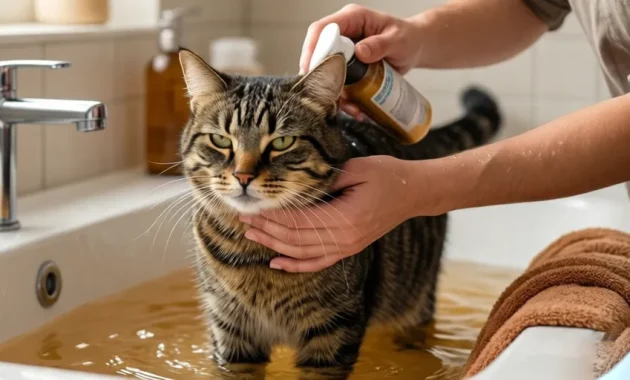
The Gentle Wet-Down: Gently carry your cat into the room, place them onto the rubber mat, and slowly pour pitcherfuls of warm water over their shoulders, back, and hindquarters. Do not splash their face, nose, or eyes.
The Head-Free Cleansing Face Wash: Apply a nickel-sized amount of shampoo down their spine and work it into a gentle lather, massaging their belly, tail base, and legs. To clean the face, avoid running water entirely; instead, wipe down their muzzle, forehead, and cheeks using a warm, damp washcloth without any soap.
The Flawless Rinse: Pour clean, warm water over their body until every trace of soap is gone. Residual soap left on the skin will dry out, causing severe itching and flakes, and the cat will swallow it during their next self-grooming session.
Massaging Spine Lather ──> Protecting the Eyes/Nose ──> Systematic Pour-Rinse ──> Squeezing Excess Water
Phase 3: The Recovery and Drying Phase
The Burrito Wrap: Immediately lift your cat out of the water and wrap them securely in a large, warm towel like a burrito. Gently press the towel into their coat to squeeze out excess moisture rather than rubbing vigorously, which can tangle long fur.
The Hair Dryer Compromise: Most cats are terrified of the loud whine of an electric hair dryer. If your cat panics, skip the machine entirely and stick to thorough towel-drying in a warm, draft-free room. If you must use a dryer, set it to the lowest airflow and lowest temperature setting to avoid accidentally burning their thin skin.
Pro-Tips for Managing High-Anxiety Cats
Every cat responds differently to water. If you are dealing with a highly reactive, fearful, or aggressive cat, implement these defensive behavioral strategies:
The T-Shirt Hack: Put an old, snug-fitting cotton t-shirt on the cat before putting them in the basin. You can lather the shampoo right through the fabric. The weight of the wet shirt provides a calming effect (similar to a thunder shirt) and keeps their claws covered, protecting your hands.
The Lick-Mat Distraction: Smear a high-value, lickable liquid cat treat onto a plastic suction-cup mat and stick it to the wall of the sink at eye level. Focusing on licking the food can distract their brain from the sensation of water.
The Power of Positive Reinforcement: As soon as the bath ends and the towel wrap is secure, offer their favorite premium food, a piece of fresh chicken, or an extra liquid treat. This creates a powerful positive association (classical conditioning), teaching them that surviving a bath leads to an elite food reward.
Technical Summary Matrix
| Step | Action | Core Purpose | Avoid This Mistake |
| 1. Prep | Trim claws and brush out loose hair completely. | Prevents deep scratches; stops fur from matting when wet. | Never wet a matted coat; water cements mats in place. |
| 2. Acoustic | Pre-fill the basin; shut off all running water faucets. | Eliminates terrifying tracking noises that cause panic. | Do not use a high-pressure, noisy shower head. |
| 3. Washing | Pour warm water with a cup; apply feline-safe shampoo. | Cleanses skin safely without stripping natural protective lipids. | Never use human, baby, or dog shampoos on a cat. |
| 4. Face Care | Wipe gently with a damp washcloth (no soap). | Protects sensitive eyes, nose, and whiskers from soap burn. | Do not pour or splash water directly onto a cat's head. |
| 5. Drying | Wrap securely in towels; keep in a warm, cozy room. | Prevents rapid drops in body temperature (hypotermia). | Do not use a hot or loud hair dryer if the cat panics. |
Bathing a cat doesn't have to be a battle of wills. By approaching the task with an understanding of feline anatomy, managing the sensory triggers in the room, and using methodical, gentle movements, you can confidently navigate your cat's bath while keeping their trust—and your skin—fully intact.
FAQ – The Master Guide to Feline Bathing: Science, Behavior, and Practical Techniques
1. Do cats really need baths if they groom themselves?
Yes. Although cats spend a large portion of their day grooming, there are situations where self-cleaning is not enough. Cats may require baths if they are exposed to toxic substances, suffer from skin conditions, have severe flea infestations, are obese or elderly and cannot groom properly, or belong to hairless breeds such as the Sphynx.
2. How often should I bathe my cat?
The ideal bathing frequency depends on the cat's breed, health, and lifestyle.
- Healthy indoor cats: Only when necessary.
- Outdoor cats: Every 4 to 6 weeks.
- Hairless breeds (Sphynx): Once per week.
- Elderly or obese cats: As needed, with regular spot cleaning between baths.
- Cats with skin conditions: Follow your veterinarian’s recommendations.
3. Can I use human shampoo on my cat?
No. Human shampoos are formulated for human skin pH and can strip away the natural protective oils on a cat's skin. This may cause irritation, dryness, itching, and skin damage. Always use a shampoo specifically formulated for cats.
4. Is baby shampoo safe for cats?
Not recommended. While baby shampoo may be gentler than regular human shampoo, it is still designed for human skin and may disrupt the natural balance of a cat’s skin barrier.
5. Why do most cats dislike water?
Cats generally dislike water because their fur becomes heavy when wet, reducing mobility and insulation. Additionally, the sound, sensation, and unfamiliar experience of bathing can trigger stress and anxiety.
6. What temperature should bath water be for a cat?
The water should be lukewarm or comfortably warm, similar to the temperature used for bathing a baby. Water that is too hot can burn the skin, while cold water can cause discomfort and stress.
7. Should I trim my cat’s claws before a bath?
Yes. Trimming claws 20 to 30 minutes before bathing reduces the risk of scratches and makes the experience safer for both the cat and the owner.
8. Why should I brush my cat before bathing?
Brushing removes loose fur, dirt, and tangles. Wet fur can tighten existing mats, making them significantly more difficult and painful to remove after bathing.
9. Can bathing help with flea infestations?
Bathing can help remove some fleas and flea dirt, but it should not be considered a complete flea treatment. Effective flea control requires veterinarian-approved flea preventatives and environmental management.
10. How do I clean my cat’s face during a bath?
Use a warm, damp washcloth without soap. Gently wipe the forehead, cheeks, chin, and muzzle. Avoid pouring water directly onto the face or getting shampoo near the eyes, nose, or mouth.
11. Should I put cotton balls in my cat’s ears during a bath?
Yes. Dry cotton balls can help prevent water from entering the ear canals, reducing the risk of irritation and ear infections. Be sure not to push them deeply into the ears.
12. Can bathing reduce cat allergies in humans?
Bathing may temporarily reduce surface allergens and dander, but it does not eliminate allergen production. Regular grooming, cleaning, and environmental management are more effective long-term strategies.
13. Is it safe to use a hair dryer after bathing?
It depends on the cat. Many cats are frightened by the noise of hair dryers. If a dryer is used, select the lowest heat and airflow settings. Otherwise, thorough towel drying in a warm room is usually sufficient.
14. What should I do if my cat panics during a bath?
Remain calm and avoid forceful handling. Use positive reinforcement, treats, gentle movements, and distraction techniques such as lick mats. If severe anxiety persists, consult your veterinarian for behavioral guidance.
15. Can kittens be bathed?
Yes, but only when necessary. Use warm water, kitten-safe shampoo, and ensure they are dried thoroughly afterward to prevent chilling.
16. Do hairless cats require more baths than furry cats?
Yes. Hairless breeds such as the Sphynx produce skin oils that accumulate directly on the skin instead of being absorbed by fur. Weekly bathing is usually necessary to prevent oily buildup and clogged pores.
17. What are signs that my cat may need a bath?
Common signs include:
- Greasy or sticky fur
- Strong body odor
- Visible dirt or debris
- Fecal contamination
- Excessive dandruff
- Oily skin buildup
- Veterinary-prescribed medicated bathing requirements
18. Can I bathe a cat with a skin infection?
Yes, but only with veterinarian-approved medicated shampoos. Certain bacterial, fungal, or yeast infections require specialized products and treatment schedules.
19. How long does it take a cat to dry after a bath?
Most cats dry within a few hours when towel-dried properly and kept in a warm environment. Long-haired cats may require additional drying time.
20. What is the biggest mistake cat owners make during bathing?
The most common mistakes include:
- Using human shampoo
- Spraying water directly on the face
- Not brushing before bathing
- Using water that is too hot or too cold
- Leaving shampoo residue on the coat
- Forcing a frightened cat through the process without preparation