The Masterclass Guide to Feline First Aid: Emergency Protocols for Cat Owners
3 weeks ago
In a perfect world, our cats would live lives completely free from accidents, illness, or physical trauma. However, emergencies can and do happen. Whether it is an accidental fall, a sudden toxic exposure, a severe fight with another animal, or an acute medical crisis, the actions you take in the first few minutes can mean the difference between life and death.
While immediate veterinary care is always the gold standard and final destination in any feline emergency, there are times when you must act as the first responder. This comprehensive, highly detailed guide is designed to serve as your ultimate emergency manual, detailing the exact step-by-step procedures to stabilize your cat across ten critical emergency scenarios.
- 1. Acute Hemorrhage and Open Wounds
- 2. Fractures and Musculoskeletal Trauma
- 3. Poisoning and Toxic Exposure
- 4. Acute Vomiting (Gastrointestinal Distress)
- 5. Chronic or Repeated Diarrhea
- 6. Dystocia (Difficult Birth/Labor)
- 7. Heat Stroke (Hyperthermia)
- 8. Hypothermia (Low Body Temperature)
- 9. Epistaxis (Nosebleeds)
- 10. Globe Prolapse (Eye Out of Socket)
- Core Emergency Action Checklist
- FAQ
- 1. What should I do first if my cat has a medical emergency?
- 2. How can I stop bleeding from a wound before reaching the veterinarian?
- 3. Can I use hydrogen peroxide or alcohol to clean my cat's wounds?
- 4. What should I do if my cat breaks a bone?
- 5. How do I know if my cat has been poisoned?
- 6. Should I make my cat vomit after swallowing something toxic?
- 7. Is activated charcoal safe for poisoned cats?
- 8. When does vomiting become a veterinary emergency?
- 9. How can I help a cat with diarrhea?
- 10. What are the warning signs of heat stroke in cats?
- 11. How should I cool an overheated cat safely?
- 12. What causes hypothermia in cats?
- 13. How do I safely warm a hypothermic cat?
- 14. Why would my cat suddenly have a nosebleed?
- 15. What should I do if my cat's eye comes out of its socket?
- 16. Can I treat serious injuries at home instead of visiting a veterinarian?
- 17. What emergency supplies should every cat owner keep at home?
- 18. How can I prepare for a pet emergency before it happens?
1. Acute Hemorrhage and Open Wounds
Bleeding from cuts, dog bites, or lacerations requires rapid intervention to prevent hypovolemic shock (low blood volume).
Wound Management Flow:
Assess Safety ➔ Apply Direct Pressure ➔ Flush Wound ➔ Bandage Gently ➔ Transport to Vet
Emergency Action Protocol
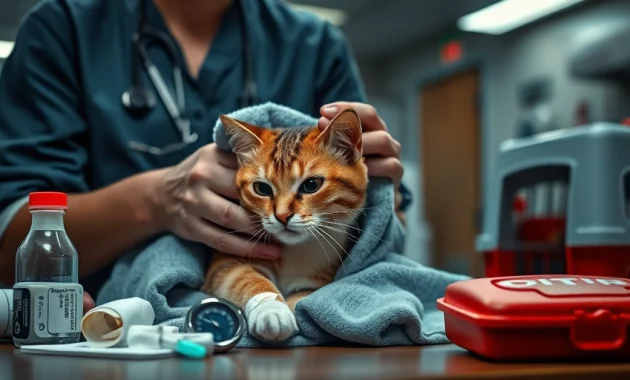
Secure and Restrain: Wrap your cat in a thick towel (the "burrito" method) to prevent them from scratching or biting you out of pain and fear.
Apply Direct Pressure: Place a clean, sterile gauze pad or a clean cloth directly over the bleeding wound. Apply firm, steady pressure for at least 3 minutes without lifting the cloth to check if the bleeding has stopped, as this can disrupt clotting.
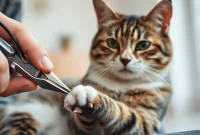
Cleanse Gently: Once the bleeding slows, gently clip away any hair surrounding the wound using blunt-nosed scissors. Flush the area with sterile saline solution (NaCl 0.9%) or clean water.
⚠️ Note: Avoid using strong hydrogen peroxide ($H_2O_2$) on deep wounds unless absolutely necessary, as it can damage healthy cells and delay tissue healing. Never use alcohol on open flesh.
Protect and Bandage: Place a fresh sterile dressing over the wound and wrap it loosely with a self-adhesive bandage (like Vetrap) or clean cloth. Do not wrap it too tightly, as this can cut off circulation.
Immediate Transport: Take your cat to the nearest veterinary clinic for professional suturing and antibiotic coverage.
2. Fractures and Musculoskeletal Trauma
If your cat has fallen from a height or been struck by a vehicle, they may have sustained a bone fracture.
Emergency Action Protocol
Minimize Movement: The primary goal is to prevent further soft tissue, nerve, or vascular damage from broken bone fragments. Keep the cat as still as possible.
Do Not Attempt to Set the Bone: Never try to realign a fractured bone yourself.
Improvise a Splint (Only If Safe): If the cat is cooperative and the fracture is on a lower limb, you can gently wrap a rolled-up magazine, thick newspaper, or a piece of cardboard around the leg, securing it loosely with medical tape to act as a temporary splint. If the cat resists, abort immediately to prevent further injury.
Transport Securely: Gently slide the cat onto a rigid board, a stiff piece of cardboard, or a flat box lined with a thick towel. This acts as a stretcher to keep their spine and limbs completely stable during transport to the vet.
3. Poisoning and Toxic Exposure
Cats are uniquely sensitive to toxins due to their highly specialized liver metabolism, which lacks certain enzymes (like glucuronosyltransferase) needed to break down common chemicals.
Toxic Treatment Protocols:
├── Corrosive Toxins (Acids/Bases) ➔ DO NOT induce vomiting; flush mouth; seek vet
└── Non-Corrosive Toxins           ➔ Induce vomiting (only if directed); give activated charcoal
Emergency Action Protocol
Identify the Toxin: Determine what the cat ingested, inhaled, or touched. Keep the product packaging to show your veterinarian.
Wash and Decontaminate:
Inhaled/Ingested: Flush the mouth gently with clean water if there are visible residues, ensuring the cat does not inhale the liquid.
Dermal (On skin/fur): Wash the cat's coat thoroughly with mild dish soap and warm water to prevent them from grooming and ingesting the chemical.
Administer Antidotes cautiously:
Acid Exposure: If the toxin was acidic, administer a tiny solution of water mixed with 1 teaspoon of sodium bicarbonate (baking soda) to help neutralize it.
Alkaline/Base Exposure: If the toxin was highly alkaline (like bleach), administer a teaspoon of diluted lemon juice or apple cider vinegar.
Administer Activated Charcoal: If the toxin is non-corrosive, administer activated charcoal (approx. 1 to 3 grams per kg of body weight, or roughly 6 tablets crushed and mixed with water) to bind the toxins in the gastrointestinal tract and prevent systemic absorption.
⚠️ Critical Warning: Never induce vomiting if your cat has ingested a corrosive substance (like batteries, drain cleaner, or gasoline), as this will cause severe chemical burns to their esophagus on the way back up. Never use salt to induce vomiting in cats, as it can cause fatal sodium toxicity. Only induce vomiting under direct veterinary phone instruction.
4. Acute Vomiting (Gastrointestinal Distress)
Vomiting is a protective mechanism to expel indigestible or toxic material, but persistent vomiting can quickly lead to severe dehydration and electrolyte imbalances.
Emergency Action Protocol
Implement a Fast: Immediately withhold all food and water for 4 to 6 hours to allow the inflamed stomach lining to rest and settle.
Provide Controlled Hydration: If your cat is desperately thirsty during the fasting window, do not let them gulp large amounts of water, as this will trigger immediate vomiting. Instead, offer clean ice cubes for them to lick.
Monitor Closely: Keep a detailed log of the frequency, color, and contents of the vomit (e.g., undigested food, clear bile, blood, or foreign objects like string).
Seek Veterinary Care: If the vomiting persists beyond 12 hours, contains blood (looking like coffee grounds), or is accompanied by extreme lethargy, seek emergency veterinary attention.
5. Chronic or Repeated Diarrhea
Like vomiting, diarrhea can quickly sap a small cat of vital fluids and nutrients.
| Action Stage | Intervention | Why It Helps |
| Stage 1: Rest the Gut | Withhold food for 4 to 6 hours (keep fresh water available). | Allows the hyperactive intestinal tract to calm down. |
| Stage 2: Remove Triggers | Eliminate all dairy, milk, and high-fat treats immediately. | Cats are lactose intolerant; fats and dairy severely exacerbate diarrhea. |
| Stage 3: Dietary Shift | Transition to a highly digestible, bland diet (e.g., boiled chicken breast without skin/salt, or veterinary gastrointestinal canned food). | Easy on the stomach; helps firm up stool. |
| Stage 4: Gradual Return | Mix regular food back in slowly over a period of 5 to 7 days once stool normalizes. | Prevents sudden dietary relapse. |
6. Dystocia (Difficult Birth/Labor)
While most queens give birth seamlessly, anatomical complications or physical exhaustion can lead to life-threatening labor difficulties (dystocia).
Labor Danger Signs:
├── Breech Presentation ➔ Leg visible but stuck; requires gentle traction
├── Vaginal Discharge   ➔ Green, black, or foul-smelling fluid (Immediate Vet)
└── Prolonged Interval  ➔ >2 hours between kittens with active straining (Immediate Vet)
Emergency Action Protocol
Address Breech Presentation (Footling): If a kitten is emerging backward (hind legs first) and becomes stuck in the birth canal, wait for the queen's next contraction. Using a clean, warm, damp cloth, gently grasp the kitten's legs/hips and pull downward and backward in a slow, gentle arc matching the queen's pushes. Never pull forcefully.
Check for Infection Signs: If you notice a foul-smelling green, black, or purulent (pus-like) discharge coming from the vulva without a kitten being born, this indicates a dead fetus or severe uterine infection. Go to the vet immediately.
Monitor the Inter-uterine Timeline: If the queen has been straining actively for more than 60 minutes, or if more than 2 hours have passed between kittens with no active labor, she requires emergency medical intervention (possibly an emergency C-section).
7. Heat Stroke (Hyperthermia)
Cats do not sweat efficiently like humans; they can only dissipate heat through their paw pads and by panting. When confined in hot spaces (like a parked car or a poorly ventilated room), their core body temperature can skyrocket.
8. Hypothermia (Low Body Temperature)
Hypothermia occurs when a cat is exposed to freezing temperatures, damp environments, or is recovering from shock/anesthesia.
Emergency Action Protocol
Create a Warming Nest: Wrap your cat in a warm, dry blanket or towel (warmed briefly in a clothes dryer).
Use Safe External Heat Sources: Fill plastic bottles with hot water, wrap them securely in thick towels, and place them next to your cat's body.
⚠️ Critical Warning: Never apply hot water bottles directly to a cat's skin, as their compromised circulation makes them highly susceptible to severe thermal burns. Never use heating pads unattended.
Warm the Environment: Position a safe incandescent desk lamp near their enclosure to warm the ambient air, ensuring the cat can easily move away from the light if they get too warm. Keep them inside a draft-free room until their rectal temperature normalizes (ideally between 38°C and 39.2°C).
9. Epistaxis (Nosebleeds)
Bleeding from the nasal passages can be caused by physical trauma, foreign bodies (like grass awns), rat poison ingestion, or severe upper respiratory infections.
Emergency Action Protocol
Keep the Cat Calm: Excitement, fear, and panic raise blood pressure, which directly accelerates nasal bleeding. Keep your cat in a quiet, dark, confined space.
Apply Cold Compression: Place a small ice pack or a bag of frozen vegetables wrapped in a thin towel directly over the bridge of the cat's nose. The intense cold triggers local vasoconstriction, slowing down and halting the bleed.
Do Not Insert Splints: Never attempt to insert cotton swabs, tissues, or styptic powder into the cat's nostrils, as this will trigger sneezing, which will immediately dislodge any newly formed blood clots.
Veterinary Check: If the bleeding does not stop within 10 minutes or is accompanied by blood coming from the mouth, seek immediate veterinary care.
10. Globe Prolapse (Eye Out of Socket)
Commonly caused by severe head trauma, dog attacks, or major accidents, this is an extreme, painful emergency where the eyeball is displaced forward out of the bony orbit.
Emergency Action Protocol
Keep the Tissue Moist: The most critical priority is to prevent the exposed corneal tissue from drying out and dying. Immediately flush the eye gently with sterile saline solution (0.9% NaCl) or lubricating artificial tears.
Protect the Globe: Dampen a piece of sterile cotton gauze with warm saline and place it gently over the exposed eye.
Maintain Moisture Constantly: Re-wet the gauze cover with fresh sterile saline every 10 minutes without removing it. This keeps the delicate ocular membranes alive during travel.
Prevent Self-Trauma: Do not allow the cat to scratch at their face. Hold their paws or wrap them tightly in a towel.
Emergency Surgery: Rush to an emergency veterinary surgeon immediately. In many cases, if the tissue is kept moist and treated within the hour, the eye can be surgically saved and replaced back into the socket.
Core Emergency Action Checklist
Keep this summary table handy to quickly recall the immediate actions required for common feline emergencies:
| Emergency Scenario | Immediate First Aid Action | Crucial Warning (What NOT to do) |
| Severe Bleeding | Apply firm, continuous direct pressure with clean gauze. | Do not lift the gauze repeatedly to check for clotting. |
| Poisoning (Corrosive) | Flush the mouth; wash the coat; call your vet. | Do NOT induce vomiting. It will burn the esophagus. |
| Heat Stroke | Apply cool water to paws/groin; use 70% alcohol on pads. | Do NOT submerge the cat in ice water. |
| Hypothermia | Wrap in warm blankets; use towel-wrapped hot water bottles. | Do NOT place hot items directly against naked skin. |
| Eye Prolapse | Cover with sterile gauze soaked in saline; re-wet every 10 mins. | Do NOT let the cat scratch their face; do not let the eye dry out. |
By mastering these fundamental emergency techniques, you act as the ultimate shield of safety for your cat, keeping them stable, comfortable, and alive while you make your way to professional veterinary care.
FAQ
1. What should I do first if my cat has a medical emergency?
The first priority is to stay calm and ensure your own safety. Cats experiencing pain or fear may bite or scratch unexpectedly. If possible, gently wrap your cat in a towel to reduce movement, assess the situation quickly, provide appropriate first aid, and transport your cat to the nearest veterinary clinic immediately. First aid is only intended to stabilize your cat—it is not a replacement for professional veterinary treatment.
2. How can I stop bleeding from a wound before reaching the veterinarian?
Apply firm, continuous pressure using sterile gauze or a clean cloth for at least three minutes without lifting it repeatedly to check the wound. If the bleeding slows, gently cover the wound with a clean bandage. Severe or continuous bleeding requires immediate emergency veterinary care.
3. Can I use hydrogen peroxide or alcohol to clean my cat's wounds?
Hydrogen peroxide may damage healthy tissue and delay healing, while alcohol causes pain and tissue irritation. For most wounds, it is safer to flush the area with sterile saline solution or clean water before seeking veterinary treatment.
4. What should I do if my cat breaks a bone?
Keep your cat as still as possible and avoid attempting to straighten the broken bone yourself. If it can be done safely, you may loosely support the injured limb with a temporary splint. Place your cat on a firm, flat surface for transportation and seek emergency veterinary care immediately.
5. How do I know if my cat has been poisoned?
Common symptoms include vomiting, diarrhea, excessive drooling, tremors, seizures, difficulty breathing, weakness, loss of coordination, or sudden collapse. Some toxins may also cause burns around the mouth or unusual behavior. Contact your veterinarian immediately if poisoning is suspected.
6. Should I make my cat vomit after swallowing something toxic?
Not always. Never induce vomiting if your cat has swallowed corrosive substances such as bleach, batteries, gasoline, or drain cleaners. Inducing vomiting can cause additional internal burns. Only induce vomiting if specifically instructed by a veterinarian.
7. Is activated charcoal safe for poisoned cats?
Activated charcoal may help absorb certain toxins before they enter the bloodstream, but it is not effective for every poison. It should only be given under veterinary guidance because incorrect use may worsen some situations.
8. When does vomiting become a veterinary emergency?
Occasional vomiting may not always indicate a serious illness. However, immediate veterinary attention is necessary if your cat:
- Vomits repeatedly within a few hours.
- Cannot keep water down.
- Vomits blood or coffee-ground-like material.
- Becomes weak or lethargic.
- Has abdominal pain.
- Swallows a foreign object.
9. How can I help a cat with diarrhea?
Temporarily withhold food for several hours while ensuring fresh water remains available. Feed a bland, easily digestible diet once symptoms improve. If diarrhea lasts longer than 24 hours, contains blood, or causes weakness or dehydration, consult a veterinarian immediately.
10. What are the warning signs of heat stroke in cats?
Signs include:
- Heavy panting
- Bright red gums
- Drooling
- Rapid heartbeat
- Weakness
- Vomiting
- Collapse
- Seizures
Heat stroke is a life-threatening emergency that requires immediate cooling and veterinary treatment.
11. How should I cool an overheated cat safely?
Move your cat to a cool environment and apply cool—not ice-cold—water to the paws, belly, groin, and armpits. Use fans to improve airflow. Avoid ice baths because they may reduce heat loss by constricting blood vessels.
12. What causes hypothermia in cats?
Hypothermia may result from prolonged exposure to cold weather, being trapped in wet environments, severe illness, anesthesia, or shock. Elderly cats, kittens, and sick cats are particularly vulnerable.
13. How do I safely warm a hypothermic cat?
Wrap your cat in warm blankets and place towel-wrapped warm water bottles nearby. Gradually increase body temperature without overheating. Never place heating pads or hot water bottles directly against your cat's skin.
14. Why would my cat suddenly have a nosebleed?
Possible causes include:
- Trauma
- Foreign objects inside the nose
- High blood pressure
- Blood-clotting disorders
- Poisoning
- Respiratory infections
- Nasal tumors
If bleeding lasts longer than 10 minutes or recurs frequently, veterinary examination is essential.
15. What should I do if my cat's eye comes out of its socket?
This is one of the most urgent veterinary emergencies. Keep the eye moist with sterile saline or artificial tears, gently cover it with damp sterile gauze, prevent your cat from rubbing it, and travel to an emergency veterinarian immediately.
16. Can I treat serious injuries at home instead of visiting a veterinarian?
No. Home first aid should only stabilize your cat during transport. Serious wounds, fractures, poisoning, heat stroke, eye injuries, and severe illness always require professional veterinary diagnosis and treatment.
17. What emergency supplies should every cat owner keep at home?
A basic feline first-aid kit should include:
- Sterile gauze
- Self-adhesive bandages
- Saline solution
- Digital thermometer
- Blunt-tip scissors
- Tweezers
- Disposable gloves
- Clean towels
- Artificial tears
- Pet-safe antiseptic solution
- Emergency veterinary contact information
18. How can I prepare for a pet emergency before it happens?
Preparation can significantly improve outcomes. Keep your veterinarian's phone number easily accessible, know the location of the nearest 24-hour emergency clinic, maintain a stocked first-aid kit, transport your cat in a secure carrier, and learn basic feline first-aid techniques before an emergency occurs.