The Miniature Panther Masterclass: The Ultimate Guide to the Bombay Cat
2 months ago
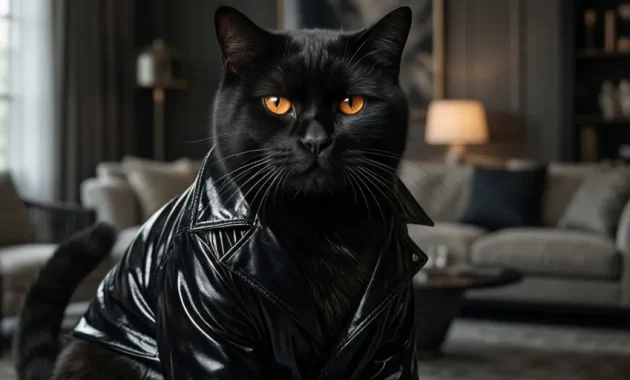
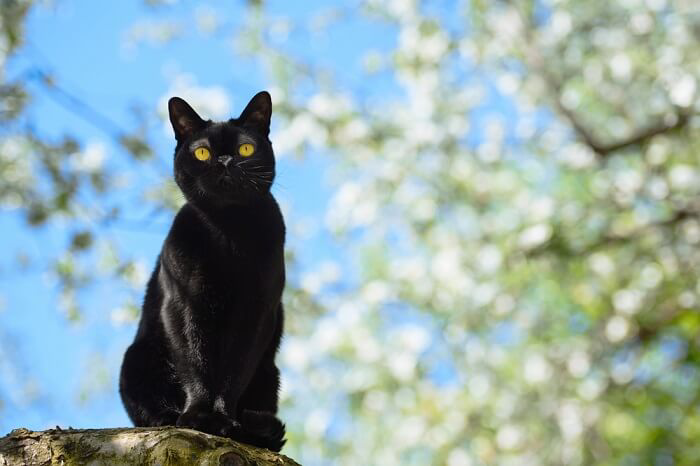
The mid-twentieth century was a golden age for cat fancy, a period when breeders across the globe began looking at genetics not just as a tool for preservation, but as a medium for living art. In the 1950s, a visionary breeder from Louisville, Kentucky named Nikki Horner looked at the sleek, wild elegance of the Indian black panther (Panthera pardus) and wondered if that fierce, breathtaking aesthetic could be shrunk down to fit on a living room sofa.
Horner did not want a wild hybrid. The mid-century had seen a rising interest in crossing domestic felines with actual wild Asian leopard cats or African servals, but Horner knew that wild blood brought wild unpredictability. Her goal was infinitely more challenging: she wanted to create a cat that possessed the absolute illusion of the wild—the muscular, heavy-bodied cadence, the unblinking copper gaze, the gleaming patent-leather coat—using entirely domestic, predictable, and sweet-tempered ancestral lines.
The journey was neither short nor easy. It took Horner more than a decade of meticulous, often frustrating trial and error to unlock the genetic formula she envisioned. The foundational architecture of the Bombay breed relied on two distinct, established purebreds: the American Shorthair and the sable Burmese.
[Black American Shorthair (Male)]   x   [Sable Burmese (Female)]
                 │                                 │
                 +────────────────┬────────────────+
                                  │
                                  ▼
                     [First-Generation Hybrids]
             (Varied coat textures, ghost tabby lines)
                                  │
                   (Meticulous Backcrossing & Selection)
                                  │
                                  ▼
                    [The True-Breeding Bombay]
          (Patent-leather black coat, copper eyes, dense muscle)
Horner’s initial attempts in the 1950s failed to meet her exacting standards. The first crosses between black American Shorthairs and Burmese often resulted in kittens that lacked the robust, compact muscle density of the Burmese or the rich, deep coat color of the Shorthair. Many displayed "ghost stripes"—faint tabby markings inherited from the Shorthair side that refused to fade. Undeterred, Horner paused, reassessed her genetic stock, and refined her selection parameters. She sought out American Shorthairs with unparalleled, deep-ink black coats and combined them with Burmese lines renowned for their compact, heavy bone structure and rounded head profiles.
By the mid-1960s, the breakthrough occurred. Litters began consistently yielding kittens that looked less like mixed-breed domestics and more like exotic jungle predators. They possessed a unique, heavy feel when lifted—a dense musculature wrapped in a coat so glossy it looked perpetually wet.
Yet, achieving a physical type was only half the battle. Horner had to fight for the breed's institutional survival. The Cat Fanciers' Association (CFA) and other major registries were notoriously conservative regarding new hybrid breeds, often viewing them as threats to the purity of established lines. Burmese breeders, in particular, worried that the outcrosses would pollute their gene pools. Horner persevered through years of rigorous documentation, exhibiting her cats to prove they bred true to type, displaying consistent physical and behavioral traits across generations.
The turning point arrived in 1970 when the CFA officially accepted the Bombay for registration. Six years later, in 1976, the breed achieved Championship status. Nikki Horner’s dream of a parlor panther had successfully transitioned from a personal obsession to an internationally recognized masterpiece of feline husbandry.
- The Genetic Architecture – Shorthair Meets Burmese
- FAQ: Bombay Cat – The Miniature Black Panther of the Domestic World
- 1. What is a Bombay cat?
- 2. Who created the Bombay breed?
- 3. What breeds were used to create the Bombay?
- 4. Why is the breed called "Bombay"?
- 5. When was the Bombay officially recognized?
- 6. Do Bombay cats contain wild cat genetics?
- 7. Why do Bombay cats look like miniature panthers?
- 8. What color are Bombay cats?
- 9. What are "ghost stripes" in Bombay cats?
- 10. What is the texture of a Bombay's coat?
- 11. What eye colors are acceptable in Bombay cats?
- 12. How large do Bombay cats become?
- 13. Why are Bombay cats often described as "a brick wrapped in silk"?
- 14. What is the typical head shape of a Bombay?
- 15. Are Bombay cats intelligent?
- 16. Are Bombay cats affectionate?
- 17. Do Bombay cats get along with children?
- 18. Are Bombay cats good with other pets?
- 19. Do Bombay cats like being alone?
- 20. Are Bombay cats vocal?
- 21. Do Bombay cats require a lot of grooming?
- 22. Do Bombay cats shed?
- 23. What kind of exercise do Bombay cats need?
- 24. Are Bombay cats suitable for apartment living?
- 25. What health issues can Bombay cats face?
- 26. How long do Bombay cats live?
- 27. Are Bombay cats rare?
- 28. Why do Bombay cats love human interaction?
- 29. Are Bombay cats lap cats?
- 30. What makes the Bombay unique among black cats?
The Genetic Architecture – Shorthair Meets Burmese
To look at a Bombay cat is to witness a delicate, deliberate genetic compromise. The breed is a living bridge between the utilitarian, rugged morphology of the American Shorthair and the exotic, dense, rounded geometry of the Burmese. Understanding how these two distinct genetic reservoirs interact is key to appreciating what makes the Bombay anatomically unique.
       [ AMERICAN SHORTHAIR REVENUES ]            [ SABLE BURMESE REVENUES ]
       - Deep, midnight black coat pigment        - Compact, dense bone structure
       - Broad, muscular chest framework          - Rounded skull, no sharp angles
       - Calming, independent disposition         - Intense, vocal, people-oriented
                      │                                      │
                      +──────────────────┬───────────────────+
                                         │
                                         ▼
                             [ THE BOMBAY MATRIX ]
                A compact, heavy-bodied feline with a glossy,
                jet-black coat and intense golden-to-copper eyes.
The American Shorthair contributed the crucial coat color genetics. The intense, solid jet-black coloration ($B$ gene series for black eumelanin) required to mask all underlying tabby patterns came directly from carefully selected Shorthair lines. Furthermore, the American Shorthair brought a structural sturdiness—a broad chest, powerful legs, and an overall athletic endurance that grounded the breed. It also infused the hybrid line with a lower-key, highly adaptable temperament, preventing the resulting cats from inheriting the hyper-vocal, high-strung tendencies occasionally found in pure oriental lines.
Conversely, the Burmese provided the defining exotic characteristics. From the Burmese, the Bombay inherited its signature head shape: a pleasingly round skull entirely devoid of sharp angles or flat planes, a broad muzzle, and a distinct, subtle break at the bridge of the nose. More importantly, the Burmese passed down its remarkable bone density. A Bombay cat is deceptively heavy; feline biologists and judges often describe them as "a brick wrapped in silk." When you lift a Bombay, its actual weight frequently catches you off guard because its mass is concentrated in dense, compact muscle tissue rather than a large frame.
                  [ ANATOMICAL PROFILE OF THE BOMBAY ]

                  Round Skull, No Sharp Angles
                             │
     Wide-Set, Round Eyes ───┼─── Broad, Well-Developed Muzzle
                             │
     Slight Nose Break ──────┴─── Forward-Tilted, Rounded Ears
This structural synthesis manifests clearly in the official breed standards across major registries. The body must be medium in size, muscular, and compact, showing no signs of weakness or structural flabbiness. The legs must be well-formed and perfectly proportionate to the torso, ending in neat, rounded paws. The tail must be straight, medium in length, and exhibit a clean, gradual taper toward the tip.
The entire silhouette is engineered to convey a sense of coiled power and fluid grace—a faithful domestic mirror of the great black leopards of India.
FAQ: Bombay Cat – The Miniature Black Panther of the Domestic World
1. What is a Bombay cat?
The Bombay is a rare domestic cat breed developed to resemble a miniature black panther. It combines the sleek black coat of the American Shorthair with the muscular body and rounded features of the Burmese, creating a cat with a striking wild appearance and a friendly domestic temperament.
2. Who created the Bombay breed?
The Bombay breed was developed by breeder Nikki Horner of Louisville, Kentucky, during the 1950s and 1960s. Her goal was to create a fully domestic cat that looked like an Indian black panther without introducing any wild feline genetics.
3. What breeds were used to create the Bombay?
The Bombay was created through selective breeding between black American Shorthairs and sable Burmese cats. Over multiple generations, breeders refined the desired traits until the breed consistently reproduced its unique appearance.
4. Why is the breed called "Bombay"?
The name "Bombay" was inspired by the black panthers associated with India. Although the breed has no direct connection to the city of Bombay (Mumbai), the name reflects its panther-like appearance.
5. When was the Bombay officially recognized?
The Cat Fanciers' Association (CFA) accepted the Bombay for registration in 1970. The breed achieved Championship status in 1976 after demonstrating consistent physical and behavioral characteristics.
6. Do Bombay cats contain wild cat genetics?
No. Bombay cats are 100% domestic cats. Their panther-like appearance is achieved entirely through selective breeding of domestic feline bloodlines.
7. Why do Bombay cats look like miniature panthers?
Bombays possess a solid jet-black coat, muscular body, rounded head, copper-colored eyes, and smooth movement patterns that closely resemble small black panthers.
8. What color are Bombay cats?
True Bombay cats are always black. Their coat should be uniformly black from root to tip, including the nose leather and paw pads.
9. What are "ghost stripes" in Bombay cats?
Ghost stripes are faint tabby markings that can appear in young kittens due to ancestral tabby genetics inherited from the American Shorthair. These markings usually fade as the cat matures.
10. What is the texture of a Bombay's coat?
The coat is short, fine, close-lying, and exceptionally glossy. Many enthusiasts describe it as having a patent-leather or lacquered appearance.
11. What eye colors are acceptable in Bombay cats?
The preferred eye colors range from deep gold to brilliant copper. Rich copper eyes are considered the most desirable in many breed standards.
12. How large do Bombay cats become?
Bombays are medium-sized cats. Males typically weigh between 8–15 pounds (3.6–6.8 kg), while females generally weigh between 6–10 pounds (2.7–4.5 kg).
13. Why are Bombay cats often described as "a brick wrapped in silk"?
Despite their moderate size, Bombays possess unusually dense muscles and strong bone structure inherited from their Burmese ancestry, making them feel significantly heavier than they appear.
14. What is the typical head shape of a Bombay?
The breed standard calls for a rounded skull with no sharp angles, a broad muzzle, rounded ears, and large round eyes that contribute to its expressive appearance.
15. Are Bombay cats intelligent?
Yes. Bombays are highly intelligent and learn routines, commands, and interactive games quickly. They enjoy puzzle toys and mentally stimulating activities.
16. Are Bombay cats affectionate?
Very much so. Bombays often form strong bonds with their owners and enjoy spending significant time with family members.
17. Do Bombay cats get along with children?
Yes. Their affectionate and social nature generally makes them excellent companions for respectful children.
18. Are Bombay cats good with other pets?
Most Bombays adapt well to other cats and cat-friendly dogs when introduced properly.
19. Do Bombay cats like being alone?
Not particularly. Bombays are known for being people-oriented and may become bored or lonely if left alone for extended periods.
20. Are Bombay cats vocal?
They tend to be moderately vocal. While not as talkative as some Oriental breeds, they often communicate through soft meows and vocal interactions with their owners.
21. Do Bombay cats require a lot of grooming?
No. Their short coat requires minimal maintenance. Weekly brushing is usually sufficient to remove loose hairs and maintain shine.
22. Do Bombay cats shed?
Yes, but shedding is generally light compared to many other breeds because of their short, close-lying coat.
23. What kind of exercise do Bombay cats need?
Bombays are active and playful. Daily play sessions, climbing structures, and interactive toys help maintain healthy weight and mental stimulation.
24. Are Bombay cats suitable for apartment living?
Yes. Their adaptable personality and moderate size make them excellent apartment companions, provided they receive adequate enrichment and attention.
25. What health issues can Bombay cats face?
Generally healthy, Bombays may occasionally inherit conditions associated with Burmese ancestry, including craniofacial abnormalities, respiratory issues related to head structure, and obesity if overfed.
26. How long do Bombay cats live?
With proper care, most Bombay cats live between 12 and 16 years, though some individuals may exceed this range.
27. Are Bombay cats rare?
Yes. The Bombay remains one of the rarer pedigreed cat breeds worldwide, making well-bred kittens relatively difficult to find.
28. Why do Bombay cats love human interaction?
Their Burmese ancestry contributes to a strong desire for companionship, making them highly social and deeply attached to their human families.
29. Are Bombay cats lap cats?
Yes. Many Bombays enjoy cuddling, sitting on laps, and sleeping beside their owners.
30. What makes the Bombay unique among black cats?
Unlike ordinary black domestic cats, the Bombay was selectively developed to consistently exhibit a specific combination of jet-black coloration, copper eyes, rounded features, muscular density, and a panther-like silhouette.