The Ultimate Guide to Feline Health, Behavior, and Nutrition: Decoding the Science of Spaying, Neutering, and Everyday Care
2 months ago
Have you ever stared into your cat’s glowing eyes as they sat perched on the back of your sofa and wondered what was actually transpiring inside that furry head? Or perhaps you have found yourself deeply conflicted in a veterinary waiting room, looking down at your six-month-old kitten, weighing the clinical pros and cons of elective reproductive surgery?
Cats are among the world's most beloved yet fundamentally misunderstood companions. Renowned for their fierce independence, enigmatic expressions, and highly adaptable social hierarchies, they exist simultaneously as cuddly roommates and apex predators in miniature.
To truly understand a cat is to look past the myths and dive headfirst into the modern scientific literature surrounding feline neurology, behavioral ecology, veterinary surgery, and preventative immunology.
This comprehensive master blueprint explores the depths of the feline world. Written with an empathetic, human touch and grounded in peer-reviewed veterinary data, this text unpacks what cats think about, evaluates the biological realities of spaying and neutering, addresses localized clinical challenges like ocular diseases, and provides actionable pathways toward optimal nutritional management.
Inside the Feline Command Center — Neuroanatomy and Cognitive Intelligence
For decades, canine intelligence received the lion's share of comparative psychology funding, leaving the inner workings of the feline mind cloaked in mystery. However, recent advancements in veterinary neuroanatomy have revealed that the domestic cat possesses a brain structural architecture that is vastly more sophisticated than historical stereotypes suggest.
The Structural Design of the Feline Brain
The brain of a domestic cat (Felis catus) measures approximately 5 centimeters (2 inches) in length and accounts for roughly 0.9% of its total body weight. By comparison, the human brain constitutes about 2% of total body mass. However, in evolutionary biology, absolute brain volume and simple weight ratios are highly deceptive metrics for evaluating cognitive processing power.
                     THE FELINE BRAIN ARCHITECTURE

        [ CEREBRUM ] ────────────────► Controls high-level cognition,
                                       rational thoughts, and decision-making.
             │
             ├─► Surface Gyri & Sulci: Heavily folded to maximize surface area.
             │
             └─► Cortical Neurons: ~300 Million data-processing cells.
The true power of the feline mind resides within the highly specialized structure of the cerebrum, the region tasked with commanding executive thought patterns, environmental mapping, and emotional processing. The surface of the feline cerebral cortex is heavily wrinkled, featuring complex folds called gyri (ridges) and sulci (grooves). This surface folding maximizes the total surface area of the brain, crowding millions of processing units into a highly condensed skull space.
Cortical Neurons: The Great Feline-Canine Debate
To understand structural intelligence, neuroscientists measure the density of cortical neurons—the fundamental gray-matter cells responsible for processing incoming sensory data, storing long-term memories, and formulating logical reactions.
A landmark comparative neuroanatomy study shed light on this metric:
Domestic Cats: Possess approximately 300 million cortical neurons.
Domestic Dogs: Possess approximately 160 million cortical neurons.
While this specific data point led many behaviorists to claim cats possess twice the baseline information-processing capacity of dogs, the wider scientific community maintains a nuanced perspective. Intelligence is multifaceted.
Dogs display exceptional social-communicative intelligence, making them highly receptive to human training and verbal commands. Cats, conversely, excel at independent problem-solving, structural spatial awareness, and fine-motor coordination.
Rather than viewing cats as "untrainable" or stubborn, behaviorists recognize that the feline brain is highly specialized for solitary survival, requiring an incredibly dense network of neurons to calculate distance, track rapid movements, and navigate three-dimensional environments.
- 1. What do cats think about most of the time?
- 2. Do cats recognize their owners?
- 3. Do cats feel emotions like humans?
- 4. Are cats smarter than dogs?
- 5. Why does my cat stare at me?
- 6. At what age should a cat be spayed or neutered?
- 7. What are the benefits of spaying a female cat?
- 8. What are the benefits of neutering a male cat?
- 9. Can a sterilized cat still go into heat?
- 10. Why do sterilized cats gain weight more easily?
- 11. Why are my cat's eyes watering?
- 12. When should I take my cat to the veterinarian for watery eyes?
- 13. Can I use human eye drops on my cat?
- 14. How should I clean my cat's eyes safely?
- 15. What nutrients are essential for cats?
- 16. Why is taurine important for cats?
- 17. Can cats drink regular cow's milk?
- 18. Are treats healthy for cats?
- 19. How can I strengthen my cat's immune system?
- 20. What is the best way to keep a cat healthy and happy?
What Do Cats Think About? Deconstructing Feline Consciousness
Because cats cannot communicate via human speech, we must decode their internal monologues by matching observed behavioral actions with neurological responses. While cats do not sit around pondering abstract existential philosophies, their minds are far from blank.
They live in a streamlined, practical sensory reality driven by wild evolutionary instincts and adapted for domestic companionship.
                       THE FIVE PILLARS OF FELINE THOUGHT

    [Food Acquisition] ──► Tracking schedules, vocal cues, and predatory pathways.
    [Human Socializing]──► Evaluating giant roommates through maternal lenses.
    [Emotional Balance]──► Processing joy, environmental stress, and loneliness.
    [Territorial Alert]──► Monitoring boundaries and checking resource security.
    [Immediate Reality]──► Processing action and effect completely in the present.
1. The Complex Calculations of Sourcing Food
In a domestic setting, your cat doesn't have to work to find food, but their brain doesn't know that. Sourcing food remains a high-priority mental activity.
Cats are obligate carnivores, meaning their ancestral survival depended completely on catching fresh meat. Consequently, a vast portion of their daily thoughts centers around tracking food pathways.
Your domestic cat maps out your household routines with precision:
Auditory Anchoring: They don't just hear a sound; their brain recognizes the exact acoustic frequency of a pop-top can cracking or a specific plastic bag rustling from three rooms away.
Temporal Tracking: Cats possess a highly accurate internal circadian clock. If you feed them consistently at 5:00 PM, their neurological system anticipates the event, prompting them to pace, vocalize, or stare at you intently at exactly 4:45 PM.
Gesture Recognition: Peer-reviewed studies confirm that cats actively monitor human body language and vocal inflections associated with meals. They read your posture to gauge whether an interaction will result in a treat.
2. The Human Conundrum: You Are a Giant, Non-Hostile Roommate
One of the most profound paradigm shifts in animal behavior came from renowned feline behaviorist John Bradshaw. His extensive research into domestic cat interactions revealed that cats do not realize humans are a completely separate species.
When a dog interacts with a human, they fundamentally alter their body language, recognizing that humans are a distinct social group. Cats do not make this distinction.
When your cat walks up to you, arches their back, lifts their tail perfectly vertical, and purrs while rubbing their cheeks against your shins, they are using the exact same social signposts they use with other cats.
                   THE TRANSLATION OF FELINE GESTURES

  Bunting (Cheek Rubbing) ──► Depositing facial pheromones; marking you as safe.
  Vertical, Quivering Tail ──► Signaling extreme trust, security, and open greeting.
  Allogrooming (Licking)   ──► Solidifying social bonds within a shared colony.
In the mind of a cat, you are a remarkably large, clumsy, non-hostile, and exceptionally generous feline roommate. They treat you as an equal within their social hierarchy.
When they lick your hand (allogrooming) or massage your stomach with their paws (kneading), they are recreating comfort habits learned from their mothers during kittenhood. They view you as family, operating on the assumption that you share a collective bond.
3. The Neurological Spectrum of Happiness and Sadness
Cats experience basic emotions intensely, though these emotions are rooted in environmental stability rather than complex psychological narratives.
Neurological Happiness: Occurs when a cat’s environment feels secure, predictable, and rich in resources. When a cat purrs on your lap, their brain releases serotonin and endorphins. This state is achieved through consistent routines, active playtime that fulfills their hunting drives, and quiet, respectful human bonding.
Neurological Sadness and Loneliness: For years, society labeled cats as cold, solitary figures that could be left alone for days without emotional consequence. This is a myth. Cats form deep emotional attachments to their human caretakers. When left in isolation for extended periods, they experience separation anxiety and profound boredom, which can manifest as lethargy, vocal crying, or a loss of appetite.
4. Living Completely in the Present: The Non-Existent Grudge
Human relationships are often complicated by memories of past slights or anxiety about future actions. Feline psychology, however, operates entirely in the present moment, driven by a direct loop of action and immediate consequence.
If you step on your cat’s tail by accident, they will emit a loud yowl, run away, and perhaps hiss at you from behind the sofa. To a human, this looks like anger or a brewing grudge.
However, within minutes, the cat's sympathetic nervous system cools down. Once the physical pain stops and you approach them with calm, non-threatening energy, they will walk right back out and curl up in your lap.
Cats do not harbor resentment, nor do they plot revenge. A hiss is not a declaration of war; it is an immediate boundary marker stating, "That hurt, stop it." They do not have the cognitive machinery required to plan retaliatory behavior for something that occurred hours ago.
5. The Devastating Reality of Chronic Fear
While cats don't hold grudges, they do form strong, fear-based associative memories for survival. If an environment is chronically unpredictable—marked by loud shouting, physical punishment, or territorial invasions by other animals—a cat’s brain enters a state of constant stress.
                    THE BIOCHEMICAL PATHWAY OF FEVER

  Chronic Stress Trigger ──► High Cortisol & Adrenaline ──► Systemic Inflammation
                                                                   │
                                                                   ▼
       Inappropriate Urination ◄── Overgrooming (Alopecia) ◄───────┘
When prolonged fear floods a cat's body with cortisol and adrenaline, it breaks down their physical health. Chronic fear alters their behavior, causing them to hide constantly, skip meals, or lash out in defensive aggression.
It also leads to medical conditions like idiopathic cystitis (sterile bladder inflammation resulting in inappropriate urination outside the litter box) and psychogenic alopecia (compulsive overgrooming that leaves patches of bare skin). Minimizing fear is a necessity for their physical health.
Emotional Myths — Differentiating Feline Guilt from Feline Jealousy
Because humans are hardwired for social storytelling, we constantly misinterpret our pets' expressions. Two of the most frequently misunderstood feline emotions are guilt and jealousy. While one is a biological impossibility for a cat, the other is a core survival trait.
Why Your Cat Never Feels Guilty
Every cat owner has experienced this scenario: you walk into the living room, discover your favorite houseplant knocked over with dirt strewn across the floor, and look at your cat. The cat has widened eyes, lowered ears, and a slinking posture as they crawl under the coffee table. You think, "Look at that face, they know exactly what they did wrong."
Veterinary behaviorists have debunked this human assumption through controlled behavioral studies. Cats are incapable of experiencing the moral emotion of guilt.
                      THE ANATOMY OF A MISUNDERSTANDING

  [ Past Action ]     ──► Cat knocks over a plant because it was fun/in the way.
  [ Human Enters ]    ──► Human exhibits rigid posture, narrowed eyes, and loud voice.
  [ Present Response ]──► Cat reads human's angry energy ──► Shows fear/submission.
What you are witnessing in that moment is a direct reaction to your immediate body language. Cats are masterful readers of micro-expressions and energy.
When you stand over a mess with a tense posture, a furrowed brow, and a sharp vocal tone, your cat perceives an unpredictable, dangerous predator. Their lowered ears and slinking posture are an automated fear and submission response designed to appease an angry threat in the present moment.
They have no cognitive link connecting your current anger to a plant they knocked over forty-five minutes ago. Punishing a cat after the fact is not only ineffective; it damages their trust in you because, from their perspective, your anger seems completely random and dangerous.
The Biological Reality of Feline Jealousy
While guilt is a myth, feline jealousy is real. You can easily spot this behavior in multi-cat households: you begin petting Cat A, and Cat B suddenly charges across the room, wedges their body directly between your hand and Cat A, and demands attention. Alternatively, a cat might display behavioral changes when a new infant, a new romantic partner, or a new pet joins the family.
To understand feline jealousy, we must look at how cats organize their social dynamic. Unlike dogs, who traditionally rely on a pack structure with cooperative rules, domestic cats operate on a flexible social system centered around resource security.
                       THE FELINE RESOURCE TRIANGLE

                               [ SURVIVAL ]
                               Food / Water
                               Litter Boxes
                                   ╱  ╲
                                  ╱    ╲
                                 ╱      ╲
               [ COMFORT ] ─────┘────────└───── [ SOCIAL ]
              High Perches                       Human Bonding
              Sunny Windows                      Play Sessions
In a cat’s world, everything is a resource: food bowls, litter boxes, elevated perches, sunny spots, and you. Because cats are solitary hunters by nature, they view their world through a lens of potential scarcity.
When a cat pushes another animal away from you, they aren't experiencing a romanticized version of human jealousy; they are actively defending access to a highly valuable, security-providing resource: your attention, protection, and affection.
If they feel a new entity is permanently blocking their access to vital resources, this jealousy can escalate into territorial urine marking, hiding, or redirected aggression.
The Surgical Reality — Spaying and Neutering Cats
As a responsible cat owner, one of the most important healthcare choices you will make is opting for surgical sterilization. While the population-control benefits are obvious, the systemic health and behavioral upgrades this surgery provides to an individual cat are life-changing.
                       STERILIZATION TERMINOLOGY

  FEMALE CATS: Spaying (Ovariohysterectomy)  ──► Removes ovaries and uterus.
  MALE CATS:   Neutering (Castration)        ──► Removes both testicles.
The Surgical Architecture of Spaying and Neutering
Both procedures are routine surgeries performed under general anesthesia, but they vary significantly in their surgical complexity:
Female Cats (Spaying): An abdominal surgery. The veterinarian makes an incision through the skin and the linea alba (the fibrous connective tissue of the abdominal wall) to access the reproductive tract. In a full ovariohysterectomy, both ovaries and the entire uterus are excised. In an ovariectomy, only the ovaries are removed. The abdominal wall and skin are then closed with surgical sutures or medical tissue glue.
Male Cats (Neutering/Castration): A minimally invasive external procedure. The veterinarian makes two small incisions directly into the scrotal sac, isolates the testicles, ligates the spermatic cords and blood vessels, and extracts the testes. Because the incisions are tiny and drain naturally, they are typically left to heal without external stitches.
Debunking the Myth of the Single Litter
One of the most persistent, dangerous myths passed down through generations of pet owners is that female cats should be allowed to experience at least one heat cycle or give birth to one litter of kittens before being spayed.
                       THE SINGLE LITTER MYTH

  [ Old Myth ]  ──► "Letting a cat have one litter makes them calmer and healthier."
  [ Scientific ]──► Offers ZERO health benefits. Increases cancer risk exponentially.
                    Contributes heavily to global shelter overpopulation.
There is absolutely zero medical, physiological, or psychological benefit to letting a cat have a litter before spaying.
From a clinical perspective, delaying the spay procedure exposes the young female cat to unnecessary physical stress, increases the risk of birthing complications (such as dystocia, which can require an emergency C-section), and significantly raises her long-term risk of developing aggressive reproductive cancers.
Furthermore, with animal shelters worldwide facing a constant crisis of stray overpopulation, allowing a cat to produce an accidental litter puts a heavy strain on local rescue resources.
Why Spaying Your Female Cat Is Important
Leaving a female cat intact (unspayed) places a heavy toll on her body, forcing her through a cycle of hormonal fluctuations that can lead to physical distress and life-threatening medical conditions.
The Torture of the Unfulfilled Heat Cycle
Cats are seasonally polyestrus, meaning they go into heat multiple times during a breeding season (which runs virtually year-round in warm climates or well-lit indoor homes). If an intact female cat does not become pregnant during a heat cycle, her hormone levels drop briefly, only for her to enter heat again weeks later.
                  THE INTACT FEMALE HORMONAL LOOP

  Heat Cycle Begins ──► Loud Caterwauling & Agitation ──► No Pregnancy Occurs
          ▲                                                      │
          └─────────────────── Cycle Repeats in Weeks ◄──────────┘
An unspayed female cat in heat lives in a state of high frustration and physical discomfort. Driven by an overwhelming instinctual urge to locate a mate, she will display distressing behaviors:
Caterwauling: Emitting loud, mournful, screeching cries that sound like she is in intense pain, designed to alert neighborhood males across long distances.
Frantic Escape Attempts: Darting past your feet at open doors, putting herself at risk of traffic accidents or dog attacks.
Urine Spraying: Backing up to walls and spraying pheromone-heavy urine to broadcast her reproductive status.
                 CRITICAL DISEASES IN UNSPAYED FEMALES

  [ Pyometra ]       ──► Direct uterine bacterial infection; fills uterus with pus.
                         An absolute emergency requiring immediate surgery.
  ─────────────────────────────────────────────────────────────────────────────
  [ Mammary Tumors ] ──► Malignant breast cancer; spreads quickly to the lungs.
                         Risk drops to near zero if spayed before first heat.
Pyometra (The Silent Killer): Each time an unspayed cat goes through a heat cycle without mating, the uterine lining thickens under the influence of progesterone. Over time, cysts can form, creating an environment ripe for bacterial invasion. This results in pyometra, an acute infection where the uterus fills with pus. If the cervix is closed, the uterus can rupture internally, leaking bacteria into the abdomen and causing death via septic shock within hours. Pyometra requires an expensive, high-risk emergency spay surgery.
Mammary Gland Malignancies: Unspayed cats have a drastically higher incidence of mammary gland tumors (breast cancer). In felines, over 85% of mammary tumors are highly malignant and metastasize rapidly to the lungs and local lymph nodes. Spaying a kitten before her first heat cycle drops her risk of developing mammary cancer to near zero.
Why Neutering Your Male Cat Is Important
An intact male cat (a tomcat) is driven almost entirely by testosterone. This hormonal focus makes them incredibly challenging to keep as indoor pets, while also turning them into a primary target for traumatic injuries outdoors.
Behavioral Softening: Eliminating the Tomcat Musk
The most compelling reason to neuter a male pet cat is to preserve your home's hygiene. Intact male cats use urine spraying as an essential communication tool.
Tomcat urine contains unique proteins and amino acids that produce an incredibly strong, oily, and pungent musk odor that is nearly impossible to completely remove from drywall, furniture, or carpets. Neutering a male cat around six months of age drops testosterone production, eliminating or significantly reducing the urge to spray inside the house.
                   THE RISK TRAJECTORY OF INTACT MALES

  High Testosterone ──► Extreme Territorial Roaming ──► Deep Bite Wound Traumas
                                                                 │
                                                                 ▼
      FIV / FeLV Incurable Contagions ◄──────────────────────────┘
The Outdoor Perils of an Unneutered Male
If allowed outside, an unneutered male cat will patrol an expansive territory, driven to locate females in heat. This roaming lifestyle exposes them to extreme physical hazards:
Brutal Territorial Fighting: Intact males will fight rival males for breeding rights. These brawls cause deep bite wounds, scratches, and severe lacerations that frequently develop into painful subcutaneous abscesses requiring surgical drainage.
Incurable Viral Pathogens: The primary transmission vector for Feline Immunodeficiency Virus (FIV) and Feline Leukemia Virus (FeLV) is deep, saliva-to-blood bite wounds inflicted during territory wars. Neutering your male cat removes the competitive drive to fight, safeguarding them against these life-shortening viral infections.
Post-Operative Care Strategies for Sterilized Cats
Once you pick up your cat from the veterinary clinic post-sterilization, the success of the procedure rests entirely on your home care routine over the following 7 to 10 days.
                  POST-OP HOME RECOVERY BLUEPRINT

  [ Isolation & Quiet ] ──► Confine your cat to a single, small room (bathroom or bedroom).
  [ Jump Prevention ]   ──► Remove access to high counters or shelves to protect sutures.
  [ E-Collar Security ] ──► Keep the cone or recovery suit on at all times.
  [ Daily Site Check ]  ──► Inspect incision daily for redness, weeping, or swelling.
1. Enforcing Strict Physical Confinement
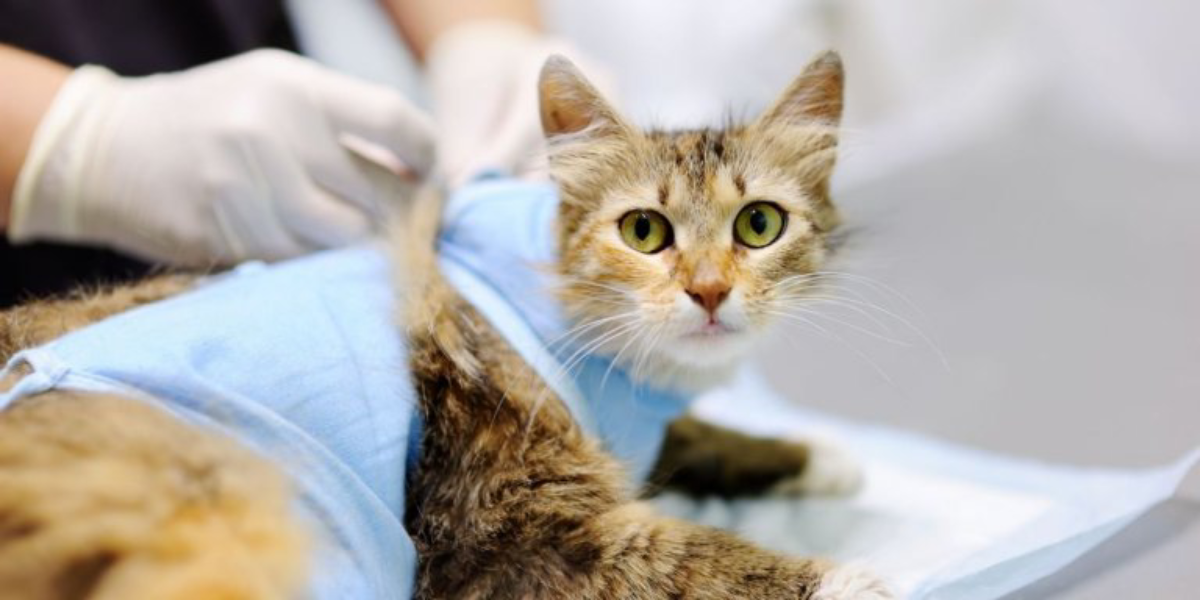
Cats do not understand that they have internal abdominal or scrotal incisions held together by delicate sutures. The moment the anesthetic grogginess wears off, they may try to leap onto high countertops, cat trees, or windowsills.
Sudden stretching can rip open internal or external stitches, causing herniations or internal bleeding. Keep your recovering cat confined to a small, warm, quiet room (such as a bathroom or laundry room) free of high furniture for at least one week.
2. The Defensive Armor: E-Collars and Recovery Suits
A cat’s tongue is covered in backward-facing, spine-like hooks called papillae, which act like coarse sandpaper. If a cat is allowed to lick their surgical incision, they will quickly shred through the skin sutures or introduce harmful mouth bacteria into the open wound, leading to severe localized infections.
Never take off the Elizabethan collar (cone) or the fabric surgical recovery suit because you feel bad for them. A few days of mild annoyance in a cone is far better than an emergency return trip to the clinic for wound debridement and re-stitching.
The Metabolic Shift Post-Surgery
A highly predictable physical side effect of surgical sterilization is a change in your cat's baseline metabolism.
Within days of removing the gonads, a cat's baseline metabolic rate drops by roughly 20% to 30%. At the same time, because they are no longer pacing, crying, roaming, or fighting, their daily physical activity levels naturally decline.
                     THE POST-STERILIZATION PITFALL

  Baseline Metabolism Drops (~25%)  +  Daily Physical Activity Decreases
                               │
                               ▼
        [ Continued Calorie-Dense Diet = Rapid Feline Obesity ]
If you continue to feed your cat the same quantity of calorie-dense adult or kitten food post-surgery, they will rapidly accumulate excess body fat. Feline obesity is a serious medical issue that predisposes cats to:
Type 2 Diabetes Mellitus: Requiring daily lifelong insulin injections.
Hepatic Lipidosis (Fatty Liver Disease): A life-threatening liver failure condition triggered if a stressed, overweight cat stops eating for even a couple of days.
Osteoarthritis: Chronic joint wear and painful spinal degeneration caused by carrying excess physical weight.
To prevent this metabolic trap, work with your vet to reduce their daily kibble portions by 10% to 20%, or transition them to a high-quality food formulated specifically for altered pets, such as PRO PLAN Cat Adult Sterilised Weight Loss Salmon & Tuna. This specific nutritional architecture limits fat intake while using precise protein-to-fiber ratios to keep your cat feeling full and satisfied on fewer calories.
Feline Ocular Diseases Identifying and Treating Watery Eyes
Moving from systemic surgeries to focused everyday care, one of the most common issues that cat owners bring to veterinary attention is chronic eye discharge. If your cat’s eyes are constantly weeping, watery, or caked with crust, it is a clear clinical sign that their ocular defense system is under duress.
                 THE DIAGNOSTIC MATRIX FOR WATERY EYES

            CHRONIC OCULAR DISCHARGE (EPIPHORA)
                             │
       ┌─────────────────────┼─────────────────────┐
       ▼                     ▼                     ▼
 [ STRUCTURAL ]        [ IRRITATING ]        [ INFECTIOUS ]
 Flat facial bones     Allergens, dust,      Herpesvirus (FHV-1),
 & kinked tear ducts.  playtime scratches.   Chlamydia, Eye worms.
The Seven Medical Root Causes of Epiphora
Anatomical and Brachycephalic Genetics: For flat-faced breeds like Persians, Himalayans, and Exotic Shorthairs, watery eyes are an unfortunate consequence of selective breeding. Their shortened nasal bones cause their tear drainage ducts to become kinked or completely compressed. Tears cannot drain down into the nasal cavity normally, so they continuously overflow onto the face, causing chronic dampness and dark brown tear staining.
Environmental Allergens: Cats suffer from airborne respiratory allergies just like we do. Household dust mites, synthetic room deodorizers, cigarette smoke, fresh paint fumes, and seasonal pollens can inflame the eye linings. This type of irritation is typically paired with frequent sneezing and rubbing of the face.
Trauma from Foreign Bodies: Because cats explore spaces close to the floor, microscopic objects like stray carpet fibers, fine litter dust particles, or tiny plant splinters can easily lodge behind their third eyelid (nictitating membrane). The eye immediately produces excessive fluid to try to flush out the irritating object.
Playtime Scratches (Corneal Ulcers): Multi-cat households and high-energy litters of kittens engage in vigorous wrestling matches. An accidental swipe from an unclipped claw can create a microscopic scratch on the cornea (the clear outer shield of the eye). Corneal scratches are incredibly painful, leading to immediate squinting, watery discharge, and a high risk of bacterial infections that can permanently scar the eye.
Chemical Contact and Volatile Irritants: Exposure to household chemicals—such as aerosol sprays, floor disinfectants, or essential oil diffusers—can trigger chemical conjunctivitis. The sensitive ocular tissue reacts with redness, swelling, and continuous weeping.
Bacterial Pathogens and Parasitic Infestations: Direct infections by organisms like Chlamydophila felis (feline chlamydia) cause severe swelling of the pink tissues surrounding the eye. Additionally, filth flies can act as intermediate hosts, depositing microscopic larvae of the eye worm (Thelazia) directly onto the moist margins of the eye, where they grow into physical parasites within the tear ducts.
Upper Respiratory Infections (URIs / Cat Flu): The most common cause of watery eyes in kittens is an Upper Respiratory Infection. These infections are highly contagious and are primarily driven by Feline Herpesvirus-1 (FHV-1) and Feline Calicivirus (FCV).
                  THE EVOLUTION OF URI OCULAR EFFLUENT

  Stage 1: Clear, thin fluid dripping from one or both eyes.
  Stage 2: Thicker, sticky mucus that dries into hard crusts.
  Stage 3: Thick yellow-green pus, signaling a serious secondary bacterial infection.
Part 11: Home First Aid Protocols for Feline Ocular Discharges
If you notice your cat or kitten dealing with watery eyes, executing proper home first aid can keep them comfortable and prevent the condition from worsening while you arrange a veterinary evaluation.
                   THE STERILE EYE CLEANSING MANEUVER

  Step 1 ──► Submerge a pristine, sterile cotton ball into lukewarm plain water.
  Step 2 ──► Hold the damp ball against eye crusts for 10 seconds to soften them.
  Step 3 ──► Wipe gently from the inner corner (near the nose) outward.
  Step 4 ──► Discard the cotton ball immediately. USE A FRESH ONE FOR THE OTHER EYE.
The Rules of Safe Eye Cleansing
Moisten and Soften: Never pull dry, hardened crusts directly off your cat's fur. This tears the delicate skin around the eye, causing pain and creating open sores for bacteria. Always soften the crusts first with a damp cotton ball.
Prevent Cross-Contamination: Never use the same cotton ball or cloth to wipe both eyes. If one eye has a localized bacterial or viral infection and the other is healthy, using the same material across both eyes will quickly spread the disease to the healthy eye.
Avoid Self-Medication: Never use over-the-counter human eye drops (like Visine or antibiotic drops left over from a family member) on a cat. Feline eyes react differently to chemical formulations, and certain human medications can cause severe corneal damage or systemic poisoning in cats.
Minimizing Environmental Irritants
To support your cat's recovery, implement a clean-air protocol indoors. Vacuum thoroughly to reduce dust, vacuum with a HEPA filter if possible, and switch your cat over to a 99% dust-free clay, paper, or tofu litter.
Avoid smoking indoors, and turn off any electronic oil diffusers or plug-in air fresheners until your cat’s eyes have fully healed.
Advanced Immunology Cultivating Internal Defenses via Colostrum
While keeping your home clean and sanitizing your cat's eyes are great external habits, the ultimate line of defense against infectious diseases like Feline Herpesvirus, Calicivirus, and Chlamydia is a strong internal immune system.
The Biological Blueprint of Bovine Colostrum
For kittens transitioning away from their mother’s milk, as well as adult cats under environmental stress, targeted nutritional support can make a major difference. Advanced veterinary diets now harness the immunoprotective power of bovine colostrum—the nutrient-dense "first milk" produced by cows immediately after giving birth.
               HOW COLOSTRUM FORMS AN IMMUNE SHIELD

              Ingested Bovine Colostrum (Bioactive Proteins)
                                    │
                                    ▼
         Binds to Secretory IgA & IgG Antibodies in the Gut
                                    │
                                    ▼
       Systemic Defense Upgrade Across All Mucosal Membranes
                                    │
                                    ▼
       [ Drastic Reduction in Upper Respiratory Eye Infections ]
Bovine colostrum contains a dense concentration of pre-formed antibodies (specifically Immunoglobulin G and Secretory Immunoglobulin A), along with antimicrobial proteins like lactoferrin. When a cat eats a diet enriched with colostrum, such as PRO PLAN Kitten Starter, these immunoglobulins work directly within their digestive tract to stabilize their microbiome and support systemic immune defenses.
By upgrading their internal immune response, colostrum helps their body quickly suppress viral flare-ups (like latent Feline Herpesvirus) and fight off bacterial pathogens, protecting them from the upper respiratory infections that cause painful, watery eyes.
Core Comparison and Reference Manuals
To help you make quick, informed choices for your pet, keep these reference manuals handy as a summary of the clinical insights covered in this guide.
Comprehensive Feline Symptom Translation Matrix
| Observed Behavioral Symptom | Common Human Misinterpretation | Scientific & Clinical Reality | Required Action |
| Slinking away, flattened ears, widened eyes near a household mess. | The cat feels guilty for their bad behavior. | The cat is displaying fear and submission in response to your angry body language. | Stop any verbal or physical punishment. Clean up the mess calmly and focus on positive reinforcement. |
| Pushing another cat away from your lap, vocalizing, and crowding you. | The cat loves you so much they are feeling romantically jealous. | The cat is protecting access to a high-value resource (you) to maintain their security. | Ensure all cats have equal, separate access to food, perches, and individual attention. |
| Loud, continuous caterwauling, restlessness, and door darting in an unspayed female. | The cat is lonely, bored, or wants to play outdoors. | The cat is in a hormonal heat cycle, experiencing physical distress to find a mate. | Keep the cat strictly indoors to avoid pregnancy. Schedule a spay surgery once the cycle clears. |
| Backing up to vertical surfaces, shaking the tail, and spraying pungent fluid. | The cat is mad at you and peeing out of spite. | Testosterone-driven territorial urine marking (males) or pheromone broadcasting (females). | Schedule a sterilization surgery immediately to lower reproductive hormone levels. |
| Persistent clear or crusty weeping from one or both eyes, along with squinting. | The cat is crying emotional tears or has a simple sleep crust. | The cat has a medical condition (corneal scratch, dust irritation, or a viral upper respiratory infection). | Clean the eyes gently with a damp cotton ball. Schedule a vet check if squinting or pus appears. |
Comparative Analysis: Spaying vs. Neutering At-A-Glance
| Feature / Metric | Female Cats (Spaying) | Male Cats (Neutering) |
| Medical Terminology | Ovariohysterectomy or Ovariectomy | Castration |
| Anatomical Target | Removal of both ovaries and the uterine horns. | Removal of both external testes. |
| Surgical Approach | Invasive internal surgery requiring entry into the abdominal cavity. | Minimally invasive external surgery through minor scrotal incisions. |
| Optimal Age Window | 4 to 6 months (Preferably before the very first heat cycle). | 4 to 6 months (Preferably before territorial spraying habits form). |
| Primary Cancers Prevented | Malignant mammary gland tumors, ovarian cancer, and uterine cancer. | Testicular cancer. |
| Life-Threatening Illnesses Intercepted | Pyometra (acute, pus-filled uterine infection). | FIV and FeLV transmission by reducing territorial fight wounds. |
| Post-Operative Care Rigor | High. Requires 7–10 days of strict confinement to protect abdominal stitches. | Moderate. Requires monitoring for scrotal swelling; typically no stitches needed. |
| Metabolic Impact | Base metabolic rate drops ~25%; requires careful caloric tracking to prevent obesity. | Base metabolic rate drops ~25%; requires careful caloric tracking to prevent obesity. |
Final Thoughts: The Pathway to Ultimate Feline Fellowship
Caring for a domestic cat requires a balance of empathy and scientific understanding. By looking past old myths—such as treating a cat's fear response as "guilt," or delaying critical surgeries out of a mistaken belief that they need to experience a litter of kittens—you can make informed, evidence-based choices for your pet.
Every step you take to support their well-being has a direct impact on their quality of life:
Providing a stable, predictable home environment to ease their natural anxieties.
Scheduling routine sterilisations around six months of age to protect them from reproductive cancers and hidden infections like pyometra.
Adjusting their post-surgery portions or feeding specialized diets like PRO PLAN Sterilised to keep them lean and prevent obesity.
Monitoring their eye health and supporting their immune system with antibody-rich ingredients like colostrum.
When you base your daily care routines on verified veterinary science and clear behavioral insights, you clear away the guesswork of pet ownership. By meeting your cat's needs with clarity and consistency, you build a deep, rewarding relationship with your companion—one built on mutual trust, vibrant health, and a true understanding of the feline mind.
Frequently Asked Questions (FAQ)
1. What do cats think about most of the time?
Cats primarily think about food, safety, territory, social interactions, play, and environmental changes. Their brains are constantly processing information related to survival, comfort, and resource management.
2. Do cats recognize their owners?
Yes. Cats recognize their owners through scent, voice, appearance, daily routines, and body language. Many cats form strong emotional bonds with their human companions.
3. Do cats feel emotions like humans?
Cats experience emotions such as happiness, fear, stress, affection, frustration, and excitement. However, complex emotions like guilt are not believed to function the same way they do in humans.
4. Are cats smarter than dogs?
There is no definitive answer. Cats and dogs excel in different areas of intelligence. Cats are known for independent problem-solving and spatial awareness, while dogs often excel in social communication and trainability.
5. Why does my cat stare at me?
Cats may stare at their owners because they are seeking attention, expecting food, expressing affection, monitoring their environment, or simply observing your behavior.
6. At what age should a cat be spayed or neutered?
Most veterinarians recommend spaying or neutering cats around 4 to 6 months of age, although the ideal timing may vary depending on the cat's health and your veterinarian's recommendations.
7. What are the benefits of spaying a female cat?
Spaying helps prevent unwanted pregnancies, eliminates the risk of uterine infections such as pyometra, and significantly reduces the risk of mammary gland tumors and reproductive cancers.
8. What are the benefits of neutering a male cat?
Neutering reduces territorial aggression, urine spraying, roaming behavior, and the risk of testicular cancer. It can also lower the likelihood of injuries from fighting with other cats.
9. Can a sterilized cat still go into heat?
In most cases, no. Properly spayed cats do not experience heat cycles. If heat-like behaviors continue long after surgery, a veterinary examination is recommended.
10. Why do sterilized cats gain weight more easily?
After sterilization, a cat's metabolism often slows down while activity levels decrease. Without adjusting calorie intake and encouraging exercise, weight gain can occur.
11. Why are my cat's eyes watering?
Watery eyes can result from allergies, dust, eye irritation, foreign objects, infections, upper respiratory diseases, blocked tear ducts, or breed-related facial anatomy.
12. When should I take my cat to the veterinarian for watery eyes?
Seek veterinary attention if eye discharge becomes thick, yellow, green, bloody, causes squinting, swelling, pain, loss of appetite, fever, or does not improve within 24–48 hours.
13. Can I use human eye drops on my cat?
No. Human eye medications should never be used without veterinary approval because some ingredients can be harmful to cats.
14. How should I clean my cat's eyes safely?
Use a clean cotton pad or soft gauze dampened with lukewarm water. Gently wipe from the inner corner of the eye outward, using a fresh pad for each eye.
15. What nutrients are essential for cats?
Cats require high-quality animal protein, taurine, essential fatty acids, vitamins, minerals, and adequate hydration to maintain optimal health.
16. Why is taurine important for cats?
Taurine is an essential amino acid that supports vision, heart function, reproduction, and overall health. Taurine deficiency can lead to serious medical problems.
17. Can cats drink regular cow's milk?
Most adult cats are lactose intolerant. Cow's milk may cause digestive upset, diarrhea, vomiting, and bloating. Specially formulated cat milk is a safer alternative.
18. Are treats healthy for cats?
Treats can be part of a healthy diet when given in moderation. They should not exceed approximately 10% of a cat's daily calorie intake.
19. How can I strengthen my cat's immune system?
A balanced diet, regular veterinary care, vaccinations, parasite prevention, proper hydration, stress reduction, and high-quality nutrition all contribute to a strong immune system.
20. What is the best way to keep a cat healthy and happy?
Provide balanced nutrition, clean water, regular veterinary checkups, mental stimulation, daily play, a safe environment, and plenty of positive interaction and affection.