Feline Ocular Health: 7 Medical Causes of Watery Eyes in Cats and Immediate Care Guidelines
2 months ago
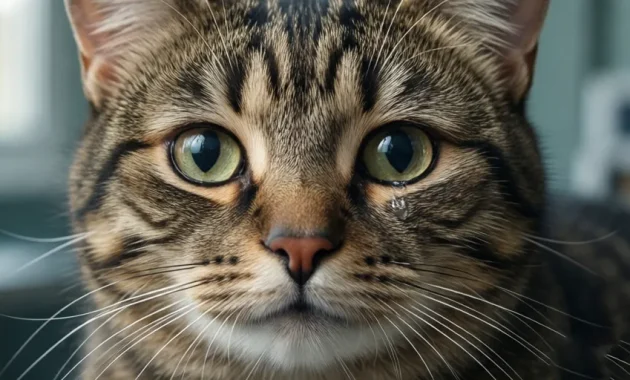
Discovering that your cat or newly adopted kitten has watery, weeping eyes can be a distressing experience for any pet parent. While a minimal amount of clear moisture is a normal physiological mechanism designed to lubricate the eye, excessive tearing—medically referred to as epiphora—is a clinical sign that should never be ignored.
A cat’s eyes are highly sensitive indicators of their overall health. Excessive tearing can stem from a wide variety of sources, ranging from benign structural genetics to severe, contagious respiratory viruses and parasitic infestations.
This comprehensive, human-written guide breaks down the seven primary medical causes behind watery feline eyes, provides actionable first-aid steps you can implement at home, and outlines how targeted nutrition can protect your cat's ocular immune system.
The 7 Primary Causes of Watery Feline Eyes
Understanding the underlying trigger of your cat's watery eyes is the first step toward effective treatment. Ocular discharge generally falls into one of seven distinct categories:
                      PRIMARY TRIGGERS FOR FELINE EPIPHORA

  [ Structural ] ──► Brachycephalic facial anatomy and blocked tear ducts.
  [ Infectious ] ──► Upper Respiratory Infections (URI), bacteria, and parasites.
  [ External ]   ──► Allergens, airborne debris, and physical corneal scratches.
1. Brachycephalic Genetics and Facial Anatomy
For certain pedigree cat breeds, watery eyes are an inherent consequence of structural anatomy rather than an active disease.
The Affected Breeds: Brachycephalic (flat-faced) breeds—such as Persians, Himalayans, and Exotic Shorthairs—possess severely shortened nasal bones and round, prominent eye sockets.
The Mechanism: Due to this compressed facial structure, the natural nasolacrimal ducts (the internal drainage tubes connecting the eyes to the nose) become kinked, narrowed, or entirely blocked. Because normal tear fluid cannot drain downward into the nose, it spills over the lower eyelids, causing chronic tear staining and dampness.
2. Environmental Allergies
Just like humans, cats can suffer from hypersensitive immune reactions to environmental triggers. If your cat’s watery eyes are accompanied by frequent sneezing, coughing, or frantic rubbing of their face and eyes with their paws due to intense itching, allergies are the highly probable culprit. Common feline allergens include household dust mites, synthetic perfumes, cigarette smoke, chemical floor cleaners, and seasonal plant pollen.
3. Airborne Debris and Foreign Objects
Felines spend a large portion of their lives exploring low-to-the-ground environments, making them vulnerable to airborne particulate matter. If a speck of sharp household dust, loose litter sand, a stray carpet fiber, or a tiny plant burr becomes trapped beneath your cat's third eyelid, the eye will immediately produce a flood of tears. This rapid fluid production is an automated defense mechanism designed to naturally flush the foreign object out of the ocular socket.
4. Playtime Trauma and Physical Scratches
Kittens and young cats engage in vigorous, high-energy play sessions with their littermates or housemates. During these wrestling matches and mock battles, a sharp, unclipped claw can easily swipe across a sibling's face.
Even a microscopic scratch on the delicate cornea (the transparent outer layer of the eye) causes immediate, intense pain, squinting, inflammation, and heavy tearing. Left unmanaged, these minor scratches can quickly develop into deep corneal ulcers that threaten the cat's sight.
5. Eye Irritation from External Toxins
A cat's eyes can easily become inflamed through indirect contact with daily household products. Aerosol room fresheners, volatile organic compounds (VOCs) from fresh paint, essential oil diffusers, and strong flea-treatment chemicals can emit irritating vapors. When these vapors come into contact with the ocular surface, they trigger chemical conjunctivitis, resulting in glassy, weeping eyes.
6. Bacterial Infections and Eye Worm Parasites
A highly localized cause of severe weeping and crusting is a direct biological invasion:
Bacterial Conjunctivitis: Primarily driven by the specialized bacterium Chlamydophila felis (feline chlamydia), this infection aggressively attacks the conjunctival membranes of the eye and the upper respiratory tract. If left untreated by a veterinarian, the bacteria can migrate downward, culminating in severe pneumonia.
Ocular Parasites: Though less common, watery eyes can be caused by eye worms, specifically Thelazia californiensis or Thelazia callipaeda. These parasitic worms inhabit the tear ducts and the space beneath the eyelids. They are transmitted when common houseflies or filth flies deposit microscopic worm larvae onto the moist margins of the cat's eye during rest.
7. Upper Respiratory Infections (URIs)
The most widespread and clinically significant cause of watery eyes in young kittens is an Upper Respiratory Infection (URI), often referred to as "cat flu." These infections are highly contagious and are predominantly driven by viral pathogens, including Feline Herpesvirus-1 (FHV-1) and Feline Calicivirus (FCV).
                    PROGRESSION OF URI DISCHARGE

  [ Early Stage ]  ──► Clear, watery fluid weeping from one or both eyes.
  [ Medium Stage ] ──► Thick, sticky, mucoid consistency that glues eyelids shut.
  [ Advanced ]     ──► Yellow-green purulent pus indicating a secondary infection.
As a URI progresses, the clear tears rapidly transform into a thick, sticky, purulent (pus-filled) discharge that can firmly glue the cat's eyelids shut, requiring immediate medical intervention and antibiotic therapy.
- 1. Brachycephalic Genetics and Facial Anatomy
- 2. Environmental Allergies
- 3. Airborne Debris and Foreign Objects
- 4. Playtime Trauma and Physical Scratches
- 5. Eye Irritation from External Toxins
- 6. Bacterial Infections and Eye Worm Parasites
- 7. Upper Respiratory Infections (URIs)
- 1. Why are my cat's eyes watering?
- 2. Are watery eyes normal in cats?
- 3. Which cat breeds commonly have watery eyes?
- 4. Can allergies cause watery eyes in cats?
- 5. What does clear eye discharge mean?
- 6. What does yellow or green eye discharge mean?
- 7. Can a cat's eye injury cause tearing?
- 8. What are the signs of a cat eye infection?
- 9. Can upper respiratory infections cause watery eyes?
- 10. How do I clean my cat's watery eyes safely?
- 11. Should I use human eye drops on my cat?
- 12. Can dust and litter irritate my cat's eyes?
- 13. When should I take my cat to the vet for watery eyes?
- 14. Can parasites cause watery eyes in cats?
- 15. Can nutrition help prevent eye infections in cats?
Home Care and First-Aid Protocols for Watery Eyes
If your cat is currently dealing with weeping eyes, you can utilize the following safe, at-home care techniques to keep them comfortable while monitoring their condition.
1. Execute a Routine Ocular Cleansing
When tears accumulate on the fur around the eyes, they dry out and form hard, irritating crusts. These crusts trap bacteria against the skin, leading to painful secondary skin infections.
                     SAFE EYE CLEANING MANEUVER

  [ Prep ]   ──► Submerge a sterile cotton ball into lukewarm water.
  [ Wipe ]   ──► Wipe gently from the inner corner (nose) outward.
  [ Repeat ] ──► Use a completely fresh cotton ball for the second eye.
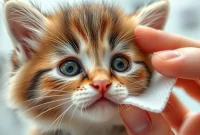
Clean your cat's eyes 2 to 3 times daily using a sterile cotton ball or soft gauze pad submerged in plain, lukewarm water. Gently press the damp cloth against any hardened crusts for a few seconds to soften them before wiping them away. Always wipe from the inner corner of the eye outward.
Critical Warning: Never use a single cotton ball to clean both eyes, as this will cross-contaminate pathogens from one eye to the other. Absolutely avoid over-the-counter human eye drops or generic pet store washes unless they have been explicitly prescribed by your treating veterinarian.
2. Implement Strict Environmental Hygiene
Because airborne dust and surface bacteria exacerbate eye issues, you must optimize your cat's living environment. Vacuum carpets frequently, switch to a low-dust or dust-free cat litter formula, and temporarily stop using aerosol sprays, perfumes, or harsh chemical cleaners near your cat's bedding. Keeping their environment pristine prevents external irritants from making an existing eye issue worse.
The Nutritional Defense The Power of Colostrum
The absolute best way to minimize the risk of infectious diseases that cause watery eyes is to build a powerful internal immune system from day one. For growing kittens and adult cats alike, specialized nutrition can provide foundational support.
When selecting a diet to protect your pet from recurrent viral and bacterial eye issues, look for formulas enriched with bovine colostrum, such as Pro Plan Kitten Starter.
                  HOW COLOSTRUM PROTECTS OCULAR HEALTH

  [ Bovine Colostrum ] ──► Delivers Pre-Formed Antibodies (IgG & IgA)
                                           │
                                           ▼
                    [ Fortifies Systemic Immune Defenses ]
                                           │
                                           ▼
                [ Drastically Lowers URI & Conjunctivitis Risks ]
Colostrum is the highly nutritious, antibody-rich first milk produced immediately after birth. When processed into premium cat food, colostrum delivers a dense concentration of bioactive proteins and immunoglobulins directly to your cat’s digestive system.
By reinforcing their systemic immune defenses, colostrum helps your kitten or cat easily fight off common pathogens like Feline Herpesvirus and Chlamydia felis, effectively stopping upper respiratory eye discharge before it ever has a chance to start.
Ocular Symptom Evaluation Matrix
Use this reference table to evaluate whether your cat's watery eyes require an emergency veterinary visit:
| Discharge Characteristic | Accompanying Symptoms | Likely Cause | Urgency Level |
| Clear, watery, thin fluid | Short snout, no sneezing, calm behavior | Flat-faced genetics (Persian/Himalayan) | Low (Requires daily manual cleaning) |
| Clear fluid, high volume | Frequent sneezing, face rubbing, clear nose | Environmental allergies or dust irritation | Mild (Clean eyes and remove allergens) |
| Clear fluid in ONE eye | Squinting, holding eye shut, pawing at face | Foreign object or recent claw scratch | Moderate (Vet check needed to rule out ulcers) |
| Thick, sticky, white fluid | Mild lethargy, damp fur around eyes | Early-stage bacterial or viral conjunctivitis | Moderate (Schedule veterinary appointment) |
| Thick yellow or green pus | Fever, loss of appetite, crusty nose, coughing | Advanced Upper Respiratory Infection (URI) | High (Requires prescription antibiotic drops) |
If your cat's eye discharge does not clear up within 24 to 48 hours of gentle home cleaning, or if you notice them squinting in obvious pain, bypass home remedies entirely and schedule a professional veterinary examination to protect their long-term vision.
FAQ
1. Why are my cat's eyes watering?
Watery eyes in cats can be caused by allergies, dust, eye infections, blocked tear ducts, respiratory infections, eye injuries, parasites, or breed-related facial structures.
2. Are watery eyes normal in cats?
A small amount of clear moisture is normal, but excessive tearing, frequent discharge, or crusty eyes may indicate an underlying health problem.
3. Which cat breeds commonly have watery eyes?
Flat-faced breeds such as Persian, Himalayan, and Exotic Shorthair cats often experience chronic tearing due to their facial anatomy and narrowed tear ducts.
4. Can allergies cause watery eyes in cats?
Yes. Environmental allergens such as pollen, dust mites, cigarette smoke, perfumes, and cleaning products can trigger watery eyes and sneezing.
5. What does clear eye discharge mean?
Clear discharge is often associated with allergies, mild irritation, blocked tear ducts, or the early stages of a viral infection.
6. What does yellow or green eye discharge mean?
Yellow or green discharge usually indicates a bacterial infection or a severe upper respiratory infection that requires veterinary treatment.
7. Can a cat's eye injury cause tearing?
Yes. Corneal scratches, foreign objects, or rough play with other cats can cause excessive tearing, squinting, and eye discomfort.
8. What are the signs of a cat eye infection?
Common symptoms include watery eyes, redness, swelling, squinting, thick discharge, crusty eyelids, sneezing, and reduced appetite.
9. Can upper respiratory infections cause watery eyes?
Absolutely. Feline herpesvirus and calicivirus are common causes of watery eyes, sneezing, nasal discharge, and conjunctivitis.
10. How do I clean my cat's watery eyes safely?
Use a clean cotton ball or sterile gauze soaked in lukewarm water. Gently wipe from the inner corner outward and use a separate cotton ball for each eye.
11. Should I use human eye drops on my cat?
No. Human eye medications should never be used unless specifically prescribed by a veterinarian.
12. Can dust and litter irritate my cat's eyes?
Yes. Dusty cat litter, airborne debris, and household dust can irritate the eyes and increase tear production.
13. When should I take my cat to the vet for watery eyes?
Seek veterinary care if symptoms last more than 24–48 hours, if discharge becomes thick or colored, or if your cat is squinting, lethargic, or showing signs of pain.
14. Can parasites cause watery eyes in cats?
Yes. Eye worms such as Thelazia species can infect tear ducts and cause chronic tearing and irritation.
15. Can nutrition help prevent eye infections in cats?
A strong immune system supported by balanced nutrition, quality protein, vitamins, and colostrum-enhanced diets may help reduce the risk of infections that affect the eyes.