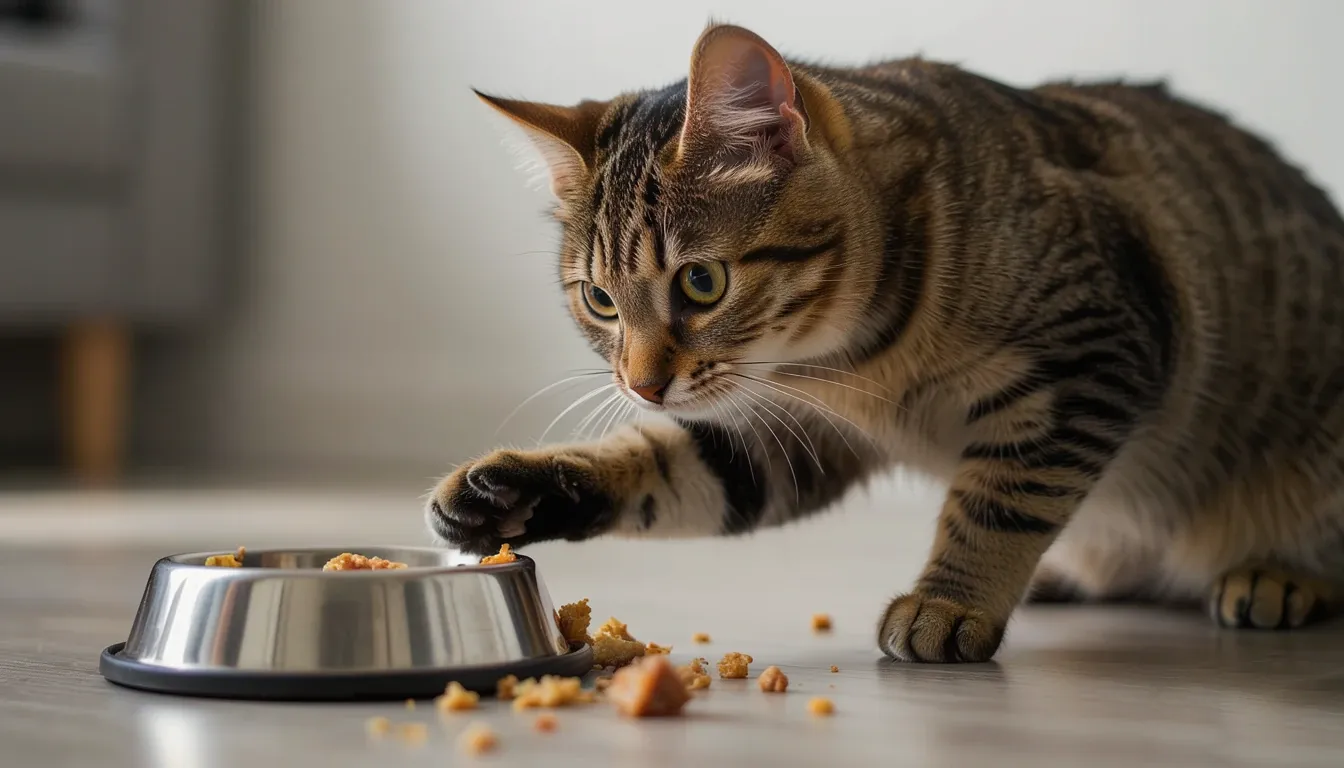
Every cat owner has witnessed it: your cat approaches their food bowl, takes a few bites, and then begins frantically scratching at the floor, the wall, or nearby cabinets. They might even drag a nearby dish towel, loose paper, or a blanket to drape over their leftover kibble.
This behavior, known scientifically as food caching, can be baffling. Your indoor cat is pampered, safe, and fed on a strict schedule. They face zero threat of starvation, and no apex predators are stalking your kitchen. Yet, their biological programming compels them to act as if they are fighting for survival in the African savannah.
This comprehensive guide decodes the evolutionary psychology, feline neurology, and environmental triggers behind why cats bury their food, alongside actionable strategies to manage this behavior if it becomes destructive.
The Felidae Ancestry and Biological Hardwiring
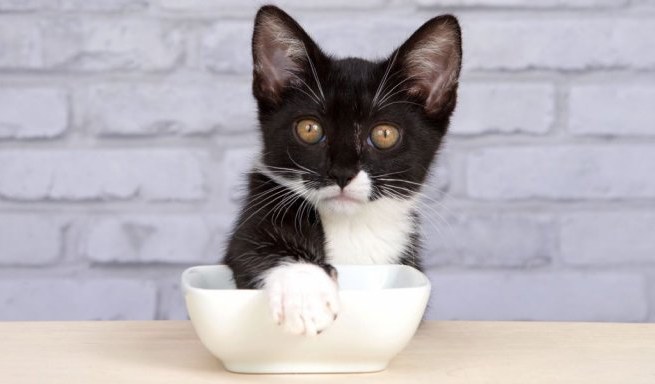
To understand why a domestic house cat (Felis catus) scratches around their food dish, we must examine their genetic blueprint. Modern domestic cats share over 95% of their DNA with the wild tiger (Panthera tigris) and are direct descendants of the African wildcat (Felis lybica).
In the wild, survival depends on a delicate balance of energy conservation and risk management. Food caching is an evolutionary adaptation designed to solve several critical threats:
[Wild Feline Kill] ──► Partial Consumption ──► Olfactory Risk ──► Food Caching (Burial)
                                                                       │
                                      ┌────────────────────────────────┴────────────────────────────────┐
                                      ▼                                                                 ▼
                        [Predator/Competitor Avoidance]                                   [Resource Preservation]
The Dual Identity: Predator and Prey
Unlike apex predators like lions or wolves, smaller wildcats occupy a precarious middle tier in the food chain. They are highly efficient hunters of rodents and birds, but they are simultaneously preyed upon by larger carnivores, including leopards, hyenas, and large birds of prey.
Leaving a raw carcass exposed generates a powerful olfactory trail (scent footprint). For a solitary wildcat, this scent is a liability. It alerts larger, more dominant predators to their exact coordinates, jeopardizing their safety. Burying the remains is not about saving the food for a later gourmet meal; it is a tactical cloaking mechanism.
Olfactory Cryptography (Scent Masking)
A cat’s world is mapped primarily through chemical signaling. While humans rely heavily on vision, cats interpret their environment through an incredibly sophisticated olfactory system containing roughly 200 million scent receptors (compared to a human’s meager 5 million).
Pheromones and Paw Scraping
When a cat scratches the floor around their food bowl, they are engaging in a dual-purpose behavior:
-
Physical Concealment: The visual attempt to push dirt, leaves, or substrate over the food source.
-
Chemical Signposting: Cats possess eccrine sweat glands on the pads of their paws. When they scrape a surface, they deposit unique pheromones onto that substrate.
In a wild context, this serves as an olfactory “keep out” sign to other small competitors. In a domestic context, it can manifest as a conflicted behavior: the cat is trying to hide the food’s scent while simultaneously marking the territory around it.
Psychological and Environmental Triggers in the Home
While the instinct is ancient, specific conditions within a modern home can amplify or trigger food-covering behavior.
1. Multi-Cat Dynamics and Resource Guarding
In households with multiple felines, covert competition is a constant variable. Even if your cats appear friendly, eating is a vulnerable state.
If feeding stations are grouped together, a submissive cat may experience high anxiety. They will rapidly consume a portion of their food and immediately attempt to bury the rest to prevent the dominant cat from stealing it or tracking their presence to that specific feeding zone.
2. Environmental Overstimulation
Cats prefer predictable, quiet spaces for consumption. If a food bowl is placed in a high-traffic area—such as next to a loud washing machine, a glass door looking out at neighborhood stray animals, or a busy hallway—the cat’s hyper-vigilance kicks in. The instinctual urge to cover tracks scales up dramatically when the cat feels exposed.
Medical and Dietary Root Causes
If a cat suddenly starts burying their food when they have never done so before, or if they are scratching at the bowl instead of eating, the issue may be physiological rather than instinctual.
Gastrointestinal Distress and Nausea
When a cat is nauseous due to gastritis, inflammatory bowel disease (IBD), or early-stage chronic kidney disease (CKD), the smell of food can trigger immediate aversion.
The cat approaches the bowl expecting to eat, experiences a wave of nausea, and instinctively treats the food as a negative stimulus that needs to be buried and eliminated from their immediate territory.
Dietary Oxidation and Spoilage
A cat’s nose can instantly detect rancid fats and bacterial growth long before human senses notice anything amiss.
-
Wet Food: Left out for more than 20–30 minutes begins to dry out and oxidize, forming a crust and breeding bacteria.
-
Dry Kibble: High-fat kibble stored in open bags undergoes lipid oxidation, turning rancid.
When a cat tries to bury these meals, they are practicing basic hygiene, treating the spoiled food like waste.
Operational Strategies to Manage Food Covering
If your cat’s instinctual scratching is destroying hardwood floors, shredding carpets, or creating a chaotic mess of scattered bowls and dragged laundry, you can alter their environment to curb the behavior without causing psychological stress.
Wild vs. Domestic Behavioral Comparison
| Attribute | Wild Felid Behavior | Domestic Cat Equivalent |
| Primary Target | Raw carcasses, large prey fragments | Leftover wet food or open kibble bowls |
| Primary Motivation | Predator avoidance, defense against hyenas/vultures | Instinctual drive, multi-cat anxiety, territorial marking |
| Substrate Used | Dirt, leaf litter, sand, loose brush | Carpets, curtains, towels, loose paperwork |
| Medical Indicator? | No (Strict survival mechanism) | Yes (Can indicate nausea, dental pain, or spoiled fat) |
Critical Warning: Never verbally punish, scold, or spray a cat with water for scratching around their food bowl. This behavior is as involuntary and natural to them as breathing. Punishing an instinctual survival mechanism will only induce profound psychological stress, destroy the human-animal bond, and potentially trigger secondary behavioral issues like inappropriate elimination outside the litter box.
By understanding that food covering is a window into your cat’s evolutionary past, you can view this quirky habit with empathy. Through smart environmental management, portion control, and strategic bowl placement, you can easily protect your home while respecting your cat’s inner wildcat.
FAQ
1. Why does my cat try to bury its food?
Cats often bury their food due to an instinct called food caching. In the wild, felines cover leftover prey to hide its scent from predators and competitors. Even indoor cats retain this evolutionary behavior despite having a reliable food source.
2. Is it normal for cats to scratch around their food bowl?
Yes. Scratching around a food bowl is a common feline behavior. Cats may paw at the floor, walls, or nearby objects as part of an instinctive attempt to cover or hide leftover food.
3. Why does my cat scratch the floor after eating?
After eating, some cats instinctively try to bury the remaining food. This behavior originates from their wild ancestors, who concealed food remains to reduce scent trails and protect resources from other animals.
4. Why does my indoor cat bury food if there are no predators?
Although domestic cats live in safe environments, their behavior is still influenced by millions of years of evolution. Food-covering behavior remains deeply embedded in their instincts and can be triggered even when there is no actual threat.
5. Why does my cat cover food with towels, blankets, or paper?
Cats may use available objects such as towels, paper, clothing, or blankets as substitutes for dirt or leaves. They are attempting to perform the same food-caching behavior their wild ancestors used to conceal prey.
6. Is burying food a sign that my cat dislikes the food?
Not always. Many cats bury food simply because they have finished eating and want to hide the leftovers. However, if your cat consistently avoids eating and immediately tries to bury fresh food, it may indicate food aversion, spoilage, or a medical issue.
7. Can multi-cat households cause food-covering behavior?
Yes. In homes with multiple cats, food caching may be triggered by competition or anxiety. A cat may attempt to hide leftover food to prevent another cat from accessing it.
8. Why does my cat scratch around food but not eat it?
This can sometimes indicate nausea, dental pain, gastrointestinal discomfort, or a dislike of the food. If the behavior is sudden or accompanied by appetite loss, veterinary evaluation is recommended.
9. Can spoiled food make a cat try to bury it?
Yes. Cats have an extremely sensitive sense of smell and can detect spoilage long before humans notice it. If food smells stale, rancid, or contaminated, a cat may instinctively attempt to cover it.
10. Is food-covering behavior related to territorial marking?
Partially. Cats have scent glands in their paw pads. When they scratch around their food area, they may leave scent markers while simultaneously attempting to conceal the food source.
11. Should I stop my cat from burying its food?
Generally, no. Food caching is a natural behavior. Instead of discouraging it, focus on managing the environment by removing leftovers promptly and protecting surrounding surfaces.
12. Can burying food indicate stress or anxiety?
Yes. Environmental stress, household changes, loud noises, unfamiliar animals, or competition with other pets can increase food-covering behavior in some cats.
13. How can I reduce excessive scratching around the food bowl?
Offering smaller meals, removing leftovers after feeding, using feeding mats, and providing separate feeding areas in multi-cat households can help reduce excessive scratching behavior.
14. Why does my cat bury food but not water?
Food produces stronger scents that attract attention from competitors and predators in the wild. Water does not carry the same survival risks, so cats generally do not attempt to bury it.
15. Is food-covering behavior a medical emergency?
Not usually. However, if the behavior appears suddenly, is accompanied by appetite loss, vomiting, weight loss, lethargy, or signs of pain, it could indicate an underlying health problem that requires veterinary attention.
16. Do all cats bury their food?
No. Some cats never display food-caching behavior, while others do it regularly. Personality, genetics, environment, and life experiences all influence whether a cat exhibits this instinct.
17. Why does my cat scratch the wall near the food bowl?
Scratching nearby walls or surfaces is often part of the same instinctive burial ritual. The cat is attempting to “cover” the food using whatever surfaces are available in the environment.
18. Can kittens bury their food too?
Yes. Food-caching instincts can appear in kittens, although the behavior is more commonly observed as they mature and develop adult behavioral patterns.
19. Does burying food mean my cat is saving it for later?
Sometimes, but not always. In most cases, the behavior is more closely linked to scent concealment and instinctive resource management than intentionally storing food for future consumption.
20. Should I punish my cat for scratching around food?
No. Punishing a cat for instinctive behavior can increase stress, damage trust, and potentially lead to additional behavioral problems. Environmental management is a far more effective solution.