
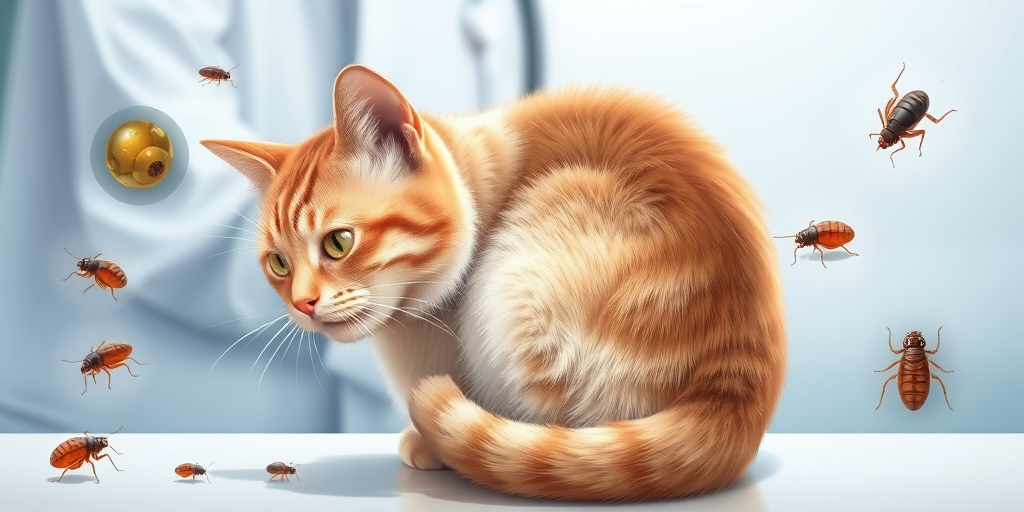
The feline flea (Ctenocephalides felis) is a highly specialized, wingless ectoparasite. Its flattened body allows it to move easily through a cat’s thick fur, while its backward-pointing spines (ctenidia) lock it securely to the hair shafts.
Understanding the flea’s rapid reproductive cycle is essential for successful eradication, as treating the adult fleas on the cat only addresses a small fraction of the total problem.
                                [The 95% Environmental Biomass]
                                               │
               ┌───────────────────────────────┼───────────────────────────────┐
               ▼                               ▼                               ▼
         Eggs (50%)                      Larvae (35%)                     Pupa (10%)
    Dropped into carpets,          Photophobic; feed on flea       Resilient silk cocoon;
     bedding, and furniture.       debris deep in fibers.          impervious to chemicals.
                                               │
                                               ▼
                                 [The 5% Visible Biomass]
                                       Adult Fleas
                                    Feed on host blood;
                                   lay eggs within 48h.
The Four-Stage Lifecycle Breakdown

-
The Adult Phase (5% of Population): Adult fleas live almost exclusively on the host animal. They feed on the cat’s blood within minutes of arriving and begin mating. A single female flea can lay up to 50 eggs per day, turning an untreated cat into a breeding ground.
-
The Egg Phase (50% of Population): Flea eggs are smooth, white, and translucent. They do not stick to the fur; instead, as the cat moves, the eggs fall off into the surrounding environment, including carpets, sofas, and pet bedding.
-
The Larval Phase (35% of Population): Within a few days, the eggs hatch into legless larvae. These larvae are photophobic (sensitive to light) and crawl deep into carpet fibers, floor cracks, and dark corners. They feed on organic debris, primarily the feces of adult fleas (flea dirt), which contains undigested blood.
-
The Pupal Phase (10% of Population): The larva spins a sticky, silk-like cocoon to enter the pupal stage. This cocoon easily collects environmental dust and camouflage, making it nearly invisible. The pupal shield is highly resilient and impervious to standard household insecticides.
Inside the cocoon, the pre-emergent adult flea can lie dormant for months, waiting for physical vibrations, body heat, or carbon dioxide levels that signal a nearby host animal.
Clinical Symptoms and Pathological Diagnostics
A flea infestation can cause serious secondary medical issues. Recognizing these symptoms early allows for quicker veterinary intervention.
1. Flea Allergic Dermatitis (FAD)
Flea Allergic Dermatitis is a common immunopathological condition caused by an allergic reaction to the saliva injected by a feeding flea. The flea’s saliva contains a mix of histamine-like compounds and enzymes that block blood clotting, which can trigger a severe immune response in sensitive cats.
-
Clinical Presentation: Intense itching (pruritus), frantic grooming, and scratching centered around the lower back, tail base, neck, and inner thighs.
-
Lesion Architecture: This constant scratching often leads to Miliary Dermatitis, a condition characterized by small, crusty, red bumps across the skin. In severe cases, it causes self-induced hair loss (alopecia) and open sores that are vulnerable to secondary bacterial infections.
2. Microcytic Anemia
Because fleas are blood-feeding insects, a heavy infestation can cause significant blood loss. This is especially dangerous for kittens, senior cats, or animals with existing chronic illnesses, as it can quickly lead to life-threatening anemia.
-
Diagnostic Markers: Lethargy, weakness, rapid breathing, and notably pale or white mucous membranes in the gums.
3. Endoparasitic Transmission Vector
Fleas also act as an intermediate host for the common tapeworm (Dipylidium caninum). When a cat grooms itself and swallows an infected adult flea, the tapeworm larva completes its development inside the cat’s small intestine.
-
Diagnostic Markers: The presence of small, rice-like tapeworm segments (proglottids) crawling around the cat’s anal area or visible on fresh stool.
The Flea Dirt Test (Diagnostic Verification)
To confirm an infestation when adult fleas are hard to spot in thick fur, perform a simple Flea Dirt Test:
If the black specks dissolve into a distinct reddish-brown color, it confirms the presence of flea feces, meaning active fleas are feeding on the animal.
Pharmacological Therapeutics & Age-Specific Protocols
Getting rid of a flea infestation requires targeted medicine that matches your cat’s specific age, weight, and health status. Modern veterinary treatments rely on advanced Spot-On (Tetes Tengkuk) or oral medications that disrupt the insect’s nervous system.
                              [Targeted Antiparasitic Selection]
                                               │
         ┌─────────────────────────────────────┼─────────────────────────────────────┐
         ▼                                     ▼                                     ▼
   [Pediatric Kittens]               [Adult Maintenance]              [Gestating / Lactating]
 ├── Age: < 8 Weeks                  ├── Active Spot-On Blends         ├── High Safety Margin
 └── Manual flea combing only        └── Fipronil / Fluralaner         └── Selamectin protocols
1. Pediatric Kittens (Under 8 Weeks of Age)
The nervous systems of very young kittens are highly sensitive to synthetic chemicals, making most commercial spot-on treatments unsafe.
-
Clinical Protocol: Use manual flea combs dipped in warm water and mild soap to physically remove the insects. Keep the kitten warm, and wash their bedding frequently until they reach the age and weight requirements for chemical treatment.
2. Standard Adult Maintenance (Non-Pregnant / Non-Lactating)
Adult cats can safely receive advanced prescription medications that target adult insects and inhibit flea egg development.
-
Fipronil / Imidacloprid: These topical treatments spread through the oils in the cat’s skin, overstimulating the central nervous system of adult fleas upon contact.
-
Fluralaner / Selamectin: These systemic options provide long-lasting, broad-spectrum protection, killing adult fleas quickly and treating internal parasites like hookworms, roundworms, and ear mites at the same time.
3. Gestating and Lactating Queens (Mothers)
Treating pregnant or nursing cats requires extreme caution, as many chemicals can cross the placental barrier or pass into the mother’s milk, risking toxicity to the developing kittens.
-
Clinical Protocol: Only use specific medications, such as Selamectin, that have been clinically tested and approved for breeding, pregnant, and lactating cats. Always consult your veterinarian before applying any treatment during pregnancy.
Comprehensive Environmental Sanitization
Treating the cat addresses only 5% of the problem. To prevent re-infestation, you must thoroughly clean the surrounding home to target the remaining 95% of the flea biomass (eggs, larvae, and pupae).
1. High-Temperature Thermal Washing
Gather all pet blankets, washable bed covers, rugs, and soft fabrics that your cat contacts. Wash them in a heavy-duty laundry cycle at a minimum temperature of $60^\circ\text{C}$ ($140^\circ\text{F}$) for at least 20 minutes. This thermal exposure destroys the proteins in flea eggs and larvae.
2. High-Suction Mechanical Vacuuming
Vacuum all carpets, area rugs, upholstered furniture, and hardwood floor seams daily. Flea larvae avoid light by hiding deep within carpet fibers and under baseboards. Use a vacuum with a rotating brush bar to pull them out.
3. Vacuum Bag Decontamination
The vacuum collect eggs and pupae, but the warmth inside the dust collection bag can cause them to hatch. After vacuuming, treat the bag or canister with an Insect Growth Regulator (IGR) spray to stop flea development, then empty it immediately into an outdoor trash bin.
Integrated Ectoparasite Eradication Matrix
| Focus Area | Targeted Lifecycle Stage | Primary Method | Active Medical/Chemical Agent |
| Host Animal (Cat) | Adult Fleas (Feeding Phase) | Topical Spot-On or Oral Chewable | Fipronil, Fluralaner, Selamectin |
| Pet Bedding & Linens | Eggs & Newly Hatched Larvae | High-Temperature Washing | Thermal denaturation ($60^\circ\text{C}$) |
| Carpets & Floor Fissures | Deeply Hidden Larvae | Deep Mechanical Vacuuming | Structural extraction via brush-bar suction |
| Household Surfaces | Environmental Larvae & Eggs | Area Insektisida Spray | Methoprene, Pyriproxyfen (IGRs) |
FAQ
1. What are cat fleas?
Cat fleas (Ctenocephalides felis) are tiny, wingless external parasites that live on cats and feed on blood. They are the most common flea species found on domestic cats and can also infest dogs, rabbits, and even bite humans. Their flattened bodies and backward-facing spines help them move through fur and stay attached to the host.
2. Why are fleas such a serious problem for cats?
Fleas are more than just a nuisance. They can trigger intense itching, allergic skin disease, blood loss, skin infections, and even transmit internal parasites such as tapeworms. In kittens, elderly cats, or medically fragile cats, a heavy flea infestation can become dangerous very quickly.
3. How do fleas survive and spread so quickly?
Fleas reproduce at a very high rate. Once an adult flea lands on a cat and takes a blood meal, mating can begin rapidly, and female fleas can lay dozens of eggs per day. Those eggs fall into the environment, where they continue developing in carpets, bedding, upholstery, floor cracks, and dark corners of the home.
4. What is the flea life cycle?
The flea life cycle has four stages: egg, larva, pupa, and adult. Adult fleas live on the cat and feed on blood. Eggs fall into the home environment, hatch into larvae, then develop into pupae inside protective cocoons. Adult fleas eventually emerge from the cocoon when they detect heat, vibration, or carbon dioxide from a nearby host.
5. Why is it so hard to eliminate fleas completely?
Because most of the flea population does not live on the cat. Adult fleas on the pet are only a small visible portion of the infestation. The majority of eggs, larvae, and pupae are hidden in the home environment. If only the cat is treated and the house is ignored, the infestation often comes back.
6. Do flea eggs stay on the cat’s fur?
No. Flea eggs are not sticky. After they are laid, they usually fall off the cat into the surrounding environment, including bedding, rugs, sofas, cracks in flooring, and other places where the cat rests or walks.
7. Where do flea larvae usually hide?
Flea larvae prefer dark, protected areas away from light. They often burrow deep into carpet fibers, under furniture, in floor seams, along baseboards, and inside bedding. These larvae feed on organic debris, especially flea dirt left behind by adult fleas.
8. What is the pupal stage and why is it important?
The pupal stage is one of the most frustrating parts of a flea infestation. The larva forms a sticky cocoon that protects the developing flea. This cocoon can resist many common insecticides and may remain dormant for weeks or even months until conditions are right for the adult flea to emerge.
9. Can fleas live in the house even if I do not see them on my cat?
Yes. It is very possible to have a flea infestation in the environment before you clearly see many fleas on the cat. Because eggs, larvae, and pupae hide in the home, the infestation can continue developing out of sight.
10. What are the most common signs of fleas on a cat?
Common signs include frequent scratching, biting at the skin, overgrooming, sudden irritability, hair loss, visible flea dirt, skin redness, and small scabs or crusts—especially around the neck, lower back, tail base, and thighs. Some cats are so sensitive that even a few fleas can cause severe symptoms.
11. What is flea dirt?
Flea dirt is flea feces. It looks like tiny black or dark brown specks in the fur, especially around the neck, back, and tail area. Because it contains digested blood, it is one of the most useful signs of an active flea infestation.
12. How can I tell whether black specks in my cat’s coat are flea dirt?
Use the flea dirt test. Place the black specks on a wet white tissue or damp paper towel. If the specks dissolve into a reddish-brown or rust-colored halo, it strongly suggests flea dirt, meaning fleas have been feeding on your cat’s blood.
13. What is Flea Allergic Dermatitis (FAD)?
Flea Allergic Dermatitis is a hypersensitivity reaction to flea saliva. Some cats are extremely sensitive to flea bites, and even one or two fleas can trigger intense itching, inflammation, hair loss, and skin damage. It is one of the most common flea-related skin disorders in cats.
14. What does flea allergy look like in cats?
Cats with flea allergy often scratch frantically, overgroom themselves, chew at their skin, and develop scabs or crusty bumps. Hair loss commonly appears around the lower back, tail base, neck, belly, and inner thighs. In severe cases, the skin becomes inflamed and vulnerable to secondary infection.
15. Can fleas cause bald patches on cats?
Yes. Fleas can cause hair loss directly and indirectly. A cat may lose fur due to scratching, chewing, licking, or overgrooming in response to flea bites. Cats with flea allergies are especially likely to develop noticeable bald areas.
16. Can fleas make a cat anemic?
Yes. Heavy flea infestations can cause significant blood loss, especially in kittens, elderly cats, or cats with underlying disease. Severe infestations may lead to anemia, which is a potentially life-threatening condition if not treated promptly.
17. What are the signs of flea-related anemia in cats?
Signs can include weakness, lethargy, pale gums, low energy, rapid breathing, poor appetite, and overall collapse in severe cases. If a kitten or sick cat has fleas and seems weak or pale, veterinary care should be sought immediately.
18. Can fleas give cats tapeworms?
Yes. Fleas are an important intermediate host for the tapeworm Dipylidium caninum. If a cat swallows an infected flea while grooming, the tapeworm can develop inside the intestine.
19. How do I know if my cat may have tapeworms from fleas?
One of the classic signs is the presence of small white segments that look like grains of rice around the anus, on bedding, or in fresh stool. Some cats may also scoot, lick excessively around the rear end, or have recurring flea problems alongside tapeworm infection.
20. Are fleas dangerous for kittens?
Yes, fleas can be especially dangerous for kittens. Because kittens have a small blood volume and immature immune systems, even a moderate infestation can lead to anemia, weakness, dehydration, and failure to thrive. Flea treatment in very young kittens must be handled carefully because many medications are not safe for them.
21. Can indoor cats get fleas?
Yes. Indoor cats are not immune to fleas. Fleas can enter the home on clothing, shoes, other pets, visiting animals, used furniture, or through windows and doors. If there are dogs in the home or stray animals nearby, the risk increases.
22. How do cats usually get fleas?
Cats can get fleas from direct contact with infested animals, contaminated bedding, outdoor environments, or flea-infested indoor spaces. Fleas can also hitchhike into the house on humans or other pets.
23. Do I need to treat all pets in the house if only one cat has fleas?
In most cases, yes. If one pet has fleas, it is safest to assume the environment and other pets may also be affected. Treating only one animal often leads to ongoing reinfestation because fleas can continue cycling between pets and the household environment.
24. What is the best way to get rid of fleas on a cat?
The most effective approach is a combination of veterinary-approved flea treatment for the cat and aggressive environmental control in the home. Treating the cat alone is usually not enough. Successful flea control requires targeting both the animal and the environment at the same time.
25. What flea treatments are commonly used for adult cats?
Common modern treatments include topical spot-on products and certain oral medications prescribed or recommended by veterinarians. Depending on the product, active ingredients may target adult fleas, disrupt egg development, or provide broader parasite protection. The right product depends on the cat’s age, weight, health, and whether the cat is pregnant or nursing.
26. Are flea spot-on treatments effective?
Yes, when used correctly and consistently, quality spot-on treatments can be very effective. They are designed to spread through the oils of the skin and coat, killing fleas after contact or feeding, depending on the formulation.
27. Can I use dog flea medicine on my cat?
No. Never use a dog flea product on a cat unless a veterinarian specifically tells you it is safe. Some dog flea medications contain ingredients that are highly toxic to cats and can cause severe neurological reactions, tremors, seizures, or death.
28. Are all flea medications safe for kittens?
No. Very young kittens are highly sensitive to many chemical flea treatments. Product safety depends on the kitten’s exact age and body weight. For very young kittens, treatment often relies on manual flea removal and careful environmental control until they are old enough for approved medication.
29. How should fleas be managed in kittens under eight weeks old?
For kittens that are too young for standard flea medications, manual flea combing is often the safest immediate option. A flea comb can physically remove fleas, and bedding should be washed frequently. Kittens must also be kept warm, monitored closely, and evaluated by a veterinarian if they appear weak, pale, or heavily infested.
30. Can pregnant or nursing cats be treated for fleas?
They can, but extra caution is required. Not every flea medication is safe during pregnancy or lactation. A veterinarian should recommend a product with an appropriate safety profile for breeding, pregnant, or nursing cats.
31. Why do flea infestations keep coming back after treatment?
Reinfestation usually happens because the environmental stages of the flea life cycle were not fully controlled. Even if adult fleas on the cat are killed, eggs, larvae, and pupae in carpets, bedding, and furniture can continue maturing and re-infest the pet.
32. How should I clean the house during a flea infestation?
Wash pet bedding, blankets, and soft fabrics regularly in hot water. Vacuum carpets, rugs, furniture, and floor edges thoroughly and repeatedly. Pay close attention to areas where the cat sleeps or spends time. Consistent environmental cleaning is a critical part of breaking the flea life cycle.
33. Does washing bedding really help kill fleas?
Yes. Washing pet bedding, blankets, and washable fabrics at a sufficiently hot temperature can help kill flea eggs and larvae. It also removes flea dirt, skin debris, and environmental contamination that support the flea life cycle.
34. Why is vacuuming so important for flea control?
Vacuuming helps remove eggs, larvae, flea dirt, and some pupae from carpets, upholstery, and cracks in the home. It also disturbs pupae, which can encourage them to emerge from cocoons and become vulnerable to treatment. Repeated vacuuming is often one of the most useful non-medication tools in flea eradication.
35. Do I need to clean the vacuum after using it during a flea infestation?
Yes. Flea eggs and pupae may survive inside a vacuum container or bag. Emptying and cleaning the vacuum promptly helps reduce the chance of fleas continuing to develop inside the collected debris.
36. Can flea infestations affect human family members?
Yes. Fleas can bite humans, causing itchy red bumps, especially around the ankles and lower legs. In addition, flea-related skin disease, tapeworm transmission, and the stress of severe infestation can affect the whole household environment.
37. When should I take my cat to the vet for fleas?
You should contact a veterinarian if your cat has severe itching, skin wounds, bald patches, pale gums, weakness, suspected tapeworms, heavy flea infestation, or if the cat is a kitten, elderly, pregnant, nursing, or already ill. Veterinary advice is also important if over-the-counter treatment has failed or you are unsure which flea product is safe.
38. How long does it take to fully eliminate a flea infestation?
It can take several weeks and sometimes longer depending on the severity of the infestation, the number of pets involved, how thoroughly the home is cleaned, and how consistently treatment is applied. Because pupae can remain dormant, flea control often requires patience and repeated management rather than a one-time treatment.
39. Can one flea cause a major reaction in a sensitive cat?
Yes. In cats with flea allergy, even a very small number of flea bites can trigger intense itching and skin inflammation. This is why a cat can appear miserable even if you do not see many fleas on the body.
40. What is the biggest mistake owners make when dealing with cat fleas?
One of the biggest mistakes is focusing only on the visible adult fleas on the cat while ignoring the environmental stages of the infestation. Effective flea control must target the cat, the household environment, and the full flea life cycle at the same time. Otherwise, the infestation often returns.