The Ultimate Guide to Bathing a Cat: When, How, and Essential Safety Tips
1 week ago
Ask almost any cat owner about bathing their pet, and you will likely hear stories of water splashes, frantic meows, and deep claw scratches.
It is no secret that most felines harbor a intense dislike of water. Cats spend upwards of 30% to 50% of their waking hours grooming themselves. Their barbed tongues act as natural hairbrushes, distributing natural skin oils and removing loose fur. In most cases, self-grooming is all a healthy cat needs to stay clean.
However, self-grooming has its limits. Senior cats, obese pets, hairless breeds, and outdoor explorers often need human help to keep their coat and skin healthy.
This complete guide breaks down when you should bath your cat, the equipment you need, a step-by-step bathing process, and stress-reduction tips to keep the experience calm for both you and your feline companion.
- Does Your Cat Really Need a Bath? Frequency and Special Cases
- Essential Equipment Checklist
- Step-by-Step Guide to Bathing Your Cat
- Stress-Reduction Tips for a Calm Bath Time
- Conclusion
- Detailed FAQ
- 1. Do all cats need regular baths?
- 2. How often should I bathe my indoor cat?
- 3. Which cats require more frequent baths?
- 4. Can I use human shampoo on my cat?
- 5. Is baby shampoo safe for cats?
- 6. What water temperature is best for bathing a cat?
- 7. Should I trim my cat's nails before a bath?
- 8. Should I brush my cat before bathing?
- 9. Can I pour water over my cat's head?
- 10. How do I keep water out of my cat's ears?
- 11. What should I do if my cat panics during the bath?
- 12. Is it okay to use a hair dryer after bathing?
- 13. Can bathing remove fleas?
- 14. What if my cat gets into something toxic?
- 15. Should I reward my cat after a bath?
- 16. Can kittens be bathed?
- 17. Are there alternatives to bathing?
- 18. When should I contact a veterinarian instead of bathing my cat?
Does Your Cat Really Need a Bath? Frequency and Special Cases
Before reaching for the shampoo, it is important to know whether your cat actually needs a bath or if a gentle brush will do the job.
Feline Bathing Requirement Matrix:
┌─────────────────────────────────────────────────────────────┐
│                   Standard Indoor Cats                      │
│        (Self-Grooming, Short/Medium Coat, Healthy)          │
│        ➔ Bathing Frequency: Every 4 to 6 Weeks (or as needed)│
└──────────────────────────────┬──────────────────────────────┘
                               │
                               ▼
┌─────────────────────────────────────────────────────────────┐
│                 High-Frequency Requirement                  │
│  - Hairless Breeds (Sphynx): Once per week (Oily Skin)      │
│  - Senior / Obese Cats: As needed for hygiene support       │
│  - Outdoor Explorers: Periodic washing for dirt/contaminants│
└─────────────────────────────────────────────────────────────┘
1. General Guidelines for Healthy Cats
For average indoor cats with short or medium coats, baths are rarely needed unless they get into something sticky, smelly, or toxic.
A general rule of thumb for routine bathing is every 4 to 6 weeks. This interval helps prevent dander buildup without stripping the natural oils that protect their skin.
2. Special Categories That Require Regular Baths
Hairless Breeds (e.g., Sphynx, Bambino): Lacking fur to absorb natural body oils, hairless cats develop a oily buildup on their skin that can cause clogged pores and stain furniture. They require a bath once a week with a gentle, moisturizing cleanser.
Senior and Arthritic Cats: As cats reach their senior years, joint pain and stiffness make it difficult to groom hard-to-reach spots like their back and hindquarters.
Obese Cats: Overweight cats often struggle to reach their lower back, tail base, and rear quarters, leading to matted fur and skin irritation.
Outdoor Explorers: Outdoor cats frequently pick up mud, sap, pollen, and pesticides that should be washed off before they groom and swallow those harmful substances.
Essential Equipment Checklist
Preparation is key to a smooth, stress-free cat bath. Gather all your supplies before bringing your cat into the bathroom.
Essential Cat Bathing Toolkit:
├── Washing Vessel      ➔ Rubber-matted sink, basin, or shallow tub
├── Cat-Safe Shampoo    ➔ Unscented, hypoallergenic, soap-free formula
├── Drying Tools        ➔ 2 Large microfiber towels (Low-heat dryer optional)
└── Grooming & Safety   ➔ Wide-tooth comb, cotton balls, and rubber gloves
Pre-Bath Prep Checklist
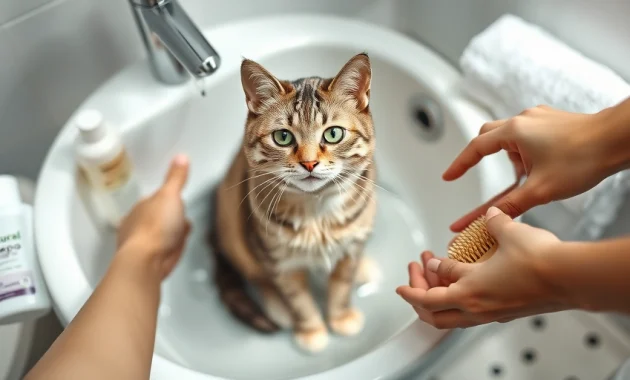
Cat-Safe Shampoo: Never use human shampoo, baby shampoo, or dog products. Human skin has a different pH balance than feline skin (~5.5 vs. ~7.5). Using human products can dry out their skin and cause severe irritation. Opt for a soap-free, fragrance-free cat shampoo.
Rubber Bath Mat or Towel: Placing a non-slip rubber mat or a wet towel at the bottom of the sink or tub gives your cat something to grip, preventing panic caused by slippery surfaces.
Cotton Balls: Place a large cotton ball gently inside each of your cat's ears to keep water out of the ear canal and prevent painful ear infections.
Towels and Pitcher: Keep two large, soft microfiber towels nearby, along with a small plastic pitcher or cup for gentle rinsing. Avoid using a loud, pressurized showerhead.
Step-by-Step Guide to Bathing Your Cat
Bathing a cat works best when you stay calm, move slowly, and keep the process predictable.
Cat Bathing Workflow:
┌─────────────────────────────────────────────────────────────┐
│ Step 1: Pre-Bath Prep (Nail Trimming & Coat Brushing)       │
└──────────────────────────────┬──────────────────────────────┘
                               │
                               ▼
┌─────────────────────────────────────────────────────────────┐
│ Step 2: Lukewarm Water Rinsing (Avoid Ears and Eyes)        │
└──────────────────────────────┬──────────────────────────────┘
                               │
                               ▼
┌─────────────────────────────────────────────────────────────┐
│ Step 3: Gentle Lathering & Facial Wipe-Down                 │
└──────────────────────────────┬──────────────────────────────┘
                               │
                               ▼
┌─────────────────────────────────────────────────────────────┐
│ Step 4: Complete Rinsing & Towel Wrap                       │
└─────────────────────────────────────────────────────────────┘
Step-by-Step Instructions
Stress-Reduction Tips for a Calm Bath Time
Reducing environmental stress helps make bath time easier for both you and your cat.
Stress Management Strategies:
├── Eliminate Loud Noises ➔ Turn off running faucets; use a cup for rinsing
├── Anti-Slip Stability  ➔ Place rubber mats underfoot to prevent slipping
└── Positive Reinforcement➔ Reward with high-value treats immediately after
Key Stress-Reduction Tactics
Turn Off Running Faucets: The sound of running water can cause anxiety in cats. Fill your wash basin before bringing your cat into the room.
Skip the Blow Dryer: Most cats are terrified of the loud noise and hot airflow from hair dryers. Stick to thorough towel drying in a warm, draft-free room unless your cat is accustomed to a low-noise dryer on its coolest setting.
Do a Shampoo Patch Test: Apply a small drop of shampoo to your cat's leg 24 hours before the bath to check for allergic reactions or skin sensitivity.
Use Positive Reinforcement: Immediately after drying your cat, give them high-value treats, extra affection, or their favorite food. Rewarding them builds a positive association with bath time over time.
Conclusion
While bathing a cat requires patience, preparation, and careful handling, it does not have to be a stressful experience. By recognizing when your cat actually needs a bath, using feline-safe products, and keeping the environment quiet and secure, you can maintain your cat's coat and skin health safely.
Quick Reference: Cat Bathing Summary
| Aspect | Key Recommendations |
| Standard Frequency | Every 4 to 6 weeks (only when necessary for hygiene). |
| Sphynx / Hairless Cats | Once per week to manage body oil buildup. |
| Water Temperature | Lukewarm (~100°F / 38°C); avoid hot or cold water. |
| Shampoo Type | Unscented, soap-free cat-specific shampoo ONLY. |
| Post-Bath Reward | Offer high-value treats to build a positive association. |
Detailed FAQ
1. Do all cats need regular baths?
No. Most healthy indoor cats are excellent self-groomers and rarely require regular bathing. Their rough tongues effectively remove dirt, loose hair, and distribute natural skin oils. However, cats may need baths if they become covered in sticky substances, grease, chemicals, or excessive dirt.
2. How often should I bathe my indoor cat?
For healthy indoor cats, bathing every 4–6 weeks is generally sufficient if needed. Many indoor cats may only require occasional baths throughout the year, especially if they receive regular brushing.
3. Which cats require more frequent baths?
Some cats benefit from more frequent bathing, including:
- Hairless breeds like the Sphynx (typically once a week)
- Senior cats with arthritis
- Obese cats that cannot groom properly
- Outdoor cats exposed to dirt, pollen, mud, or contaminants
- Cats with certain skin conditions, following veterinary advice
4. Can I use human shampoo on my cat?
No. Human shampoos are formulated for human skin pH and may dry out or irritate a cat's sensitive skin. Always use a cat-specific, fragrance-free, hypoallergenic shampoo.
5. Is baby shampoo safe for cats?
Although baby shampoo is milder than regular human shampoo, it is still not designed for feline skin. Cat shampoos remain the safest option.
6. What water temperature is best for bathing a cat?
Use lukewarm water (approximately 100°F or 38°C). Water that is too hot may burn your cat's skin, while cold water can cause unnecessary stress and discomfort.
7. Should I trim my cat's nails before a bath?
Yes. Trimming your cat's nails 15–30 minutes before bathing helps reduce accidental scratches if your cat becomes nervous during the process.
8. Should I brush my cat before bathing?
Absolutely. Brushing removes loose fur, dirt, and tangles. Mats become much tighter once wet, making them more difficult and painful to remove.
9. Can I pour water over my cat's head?
No. Avoid pouring water directly over your cat's head, face, ears, or eyes. Instead, use a damp washcloth to gently clean the facial area.
10. How do I keep water out of my cat's ears?
Place clean cotton balls loosely inside each ear before bathing. Remove them immediately after the bath to prevent moisture buildup.
11. What should I do if my cat panics during the bath?
Stay calm and avoid yelling or forcing the process. Speak softly, move slowly, and stop if your cat becomes extremely distressed. It may be better to try again another day or seek assistance from a professional groomer.
12. Is it okay to use a hair dryer after bathing?
Most cats dislike the loud noise and airflow of a hair dryer. Towel drying is usually sufficient. If you must use a dryer, choose the lowest heat and lowest noise setting, and only if your cat tolerates it comfortably.
13. Can bathing remove fleas?
Bathing can remove some adult fleas but is not an effective flea treatment. If your cat has fleas, consult your veterinarian about appropriate flea prevention products.
14. What if my cat gets into something toxic?
If your cat gets covered in chemicals, paint, oil, pesticides, or another toxic substance:
- Prevent your cat from licking the substance.
- Bathe immediately using a cat-safe shampoo if appropriate.
- Contact your veterinarian or an animal poison center immediately for guidance.
15. Should I reward my cat after a bath?
Yes. Offer treats, praise, toys, or extra affection immediately after bathing. Positive reinforcement helps reduce fear and builds a better association with future baths.
16. Can kittens be bathed?
Healthy kittens usually don't require bathing unless they become unusually dirty or contaminated. If bathing is necessary, use warm water, kitten-safe shampoo, and dry them thoroughly to prevent chilling.
17. Are there alternatives to bathing?
Yes. Many cats can stay clean with:
- Regular brushing
- Grooming wipes designed for cats
- Waterless cat shampoos
- Spot cleaning with a damp cloth
18. When should I contact a veterinarian instead of bathing my cat?
Consult your veterinarian if your cat has:
- Persistent greasy or flaky skin
- Hair loss
- Open wounds
- Severe itching
- Skin infections
- Unusual odors
- Lumps or sores
- Sudden inability to groom themselves
These signs may indicate an underlying medical condition requiring treatment.