
Clinical Manual on Feline Abscesses: Pathophysiology, Diagnostics, and Therapeutic Intervention
2 months ago
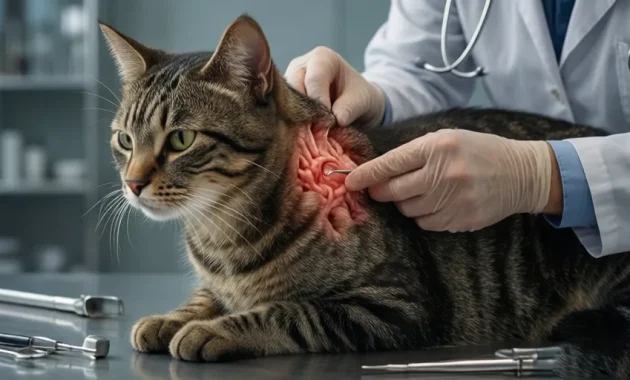
A feline abscess is a localized encapsulation of purulent exudate (pus) within a cavity formed by tissue disintegration. It is caused by pyogenic (pus-producing) bacterial infections that penetrate the subcutaneous layer or oral mucosa. While highly treatable, immediate clinical intervention is critical to prevent systemic sepsis, tissue necrosis, or the transmission of retroviral pathogens.
Pathophysiology and Etiology

Feline skin possesses high elasticity and rapidly regenerates. When a cat sustains a penetrating wound, the superficial epithelium often seals within hours, trapping superficial pathogens inside an anaerobic, warm, subcutaneous environment.
[Penetrating Wound / Bite] ──► [Inoculation of Pyogenic Bacteria] ──► [Rapid Epithelial Closure]
                                                                              │
                                                                              ▼
[Liquefactive Tissue Necrosis] ──► [Purulent Accumulation (Pus)] ──► [Anaerobic Encapsulation]
Primary Vectors of Infection
Subcutaneous (Bite/Scratch) Abscesses: Inoculation of oral or cutaneous microbiota—primarily Pasteurella multocida, Bacteroides spp., Fusobacterium spp., and Streptococcus spp.—via territorial fights or sharp fomites (e.g., nails).
Periodontal (Dental) Abscesses: Microorganisms migrate from severe plaque calculus through the gingival sulcus into the alveolar bone, forming an abscess at the tooth root matrix that often erupts through the facial or suborbital skin.
Clinical Symptomatology and Staging
The presentation of an abscess scales rapidly from localized inflammation to systemic metabolic compromise.
Localized Phase (Early to Mid-Stage)
Fluctuant Tumefaction: A distinct, warm, painful swelling beneath the skin that feels fluid-filled upon gentle palpation.
Cutaneous Erythema and Alopecia: The skin over the swelling turns red, loses hair due to follicular stress, and eventually thins or turns necrotic (dark purple/black).
Functional Mobility Deficits: Limping or reluctance to move if the lesion is located on a limb or near a joint.
Systemic/Disseminated Phase (Advanced Stage)
Pyrexia (Fever): Elevated core body temperature as the immune system fights the bacterial load.
Lethargy and Inappetence: Anorexia driven by systemic toxicity and severe localized pain.
Rupture and Drainage: The necrotic skin tears open, releasing foul-smelling, blood-stained pus.
Odontogenic Indicators: Halitosis (foul breath) and ptyalism (excessive drooling) if the source is dental.
Veterinary Diagnostic and Treatment Protocols
An abscess cannot be safely resolved with home remedies. It requires sterile surgical management and target-specific pharmaceuticals.
                  [ CLINICAL INTERVENTION CASCADE ]
                                  │
       +--------------------------+--------------------------+
       |                                                     |
 [ Surgical Debridement ]                                    [ Medical Therapeutics ]
 - Sedation / General anesthesia.                            - Broad-spectrum systemic antibiotics.
 - Incision, evacuation, & sterile flushing.                 - Non-steroidal anti-inflammatory drugs (NSAIDs).
 - Installation of a penrose drain (if deep).                - Retroviral screening (FIV/FeLV testing).
1. Surgical Debridement and Lavage
Under appropriate sedation or general anesthesia, the veterinarian incises the fluctuant mass, completely evacuates the purulent matter, and debrides any dead or necrotic tissue. The empty cavity is then thoroughly flushed using a sterile, warmed antiseptic solution (such as diluted chlorhexidine or saline). For extensive or deep cavities, a flexible latex Penrose drain is sutured into place to keep the wound open, allowing fluid to drain freely for 3 to 5 days.
2. Pharmacological Support
Antibiotic Regime: A course of broad-spectrum antibiotics (e.g., Amoxicillin-Clavulanate or Cefovecin sodium) is administered to eradicate residual bacteria and prevent deep bone infection (osteomyelitis).
Analgesia: Injectable or oral Non-Steroidal Anti-Inflammatory Drugs (NSAIDs) are prescribed to manage pain and reduce fever.
Because fight wounds are the primary transmission route for Feline Immunodeficiency Virus (FIV) and Feline Leukemia Virus (FeLV), veterinarians recommend performing an ELISA blood test 60 days post-injury to confirm the cat’s retroviral status.
Preventive Medicine and Nutritional Support
Proactive Preventive Pillars
Surgical Gonadectomy (Sterilization): Neutering and spaying removes the hormonal drive to roam and drastically reduces territorial fighting, cutting the incidence of bite-wound abscesses by up to 80%.
Environmental Confinement: Keeping cats indoors or providing a secure outdoor enclosure eliminates contact with stray animals and sharp environmental hazards.
Immunization: Maintain an up-to-date core vaccination schedule (including Rabies) to protect against preventable viral infections.
Immune-Optimized Phase Nutrition
To accelerate tissue healing, support cellular regeneration, and assist the immune system during recovery, switch your cat to a nutrient-dense diet tailored to their specific life stage:
Growth Phase (PRO PLAN Kitten Wet Chicken): Packed with essential proteins and enhanced with DHA and Inulin to support optical, neurological, and digestive development, while bolstering the immune system during growth spurts.
Adult Maintenance (PRO PLAN Adult Wet Chicken): Rich in premium bioavailable proteins to maintain lean muscle tissue and supply steady metabolic energy for daily vitality.
Senior Phase (PRO PLAN Adult 7+ Wet Chicken): Highly specialized nutrient profiles featuring targeted proteins and joint-supporting compounds to preserve lean mass, protect mobility, and assist aging immune systems.
Detailed FAQ
1. What is a feline abscess?
A feline abscess is a localized pocket of pus that forms beneath the skin or around a tooth after bacteria enter damaged tissue. The body attempts to contain the infection by creating a capsule around the affected area, resulting in swelling, pain, and inflammation.
2. What causes abscesses in cats?
The most common causes include:
- Bite wounds from cat fights
- Deep scratches from other animals
- Puncture wounds from sharp objects
- Severe dental disease and tooth root infections
- Untreated skin injuries that become infected
Bacteria commonly involved include Pasteurella multocida, Streptococcus species, Bacteroides species, and Fusobacterium species.
3. Why do cat bite wounds often become abscesses?
Cat teeth are sharp and narrow, creating deep puncture wounds that quickly close on the surface. This traps bacteria beneath the skin, creating a warm, oxygen-poor environment where bacteria multiply rapidly and produce pus.
4. What are the early signs of a feline abscess?
Early symptoms may include:
- A small lump or swelling under the skin
- Warmth around the affected area
- Pain when touched
- Redness of the skin
- Hair loss over the swelling
- Mild limping if located on a leg
These signs often appear several days after the original injury.
5. What does an advanced abscess look like?
As the infection progresses, you may notice:
- Large fluid-filled swelling
- Darkened or thinning skin
- Fever
- Loss of appetite
- Lethargy
- Foul-smelling discharge
- Ruptured skin leaking blood-stained pus
Advanced abscesses require immediate veterinary treatment.
6. Can a cat abscess heal on its own?
Some abscesses may rupture and partially drain naturally, but this does not eliminate the infection. Without proper cleaning, drainage, and antibiotics, bacteria may remain deep within the tissue and cause recurring infections or more serious complications.
7. How can I tell if my cat has a dental abscess?
Common signs of a dental abscess include:
- Bad breath
- Excessive drooling
- Difficulty eating
- Facial swelling
- Pawing at the mouth
- Weight loss
- Discharge near the face or eye area
Dental abscesses often require tooth extraction and professional dental treatment.
8. Is a feline abscess considered an emergency?
Yes. While not always immediately life-threatening, untreated abscesses can progress to:
- Severe tissue destruction
- Bone infections
- Bloodstream infections (sepsis)
- Chronic pain
- Systemic illness
Prompt veterinary care significantly improves outcomes.
9. How do veterinarians diagnose an abscess?
Diagnosis typically involves:
- Physical examination
- Palpation of the swelling
- Evaluation of wound history
- Dental examination if oral disease is suspected
- Laboratory testing when systemic illness is present
- Imaging studies for deep or complex infections
10. What is surgical debridement?
Surgical debridement is the removal of infected material, pus, and dead tissue from the abscess cavity. This procedure helps eliminate bacterial contamination and promotes healthy tissue healing.
11. Why is drainage important during treatment?
Drainage prevents pus and inflammatory fluids from becoming trapped inside the wound. Veterinarians may place a Penrose drain to keep the area open for several days, allowing continuous drainage and reducing the risk of recurrence.
12. What medications are commonly used for feline abscesses?
Treatment may include:
- Broad-spectrum antibiotics
- Pain-relieving medications
- Anti-inflammatory drugs
- Antiseptic wound flushes
The exact treatment depends on the severity and location of the infection.
13. Can abscesses spread infection throughout the body?
Yes. If bacteria enter the bloodstream, they can cause systemic infections affecting multiple organs. This is why severe abscesses should never be ignored.
14. Why are FIV and FeLV tests recommended after cat fights?
Cat fights are a major transmission route for:
- Feline Immunodeficiency Virus (FIV)
- Feline Leukemia Virus (FeLV)
Because these viruses are commonly spread through bite wounds, veterinarians often recommend follow-up testing after a fight-related abscess.
15. How long does recovery usually take?
Recovery varies depending on severity but generally includes:
- Initial drainage period: 3–5 days
- Antibiotic therapy: 1–3 weeks
- Full tissue healing: 2–4 weeks
Complex or deep infections may require longer recovery periods.
16. How can cat owners prevent abscesses?
Preventive measures include:
- Keeping cats indoors
- Supervising outdoor access
- Neutering or spaying cats
- Maintaining vaccinations
- Treating wounds immediately
- Scheduling regular veterinary checkups
- Monitoring dental health
17. Does sterilization reduce abscess risk?
Yes. Sterilized cats are generally less likely to roam and engage in territorial fighting. This significantly reduces the risk of bite wounds, which are the leading cause of feline abscess formation.
18. What nutrition helps cats recover from an abscess?
Recovery diets should focus on:
- High-quality animal protein
- Adequate hydration
- Essential vitamins and minerals
- Omega fatty acids
- Age-appropriate nutritional formulas
Proper nutrition supports immune function, tissue repair, and overall recovery.
19. Can kittens develop abscesses?
Yes. Kittens can develop abscesses from injuries, bites, or infections. Because their immune systems are still developing, prompt veterinary treatment is especially important.
20. When should I contact a veterinarian immediately?
Seek veterinary attention immediately if your cat shows:
- Rapidly growing swelling
- Fever
- Refusal to eat
- Severe pain
- Pus discharge
- Difficulty walking
- Facial swelling
- Extreme lethargy
- Signs of dehydration