The Rosetta Stone of Feline Behavior: How to Decode Your Cat’s Secret Language, Stop Behavior Problems, and Build an Unbreakable Bond
3 months ago
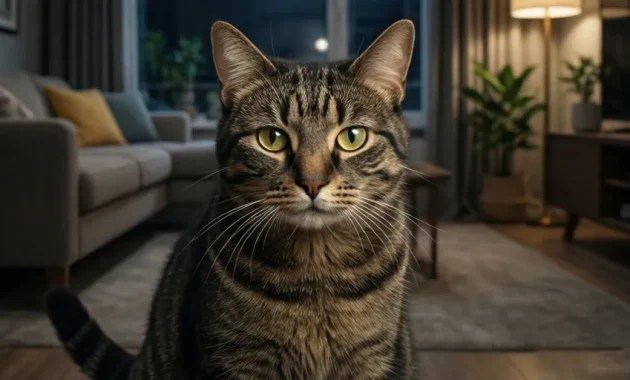
If you have ever stared at your cat while they intensely stared at a blank wall, suddenly sprinted across the living room at three o’clock in the morning, or accurately swatted your hand away the second you tried to rub their exposed belly, you have probably asked yourself: What on earth is my cat thinking?
For centuries, cats have carried a reputation for being mysterious, aloof, independent, and completely unpredictable. While dogs wear their emotions openly on their wagging tails and floppy ears, feline communication is highly sophisticated, quiet, and deeply nuanced. Cats do not use language the way we do. Instead, they interact with the world through a complex matrix of facial movements, body postures, tail alignments, pheromone deposits, and highly tailored vocal signals.
When a cat destroys your favorite leather armchair, sprays urine on your living room curtains, or growls when a guest walks through the front door, they are not acting out of malice, spite, or revenge. They are simply using the ancient, instinctual survival tools of their wild ancestors to communicate their internal emotional state to you.
This master-level behavioral guide breaks down the biological blueprints behind feline actions, gives you actionable solutions for common behavior issues, and shows you how to translate your cat's body language to build a deep bond of mutual respect.
The Evolutionary Roots of Feline Communication
To truly understand why your domestic cat acts the way they do, we must step back in time and look at their wild evolutionary ancestor: Felis lybica, the African wildcat.
                    [ The Dual Nature of the Domestic Cat ]
                                       │
         ┌─────────────────────────────┴─────────────────────────────┐
         ▼                                                           ▼
 [ The Solitary Predator ]                                  [ The Vulnerable Prey ]
 ├── Must hunt silently to survive                          ├── Must protect vital organs
 ├── Relies on scent-marking boundaries                     ├── Conceals signs of pain/weakness
 └── Avoids direct, physical conflict                       └── Views unfamiliarity as a threat
Unlike dogs, who evolved from pack animals with clear social structures and group hunting strategies, cats developed as solitary hunters. In the wild, a solitary hunter must be entirely self-reliant. If a wildcat gets severely injured in a fight, they cannot hunt; if they cannot hunt, they die. Because of this, cats evolved to avoid direct, physical conflict whenever possible. They chose to manage their territories using silent chemical messages, subtle body postures, and strategic distance rather than raw physical aggression.
At the same time, because of their small physical size, cats occupy a unique place in the natural ecosystem: they are both predators and prey. This dual nature explains almost every single "strange" quirk your cat displays today. Your cat's deep-rooted obsession with elevated vantage points, their instinct to bury their waste, and their extreme caution around unfamiliar faces are not arbitrary habits. They are hardwired survival mechanics designed to keep a small, solitary predator from becoming a larger carnivore's dinner.
- The Acoustic World: Translating the Feline Vocal Registry
- Visual Literacy: Reading Your Cat’s Tail, Ears, and Eyes
- Olfactory Territoriality: The Chemical Communication Network
- Troubleshooting Major Behavioral Obstacles
- How to Read and Respond to Your Cat's Daily Needs
- Conclusion: The Reward of Fluent Feline Communication
- Frequently Asked Questions (FAQ)
- 1. Why do cats suddenly run around the house at night?
- 2. Why does my cat stare at walls or empty spaces?
- 3. What does a cat’s slow blink mean?
- 4. Why does my cat scratch furniture?
- 5. How can I stop my cat from scratching the sofa?
- 6. Why do cats meow at humans?
- 7. What does it mean when a cat’s tail is straight up?
- 8. Why does my cat bite me during petting?
- 9. Why does my cat expose their belly?
- 10. Why do cats bring toys or prey to their owners?
- 11. Why is my cat spraying urine indoors?
- 12. Why does my cat hide from visitors?
- 13. What does a puffed-up tail mean?
- 14. Why does my cat rub their face on me?
- 15. How do cats show affection?
- 16. Why does my cat chirp or trill?
- 17. Why do cats dislike direct eye contact?
- 18. Can stress cause behavioral problems in cats?
- 19. How can I build trust with a shy cat?
- 20. What is the best way to understand my cat better?
The Acoustic World: Translating the Feline Vocal Registry
Many cat owners are surprised to learn that the classic "meow" is not a natural way adult cats communicate with each other. In feral colonies, adult cats rely almost entirely on scent markers and body postures to interact. They rarely meow at other felines, save for rare moments of intense territorial conflict or mating standoffs.
The domestic cat's meow is actually an evolutionary development created specifically to communicate with us. Over thousands of years of living alongside humans, cats learned that their human caretakers are largely blind to subtle scent markers and quiet ear twitches, but highly responsive to vocal sounds. Essentially, your cat has designed a customized vocal system just to grab your attention and manage their household.
                  [ The Structural Feline Vocal Spectrum ]
                                     │
         ┌───────────────────────────┼───────────────────────────┐
         ▼                           ▼                           ▼
   [ The Chirp/Trill ]         [ The Long Meow ]           [ The High Pitch ]
  ├── Short, rolling vocal    ├── Sustained, mid-tone     ├── Loud, sharp delivery
  └── Friendly, warm greeting └── Urgent food request     └── Anger, pain, or terror
The Acoustic Spectrum Matrix
To help you understand exactly what your cat is trying to say, let's break down the distinct vocal patterns of the feline registry:
The Short, High-Frequency Meow: This acts as a standard, friendly greeting. Think of it as your cat casually saying, "Oh, hey! Welcome back to the room." It shows they are comfortable and happy to acknowledge you.
The Multiple, Rhythmic Meows: When your cat offers a string of chirpy meows, it indicates an excited, positive mood. This behavior is common when you come home after a long workday or when they are anticipating playtime.
The Sustained, Mid-Tone Meow: This is a clear, goal-oriented request. If your cat stands by an empty food bowl or a closed bedroom door and lets out a long, deliberate meow, they are issuing a demand: "Fill my bowl" or "Open this door immediately."
The Low-Pitch, Deep Growl or Hiss: These are involuntary, defensive sounds used to de-escalate a perceived threat. A hissing cat is not looking for a fight; they are exposing their teeth and releasing a burst of air to warn an intruder to back off before physical force becomes necessary.
The High-Pitch, Sharp Caterwaul or Yowl: This is an intense, urgent distress signal. It indicates your cat is experiencing severe physical pain, sudden terror, or extreme environmental stress. If you hear this sound from an unneutered cat, it can also serve as a loud mating call.
The Trill or Chirp: This beautiful, rolling, almost bird-like sound is passed down directly from mother cats to their kittens as a way to say, "Follow me" or "Pay attention." When an adult cat trills while trotting into the room, it shows they feel safe, affectionate, and want you to interact with them.
Visual Literacy: Reading Your Cat’s Tail, Ears, and Eyes
If vocalizations are your cat’s way of making demands, their body language is the true window into their emotional world. Being able to read these visual cues allows you to understand exactly how your cat is feeling before they ever make a sound.
1. Tail Posture Dynamics
A cat’s tail is an incredible tool for emotional expression, acting like an open antenna that reveals their inner mood.
[ Vertical Tail Alignment ]  --> Excitement, confidence, and total trust.
[ Question Mark Curve ]      --> Playful curiosity; open to interaction.
[ Low, Tucked Position ]     --> Fear, anxiety, or submissive self-defense.
[ Whipping / Thumping ]      --> Overstimulation, annoyance, or rising anger.
The Vertical "Flagpole" Tail: Held straight up in the air, this position signals complete confidence, security, and a friendly mood. If the tip of the vertical tail gives a subtle quiver, it means your cat is genuinely thrilled to see you.
The Question Mark Hook: A vertical tail that curves gently at the very top indicates playful curiosity. Your cat is feeling secure and is highly open to playing with a toy or enjoying a petting session.
The Puffed-Up "Bottle Brush" Tail: When a cat suddenly blows out the fur on their tail and arches their back, they are experiencing intense fear or shock. By puffing up their tail, they are trying to make themselves look as physically large and imposing as possible to scare off a potential predator.
The Twitching, Whipping, or Thumping Tail: Unlike dogs, who wag their tails out of joy, a cat that is rapidly swishing, twitching, or thumping their tail against the floor is showing growing agitation, overstimulation, or anger. This is your cue to step back and give them space before they feel the need to swat or bite.
2. Ear Orientation and Mechanics
With over 32 individual muscles controlling each ear, a cat can rotate their hearing apparatus up to 180 degrees independently to map out their environment.
                  [ Ear Orientation Architecture ]
                                 │
         ┌───────────────────────┼───────────────────────┐
         ▼                       ▼                       ▼
  [ Forward Facing ]       [ Slightly Flared ]     [ Flattened/Pinned ]
 ├── Calm contentment     ├── Overstimulated      ├── Pure defensive terror
 └── Active engagement    └── Shifting focus      └── Ready for conflict
Forward and Alert: When your cat is resting comfortably, their ears face forward and tilt slightly out. This indicates a calm, content state of mind, open to taking in the sights and sounds around them.
The "Airplane Wings" Flare: As a cat becomes annoyed, overstimulated, or nervous, their ears will rotate sideways, flattening out to look like airplane wings. This is a clear warning sign that your cat is uncomfortable with the current interaction and needs a break.
Pinned Flat Against the Skull: When ears are flattened completely back against the head, the cat is feeling intense fear or rage. They instinctively pin their ears back to protect them from injury during an imminent physical fight.
3. Ocular Signals and Pupil Fluctuations
A cat’s eyes change rapidly based on both ambient light levels and internal neurological shifts.
Slow Blinking (The Ocular Hug): When a cat looks at you with relaxed, heavy eyelids and slowly closes and opens their eyes, they are performing the ultimate feline display of love and security. Because closing their eyes in your presence proves they don't feel the need to watch for danger, they are letting you know they trust you completely.
Constricted Slit Pupils: In normal room lighting, tightly constricted pupils indicate intense focus, high confidence, or potential irritation. If your cat's eyes lock onto something with slit pupils, they may be preparing to pounce on a toy—or they might be feeling agitated.
Fully Dilated "Saucer" Pupils: When a cat's pupils open wide into large black circles, it triggers an involuntary rush of adrenaline. This happens when they are feeling intense excitement during play, deep fear in an unfamiliar situation, or severe defensiveness.
Olfactory Territoriality: The Chemical Communication Network
To truly understand your cat, you must realize that they live in a detailed, invisible world of scent. Humans rely primarily on sight to understand their environment, but a cat perceives their home through a sophisticated map of chemical messages left behind by pheromones.
1. Bunting and Allomarking (The Scent-Driven Group Bond)
Cats possess concentrated sebaceous glands that produce unique facial pheromones. These glands are located in specific spots around their head:
[ Temporal Glands ] --> Located directly on the sides of the forehead.
[ Perioral Glands ] --> Positioned carefully around the lips and cheeks.
[ Mental Glands ]   --> Located squarely on the underside of the chin.
When your cat rubs their cheeks along the edge of your laptop, headbutts your chin (bunting), or weaves through your legs, they are engaging in a behavior called allomarking. They are not simply asking for attention; they are transferring their personal pheromones onto you.
In your cat's mind, they are marking you as a safe, family protector, weaving your scent into theirs to create a collective "group scent" that represents safety and comfort within their home.
2. The Mechanics of the Flehmen Response
Have you ever noticed your cat sniff a specific blanket or your shoes, lift their head, and open their mouth into a strange, grimacing sneer? This is known as the Flehmen response.
Cats have a specialized olfactory organ called the vomeronasal organ (or Jacobson’s organ) located right in the roof of their mouth, just behind their front teeth. By opening their mouth slightly, they are drawing scent molecules directly into this organ to analyze complex chemical signatures, such as the pheromones left behind by other animals. It allows them to gather detailed data about who visited their space and when.
Troubleshooting Major Behavioral Obstacles
Now that you understand the core mechanics of how cats communicate through sound, sight, and scent, let's explore how to solve the four most common behavioral challenges pet owners face today.
Behavioral Analysis Matrix
| Behavioral Problem | Primary Root Cause | Practical Human Solution |
| Furniture Scratching | Territorial marking and natural claw conditioning. | Place vertical sisal posts directly next to targeted furniture. |
| Inappropriate Spraying | Severe anxiety, territorial stress, or hormonal drives. | Neuter/spay early; use enzymatic cleaners to remove organic markers. |
| Intercat Aggression | Competing for resources or defensive territory protection. | Implement a slow, scent-based reintroduction process. |
| Fear of Visitors | Feeling overwhelmed by unfamiliar scents and direct eye contact. | Instruct guests to ignore the cat and let them approach on their own terms. |
Challenge 1: Destructive Furniture Scratching
A common misconception is that cats scratch furniture out of a desire to sharpen their claws or simply destroy property. In reality, scratching is an essential physical and psychological need.
When a cat scratches, they peel away dead outer claw husks, stretch out the deep muscles in their shoulders and back, and leave behind both visual marks and scent markers from the glands in their paw pads to claim their territory.
[ Cat Targets Sofa Corner ] -> Do NOT Scold or Punish
                                      │
                                      ▼
               [ Place Vertical Sisal Post Directly Next to Sofa ]
                                      │
                                      ▼
               [ Apply Catnip/Silvervine to Encourage Post Use ]
                                      │
                                      ▼
               [ Cover Sofa Corner with Double-Sided Sticky Tape ]
                                      │
                                      ▼
               [ Divert Scratching Behavior Successfully ]
Actionable Solutions
Provide Vertical Stability: Cats need to stretch their entire body weight out fully when they scratch. Cheap, flimsy scratching posts that wobble or fall over will quickly be ignored in favor of your heavy, stable sofa. Invest in tall, heavy-bottomed scratching posts wrapped in rugged sisal rope.
Strategic Placement: Cats want their territorial markers to be noticed. Placing a scratching post in a hidden back room rarely works. Position the new post directly next to the piece of furniture they have been targeting.
Make the Sofa Less Attractive: Cover the specific corners of the furniture they have been scratching with double-sided sticky tape. Cats hate the sticky texture against their sensitive paw pads and will quickly move on to use the safe, sturdy sisal post instead.
Challenge 2: Territorial Spraying and Inappropriate Elimination
Finding cat urine outside the litter box is one of the most frustrating challenges a pet owner can face. To fix this, it is crucial to understand the difference between basic elimination issues and behavioral spraying.
If your cat squats on a flat surface to empty their bladder, they are dealing with a litter box preference problem or an underlying medical issue (such as a urinary tract infection or painful crystals). If they stand upright, lift their tail high, and spray a small amount of urine backward onto a vertical surface like a wall or door frame, they are engaging in behavioral spraying to mark their territory.
Actionable Solutions
Schedule a Veterinary Checkup: Always start by ruling out medical issues. Painful conditions like Feline Lower Urinary Tract Disease (FLUTD) can cause a cat to avoid their litter box because they connect it with their physical discomfort.
The Golden Ratio for Litter Boxes: Ensure your home has plenty of resources. The universal rule for feline harmony is to maintain one more box than the total number of cats ($N+1$). If you share your home with two cats, you need at least three separate litter boxes spread out across different areas of the house.
Use Enzmatic Cleaners: Avoid cleaning up accidents with ammonia-based products. Because urine naturally contains ammonia, using these cleaners will actually make the spot smell more like a marking zone to your cat, drawing them back to spray the exact same spot again. Use an enzymatic cleaner that breaks down the organic proteins in the urine completely, erasing the scent marker for good.
Consider Sterilization: Hormones play a massive role in territorial behavior. Neutering male cats and spaying female cats before they reach maturity eliminates the hormonal drive to spray, resolving up to 90% of marking issues almost immediately.
Challenge 3: Aggression Toward Guests and Strangers
If your cat turns into an aggressive, hissing protector whenever a new person enters your home, they are likely feeling overwhelmed by unfamiliar scents and defensive of their space.
When a visitor walks into a house, they carry a dense cocktail of strange outdoor smells that can feel threatening to a sensitive cat. If that guest then tries to walk straight over to the cat, look them in the eyes, and reach out to pet them, the cat interprets those actions as an aggressive challenge.
Actionable Solutions
Practice Polite Indifference: Instruct your guests to completely ignore the cat when they first arrive. Tell them to avoid making direct eye contact, speaking to the cat, or moving into their personal space. This removes the pressure, allowing the cat to observe the visitor safely from a distance.
Let the Cat Guide the Interaction: Allow your cat to explore the newcomer on their own terms. When they feel ready, they will approach to sniff the guest’s shoes or clothes. Your guest can then extend a relaxed, lowered hand with their knuckles closed, giving the cat a safe chance to rub their cheeks against the hand and leave their own scent behind.
Use High-Value Rewards: Have your guest gently toss a few high-quality, protein-rich treats onto the floor near the cat without making direct eye contact. This simple step helps the cat connect the arrival of new people with wonderful rewards, helping them feel relaxed and secure around visitors.
Challenge 4: Managing Feline Overstimulation and "Play Aggression"
Have you ever been peacefully petting your cat while they purr happily, only for them to suddenly turn around, nip your hand, and run away? This confusing behavior is known as petting-induced overstimulation.
While cats enjoy physical affection, their hair follicles are incredibly sensitive. Repetitive petting along their back can cause sensory overload, overstimulating their nervous system until that pleasant feeling quickly turns irritating or painful.
[ Petting Session Begins ] -> Cat Purrs & Relaxes
                                    │
                                    ▼
                     [ Repetitive Sensory Input Builds ]
                                    │
                                    ▼
                     [ Neurological Overstimulation ]
                                    │
                                    ▼
                [ Warning Signs: Tail Twitch / Ears Sideways ]
                                    │
                                    ▼
                [ Physical Reaction: Sudden Nip or Swat ]
Actionable Solutions
Learn to Spot the Warning Cues: Cats almost always drop subtle hints before they lash out with a love bite. Pay close attention to their body language while petting: watch for a shifting, twitching tail, flattened ears, tense shoulder muscles, or pupils that suddenly widen. The second you notice any of these signs, stop petting immediately and let them rest.
Focus on the Scent Zones: Avoid long, heavy strokes down your cat's back or tail, as these areas overstimulate easily. Instead, focus your attention on the sweet spots around their head where they love to be scratched—like the base of the ears, under the chin, and along the cheeks.
Never Use Hands as Toys: If you use your bare fingers to play-fight with a young kitten, you are teaching them that human skin is an acceptable target for hunting behavior. As they grow into an adult cat with sharp teeth and claws, that playful habit can turn into a painful problem. Always use interactive wand toys, laser pointers, or kicker toys to keep a safe, healthy distance between their hunting instincts and your hands.
How to Read and Respond to Your Cat's Daily Needs
By mapping out your cat's distinct vocal patterns, tail movements, and facial cues, you can create an easy-to-use translation guide for their daily communication:
                  [ Feline Communication Guide ]
                                 │
         ┌───────────────────────┼───────────────────────┐
         ▼                       ▼                       ▼
  [ The Sapaan ]          [ The Permintaan ]      [ Sinyal Darurat ]
 ├── Meow pendek, ceria  ├── Meow panjang, keras ├── Meow nada tinggi
 ├── Ekor tegak lurus    ├── Tatapan mata fokus  ├── Telinga flat ke belakang
 └── Gosok badan ke kaki └── Berdiri dekat objek └── Pupil mata membesar
The Friendly Greeting (Sapaan): Your cat trots into the room with a perfectly vertical tail, lets out a short, chirpy meow, and gently rubs their face against your leg. They are feeling completely secure, happy to see you, and are claiming you as a safe part of their family.
The Focused Request (Permintaan): Your cat sits squarely next to their food bowl or a closed door, looks straight at you, and delivers a long, low, repetitive meow. They are using their customized human communication to ask for a specific action—like dinner or an open doorway.
The Emergency Distress Signal (Sinyal Darurat): Your cat crouches low to the ground with their tail tightly tucked, their ears pinned flat against their head, and their pupils fully dilated. They may let out a sharp, high-pitched hiss or growl. This tells you they are experiencing intense fear, pain, or environmental panic, and need immediate space and safety to calm down.
Conclusion: The Reward of Fluent Feline Communication
Learning to understand and speak your cat's unique behavioral language is an incredibly rewarding journey that completely changes how you share your home with your pet. When you look past the old stereotypes and see your cat for what they truly are—a highly sensitive, beautiful predator-prey animal shaped by deep-rooted survival instincts—their seemingly unpredictable quirks suddenly begin to make perfect sense.
By responding to their natural needs rather than punishing their instincts, you can resolve common home behavioral challenges with patience and respect. Providing sturdy scratching posts, maintaining the right number of clean litter boxes, and giving them the space they need to explore unfamiliar situations helps remove the anxiety that causes unwanted behaviors.
The ultimate reward for your time and care isn't just a calm, well-behaved pet; it is a profound bond of unconditional love and trust. When your cat approaches you with a tall, confident tail, offers a soft slow blink from across the room, and curls up safely in your lap to purr themselves to sleep, they are letting you know that you have successfully decoded their world and created a safe, loving haven where they can truly thrive.
Frequently Asked Questions (FAQ)
1. Why do cats suddenly run around the house at night?
Cats experience sudden bursts of energy often called “zoomies.” This behavior is linked to their natural hunting instincts, especially during dawn and nighttime hours when wild cats are most active.
2. Why does my cat stare at walls or empty spaces?
Cats have extremely sensitive hearing and vision. They may detect tiny movements, distant sounds, insects, or light reflections that humans cannot notice.
3. What does a cat’s slow blink mean?
A slow blink is a strong sign of trust and relaxation. Cats use it to show they feel safe and comfortable around you.
4. Why does my cat scratch furniture?
Scratching helps cats stretch their muscles, remove old claw layers, and mark territory using scent glands in their paws.
5. How can I stop my cat from scratching the sofa?
Provide sturdy scratching posts near the furniture, use catnip to attract your cat to the post, and protect furniture with double-sided tape or covers.
6. Why do cats meow at humans?
Adult cats rarely meow at each other. Meowing is a communication method cats developed specifically to interact with humans.
7. What does it mean when a cat’s tail is straight up?
A vertical tail usually signals happiness, confidence, and friendliness. Cats often greet trusted humans this way.
8. Why does my cat bite me during petting?
This is commonly caused by overstimulation. Repetitive touching can become uncomfortable, causing the cat to react with a gentle bite or swat.
9. Why does my cat expose their belly?
Showing the belly is a sign of trust and relaxation. However, it is not always an invitation for belly rubs.
10. Why do cats bring toys or prey to their owners?
Cats may share toys or prey as part of social bonding behavior. In feline instincts, sharing a hunt can represent trust and affection.
11. Why is my cat spraying urine indoors?
Spraying is usually related to territorial stress, anxiety, or hormonal behavior. Neutering and reducing stress can significantly help.
12. Why does my cat hide from visitors?
Cats can feel overwhelmed by unfamiliar scents, sounds, and direct eye contact. Hiding helps them feel secure until they assess the situation.
13. What does a puffed-up tail mean?
A puffed tail indicates fear, shock, or defensive behavior. Cats try to appear larger to scare away perceived threats.
14. Why does my cat rub their face on me?
This behavior, called bunting, allows cats to leave comforting pheromones on people they trust.
15. How do cats show affection?
Cats commonly show affection through slow blinking, purring, headbutting, grooming, sleeping nearby, and following their owners around.
16. Why does my cat chirp or trill?
Trills and chirps are friendly vocalizations often used to greet humans or encourage interaction.
17. Why do cats dislike direct eye contact?
In feline communication, direct staring can feel threatening. Soft eye contact and blinking are more calming and friendly.
18. Can stress cause behavioral problems in cats?
Yes. Stress can trigger overgrooming, spraying, hiding, aggression, appetite changes, and litter box problems.
19. How can I build trust with a shy cat?
Give the cat space, avoid forcing interaction, use treats, maintain predictable routines, and allow the cat to approach you voluntarily.
20. What is the best way to understand my cat better?
Observe their body language, vocalizations, tail movements, ear positions, and daily habits. Consistent, respectful interaction helps strengthen communication and trust.