The Mechanics of the Feline Bunny Kick: Tactical Drivers and Behavioral Management
2 months ago
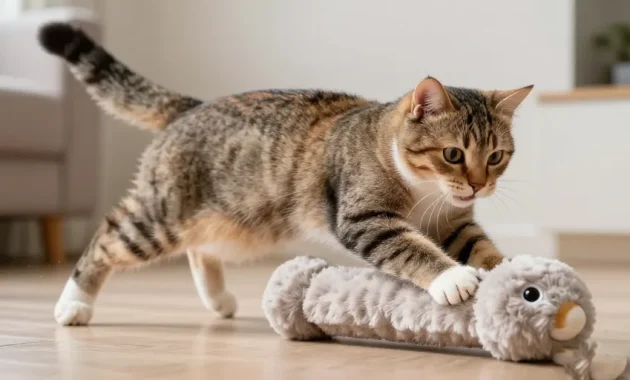
The "bunny kick"—a behavioral sequence where a cat grasps an object with its thoracic limbs (front legs) while executing rapid, alternating strikes with its pelvic limbs (hind legs)—is a deeply ingrained motor pattern in feline physiology. While it often mimics play, it is rooted in predatory mechanics and survival instincts.
The Three Biological Drivers Behind Bunny Kicking
               [Feline Bunny Kick Trigger]
                           │
       ┌───────────────────┼───────────────────┐
       ▼                   ▼                   ▼
 [Self-Defense]        [Predatory Tactics]   [Social/Play Behavior]
 • Abdominal protection • Prey immobilization • Motor skill refinement
 • Intimidation tactic • Cervical dislocation • Energy regulation
1. High-Stakes Self-Defense
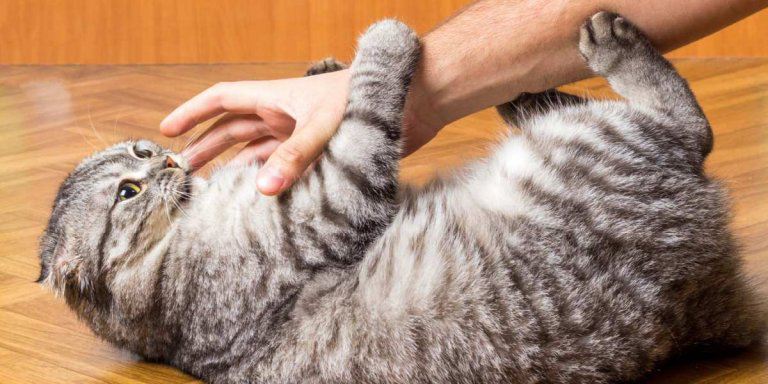
The feline abdomen houses vital organs and represents their most vulnerable anatomical zone. When a cat is supine (on its back), it is typically not a sign of submission, but rather a tactical defensive posture.
Leverage and Power: By lying on their back, cats free up all four limbs and their jaw to act as weapons.
Anatomical Force: The pelvic limbs contain the largest muscle groups in the feline body (such as the quadriceps and gluteal muscles). The bunny kick allows a cornered cat to deploy maximum force to scratch and push away a larger apex predator.
Overstimulation Trigger: This response can be triggered during human interaction if a cat's highly sensitive areas—like the abdomen or paw pads—are touched, causing a sudden shift from pleasure to defensive stress.
2. Predatory Subdual and Dispatch Mechanics
Cats are highly efficient solitary hunters. The bunny kick serves as a finishing maneuver to safely dispatch struggling prey.
Immobilization: The front legs act as a vice, locking the prey's upper body and sensory organs away from the cat's face.
Mechanical Damage: The rapid raking motion of the hind claws tears at the prey's vital organs or breaks its spine, minimizing the risk of the prey biting or injuring the cat during the struggle.
3. Motor Skill Refinement and Play
In domestic environments, the bunny kick is frequently observed during play. This behavior begins in early kittenhood during littermate wrestling.
Skill Development: Play-fighting allows kittens to practice hunting and self-defense maneuvers in a safe environment.
Social Boundary Marking: It helps young cats learn bite and claw inhibition through feedback from their peers.
Metabolic Output: For indoor adult cats, it serves as an excellent way to release pent-up energy and satisfy predatory drives.
- 1. High-Stakes Self-Defense
- 2. Predatory Subdual and Dispatch Mechanics
- 3. Motor Skill Refinement and Play
Behavioral Management: Mitigating Redirection Injuries
Because bunny kicking involves significant force and sharp claws, owners must establish clear boundaries to prevent accidental injury.
Pre-Emptive Body Language Decoding
Recognizing when a cat is escalating toward a bunny kick allows you to disengage before they strike. Watch for these signs of physiological arousal:
[Relaxed State] ──► [Mydriasis (Dilated Pupils)] ──► [Piloerection / Tail Thumping] ──► [Bunny Kick]
Autonomic Shifts: Rapid pupil dilation (mydriasis) and ears shifting flat or backward ("airplane ears").
Muscular Tension: A rigid body posture, rippling skin along the spine, or a twitching, thumping tail.
Protocol for Redirecting the Behavior
Clinical Note: Never scold, shake, or physically punish a cat that is bunny kicking. Because this behavior is linked to self-defense instincts, responding with aggression will raise their stress levels, turning a playful interaction into a genuine fight-or-flight conflict.
FAQ
1. What is a bunny kick in cats?
A bunny kick is a natural feline behavior where a cat grabs an object with its front legs and rapidly kicks it with its hind legs. Although it may appear playful, this action originates from hunting, self-defense, and survival instincts.
2. Why do cats bunny kick?
Cats bunny kick for three primary reasons:
- Self-defense
- Predatory hunting behavior
- Play and skill development
The behavior is deeply embedded in feline biology and helps cats practice movements essential for survival.
3. Is bunny kicking normal cat behavior?
Yes. Bunny kicking is completely normal and healthy feline behavior. Both kittens and adult cats perform bunny kicks during play, hunting simulations, and defensive situations.
4. Why is it called a bunny kick?
The term "bunny kick" comes from the rapid, alternating motion of the hind legs, which resembles the kicking action of a rabbit. The movement is powerful, fast, and highly coordinated.
5. Do all cats bunny kick?
Most cats display bunny kicking behavior at some point in their lives. The frequency varies depending on age, personality, energy levels, and environmental enrichment.
6. Why do cats bunny kick toys?
Cats bunny kick toys because the action mimics how they would subdue prey in the wild. The toy becomes a substitute target for practicing hunting and predatory skills.
7. Why do cats bunny kick while playing?
Play allows cats to rehearse important survival behaviors. Bunny kicking helps develop coordination, muscle strength, balance, and predatory techniques in a safe environment.
8. Why do kittens bunny kick each other?
Kittens often engage in wrestling matches that include bunny kicking. These interactions help them:
- Learn bite inhibition
- Develop social skills
- Practice hunting behaviors
- Build physical coordination
9. Is bunny kicking a sign of aggression?
Not necessarily. Bunny kicking can occur during play, excitement, hunting simulation, or defensive reactions. The surrounding body language and context determine whether the behavior is playful or aggressive.
10. Why do cats bunny kick during self-defense?
When threatened, a cat may roll onto its back and use all four limbs as defensive weapons. The hind legs contain some of the strongest muscles in a cat's body, making bunny kicking an effective strategy for creating distance from a perceived threat.
11. Why do cats grab with their front paws before kicking?
The front paws act like a restraint mechanism. By holding an object or opponent in place, the cat can deliver more powerful and accurate kicks with the hind legs.
12. How does bunny kicking help cats hunt?
In predatory situations, the front legs secure prey while the hind legs deliver rapid strikes. This helps immobilize prey and reduces the risk of injury to the cat during a struggle.
13. Why do indoor cats still bunny kick?
Even though indoor cats do not hunt for survival, their predatory instincts remain intact. Bunny kicking allows them to satisfy these natural drives through play and exercise.
14. What body language signals an upcoming bunny kick?
Common warning signs include:
- Dilated pupils
- Flattened ears
- Twitching tail
- Tail thumping
- Increased muscle tension
- Rippling skin along the back
- Intense focus on a target
15. What are "airplane ears" in cats?
Airplane ears refer to ears that rotate sideways or flatten backward. This posture often indicates overstimulation, anxiety, irritation, or preparation for defensive behavior.
16. Why does my cat bunny kick my arm?
Your cat may view your arm as a play target, hunting target, or object to wrestle. In some cases, overstimulation during petting can trigger a defensive bunny kick response.
17. Why does my cat bunny kick when I rub its belly?
A cat's abdomen contains vulnerable organs and is highly sensitive. While some cats tolerate belly rubs, others may interpret prolonged contact as threatening and instinctively respond with a bunny kick.
18. Is exposing the belly an invitation for belly rubs?
Not always. Cats often expose their belly because they feel safe, are stretching, or are preparing a defensive position. Belly exposure does not automatically mean they want to be touched.
19. What should I do if my cat starts bunny kicking my hand?
Remain calm and avoid pulling away quickly. Sudden movements can trigger stronger predatory responses. Relax your hand, allow the cat to loosen its grip, and redirect attention to an appropriate toy.
20. Why shouldn't I pull my hand away quickly?
Rapid movement resembles fleeing prey. This can intensify the cat's grip and cause more vigorous kicking and scratching.
21. What toys are best for bunny kicking?
Long plush kicker toys, stuffed fabric tubes, and durable wrestling toys are ideal. These provide resistance and allow cats to safely express natural kicking behavior.
22. Can bunny kicking cause injuries?
Yes. Because hind claws are sharp and the kicks are powerful, bunny kicking can cause scratches, punctures, bruising, and skin injuries if directed toward human hands or arms.
23. Should I let my kitten play with my hands?
No. Using hands or feet as toys encourages inappropriate play habits. What seems harmless in a small kitten can become painful and dangerous as the cat grows.
24. How can I prevent bunny kicking injuries?
Helpful strategies include:
- Using interactive toys
- Providing kicker toys
- Avoiding rough hand play
- Learning feline body language
- Redirecting play immediately when arousal increases
25. Why is redirection important?
Redirection channels natural instincts toward appropriate outlets. Rather than suppressing the behavior, it gives cats a safe target that satisfies their physical and mental needs.
26. How quickly should I redirect a bunny kick?
Ideally within a few seconds of recognizing the behavior. Prompt redirection helps the cat associate toys—not human body parts—with wrestling and kicking activities.
27. Can bunny kicking indicate overstimulation?
Yes. Some cats become overstimulated during petting sessions. What begins as enjoyment can rapidly transition into defensive behavior, resulting in biting, scratching, or bunny kicking.
28. How do I know if my cat is overstimulated?
Signs of overstimulation include:
- Sudden tail flicking
- Skin twitching
- Flattened ears
- Dilated pupils
- Increased tension
- Sudden biting or grabbing
29. Should I punish my cat for bunny kicking?
No. Punishment can increase fear, stress, and defensive behavior. Since bunny kicking is instinctive, punishment may damage trust and worsen behavioral problems.
30. Why is punishment ineffective?
Bunny kicking is rooted in natural survival instincts. Physical corrections, yelling, or scolding often cause confusion and can escalate the situation into a genuine fight-or-flight response.
31. Can bunny kicking be a sign of stress?
In some situations, yes. Defensive bunny kicking may occur when a cat feels threatened, frightened, trapped, or overwhelmed.
32. Does bunny kicking provide exercise?
Absolutely. Bunny kicking engages major muscle groups in the hind legs and core, making it an excellent form of physical activity and energy release.
33. Why do cats seem to enjoy kicker toys so much?
Kicker toys provide the resistance, texture, and size needed to mimic prey. They allow cats to grab, bite, wrestle, and kick in ways that satisfy instinctual behaviors.
34. Can senior cats still bunny kick?
Yes. While they may do so less frequently due to age-related changes in activity levels, many senior cats continue to bunny kick during play and interaction.
35. What is the best way to manage bunny kicking behavior?
The most effective approach includes:
- Understanding feline body language
- Providing suitable toys
- Avoiding hand-based play
- Redirecting appropriately
- Respecting boundaries
- Never using punishment